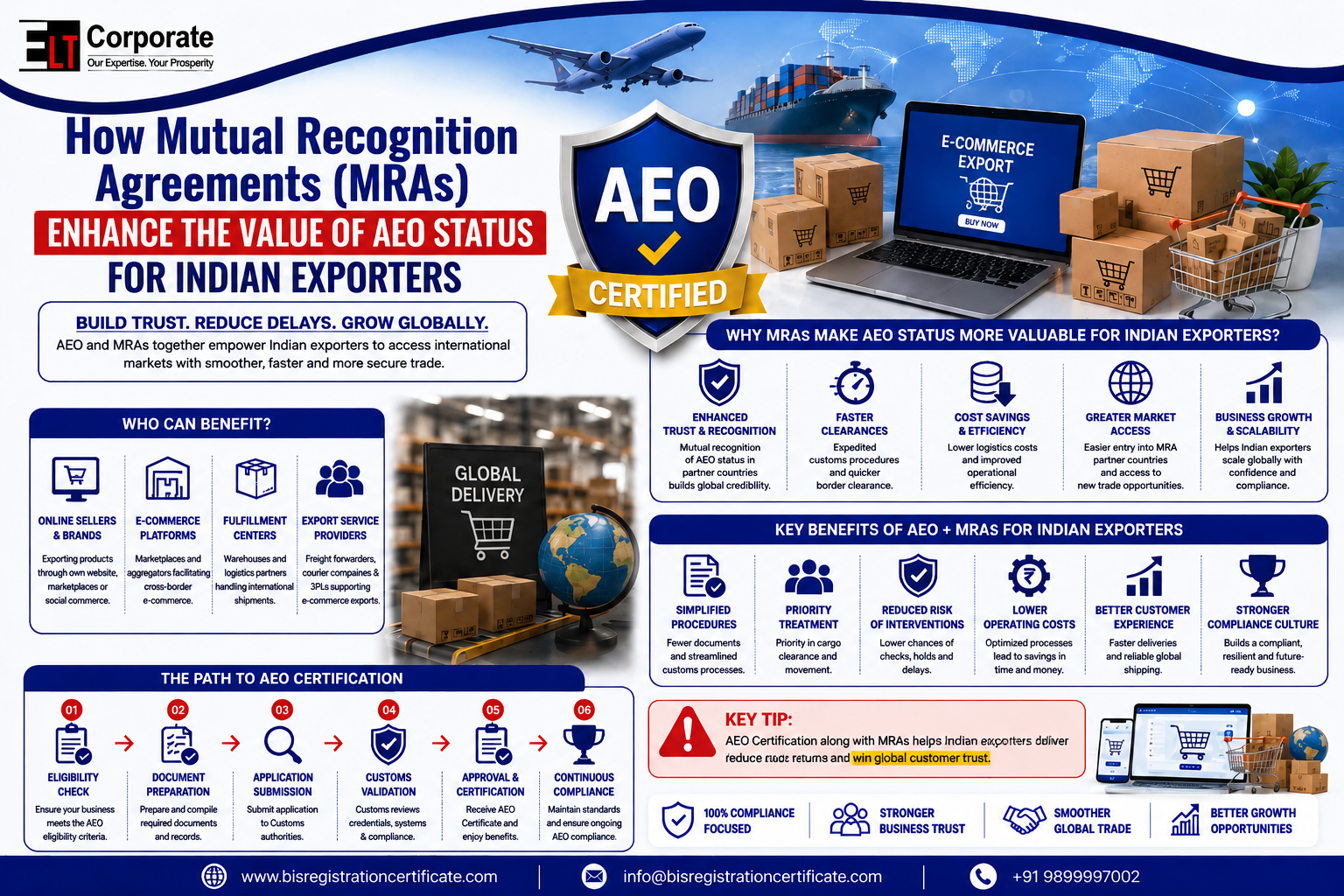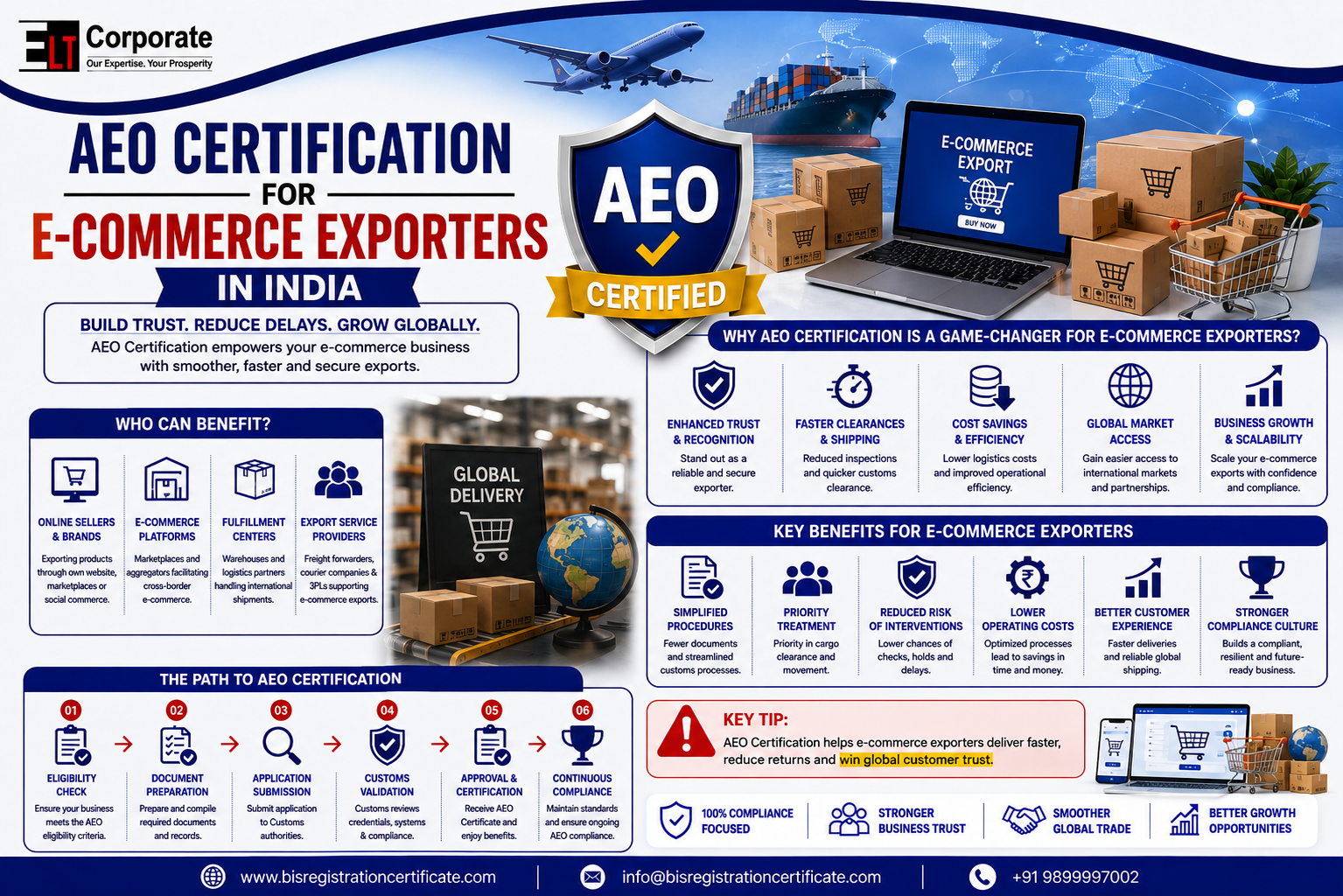
Are customs delays, high costs, and complex procedures holding back your Indian export business? Many small and medium-sized enterprises (SMEs) face significant hurdles when navigating international trade. These challenges can limit growth and make competing globally difficult. This guide will help you understand if Authorized Economic Operator (AEO) certification can be a game-changer for your small or medium export venture in India. We will explore its benefits, simplified process, and why it might be your next strategic move.
What is AEO Certification? Understanding the Trusted Trader Program
AEO certification is an internationally recognized quality mark that indicates a business adheres to secure supply chain standards. Developed by the World Customs Organization (WCO) as part of its SAFE Framework, it’s a global initiative. In India, the Central Board of Indirect Taxes and Customs (CBIC) issues this certification.
The AEO program aims to enhance international supply chain security and facilitate legitimate trade. It offers various tiers, with AEO T1 being the entry-level certification, especially suitable for compliant SMEs.
Why AEO Status Matters for Small Indian Exporters
Gaining AEO certification offers several significant advantages, directly addressing common pain points for small and medium exporters. These benefits translate into smoother operations and better financial health.
Streamlined Customs Clearance and Reduced Delays
As an AEO-certified exporter, your shipments receive priority processing. This means fewer physical inspections and faster customs clearance, reducing lead times considerably. You can also benefit from Direct Port Delivery (DPD) and Direct Port Entry (DPE) for quicker cargo movement. In certain cases and ports, AEO certificate holders may receive enhanced facilitation or designated points of contact within Customs.
Significant Financial Advantages and Cost Savings
One of the biggest perks is the reduced requirement for bank guarantees. AEO T1 certification can lower your bank guarantee obligation significantly, often up to 25%. This frees up crucial working capital. Additionally, AEO status often leads to faster processing of customs and GST refunds, improving your cash flow. You also save on demurrage and storage costs due to quicker clearances.
Enhanced Credibility and Global Recognition
Becoming an “Authorized Economic Operator” elevates your business reputation. It signifies you are a trusted and compliant partner in the global supply chain. This status can facilitate trade under Mutual Recognition Agreements (MRAs) with other countries, further simplifying cross-border operations. It also enhances your supply chain security, making you more attractive to international partners.
Simplified Compliance and Ease of Doing Business
India’s AEO program has liberalized its eligibility criteria, especially for MSMEs. This makes it more accessible than ever. AEO status may support simplified procedures under certain trade facilitation schemes, subject to the specific policy conditions applicable at the time.
Required Documents and Prerequisites
To apply for AEO T1, you will need to prepare several documents. A thorough preparation helps ensure a smooth application process.
- Importer Exporter Code (IEC): Mandatory for all import/export businesses
- Bank Solvency Certificate: Proof of financial stability from your bank
- Compliance History: Records demonstrating a good track record with customs and other regulatory bodies.
- Site Plan: Layout of your premises, highlighting security features.
- Security Policy & Procedures: Documentation of your security measures for premises, cargo, and IT systems.
- Process Flowcharts: Visual representation of your export procedures.
- Financial Statements: Audited balance sheets and profit & loss statements for the last two financial years.
- Proof of Business Registration: Company registration certificate, partnership deed, etc.
Validity of AEO Certification
Once granted, an AEO certificate is valid for a period of three years. After this period, you will need to apply for renewal. The renewal process is generally simpler, often based on a self-declaration and verification of continued compliance.
Process/Step-by-Step Procedure for AEO T1
Applying for AEO T1 certification has been streamlined to make it easier for small businesses. Here’s a simplified overview of the process:
- Self-Assessment: Review your current operations against AEO security and compliance criteria. Identify any gaps.
- Online Application: Submit your application (Form AEO-T1) through the CBIC AEO portal.
- Document Submission: Upload all required documents as specified in the application. Ensure all information is accurate and complete.
- Desk Review & Verification: The AEO Cell at CBIC will review your application and documents. They may request additional information or clarifications.
- On-Site Verification (if required): For AEO T1, a physical verification is less common but may occur if deemed necessary.
- Approval & Certification: If satisfied, CBIC grants the AEO T1 certificate. CBIC has indicated an expedited processing timeline for AEO T1 applications from MSMEs, and in many cases approvals are granted within a few weeks, subject to document completeness and verification.
Common Mistakes to Avoid
Navigating the AEO application process can have its challenges. Being aware of common pitfalls can save you time and effort.
- Incomplete Documentation: Ensure all required documents are accurate and fully submitted.
- Poor Record-Keeping: Maintain meticulous records of all customs-related transactions and security protocols.
- Inadequate Security Measures: Your premises, cargo handling, and IT systems must meet minimum security standards.
- Lack of Internal Controls: Implement clear internal policies and procedures for compliance and security.
- Ignoring Continuous Compliance: AEO is not a one-time effort; ongoing adherence to standards is crucial for renewal.
What Happens If You Ignore It?
Choosing to forego AEO certification isn’t necessarily a penalty, but it means you miss out on significant advantages. Without AEO status, your business may continue to face longer customs clearance times, more frequent inspections, and higher bank guarantee requirements.
You might also struggle to compete with AEO-certified peers who enjoy faster, more cost-effective trade. Ignoring AEO means losing a strategic edge in the competitive global market.
The Cost Involved
While the benefits are clear, understanding the costs is vital. The actual application to CBIC for AEO certification itself has no government fees. However, there are associated costs you should consider.
| Category | Estimated Cost Range (INR) |
| Consultancy/Advisory Fees | ₹50,000 – ₹2,00,000+ (depending on complexity and scope) |
| Internal Compliance
Upgrades |
Variable (e.g., CCTV, access control, software) |
| Document Preparation & Filing | ₹10,000 – ₹50,000 |
| Miscellaneous Expenses | ₹5,000 – ₹20,000 |
These figures are rough estimates and can vary widely based on your company’s existing infrastructure, internal capabilities, and the consultant chosen. The investment is often quickly recouped through the financial savings and operational efficiencies gained.
How ELT Corporate Pvt. Ltd. Can Help You
Understanding the AEO process and preparing all necessary documentation can be daunting, especially for busy small business owners. ELT Corporate Pvt. Ltd. specializes in guiding exporters through every step of the AEO certification journey. Our experts help you assess your eligibility, streamline your documentation, and ensure your business meets all compliance and security requirements.
We simplify the complex application process, helping you compile accurate financial records and implement robust security protocols. With ELT Corporate Pvt. Ltd. as your partner, you can navigate the path to AEO certification efficiently, focusing on your core export business while we handle the intricacies of compliance.
Conclusion
For small and medium exporters in India, AEO T1 certification is a worthwhile strategic investment. The liberalized eligibility criteria have made it more accessible, and the benefits—ranging from reduced bank guarantees and faster customs clearance to improved cash flow and global credibility—are substantial.
For compliant, growth-oriented exporters with regular international trade activity, AEO T1 offers a clear competitive advantage by improving efficiency, predictability, and trust in the global marketplace.
Frequently Asked Questions
What are the relaxed eligibility criteria for small exporters (MSMEs) to get AEO T1 certification in India?
MSMEs can qualify for AEO T1 with a minimum of 10 customs documents (import/export) filed over the last two financial years, subject to a satisfactory compliance record. They also need a minimum of two years of operational history, making the certification much more accessible than before.
How exactly does AEO status reduce bank guarantees and duties for SMEs?
AEO T1 status generally allows a reduction of bank guarantee requirements by up to 25%, subject to applicable Customs circulars. This significantly frees up working capital. Additionally, AEO certification can lead to faster processing of duty drawback and GST refunds, improving cash flow for small exporters.
What is the realistic timeline to apply for AEO T1 as a new or small exporter in India?
CBIC has indicated expedited processing for AEO T1 applications from MSMEs; however, timelines depend on document completeness and verification outcomes.
Can a small or medium exporter lose their AEO status after getting it?
Yes, AEO status can be revoked if the certificate holder fails to maintain compliance with AEO criteria, such as security standards or timely payment of duties. Ongoing adherence to the program’s requirements is crucial to retain the certification.
Beyond faster clearances, what are the tangible, real-world benefits for Indian MSME exporters from AEO?
Beyond faster clearances, MSMEs report improved supply chain predictability, better inventory management due to reduced delays, and enhanced trust from international buyers. This trust can lead to new business opportunities and stronger global partnerships.