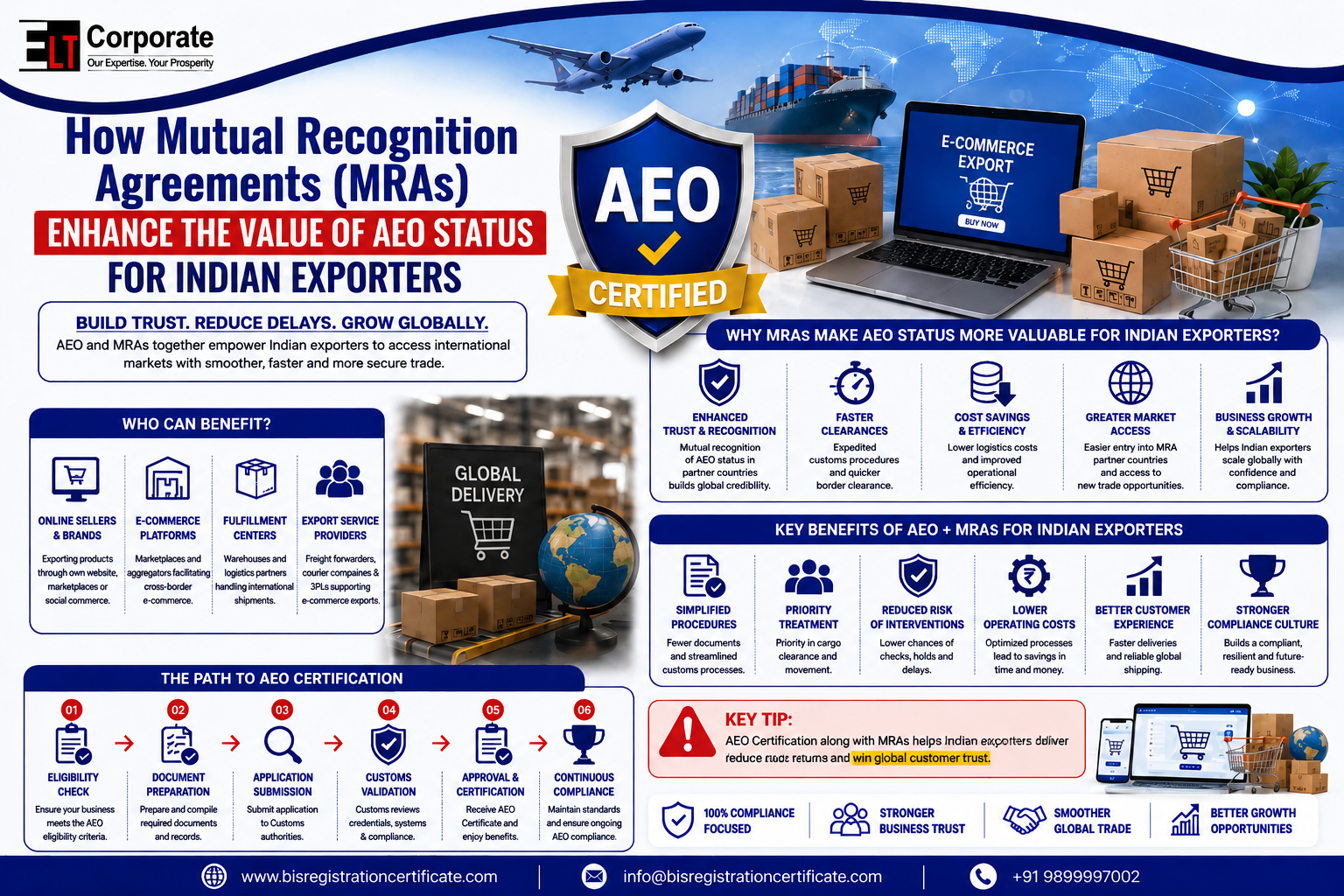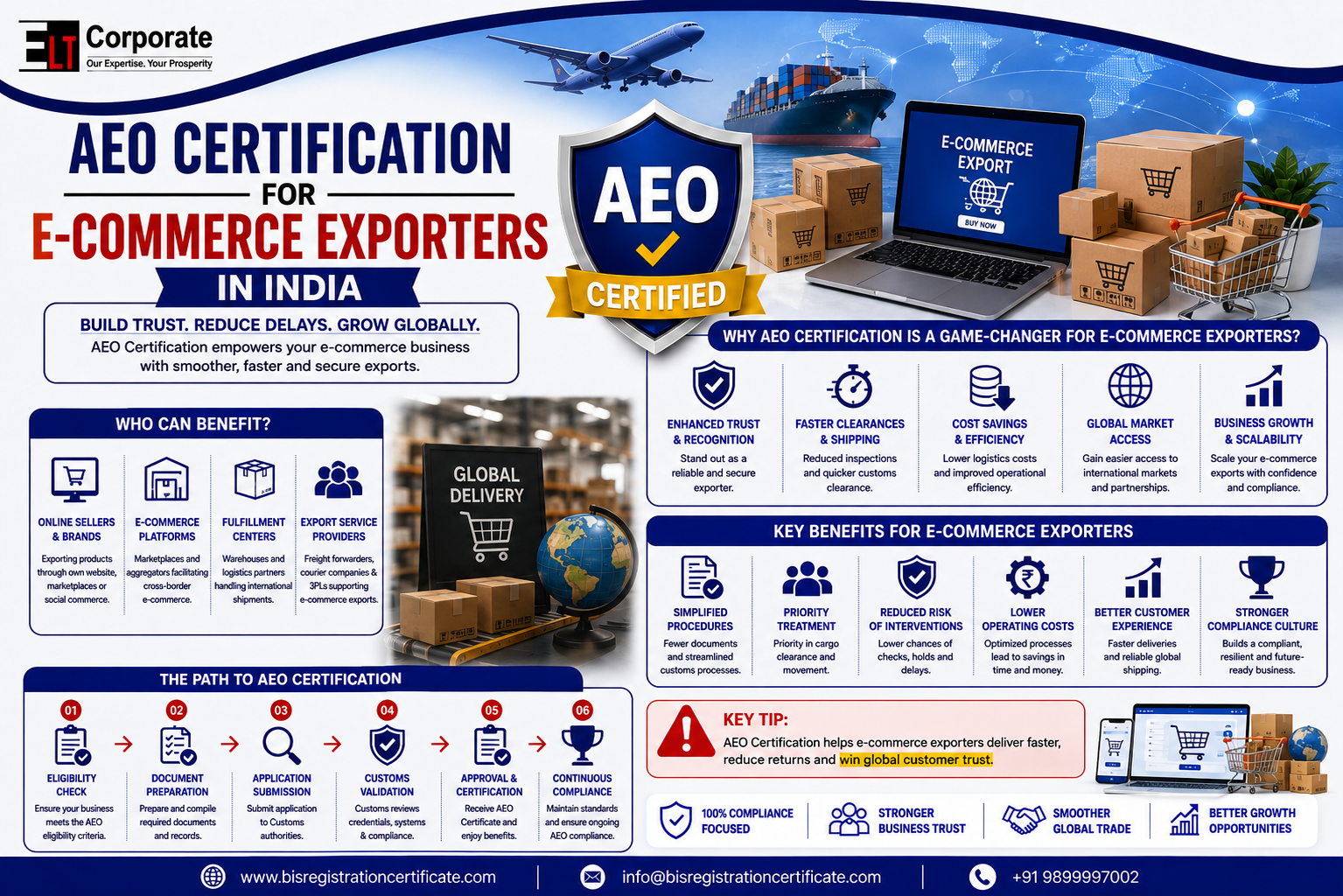
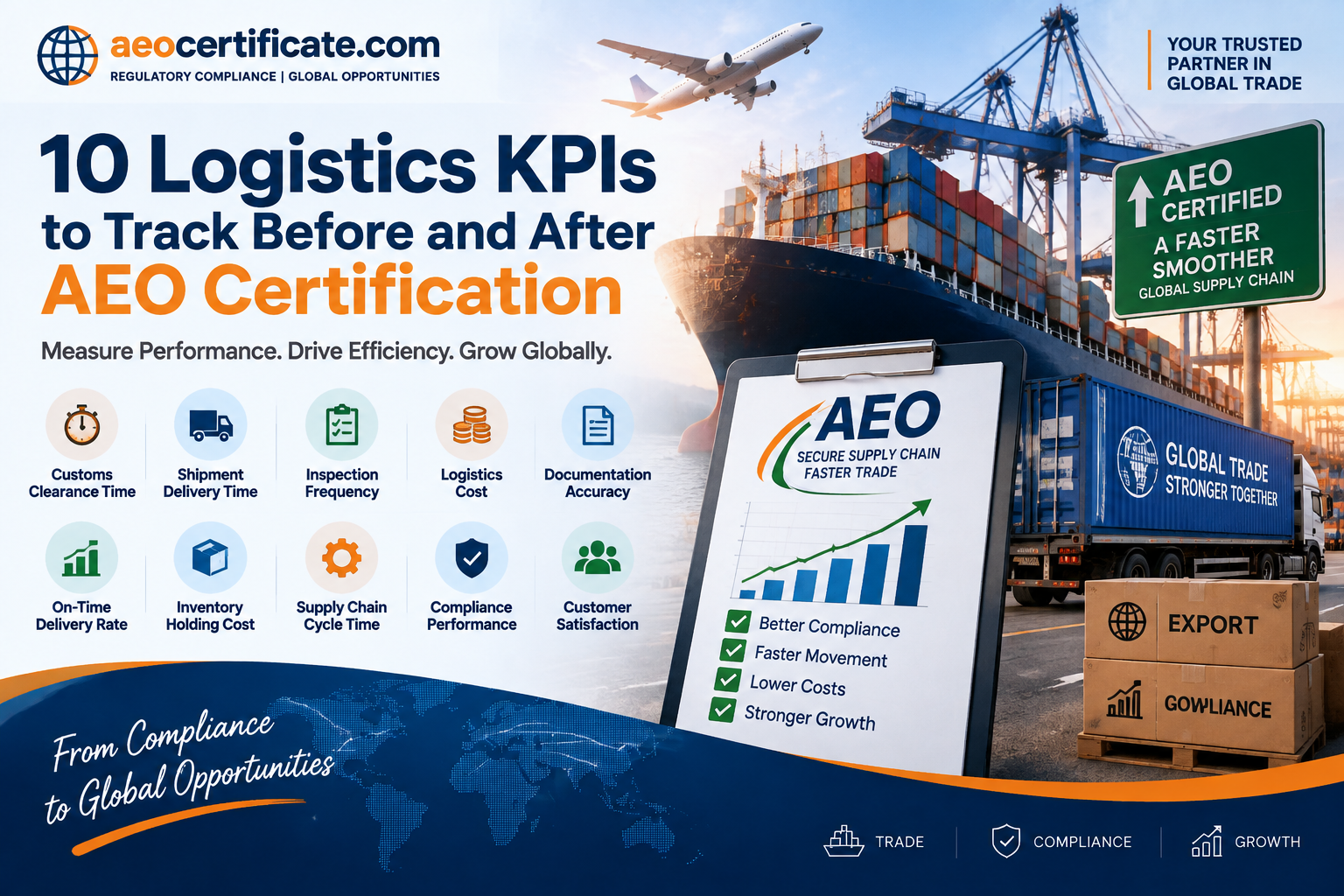
The Authorized Economic Operator (AEO) Certification introduced by Indian Customs is an important compliance program that recognizes businesses having strong customs compliance systems, secure supply chains, and effective internal controls. AEO-certified companies receive various facilitation benefits, including faster customs processing, reduced physical examination, priority handling, and improved credibility with regulatory authorities.
However, obtaining AEO Certification is not only about receiving approval from customs authorities. The actual value of certification can be measured only when businesses evaluate its impact on their daily operations. This is where logistics KPIs After AEO Certification it becomes extremely important.
By tracking logistics performance indicators before and after AEO Certification, companies can understand how certification has improved their customs operations, transportation efficiency, inventory management, compliance performance, and customer satisfaction.
A structured KPI monitoring system allows organizations to compare previous performance levels with post-certification results and identify opportunities for continuous improvement.
What Are Logistics KPIs?
Logistics Key Performance Indicators (KPIs) are measurable values used by organizations to evaluate the effectiveness and efficiency of their supply chain and logistics activities.
In international trade operations, logistics KPIs after AEO Certification, help businesses monitor various activities such as
- Customs clearance performance
- Shipment movement efficiency
- Transportation management
- Delivery reliability
- Inventory utilization
- Documentation accuracy
- Compliance performance
- Customer satisfaction
For companies that have obtained AEO Certification, monitoring logistics KPIs after AEO Certification helps demonstrate whether the organization is actually achieving operational benefits from improved customs compliance and supply chain management.
Why Is Tracking Logistics KPIs After AEO Certification Important?
Many companies consider AEO certification only a regulatory requirement, but it is also a business improvement opportunity. The certification encourages companies to develop better internal processes, maintain accurate documentation, improve security controls, and establish a reliable supply chain framework.
Tracking Logistics KPIs After AEO Certification helps companies measure:
- Reduction in customs clearance time
- Improvement in shipment release speed
- Reduction in unnecessary inspections
- Better documentation accuracy
- Lower logistics expenses
- Improved delivery performance
- Enhanced customer confidence
Without measuring these parameters, businesses cannot determine the actual operational impact of AEO Certification.
Comparison of Logistics Performance Before and After AEO Certification
| Performance Area | Before AEO Certification | After AEO Certification |
| Customs Processing | Standard customs procedures with regular assessment | Faster processing through trusted trader benefits |
| Shipment Clearance | Higher possibility of delays | Improved clearance efficiency |
| Physical Examination | More dependency on inspection procedures | Reduced inspection dependency based on risk assessment |
| Documentation Control | Higher chances of errors | Better internal documentation systems |
| Supply Chain Visibility | Limited monitoring | Improved tracking and reporting |
| Logistics Cost | Additional expenses due to delays | Better cost optimization |
1. Customs Clearance Time
Customs clearance time is one of the most important logistics KPIs after AEO Certification because it directly impacts the overall supply chain cycle.
Customs clearance time refers to the duration between submission of customs documents and final release of goods by customs authorities.
Before AEO Certification, companies may experience longer clearance timelines due to:
- Document verification requirements
- Physical examination procedures
- Additional communication with customs officials
- Risk assessment processes
After achieving AEO status, companies generally focus on maintaining strong compliance practices, accurate documentation, and secure supply chain procedures, which logistics KPIs after AEO certification can support smoother customs operations.
Formula:
Customs Clearance Time = Date and Time of Cargo Release – Date and Time of Customs Filing
Regular monitoring of this KPI helps companies identify whether their customs operations are becoming faster and more efficient.
2. Shipment Release Time
Shipment Logistics KPIs After AEO Certification: Release time measures how quickly goods are released after completing customs procedures.
For importers and exporters, every additional hour of shipment delay can increase costs through:
- Warehouse charges
- Demurrage charges
- Production delays
- Transportation rescheduling
AEO-certified businesses should monitor shipment release time regularly to evaluate improvements achieved through better compliance practices.
Key Factors Affecting Shipment Release:
- Accuracy of customs declarations
- Proper classification of goods
- Availability of supporting documents
- Compliance history of the organization
3. Customs Inspection Frequency
Physical inspection of shipments can affect supply chain speed and increase operational expenses.
One of the expected benefits of improved customs compliance is better risk-based processing.
Companies should measure:
Inspection Frequency = Number of Physically Inspected Shipments ÷ Total Shipments × 100
Example:
Before AEO Certification:
- Total shipments: 1,000
- Inspected shipments: 200
Inspection Rate = 20%
After AEO Certification:
- Total shipments: 1,000
- Inspected shipments: 80
Inspection Rate = 8%
Tracking inspection frequency helps businesses understand the impact of their compliance improvements.
4. Logistics Cost Per Shipment
Logistics cost is a critical business logistics KPI after AEO Certification because transportation and customs-related expenses directly affect profitability.
Total logistics cost may include:
- Freight charges
- Transportation expenses
- Port handling charges
- Warehouse costs
- Documentation expenses
- Delay-related costs
Formula:
Logistics Cost Per Shipment = Total Logistics Expenses ÷ Number of Shipments
After AEO Certification, companies should compare their logistics expenses to identify improvements resulting from:
- Faster movement of goods
- Reduced waiting time
- Better planning
- Improved process control
5. On-Time Delivery Performance
Customer satisfaction depends heavily on timely delivery.
On-time delivery measures whether shipments reach customers according to committed schedules.
Formula:
On-Time Delivery Rate = Number of Shipments Delivered on Time ÷ Total Shipments × 100
AEO Certification can support improved delivery reliability by reducing customs-related delays and improving supply chain predictability.
Companies should maintain monthly records of:
- Delivery commitments
- Actual delivery dates
- Delay reasons
- Corrective actions
6. Inventory Holding Cost
Inventory holding cost represents logistics KPIs after AEO Certification, the expenses associated with storing goods before they are used or delivered.
Delays in customs clearance can increase inventory blockage and working capital requirements.
Inventory holding costs include:
- Warehouse charges
- Insurance cost
- Storage expenses
- Capital investment blockage
Formula:
Inventory Holding Cost = Average Inventory Value × Holding Cost Percentage
Monitoring this KPI helps businesses understand how improved logistics performance impacts financial efficiency.
7. Supply Chain Cycle Time
Supply chain cycle time measures the total time required from order placement to final delivery.
It includes:
- Supplier processing time
- Transportation time
- Customs clearance time
- Warehouse processing
- Final delivery
A reduction in cycle time improves:
- Production planning
- Customer service
- Cash flow management
- Business competitiveness
Companies should include supply chain cycle time as a major component of their logistics KPIs after the AEO certification dashboard.
8. Compliance Performance Score
AEO Certification requires continuous compliance monitoring.
Companies should regularly evaluate:
- Internal audit performance
- SOP implementation
- Employee training
- Documentation systems
- Customs compliance records
A compliance score can be created using multiple parameters.
Example:
| Compliance Parameter | Performance |
| Documentation Accuracy | 95% |
| Internal Audit Compliance | 98% |
| Employee Training Completion | 90% |
| SOP Implementation | 95% |
Maintaining a high compliance score supports continuous AEO benefits.
9. Customer Satisfaction Level
The final objective of improving logistics performance is providing better service to customers.
Customer satisfaction can be measured through:
- Delivery reliability
- Response time
- Complaint handling
- Shipment visibility
- Communication quality
Formula:
Customer Satisfaction Score = Positive Customer Responses ÷ Total Responses × 100
Improved logistics performance after AEO certification can help companies build stronger customer relationships.
How to Create an Effective KPI Monitoring System After AEO Certification
A successful KPI system should include:
Monthly Performance Review
Companies should review:
- Customs performance
- Logistics cost
- Shipment delays
- Compliance status
Data Collection System
Maintain centralized records for:
- Import shipments
- Export shipments
- Customs communication
- Transport activities
Corrective Action Process
Whenever KPI performance decreases, organizations should identify:
- Root cause
- Responsible department
- Corrective action
- Preventive measures
Benefits of Tracking Logistics KPIs After AEO Certification
Tracking Logistics KPIs After AEO Certification provides multiple business advantages:
Improved Operational Efficiency
Companies can identify delays and improve supply chain processes.
Better Cost Management
KPI analysis helps reduce unnecessary logistics expenses.
Stronger Compliance Management
Continuous monitoring supports maintenance of AEO requirements.
Better Business Planning
Accurate performance data supports strategic decisions.
Increased Customer Confidence
Reliable delivery and efficient operations improve customer relationships
How to Measure Logistics Improvement After AEO Certification
Obtaining Logistics KPIs After AEO Certification is an important milestone for businesses involved in international trade, but the actual value of certification can only be understood by measuring operational improvements. Companies should establish measurable parameters to compare their logistics performance before and after certification.
The measurement of logistics improvement helps organizations identify whether AEO Certification has contributed to faster customs processing, better supply chain control, reduced operational costs, and improved customer service.
The most effective way to measure improvement is by comparing historical logistics data with current performance data after certification.
Important Parameters to Measure Logistics Improvement:
1. Reduction in Customs Clearance Time
One of the most important logistics KPIs after AEO Certification is customs clearance time.
Companies should compare:
- Average clearance time before AEO Certification
- Average clearance time after AEO Certification
A reduction in clearance time indicates improved customs efficiency and better documentation management.
2. Improvement in Shipment Release Speed
Businesses should track how quickly shipments are released after customs filing.
Factors to analyse:
- Date of customs filing
- Date of shipment release
- Delay reasons
- Customs queries received
3. Reduction in Shipment Delays
Companies should monitor:
- Number of delayed shipments
- Average delay duration
- Reasons behind delays
AEO-certified companies can use this data to improve supply chain predictability.
4. Improvement in Documentation Accuracy
Documentation errors are a major reason for customs delays.
Companies should track:
- Incorrect declarations
- Missing documents
- Customs queries
- Amendment requirements
5. Logistics Cost Optimization
Businesses should compare:
- Transportation cost
- Storage cost
- Demurrage charges
- Delay-related expenses
A proper Logistics KPIs after AEO Certification, the system helps identify financial improvements after certification.
Key Performance Indicators Every AEO Certified Company Should Monitor
After obtaining AEO Certification, companies should continuously monitor important performance indicators to maintain efficiency and compliance.
Logistics KPIs after AEO certification provide measurable information about how effectively the organization is managing its supply chain.
Major KPIs for AEO Certified Companies:
1. Customs Clearance Time
These logistics KPIs after AEO certification measure the efficiency of customs procedures.
Monitoring this helps companies identify:
- Processing delays
- Documentation issues
- Operational bottlenecks
2. Shipment On-Time Delivery Rate
This measures the percentage of shipments delivered according to committed timelines.
Formula:
On-Time Delivery Rate = On-Time Deliveries ÷ Total Deliveries × 100
A higher delivery rate indicates better supply chain performance.
3. Documentation Accuracy Rate
This KPI evaluates the quality of trade documentation.
Important documents include:
- Invoice
- Packing List
- Bill of Entry
- Shipping Bill
- Certificates
Accurate documentation reduces customs interruptions.
4. Inspection Frequency
Companies should monitor:
- Total shipments
- Physically inspected shipments
- Inspection percentage
This helps understand customs facilitation effectiveness.
5. Logistics Cost Per Shipment
This KPI helps businesses evaluate:
- Freight expenses
- Handling charges
- Storage costs
- Delay costs
6. Customer Satisfaction Score
Companies should measure:
- Delivery reliability
- Complaint rate
- Response time
- Shipment visibility
Complete Guide to Logistics KPIs After AEO Certification
Logistics KPIs after AEO certification are essential tools that help businesses evaluate whether their certification investment is creating measurable improvements.
A complete KPI framework should cover four major areas:
A. Customs Performance KPIs
These indicators measure customs-related efficiency.
Examples:
- Customs clearance time
- Number of customs queries
- Inspection frequency
- Documentation rejection rate
B. Transportation KPIs
These indicators evaluate transportation efficiency.
Examples:
- Transit time
- Carrier performance
- Delivery delays
- Freight cost
C. Inventory Management KPIs
These indicators measure inventory efficiency.
Examples:
- Inventory holding period
- Stock availability
- Warehouse utilization
- Inventory turnover
D. Compliance KPIs
These indicators measure regulatory performance.
Examples:
- Audit findings
- SOP compliance
- Employee training completion
- Record maintenance
Steps to Create a KPI Monitoring System:
Step 1: Define Objectives
Example:
Reduce customs clearance time by improving documentation accuracy.
Step 2: Select Relevant KPIs
Choose KPIs related to:
- Customs
- Logistics
- Cost
- Compliance
Step 3: Collect Data
Maintain records from:
- ERP systems
- Customs documents
- Transport records
Step 4: Review Performance
Conduct:
- Monthly reviews
- Quarterly analysis
- Corrective actions
Measuring Business Growth Through Logistics KPIs After AEO Certification
AEO Certification can contribute to business growth by improving operational efficiency and strengthening customer confidence. However, companies need measurable indicators to understand their business impact.
Logistics KPIs after AEO certification help connect operational improvements with business growth.
Important Growth Measurement Parameters:
1. Increase in Shipment Volume
Companies can compare:
- Number of shipments before certification
- Number of shipments after certification
Improved logistics efficiency may support handling higher shipment volumes.
2. Customer Retention Improvement
Businesses can measure:
- Repeat customers
- Customer complaints
- Customer satisfaction
Reliable delivery performance improves customer relationships.
3. Reduction in Operational Losses
Companies can analyse reductions in:
- Delay costs
- Storage expenses
- Documentation correction costs
4. Improved Market Reputation
AEO Certification can strengthen credibility with:
- International customers
- Supply chain partners
- Global businesses
5. Better Business Decision Making
KPI-based reporting helps management make decisions regarding:
- Logistics investments
- Supplier selection
- Process improvement
Conclusion
AEO Certification is not only a customs compliance achievement but also an opportunity for businesses to improve their overall supply chain performance. However, companies must continuously measure the impact of certification through proper performance indicators.
Monitoring Logistics KPIs After AEO Certification helps organizations evaluate improvements in customs clearance, shipment movement, logistics costs, documentation accuracy, compliance performance, and customer satisfaction.
A well-designed KPI framework ensures that businesses receive maximum value from their AEO Certification while maintaining long-term operational excellence and competitive advantage in international trade.
Frequently Asked Questions
Q1. What are logistics KPIs after AEO Certification?
Logistics KPIs after AEO certification are metrics used to measure supply chain and logistics improvements after AEO approval.
Q2. Why are logistics KPIs important after AEO Certification?
They help companies track efficiency, cost savings, compliance, and operational improvements.
Q3. Which KPIs should AEO companies monitor?
Key KPIs include clearance time, shipment delays, logistics cost, documentation accuracy, and delivery performance.
Q4. How does AEO Certification improve logistics?
It helps improve customs processes, documentation control, and supply chain efficiency.
Q5. How often should KPIs be reviewed?
Companies should review logistics KPIs monthly or quarterly.
Q6. Can AEO Certification reduce logistics costs?
Yes, it can help reduce delays, storage costs, and operational inefficiencies.