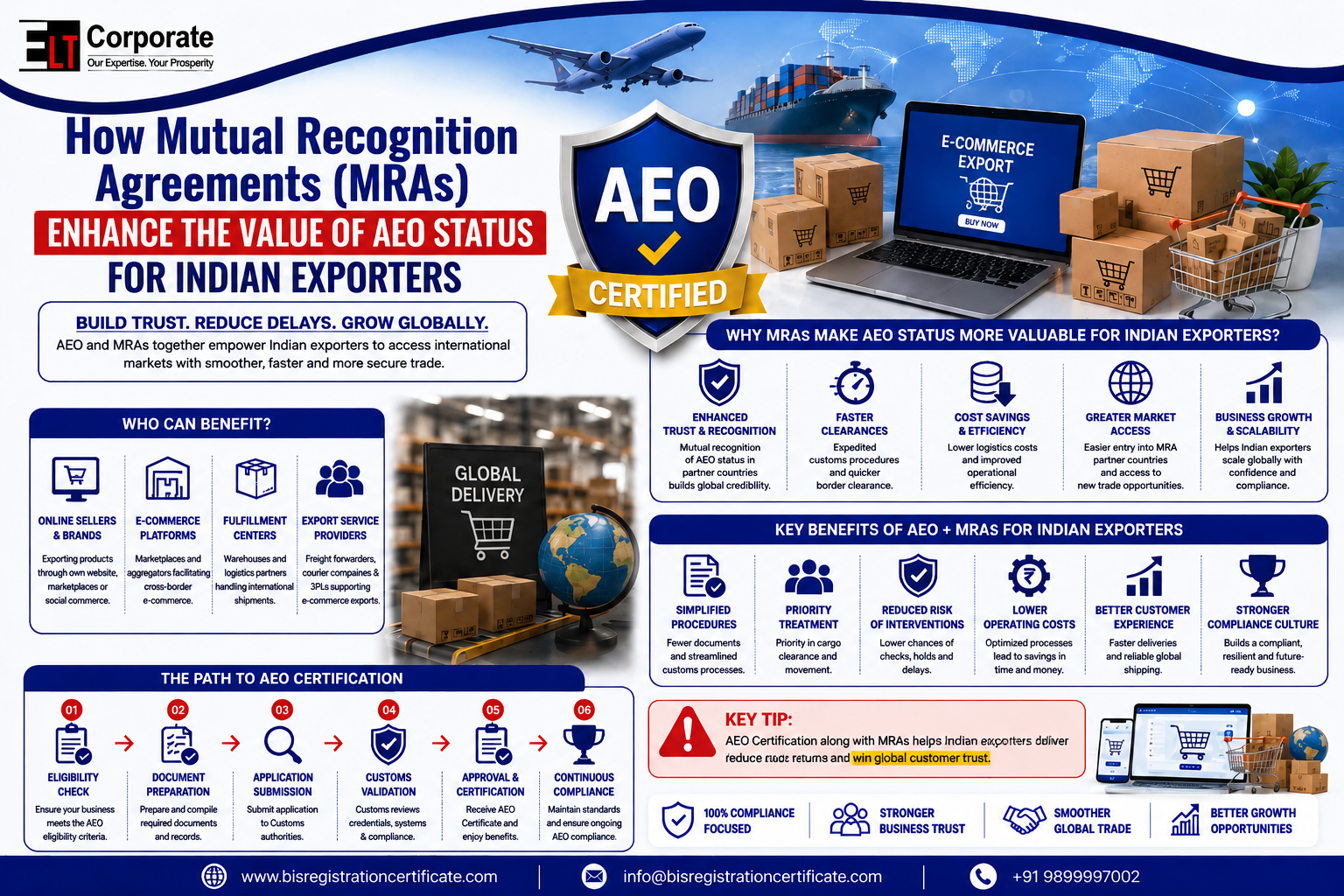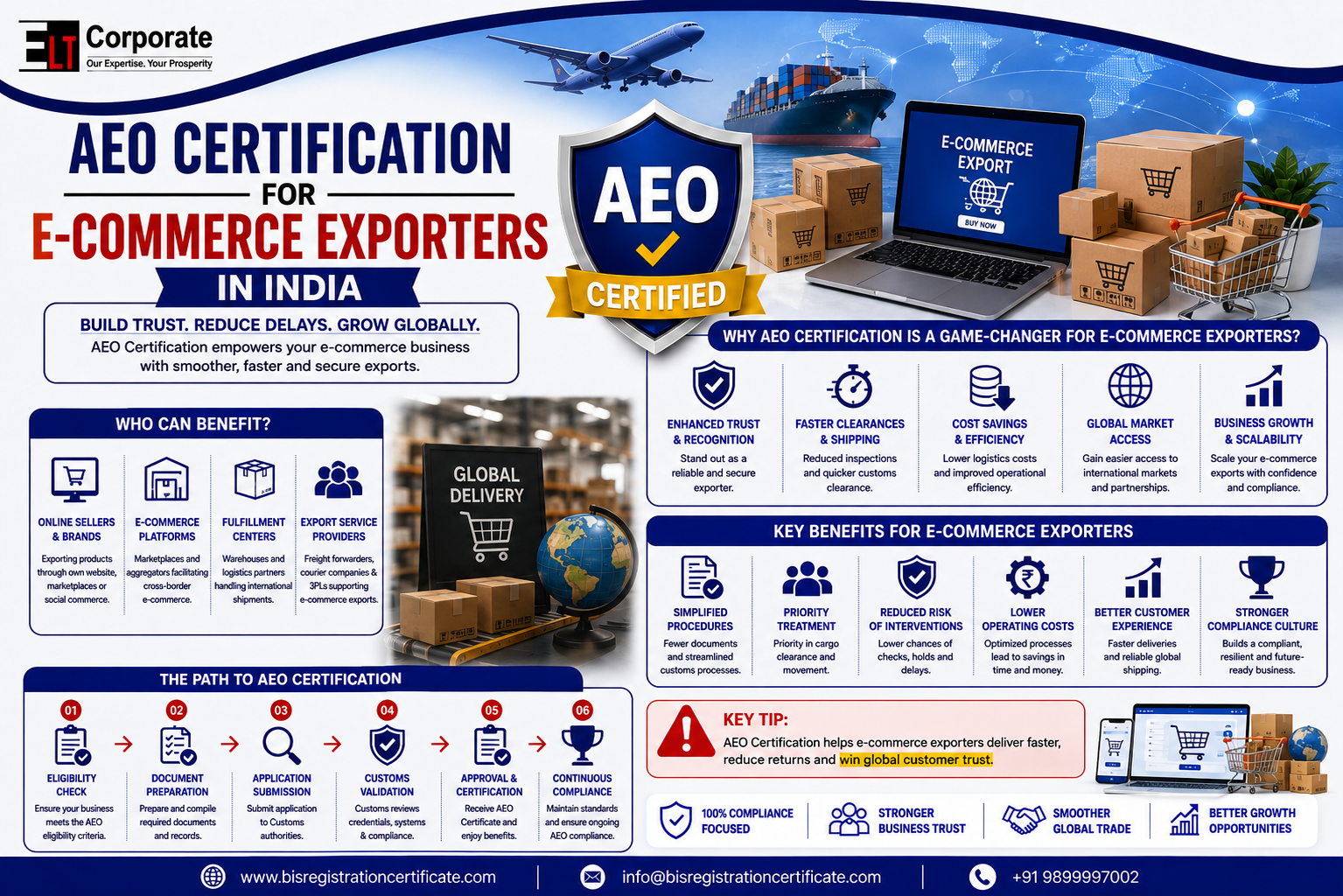
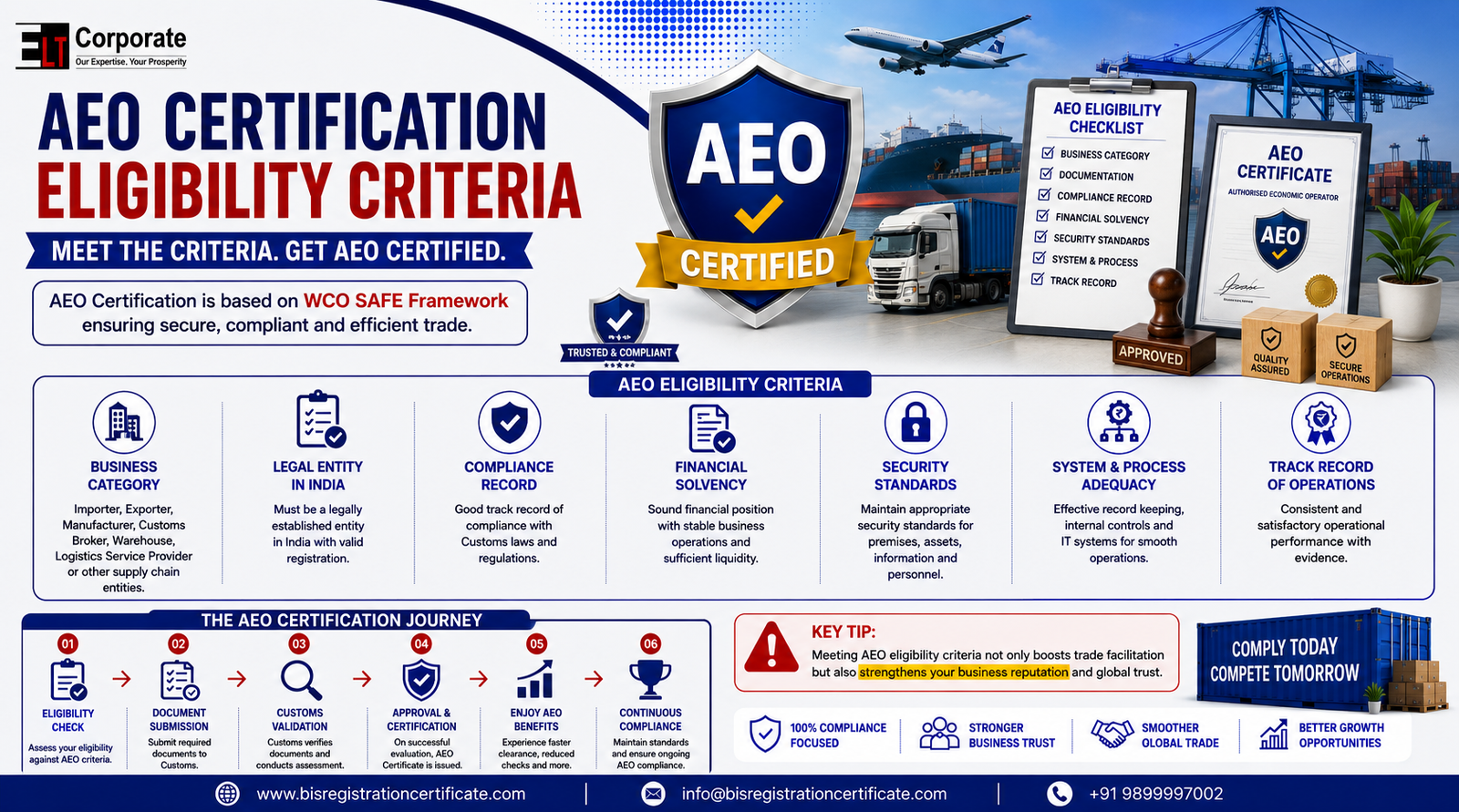
Companies that engage in trade across borders currently face tougher competition, which includes the requirement for customs procedures tailored specifically for them, along with reliable supply chain management and compliance. This can potentially compromise the overall process; a company can be forced to deal with the following challenges: incurring extra operational costs or not being able to increase its international business.
The AEO Certification Eligibility Criteria Program created by Indian Customs has been initiated to support companies in establishing themselves as trustworthy partners, assuming they possess compliance abilities, financial stability, and safe supply chain operations.
Despite the advantages it offers to companies, they still need to know about the requirements for obtaining an AEO certificate, as well as the necessary paperwork and compliance processes.
An can assist companies in gaining clients if they need to apply and understand their eligibility, as well as discover gaps in compliance, required documentation preparation, compliance processes, etc.
Understanding the procedures that your company must follow to apply for AEO certification should be the first step for any business in the field of trade.
What is AEO Certification?
AEO Certification Eligibility Criteria is a worldwide, widely accepted trade assistance program that recognizes firms engaged in international trade with the following criteria:
- Customs compliance
- Supply chain security
- Maintaining records
- Risk management
- Operational transparency
Certified firms are regarded as reliable partners by customs authorities, for which they get benefits such as fast-track processing, less examination, and improved interaction with customs authorities.
Why Do Companies Need an AEO Certification Consultant in India?
Despite the structured procedure to apply for AEO Certification Eligibility Criteria, businesses still find it hard to prepare for the certification because of:
- Absence of proper documentation
- Missing SOPs
- Weak internal controls
- Insufficient security procedure
- Lack of knowledge about eligibility criteria
An expert can help businesses to prepare properly by:
- Assessing the eligibility
- Conducting compliance gap analysis
- Preparing documentation
- Writing SOPs
- Setting up security procedures
- Getting ready for customs verification
- Taking care of all application issues
The consultant makes sure that businesses can meet the necessary requirements to get the AEO certification.
Understanding AEO Certification Eligibility Criteria
The AEO certification consultant in India lays out the grounds for eligibility for a company to apply for AEO certification.
The applicant company must demonstrate:
- Corporate status
- History of customs compliance
- Financial stability
- Documentation practices
- Internal controls
- Measures taken for supply chain security
The eligibility requirements for certification differ according to the applicable category and level of certification.
Importance of Internal Control Systems in AEO Certification Eligibility Criteria
An effective internal control system is a vital factor in meeting the AEO Certification Eligibility Criteria. Internal controls prove that a business has the right tools for monitoring actual processes in managing operations. Internal controls help companies avoid mistakes, assess risks, and comply with customs regulations.
A company needs to define the responsibilities of employees involved in the import-export process. This means that roles must be well established and include procedures used in preparing documents, delivering shipments, communicating with customs, and monitoring compliance.
A good internal control system makes customs AEO Certification authorities confident that a company is able to conduct its international transactions in the right way.
Who Are Eligible For AEO Certification In India?
Companies that are taking part in international trade can apply for AEO certification.
Eligible applicants include:
1. Importers and Exporters
Companies that are engaged in:
- Import of raw materials
- Export of finished goods
- International trading activities
can apply for AEO certification.
2. Producers
Production firms participating in international commerce can obtain AEO Certification Eligibility Criteria and raise the level of:
- Efficient importing
- Reliable exporting
- Supply chain control
Industries such as
- Medicine
- Medical instruments
- Electronic
- Automobile industry
- Engineering.
can consider AEO certification.
3. Logistics Operators
AEO certification is also relevant for:
- Freight forwarders
- Customs brokers
- Warehouse operators
- Custodians
- Terminal operators
These entities play an important role in maintaining supply chain security.
Comprehensive Evaluation Process under AEO Certification Criteria
The evaluation process under the AEO Certification Eligibility Criteria is focused on determining if an organization has established efficient compliance, security, and operational controls. In this regard, customs authorities do more than review applicant submissions. They monitor how efficiently these systems have been functioning in the respective business organization. Thus, the assessment aims to determine if the applicant has the capacity to continue secure and legal international trade.
When carrying out the evaluation, customs authorities typically check everything about the business, such as its customs compliance, documentation practices, financial stability, internal procedures, security organization, risk management systems, and similar matters. Organizations must make sure that the information they provide in their AEO certification application reflects the actual practices of their business.
Who Can Apply for AEO Certification in India?
Entities involved in customs-related international supply chain activities can apply for AEO Certification Eligibility Criteria
Eligible applicants include:
| Business Category | Examples |
| Importers | Companies importing raw materials, machinery, finished goods |
| Exporters | Companies exporting goods internationally |
| Manufacturers | Industries involved in global supply chains |
| Traders | Import-export trading companies |
| Logistics Operators | Freight forwarders, transporters, warehouse operators |
| Customs Brokers | CHA/customs brokers handling customs activities |
| Custodians | ICDs, CFS, terminal operators |
Mistakes Businesses Make While Applying for AEO Certification
1. Applying Before Understanding Eligibility Requirements
Many companies apply for the certification without a clear idea of whether they meet the requirements
Solution:
Before applying, check if you are ready for certification.
2. Creation of SOPs Solely for the Purpose of Documentation
The establishment of SOPs without any actual usage leads to difficulties in the process of auditing.
Solution:
Keep:
- Records
- Logs
- Proof of Training
- Audit Reports
3. Security Requirements Are Not Taken into Consideration
Organizations tend to concentrate on documentation only, thus neglecting security measures.
Solution:
Put into Practice:
- Access Control
- CCTV Monitoring
- Security Procedures
Benefits of Obtaining AEO Certification
Companies that fulfill AEO Certification Eligibility Criteria Requirements can enjoy a range of benefits.
- Quicker customs procedures
- Less inspection during regular checks
- Higher supply chain effectiveness
- Greater customer confidence
- Better adherence to regulations
- Edge against competitors in global trade
Importance of Customs Compliance in AEO Certification Eligibility Criteria
The crucial aspect of AEO Certification Eligibility Criteria is the requirement of having a satisfactory customs compliance history. Customs authorities assess the applicants based on their compliance with customs regulations.
In order to ensure compliance, companies are expected to comply with:
- Import and export declarations
- Classification of cargos
- Valuation data
- Customs duties paid
- Documentation requirements
Compliance history will allow customs to assume that the company is following responsible trade practices and minimizing the risks of customs violations.
Importance of SOPs Under AEO Certification Eligibility Criteria
SOPs are vital in proving that a firm has organized and controlled systems.
AEO Certification Eligibility Criteria is helpful for corporations in developing and executing SOPs pertaining to:
Customs Compliance SOP
This outlines the methods of following regulations and procedures that deal with customs matters.
Security Management SOP
This includes the management of access, visiting people, CCTV, and safety of premises.
Risk Management SOP
This discusses how companies recognize, assess, and control risks.
Employee Training SOP
This helps in making sure that the employees have information about their duties in terms of compliance and security procedures.
The use of SOPs is evidence for customs authorities that business functions are systematic and monitored.
Why Businesses Should Choose Professional AEO Certification Assistance
The process of applying for AEO Certification Eligibility Criteria is possible for companies without the involvement of any professional services, but it can be made easier by getting assistance from professionals.
A skilled consultant provides support for the business in understanding the requirements of the regulators, preparing the necessary documents, implementing/operating compliance processes, and showing readiness for customs clearance.
Economic soundness is another major condition for obtaining AEO Certification Eligibility Criteria. For customs authorities, firms with sound finances are deemed more trustworthy, as they are able to operate in a continuous manner.
To show financial soundness, an applicant may have to provide the following:
- Audited financial statements
- Tax documentation
- Financial reports
- Bank-related information
A good financial position shows that a company has the ability to fulfill its business obligations appropriately.
Financial soundness is especially valuable, as AEO certification is linked with long-lasting cooperation with customs authorities.
Risk Management System Under AEO Certification Requirement
Risk management plays a crucial role in the AEO Certification Requirement because international trade operations involve numerous risks that can impact compliance and security of the supply chain. Companies that are aiming to get AEO certification must have a system in place that would help them identify, assess, and control risks in an organized fashion.
The risks that companies should find out include the following:
- Mistakes in customs declarations
- Theft of cargo
- Unauthorized access to facilities
- Errors in documentation
- Risks associated with the suppliers
- Risks while transporting the goods
- Threats to the safety of the data
A risk management system should have elements such as identifying risks, assessing the impact of that risk, taking preventive measures, and taking corrective measures. Companies should keep documented risk assessments to prove that they monitor and control risks.
Information Security Requirements for AEO Certification
In today’s world of digital business, it is now vital to consider information security in the context of the requirements for obtaining AEO Certification Eligibility Criteria. The process of international trade necessitates sharing sensitive data of different types—such as invoices, shipment information, customer data, customs documents, etc.
Organizations need to take necessary actions to secure trade information, including:
- Controlled access to systems
- Use of passwords
- Backup of data
- Cybersecurity
- Letting the public know that information remains confidential
A good information security system makes it possible for organizations to keep their data confidential.
AEO Compliance and Physical Security Measures
Physical security is one of the main aspects that is taken into consideration within the process of AEO Certification Eligibility Criteria. Every firm is required to prove the ability to safeguard its facilities, products, and activities from unauthorized acts.
The measures of physical security include:
- enclosing the premises
- hired watchmen
- CCTV installations
- setting enabled access points
- identification systems for visitors
- restricting access to areas for employees
- creating secure warehouse facilities
Firms engaged in warehouse, production, and logistical activities will use physical security measures that are considered vital for the protection of cargo and ensuring the integrity of the supply chain.
AEO Certification is a Strategic Advantage for Businesses
AEO certification is not only about compliance, but it also provides a strategic benefit to companies. AEO companies meet the criteria for AEO Certification Eligibility Criteria and thereby evidence their commitment to reliable and open trading practices in international trade.
AEO certification enables organizations to:
– Optimize their operations
– Minimize supply chain risks
– Increase consumer trust
– Enhance relations with customs authorities
– Boost international competitiveness
For companies pursuing strategic growth in global business, AEO certification provides a solid foundation to ensure compliance and excellence in operations.
AEO Certification Eligibility Criteria for MSMEs
Small and Medium Enterprises (MSMEs) have the possibility of being granted AEO Certification Eligibility Criteria as applicants since MSMEs are provided with some leniency in the eligibility assessment process used in the AEO program.
The following aspects should be kept in mind by MSMEs:
- The importance of maintaining proper trade records
- The issue of customs compliance
- Keeping financial records
- Documentation of the processes
- Basic security arrangements.
Even though MSMEs might lack resources in comparison to larger entities, they can still meet AEO certification requirements by implementing well-thought-out processes and accumulating sufficient evidence of compliance with them.
Role of Documentation and Record Management in AEO Certification
Proper documentation is essential for achieving successful AEO Certification Eligibility Criteria. It is necessary for a business to maintain accurate records and have them readily available.
The record management system should consist of the following:
- Import/export documents
- Commercial invoices
- Shipping records
- Customs papers
- Inventory
- Supplier/customer information
An efficient system of documentation enables Customs to confirm transparency and operational control. It therefore allows a business to improve its internal processes.
Security Requirements Under AEO Certification Eligibility Criteria
One of the most important considerations in the AEO Certification Eligibility Criteria is supply chain security. Companies need to implement effective security measures to ensure the protection of the goods, information, and operations from any risks. Possible measures include implementing a CCTV system, access control system, visitor management system, employee verification system, cargo monitoring system, and data protection system. These measures are meant to prevent any unauthorized access, cargo theft, information misuse, and supply chain interference.
Conclusion
It is vital for organizations intending to acquire AEO certification to understand AEO certification eligibility criteria. The certification process entails more than mere application submission, with businesses needing to prove effective compliance standards and practices, tight security measures, proper documentation, and good internal controls.
Assisted by the aid of a qualified AEO Certification Eligibility Criteria, businesses can assess their readiness, bridge avenues of compliance, gather necessary paperwork, and complete the certification process successfully.
For importers, exporters, producers, and logistics companies, AEO certification is not merely organizational recognition but a factor that enhances efficiency and increases supply chain security.
Frequently Asked Questions
Q1. What are the eligibility requirements for AEO certification?
The criteria for being eligible for AEO certification include following customs rules and regulations, ensuring financial reliability, maintaining proper documentation and records, and ensuring the security of supply chains.
Q2. Who is eligible to apply for AEO Certification in India?
The following entities can apply for AEO certification: importers, exporters, manufacturers, traders, customs brokers, logistics service providers, and warehouse operators.
Q3. Is a compliance history with customs required to pursue AEO Certification?
Yes, the applicant must have a successful history of compliance with customs authorities.
Q4. Are SOPs compulsory for AEO Certification?
Yes, organizations must develop SOPs for customs compliance, security, risk management, and operations.
Q5. What are the documents needed to get AEO Certification?
The documents that are needed to obtain a certificate are a registration certificate, IEC, GST, customs records, financial documents, SOPs, and records related to security and safety policy.
Q6. Are MSMEs eligible to apply for AEO Certification?
Yes, MSMEs that meet the eligibility requirements can also apply for AEO certification.
Q7. What is the importance of financial stability for AEO Certification?
Financial stability serves as proof that the organization will fulfil its obligations.