
International trade offers tremendous growth opportunities, but managing customs procedures, documentation, and regulatory compliance can be challenging for importers and exporters. Even a small mistake in customs records or an incomplete application can lead to unnecessary delays.
This is where AEO Application Management becomes important.
The Authorized Economic Operator (AEO) program is a trade facilitation initiative administered by Indian Customs under the Central Board of Indirect Taxes and Customs (CBIC). It recognises businesses that demonstrate reliable customs compliance, financial solvency, and, where applicable, appropriate supply chain security standards.
For companies planning AEO registration in India, managing the application correctly is essential. From understanding eligibility requirements to preparing documents and responding to customs queries, every stage requires attention.
In this guide, we explain how AEO application management works, who can apply, the documents required, the application process, common challenges, and how professional assistance can simplify the certification journey.
What Is AEO Application Management?
AEO Application Management refers to the complete process of planning, preparing, submitting, tracking, and managing an Authorized Economic Operator certification application.
It goes beyond simply filling out an online form. A successful application requires businesses to demonstrate that their customs operations are compliant, their AEO application management records are reliable, and their internal procedures meet the applicable AEO requirements.
For example, an importer may have several years of successful trading experience but lack properly documented Standard Operating Procedures (SOPs). Another company may maintain excellent documentation but have unresolved customs compliance issues.
Both situations can create difficulties during the certification process.
Effective AEO application management helps businesses identify these issues before applying, organise supporting evidence, and maintain communication with customs authorities.
Why Is AEO Application Management Important for AEO Registration in India?
Obtaining AEO certification can provide meaningful operational advantages to businesses engaged in international trade.
However, these benefits depend on obtaining the appropriate certification and continuing to meet the applicable conditions.
Proper application management offers several advantages.
1. Reduces Documentation Errors
Missing documents, inconsistent business AEO application management details, and incomplete declarations can delay an application. A structured review helps identify these problems before submission.
2. Improves Application Readiness
Businesses can assess their customs compliance, accounting records, and internal processes before beginning AEO registration in India.
3. Supports Faster Application Processing
Well-organized applications are easier for authorities to examine. Although approval timelines cannot be guaranteed, complete and accurate submissions can help avoid preventable delays.
4. Prepares Businesses for Custom Verification
For certification categories requiring physical verification, proper application management helps ensure that employees, records, and internal controls are ready for examination.
5. Supports Long-Term Compliance
AEO certification is not just about obtaining a certificate. Businesses must continue maintaining the standards required under the program.
Types of AEO Certification in India
Before beginning AEO application management, businesses must understand which certification category suits their operations.
The Indian AEO program provides four principal categories.
| AEO Type | Suitable Applicants | Key Features |
| AEO-T1 | Eligible importers and exporters | Entry-level customs facilitation |
| AEO-T2 | Importers and exporters with established compliance and security controls | Additional benefits, subject to prescribed conditions |
| AEO-T3 | Qualifying AEO-T2 certificate holders | Highest level of facilitation |
| AEO-LO | Eligible logistics operators and supply chain service providers | Benefits designed for logistics operations |
AEO-T1 is generally the starting point for businesses seeking trusted-trader recognition.
AEO-T2 involves more detailed evaluation of internal procedures and security arrangements.
AEO-T3 is available to eligible AEO-T2 holders meeting additional conditions.
AEO-LO is intended for qualifying logistics businesses such as customs brokers, custodians, freight forwarders, and warehouse operators.
Tier Hub (T1/T2/T3/LO)+1
Selecting the correct category is an important first step in AEO registration in India.
Eligibility Criteria for AEO Registration in India
Not every business automatically qualifies for AEO certification. Applicants must satisfy the applicable requirements prescribed by Indian Customs.
Business Experience
Generally, applicants should have undertaken customs-related business activities for at least three financial years.
Eligible Micro, Small, and Medium Enterprises (MSMEs) may benefit from a relaxation to two financial years under the applicable provisions.
Custom Transaction History
Ordinarily, applicants must have handled at least AEO application management 25 Bills of Entry and/or Shipping Bills during the immediately preceding financial year.
Eligible MSMEs may qualify under the relaxed threshold of 10 customs documents, subject to the prescribed conditions.
Custom Compliance Record
Applicants should demonstrate satisfactory compliance with customs laws and relevant regulatory requirements.
Past notices, penalties, disputes, or investigations should AEO application management be examined carefully. Their effect on eligibility depends on the facts and applicable rules.
Financial Solvency
Businesses must demonstrate financial stability and the ability to meet their financial obligations.
Record Management
Applicants should maintain reliable accounting records, import-export documentation, and traceable customs transaction records.
Security and Internal Controls
AEO-T2 and AEO-LO applicants must demonstrate applicable physical security, personnel security, cargo security, access controls, and documented operating procedures.
AEO-T1 does not involve the same detailed premises-security validation requirements.
These requirements are subject to the applicable AEO application management circulars and MSME relaxations.
aeoindia.gov.in+1
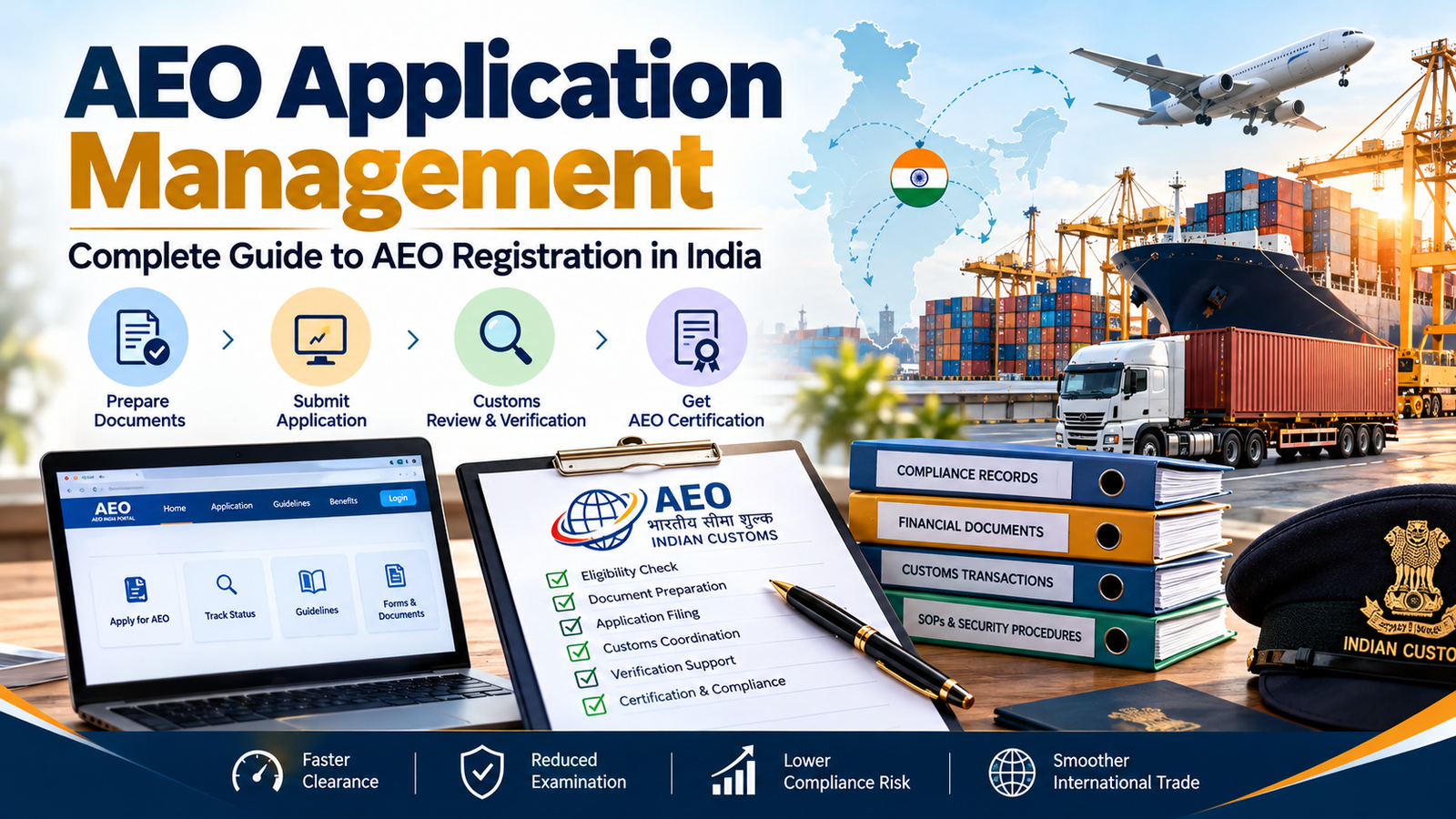
Step-by-Step AEO Application Management Process
Understanding the application process makes AEO registration in India easier to manage.
Step 1: Eligibility Assessment
Review business experience, customs transactions, financial position, and compliance history.
Step 2: Document Preparation
Collect required records, prepare declarations, and identify gaps in documentation or SOPs.
Step 3: Online Application Submission
Register or log in at the official Indian AEO Portal, select the relevant category, and submit the prescribed information.
Step 4: Customs Review
Authorities examine the application and may request additional documents or clarifications.
Step 5: Verification and Validation
Where applicable, customs officials verify premises, operational procedures, records, and security arrangements.
Step 6: Certification and Ongoing Compliance
Following successful evaluation, the appropriate AEO application management authority may grant certification. The business must continue meeting AEO conditions.
The official application journey includes preparation, submission, desk review, verification where required, and the certification decision.
Apply (Guided Journey)
Benefits of AEO Registration in India
AEO certification can make customs operations more predictable and efficient.
Depending on the certification category and applicable AEO application management conditions, benefits may include:
- Faster customs clearance and priority facilitation.
- Reduced routine cargo examination.
- Reduced bank guarantee requirements.
- Deferred payment of customs duty for eligible higher-tier entities.
- Direct Port Delivery and Direct Port Entry facilities, subject to conditions.
- Improved supply chain security and internal compliance.
- Mutual Recognition Arrangement benefits for qualifying entities and trade routes.
These advantages can help businesses reduce avoidable delays, improve shipment planning, and strengthen relationships with international trading partners.
However, the benefits vary by AEO application management and are not automatic for every certificate holder.
Common Challenges in AEO Application Management
Many businesses experience difficulties during AEO registration in India because they underestimate the importance of documentation and internal compliance.
Incomplete Customs Documentation
Missing transaction records, inconsistent declarations, or incorrect company information may result in queries from customs authorities.
Lack of Proper SOPs
Companies may follow effective internal procedures without maintaining written documentation. This can make it difficult to demonstrate compliance during verification.
Poor Coordination Between Departments
AEO applications often require information from accounts, logistics, compliance, operations, and management teams. Delayed coordination can affect application preparation.
Delayed Responses to Customs Queries
Failing to respond promptly or submitting AEO application management incomplete clarifications can extend the processing period.
Inadequate Security Arrangements
For AEO-T2 and AEO-LO applications, gaps in cargo handling, access control, or premises security may require corrective action.
A structured AEO application management approach helps businesses address these challenges before they become significant obstacles.
AEO Application Management Timeline and Government Fees
The time required for AEO registration in India depends on the certification category, application completeness, and verification requirements.
| Certification | Indicative Processing Information |
| AEO-T1 | Certificate targeted within 30 days after complete information and documents |
| AEO-T2 | Multiple stages of scrutiny, verification, reporting, and approval |
| AEO-T3 | Around 30 days for qualifying continuous T2 cases, subject to conditions |
| AEO-LO | Detailed review and verification stages |
Eligible MSME applications may receive expedited processing under the applicable guidelines.
Government Fee: Indian Customs does not charge an AEO application management fee for filing an AEO application. Professional consultancy charges, if applicable, are separate.
Apply (Guided Journey)
These are indicative processing arrangements, not guaranteed approval deadlines.
Importance of Continuous Monitoring After AEO Registration in India
Obtaining AEO certification is an important milestone, but maintaining compliance is equally essential.
Businesses should periodically review their customs documentation, internal procedures, financial compliance, and security arrangements.
Significant changes affecting AEO application management should be reported to the appropriate authorities within the prescribed timeframe.
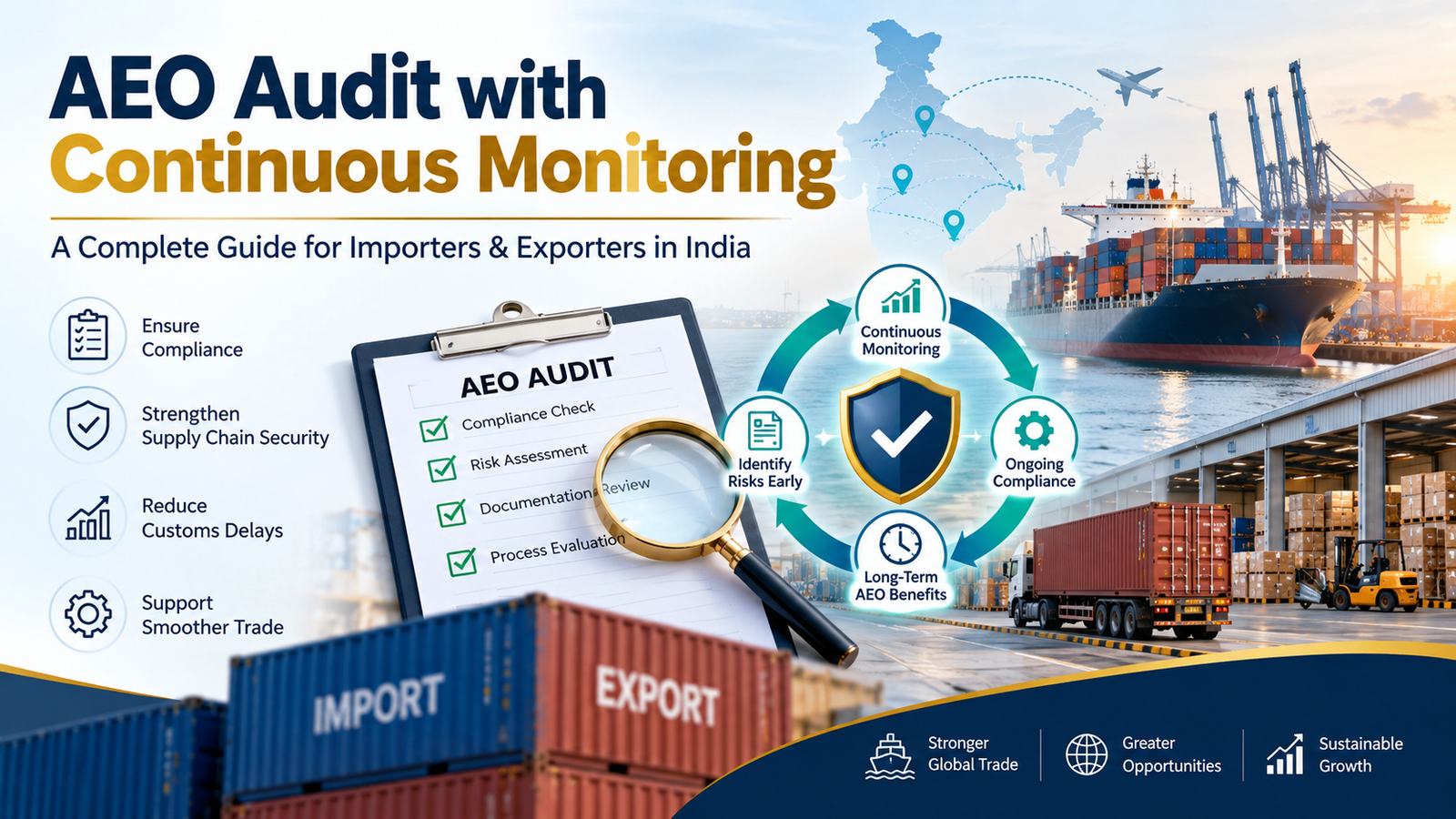
Continuous monitoring helps businesses prepare for future validation, address compliance issues early, and maintain their eligibility for AEO benefits.
Documents Required for AEO Application Management
Documentation is one of the most important parts of AEO registration in India.
The exact documents depend on the certification category, business structure, and activities performed.
| Document Category | Typical Requirements |
| Business registration | Certificate of incorporation, PAN, GST registration |
| Import-export details | Importer Exporter Code (IEC) |
| Customs records | Bills of Entry, Shipping Bills, Customs Transaction Details |
| Financial records | Audited financial statements and solvency-related documents |
| Compliance records | Details of relevant notices, disputes, penalties, and compliance history |
A business should verify the latest official AEO application management checklist before submission rather than assuming every document listed above is mandatory for every tier.
How Professional AEO Application Management Services Help
Managing an AEO application internally can require considerable time and coordination.
Professional AEO application management support can assist businesses with eligibility assessments, documentation reviews, preparation of applicable SOPs, online application filing, customs query responses, and verification readiness.
This allows internal teams to focus on their regular import-export activities while ensuring that the application process remains organized.
Professional assistance does not guarantee certification, as the final decision rests with Indian Customs.
Conclusion
AEO certification offers an opportunity for Indian importers, exporters, and logistics businesses to improve customs efficiency and strengthen international trade operations.
However, successful AEO application management requires more than submitting documents. Businesses must understand eligibility requirements, maintain accurate records, demonstrate applicable compliance standards, and respond effectively to customs authorities.
A well-managed application can reduce avoidable errors and help businesses prepare for long-term compliance.
For companies considering AEO registration in India, early planning and systematic documentation are the foundation of a smoother certification journey.
Frequently Asked Questions
Q1. What is AEO Application Management?
AEO Application Management is the process of preparing, submitting, tracking, and coordinating an Authorized Economic Operator certification application, including documentation and compliance verification.
Q2. Who can apply for AEO registration in India?
Eligible importers, exporters, manufacturers, traders, customs brokers, logistics operators, and other qualifying international supply chain participants can apply under the appropriate AEO category.
Q3. Is AEO registration mandatory in India?
No. AEO registration in India is a voluntary certification program designed to provide customs facilitation benefits to eligible businesses.
Q4. What is the government fee for AEO certification?
There is no government application filing fee charged by Indian Customs for AEO certification.
Q5. Can MSMEs apply for AEO certification?
Yes. Eligible MSMEs can apply for AEO certification and may benefit from relaxed eligibility conditions and expedited processing provisions.