How To Apply For AEO Certificate For Agriculture and Food Processing Exporters (Step-by-Step Guide)
Do you export fresh produce, processed foods, spices, dairy, grains, oils, or agro-based products?
Experiencing delays at customs, unnecessary documentation checks, or rejections at export due to poor traceability or compliance issues?
An AEO Certificate for agriculture and food processing exporters is your key to hassle-free international trade. It makes faster customs clearance, enhances your international reputation, and helps establish trust with foreign buyers.
In this step-by-step walkthrough, we will guide you through the eligibility criteria, documents needed, the entire process, and major benefits of AEO certificate obtaining an Authorised Economic Operator (AEO) certificate on CBIC AEO scheme guidelines, designed specifically for agriculture and food exporters.
Why Is AEO So Important for Agriculture & Food Exporters?
There are so many benefits of an AEO certificate in Agricultural and food items:
- Time-sensitive (perishables, frozen products, etc.)
- Quality-sensitive (have to adhere to hygiene and safety standards)
- Temperature-sensitive (cold chain dependencies)
- Worldwide regulated (under Codex, FSSAI, APEDA, etc.)
- A mere delay in customs, miscommunication, or non-compliance may lead to:
- Spoilage or contamination of the product
- International buyer loss
- Financial loss due to warehouse or rejection
- With an AEO certificate, exporters obtain foreseeability, trust, and low disruptions at worldwide customs stations.
Who Requires an AEO Certificate for Agriculture & Food Export?
These people require
- APEDA-registered Exporters
- FSSAI Licensed Food Processors
- Spice Board/MPEDA/Tea Board Exporters
- Cold Chain Logistics Providers for Food
- Dairy, Grains, Oils, Fruits, Vegetable Exporters
- Agro Product Traders, Brokers, Distributors
- Organic, Herbal, Ayurvedic Goods Exporting Companies
- Indian Food Brands with International Markets or Subsidiaries
Eligibility Criteria for AEO Certificate
How to Apply for an AEO Certificate for Agriculture and Food Processing? with eligibility criteria are very important, so here we mentioned the complete list
Three levels of AEO Certification:
TierTypeBest For
- AEO-T1 Basic Small-Mid Exporters (Document-only check)
- AEO-T2 Mid-Level Exporters with warehouses, SOPs, and site visit check
- AEO-T3 Top-Level Consistent big exporters with high compliance
Basic Eligibility:
A. Basic Set of Documents (All Applicants, Unless Noted)
- AEO Application Form (specific to the tier applied for)
- Import-Export Code (IEC) Certificate
- GST Certificate
- MSME Certificate (if applicable)
- Certificate of Incorporation
- PAN Card (Copy)
- Audit Reports for the last 3 financial years (last 2 years for MSMEs)
- Balance Sheet for relevant financial years
- Declaration on company letterhead
- List of import items (with HSN codes and country of import)
- List of export items (with HSN codes and country of export)
- Import-Export Process Map
- Site Plan for registered and branch offices
- Solvency Certificate (from CA/Statutory Auditor, as required)
- Undertaking and Declaration (specific to AEO Application)
B. Additional/Supplementary Documentation (As Applicable)
16. Net Worth details (as per audit report/balance sheet)
17. Net Current Assets (as per audit report)
18. Details of insolvency/bankruptcy/liquidation proceedings, if any, during the last 3 years (2 for MSME)
19. Standard Operating Procedures (SOPs) for:
– Record handling
– IT & data recovery
– Procedures for customs/ statutory compliance
20. Security Policy Documents & procedures (see Annexure E.5)
21. Details of bank guarantees (as required by applicant type/tier)
22. Details of legal cases, contingent liabilities (in Audit Report, last 3/2 years)
23. Any required declarations or undertakings as per tier-specific annexures
C. Annexures (These must be filled and attached as per type/tier selected):
For AEO T1:
- Annexure 1 – Company Details (name, address, registration, contact info, PAN)
- Annexure 2 – Legal, Financial, and Procedural Compliance (detailed checks and disclosures)
For AEO T2, AEO LO, and AEO T3:
- Annexure A – Application Form (company details as above, plus document checklist)
- Annexure B – Security Plan
- Annexure C – Process Map for goods and documents
- Annexure D – Site Plan (registered/branch offices and operational spaces)
- Annexure E.1 – General Compliance
- Annexure E.2 – Legal Compliance & history (infringements, SCNs, disputes, internal checks)
- Annexure E.3 – Handling of Commercial & Transport Documents (includes:
– Photo of the record room
– Organisation chart (if exists)
– SOPs for licenses, data security, cargo, and change notifications) - Annexure E.4 – Financial Solvency (solvency certificate, net worth/assets, declarations)
- Annexure E.5 – Safety & Security (security policy, cargo sealing, training, employee screening)
- Annexure F – Business Partner Details (for AEO T3 applicants only)
Step-by-Step AEO Certificate Application Process
Step 1: Select the Correct AEO Tier Based on:
- Export turnover & frequency
- Number of shipping points/ports
- Size of warehouse and production facility
- Existing SOPs & safety standards
Step 2: Register on the AEO Portal
Create your account at https://aeoindia.gov.in
Step 3: Complete the Application Forms
Annexure A – Simple Application for all levels
Annexure B – Self-Assessment for Security (for T2 & T3 only)
Step 4: Upload All Documents
- Make sure all documents are:
- Title-able clearly
- Certified and up-to-date
- Marked as per the AEO checklist
Step 5: Customs Verification
AEO-T1 – Online document evaluation
AEO-T2 & T3 – Includes:
- Site visit to your plant/storage/export facility
- Physical verification of SOPs and hygiene/safety procedures
- Interview with a customs compliance officer
AEO Certificate Timelines
Tier Processing Time
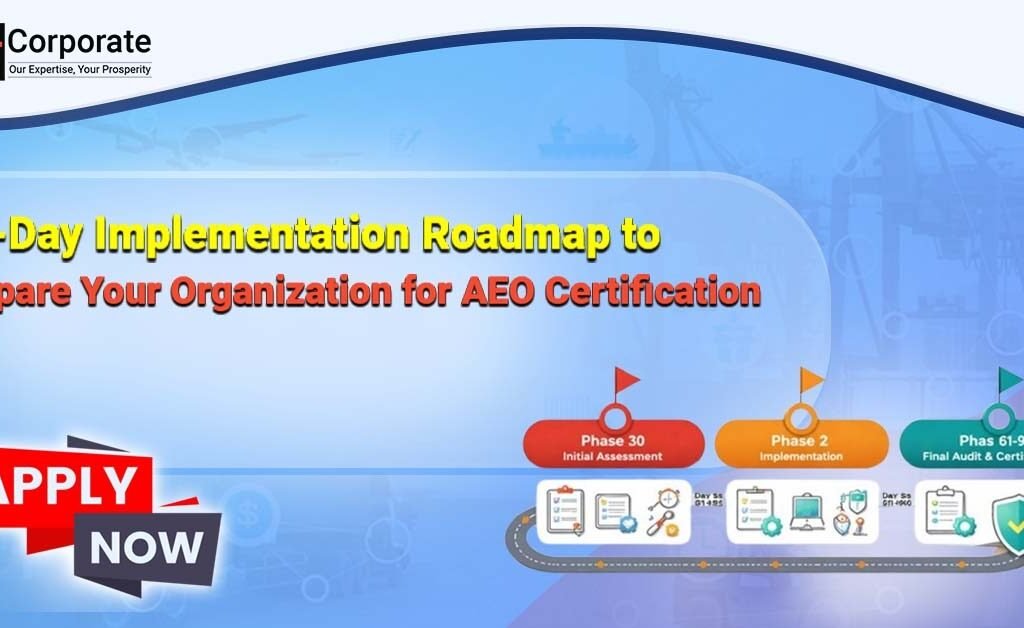
- AEO-T1 ~30 Working Days
- AEO-T2 ~60–90 Working Days
- AEO-T3 ~90–120 Working Days
Key Benefits of AEO for Agriculture & Food Exporters
How To Apply For an AEO Certificate for Agriculture and Food Processing? So understanding the key benefits is very important
- Faster Customs Clearance: Shorter hold times and quicker port clearances
- Minimal Document Checks: Systematic process for repeat exporters
- Cold Chain Priority: Accelerated movement of perishable items
- MRA Recognition: Valid across multiple countries with Mutual Recognition Agreements
- Less Physical Inspection: Particularly valuable for organic or processed foods
- Reduced Logistics Cost on account of lower warehousing delays
- Enhanced Trust is sought after by foreign importers and buyers
Why You Should Hire Professionals
How to Apply for an AEO Certificate for Agriculture and Food Processing is itself a big task; on the same side, dealing with customs, FSSAI, and CBIC regulations without professional assistance could result in rejection or delay. Here’s why you need to engage professionals such as ELT Corporate:
- Preparation of SOPs for food hygiene, safety & cold storage
- FSSAI + AEO compliance overlap
- Risk assessment reports for the supply chain
- Pre-audit mock inspections
- No mistake in document formatting and submission
- Coordinating with CBIC AEO Cell & Customs officials
Conclusion
The AEO Certificate is not a compliance label—it’s a key to trusted global food commerce. For grain, fruit, spice, frozen food, processed products, or dairy exporters, it ensures quicker delivery, reduced regulatory inconvenience, and increased buyer trust.
FAQ
What are the Benefits of an AEO Certificate
AEO Certificate provides fast customs clearance, fewer inspections, priority with lower fees, and international trade facilitation. It builds trust with Customs, increases supply chain security, and strengthens international credibility.
Who is eligible to apply for an AEO Certificate for Agriculture and Food Processing?
Exporters, FSSAI Licensed Food Processors, Spice Board/tea Board Exporters, Cold Chain Logistics Providers for Food, Dairy, Grains, Oils, Fruits, Vegetable Exporters, Distributors
How long does the AEO Certificate last for Agriculture and Food Processing?
It lasts for 3 years in validity, but they are subject to renewal.