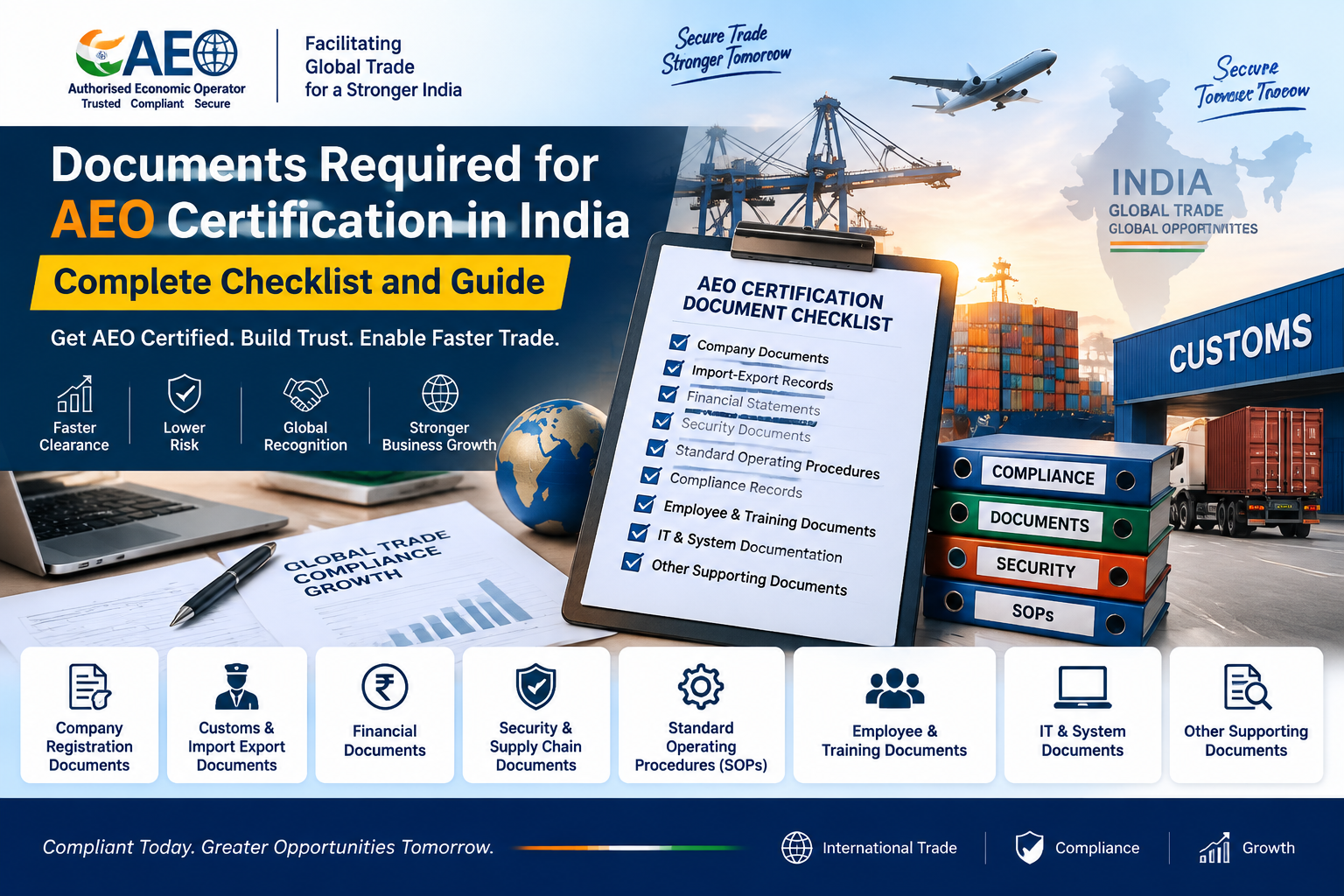
The Documents required for AEO certification in India play a crucial role in obtaining Authorised Economic Operator (AEO) status from Indian Customs. Businesses involved in international trade, including importers, exporters, manufacturers, logistics providers, customs brokers, and other supply chain participants, must prepare accurate documentation to demonstrate compliance, financial stability, customs history, and supply chain security.
The AEO Programme is managed by Indian Customs under CBIC to recognize businesses that maintain strong compliance standards and secure international supply chain practices.
A complete and properly prepared document package helps reduce delays during the application process and improves the chances of successful AEO certification.
What is AEO Certification in India?
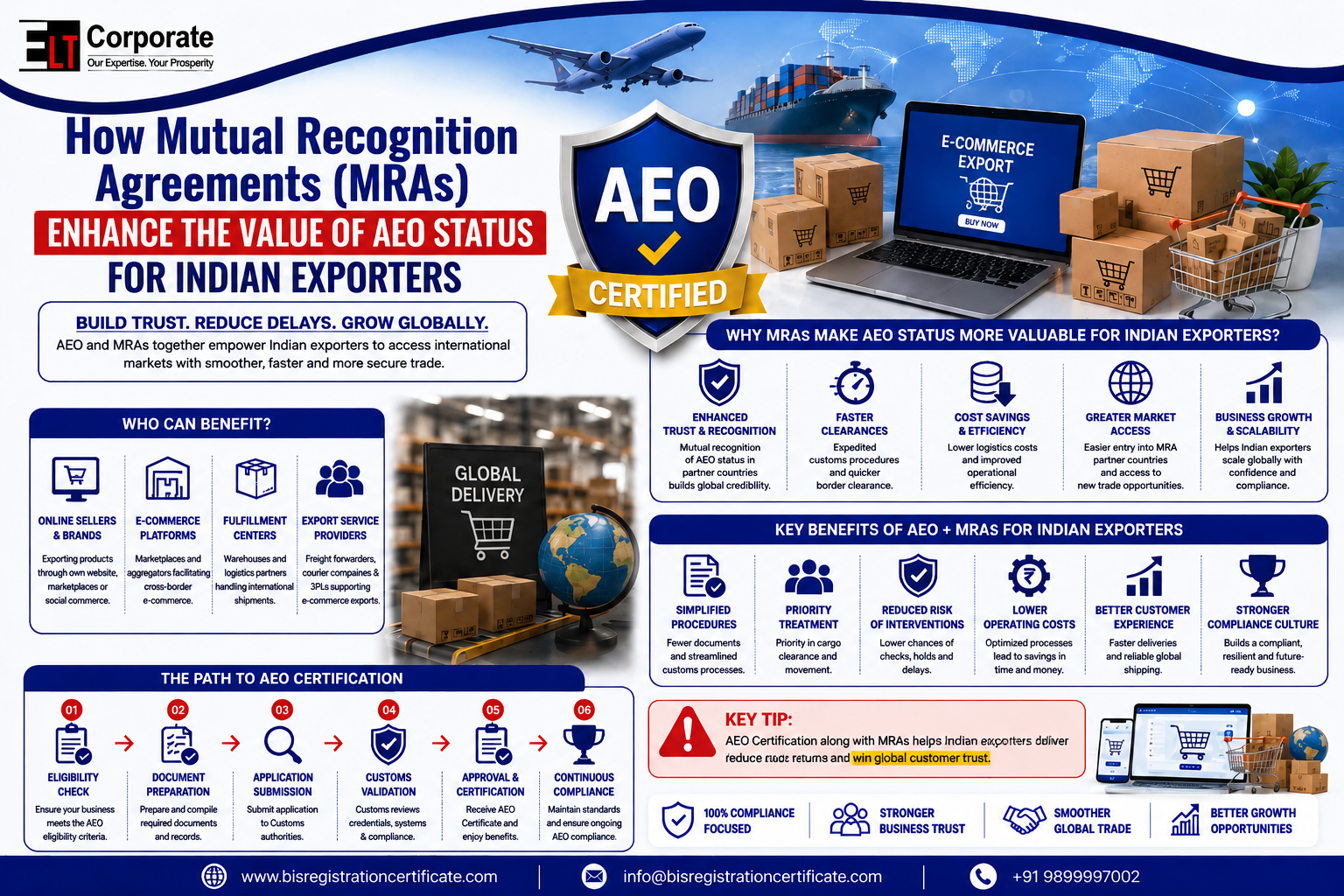
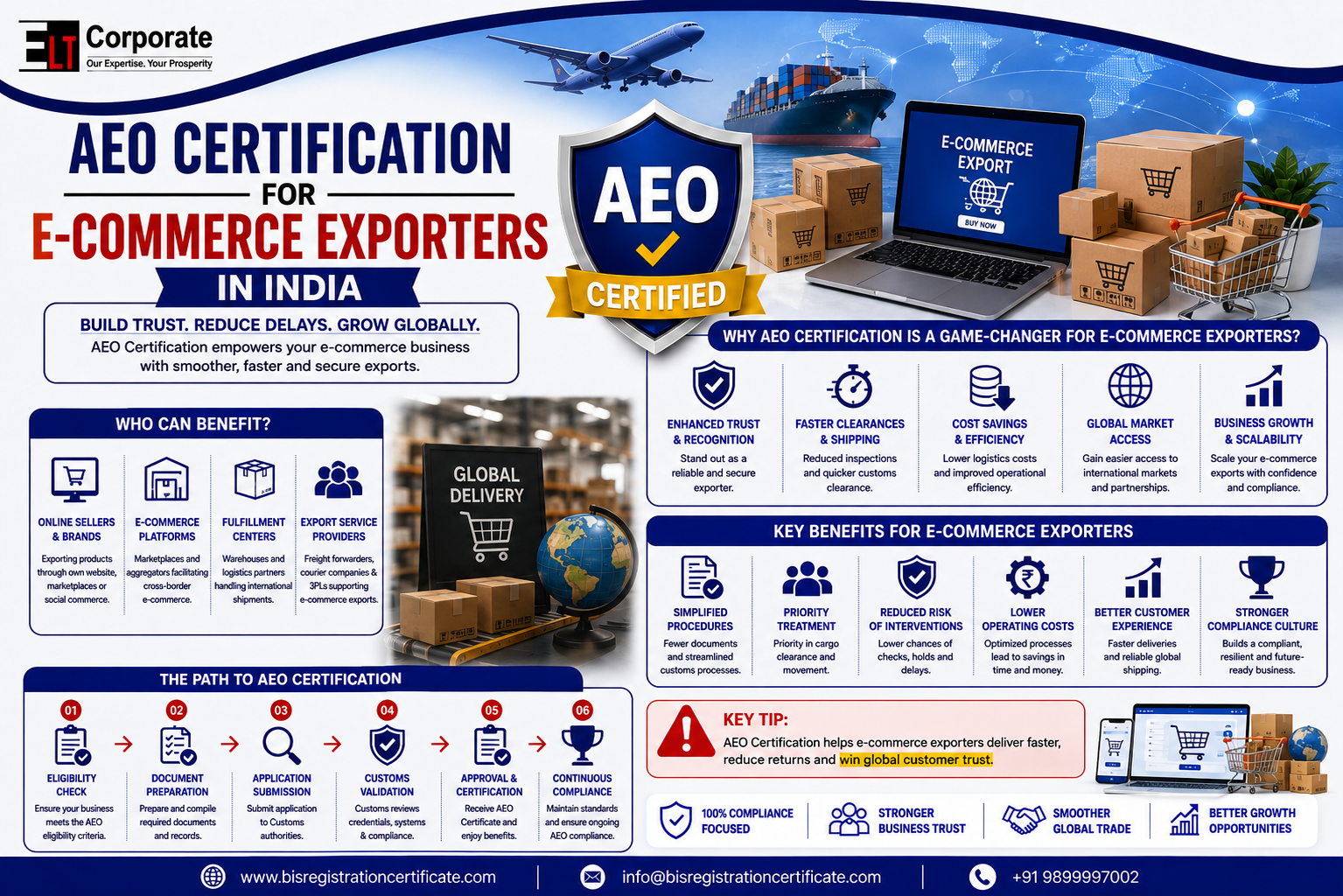
Authorised Economic Operator (AEO) Certification is a recognition provided by customs authorities to businesses that demonstrate compliance with customs regulations, financial reliability, and supply chain security standards.
The Indian AEO Programme provides different certification levels, including AEO-T1, AEO-T2, AEO-T3, and AEO-LO, depending on the applicant category and compliance level.
AEO-certified businesses may receive benefits such as
- Faster customs clearance
- Reduced customs intervention
- Priority processing
- Improved supply chain reliability
- Better credibility in international trade
Why Are Documents Required for AEO Certification in India Important?
The Documents required for AEO Certification in India help customs authorities evaluate:
- Customs compliance history
- Financial records
- Internal control systems
- Security procedures
- Supply chain management
- Employee responsibilities
- Risk management practices
Proper documentation demonstrates that the applicant follows secure and transparent trade practices.
Documents Required for AEO Certification in India
The following are the major categories of documents generally required for AEO certification:
1. Company Registration Documents
Applicants need to submit basic business registration documents, including:
- Certificate of Incorporation
- Partnership deed (for partnership firms)
- LLP agreement (where applicable)
- Memorandum and Articles of Association
- GST Registration Certificate
- PAN Card of the company
- Import Export Code (IEC)
- Company profile
These documents establish the legal identity of the applicant.
2. Customs and Import Export Compliance Documents
For Documents required for AEO Certification in India, customs compliance records are extremely important.
Required documents may include:
- Import documentation records
- Export documentation records
- Bill of Entry details
- Shipping Bill records
- Customs duty payment records
- Customs declarations
- Previous customs correspondence
- Details of customs violations (if applicable)
Applicants should maintain proper records of international trade activities.
3. Financial Documents Required for AEO Certification
Financial stability is an important evaluation factor for AEO certification.
Financial documents may include:
- Audited financial statements
- Balance sheets
- Profit and loss statements
- Income tax returns
- GST returns
- Bank details
- Financial solvency information
These documents help demonstrate the applicant’s financial reliability.
4. Security and Supply Chain Documents
Security compliance is one of the important parts of the AEO certification.
The Documents required for AEO Certification in India may include:
Physical Security Documents
- Warehouse security procedures
- Office security policies
- Access control procedures
- CCTV monitoring details
- Visitor management records
Cargo Security Documents
- Cargo handling procedures
- Transportation security policy
- Shipment monitoring process
- Container security procedures
Employee Security Documents
- Employee verification process
- Background verification policy
- Training records
- Employee access control procedures
5. Standard Operating Procedures (SOPs)
SOP documentation is one of the most important parts of the AEO certification process.
Businesses should prepare SOPs related to:
- Import procedures
- Export procedures
- Customs documentation process
- Inventory management
- Vendor management
- Transportation process
- Security controls
- Record maintenance
- Risk management
Well-documented SOPs demonstrate that the company has structured internal processes.
6. Customs Compliance History Documents
Applicants may need documents showing their compliance record.
These include:
- Previous customs audits
- Customs notices (if any)
- Penalty details (if applicable)
- Compliance corrective actions
- Internal audit reports
A clean compliance history supports the AEO certification.
7. Employee and Organization Documents
Businesses should maintain:
- Organization structure
- Employee responsibility chart
- Key employee details
- Training records
- Compliance officer details
- Contact details of authorized persons
These documents help AEO certification Customs understand operational responsibility.
8. Technology and Record Management Documents
Modern businesses should provide details regarding their IT systems.
Documents may include:
- ERP system details
- Customs filing software details
- Data security policy
- User access control policy
- Backup procedures
- Electronic record management process
9. Previous Certifications and Licences
Applicants may submit:
- ISO certificates
- Quality certifications
- Security certifications
- Industry-specific approvals
- Other compliance certificates
These documents support the company’s compliance framework.
Common Mistakes While Preparing Documents Required for AEO Certification in India
1. Submitting Incomplete Documentation
Missing documents can delay the AEO certification application review process.
2. Lack of Proper SOPs
Many businesses fail to prepare detailed operational procedures.
3. Incorrect Customs Records
A mismatch between trade records and submitted information can create compliance issues.
4. Poor Security Documentation
AEO certification requires strong supply chain security practices.
5. Ignoring Document Updates
Businesses should ensure all submitted documents contain current information.
AEO Certification Application Supporting Documents
Along with the application, businesses may need supporting documents such as
- Company profile
- Business activity details
- Organizational structure
- Customs transaction details
- Security policies
- SOP documents
- Compliance declarations
- Supporting certificates
All information provided for AEO certification should be accurate and consistent.
How to Prepare Documents for AEO Certification Successfully?
Follow these steps:
Step 1: Understand AEO Requirements
Identify the applicable AEO category and documentation requirements.
Step 2: Collect Business Documents
Prepare company registration and financial documents.
Step 3: Prepare SOPs
Create detailed procedures for trade operations and security controls.
Step 4: Review Customs Compliance History
Check previous import/export records.
Step 5: Submit Application
Complete the application with accurate supporting documents.
How AEO Certificate India Helps With Documentation Support
Preparing the AEO certification can be complex because businesses must organize multiple categories of records, SOPs, security documents, and compliance evidence.
AEO Certificate India provides professional assistance for businesses seeking AEO certification support.
Services include:
AEO Certification Consultancy
Expert guidance on eligibility, documentation requirements, and application procedures.
Documentation Preparation Support
Assistance in preparing:
- Application documents
- SOPs
- Compliance records
- Security documentation
- Supporting reports
AEO Application Filing Assistance
Support for preparing and submitting AEO certification applications.
Compliance Gap Analysis
Review of existing processes to identify areas requiring improvement before application submission.
AEO Renewal Support
Assistance with maintaining compliance and renewal-related requirements.
Complete AEO Certification Documentation Process in India
The process of preparing the Documents required for AEO Certification in India involves collecting, reviewing, organizing, and submitting various records related to business operations, customs compliance, financial strength, and supply chain security.
AEO certification is not only based on submitting an application form. Customs authorities evaluate whether the applicant has proper systems, procedures, and controls to ensure secure international trade operations.
A well-prepared documentation process helps businesses demonstrate:
- Compliance with customs laws
- Accuracy of trade records
- Effective internal controls
- Secure supply chain management
- Financial reliability
- Transparent business practices
Department-Wise Documents Required for AEO Certification in India
Preparing AEO certification requires coordination between different departments of an organization.
1. Compliance Department Documents
The compliance team should prepare:
- Customs compliance policy
- Regulatory compliance records
- Internal audit reports
- Compliance monitoring reports
- Risk assessment documents
- Corrective action reports
These documents demonstrate that the organization actively manages compliance requirements.
2. Finance Department Documents
The finance department should maintain:
- Audited financial statements
- Tax payment records
- Income tax returns
- GST filings
- Financial audit reports
- Bank certificates
- Payment records
Financial documentation helps establish the company’s stability and reliability.
3. Logistics Department Documents
For companies involved in transportation and supply chain operations, required documents may include:
- Transportation agreements
- Logistics partner details
- Shipment tracking procedures
- Cargo handling procedures
- Delivery management process
- Transport security policies
4. Warehouse Department Documents
Warehouse-related documentation is an important part of the Documents Required for AEO Certification in India.
Businesses should maintain:
- Warehouse layout plan
- Inventory management procedure
- Stock verification reports
- Security procedures
- Storage guidelines
- Goods movement records
- Access control records
5. Human Resource Department Documents
HR-related documents include:
- Employee database
- Employee verification process
- Training records
- Security awareness training
- Job responsibility documents
- Employee exit procedures
Risk Management Documents Required for AEO Certification
Risk management is an important component of AEO certification.
Businesses should prepare documents covering:
Risk Identification
Documents showing how the company identifies risks related to:
- Customs errors
- Documentation mistakes
- Supply chain disruptions
- Unauthorized access
- Security threats
Risk Assessment Procedure
Companies should maintain:
- Risk evaluation methods
- Risk scoring system
- Internal review reports
Risk Mitigation Process
Documents should explain:
- Corrective actions
- Preventive measures
- Monitoring procedures
Record-Keeping Documents Required for AEO Certification in India
Proper record management is essential for AEO compliance.
Businesses should maintain:
- Import records
- Export records
- Invoice records
- Customs documents
- Accounting records
- Inventory records
- Vendor records
- Customer records
The company should have a system that allows quick retrieval of records during verification.
Vendor and Business Partner Documents for AEO Certification
Supply chain partners also play an important role in AEO certification.
Documents may include:
- Vendor agreements
- Supplier verification documents
- Transporter agreements
- Third-party security procedures
- Partner compliance declarations
- Service provider evaluation reports
Businesses should demonstrate that AEO certification requires their partners to follow secure trade practices.
AEO Security Policy Documents Checklist
A strong security policy is a major requirement when preparing the AEO certification.
The security policy should cover:
Premises Security
Include:
- Entry and exit controls
- Visitor management system
- Security guard procedures
- CCTV monitoring
- Alarm systems
Cargo Security
Include:
- Cargo inspection procedures
- Container handling process
- Shipment monitoring system
- Unauthorized access prevention
Document Security
Include:
- Document access controls
- Confidential information protection
- Record storage procedure
IT Security
Include:
- Password policies
- Data backup system
- Cybersecurity controls
- User authorization process
How to Maintain AEO Compliance After Certification
Explanation:
Obtaining AEO certification is not the end of the compliance process.
Businesses should regularly update:
- SOPs
- Security policies
- Employee records
- Customs records
- Financial documents
- Audit reports
Continuous compliance helps maintain the benefits associated with AEO certification.
Internal Audit Documents Required for AEO Certification
Internal audits help demonstrate continuous compliance.
Required documents may include:
- Internal audit schedule
- Audit reports
- Findings report
- Corrective action records
- Compliance review reports
Regular internal audits show that the company actively monitors its processes.
AEO Certification Application Supporting Documents
Along with the AEO certification application, businesses may need supporting documents such as
- Company profile
- Business activity details
- Organizational structure
- Customs transaction details
- Security policies
- SOP documents
- Compliance declarations
- Supporting certificates
All information provided should be accurate and consistent.
Future of AEO Certification and International Trade Compliance
Explanation:
As global trade becomes more digital and security-focused, compliance programs like AEO certification are becoming increasingly important.
Businesses that maintain proper documentation and secure supply chain practices can improve their readiness for international trade requirements.
The future of trade compliance will focus on:
- Digital documentation
- Automated systems
- Data security
- Supply chain transparency
- Risk-based customs management
How to Maintain Documents After Receiving AEO Certification?
Obtaining certification is not the final step. Businesses must continue maintaining compliance records.
After receiving AEO certification, companies should regularly update:
- SOPs
- Security policies
- Employee training records
- Customs compliance records
- Financial documents
- Internal audit reports
Continuous documentation management helps maintain AEO status.
AEO Documentation Audit Checklist
Before submitting an application, businesses can AEO certification review this checklist:
✅ Company registration documents available
✅ GST and IEC documents updated
✅ Customs records properly maintained
✅ Financial statements prepared
✅ SOPs documented
✅ Security policies implemented
✅ Employee verification process available
✅ Warehouse security documented
✅ IT security controls established
✅ Vendor management process prepared
✅ Internal audit reports maintained
Why Businesses Need Professional Help for AEO Documentation
The Documents required for AEO certification in India involve multiple areas of business operations. Many companies face challenges such as
- Lack of proper SOP documentation
- Missing compliance records
- Poor security documentation
- Incorrect application information
- Difficulty understanding AEO certification
Professional guidance helps businesses identify gaps and prepare complete documentation before applying.
Conclusion
The Documents required for AEO Certification in India are the foundation of a successful AEO application. Businesses must maintain accurate records related to company registration, customs transactions, financial stability, supply chain security, SOPs, and internal controls.
Proper documentation not only supports AEO certification but also helps companies build stronger compliance systems for international trade operations.
Importers, exporters, manufacturers, logistics companies, and supply chain operators should prepare their documents carefully before applying for AEO certification.
With professional assistance, businesses can simplify the documentation process and improve their readiness for AEO certification.
Frequently Asked Questions (FAQs)
Q1. What are the Documents Required for AEO certification in India?
The Documents required for AEO Certification in India include company registration documents, IEC, GST certificate, and security documents.
Q2. Why are SOPs important for AEO certification?
SOPs demonstrate that a business has proper systems for customs compliance and security management.
Q3. Are financial documents mandatory for AEO certification?
Yes, financial records are important to demonstrate business stability and compliance capability.
Q4. What security documents are required for AEO certification?
Security documents may include access control policies, CCTV details, and cargo security procedures.
Q5. Can an importer apply for AEO certification?
Yes, importers involved in international trade activities can apply if they meet applicable AEO requirements.
Q6. How long does it take to prepare the Documents required for AEO Certification in India?
The preparation time depends on the company’s processes and the level of AEO certification applied for.