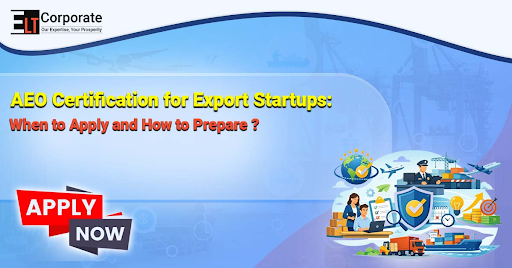
Are you an aspiring export startup navigating the complexities of international trade? Ever wondered how some companies seem to move their goods across borders with remarkable ease, while others grapple with delays and inspections? The secret often lies in something called Authorized Economic Operator (AEO) certification.
For a growing export startup, time and efficiency are critical. Customs delays can impact profits, delivery timelines, and customer trust.
This guide explains what AEO certification is, when startups should apply, and how to prepare for successful approval.
What is AEO Certification and Why Should Startups Care?
AEO (Authorized Economic Operator) certification is a program by customs authorities that recognizes businesses as trusted and compliant supply chain partners, allowing them faster customs clearance and reduced inspections.
Benefits and Importance of AEO Certification for Startups
Obtaining an AEO certification for startups offers a multitude of advantages that can provide a crucial competitive edge. These benefits directly address common pain points faced by new and growing export businesses.
- Faster customs clearance
- Reduced inspections
- Lower logistics costs
- Reduced bank guarantees
- Better international credibility
Required Documents and Prerequisites for AEO Certification for Startups
Company Documents
- Incorporation Certificate
- GST Registration
- IEC
- PAN
Financial Documents
- Financial Statements
- Income Tax Returns
- Bank Solvency
Compliance & Security Documents
- Internal compliance policies
- Security procedures for premises and cargo
- IT security and data protection details
- Details of logistics and customs partners
Validity of AEO Certification
Understanding the validity period of your AEO certificate is crucial for ongoing compliance and planning. The AEO status is not a one-time achievement; it requires continuous adherence to the stipulated standards and a timely renewal process.
For AEO-T1 and AEO-T2 certifications, which are typically the entry points for most startups, the certificate remains valid for three years from the date of issue. This gives you a significant period to leverage the benefits while continuously improving your internal processes.
The higher-tier AEO-T3 certification, designed for more established and comprehensive entities, boasts a longer validity period of five years. Regardless of the tier, it is imperative to initiate the renewal process well in advance of the expiration date to ensure uninterrupted AEO benefits.
AEO certification requires ongoing compliance through annual self-assessment and periodic customs reviews.
Any major changes in business structure or supply chain must be informed to customs authorities to retain AEO benefits.
Step-by-Step Procedure for AEO Certification for Startups
The AEO certification journey involves several stages, each requiring careful attention to detail and a strategic approach. For a startup, breaking down the process into manageable steps is key to success.
Step 1: Preliminary Assessment and Gap Analysis
Before you even think about applying, conduct a thorough internal assessment of your current operations against AEO requirements. This means evaluating your security protocols, financial health, compliance history, and documentation practices. Identify any gaps between your current state and the AEO standards.
Step 2: Remediation and Implementation Plan
Based on your gap analysis, develop a detailed action plan to address all identified deficiencies. This could involve upgrading physical security, implementing new IT systems, refining personnel screening, or developing clearer compliance policies. Document every change and implementation, as this will be crucial for your application.
Step 3: Document Preparation and Compilation
This is the most time-consuming step. Gather all the required documents meticulously, ensuring they are accurate, complete, and properly organized. For startups, special attention should be given to demonstrating financial viability and robust procedures even with a shorter operational history. Prepare a comprehensive internal manual detailing your AEO-compliant processes.
Step 4: Online Application Submission
Access the online AEO portal (aeoindia.gov.in) and fill out the application form (Form AEO T1, T2, T3, or LO, depending on your business type). Upload all supporting documents as per the specified format. Double-check all entries for accuracy before submission. The online system makes the initial submission streamlined.
Step 5: Physical Verification and Site Visit Preparation
After your online application is reviewed, customs officials will schedule a physical verification visit to your premises. This is where they cross-verify the information provided in your application with your actual operations. Prepare your team, ensure all systems are functional, and have relevant personnel available to answer questions. This visit is critical for approval.
Step 6: Post-Approval Compliance Setup and Maintenance
Once approved, you receive your AEO certificate. This is not the end, but the beginning of continuous compliance. Establish internal procedures for regular self-audits, review and update your security and compliance protocols, and maintain meticulous records. Remember, AEO status requires ongoing commitment.
Common Mistakes to Avoid
Successfully navigating the AEO application process, especially for startups, means being aware of potential pitfalls. Avoiding these common errors can significantly increase your chances of approval and streamline the entire procedure.
Here’s a checklist of common mistakes to steer clear of:
Inadequate Security Procedures: Failing to meet prescribed physical and IT security standards is a major reason for rejection. Ensure your premises, cargo, data, and personnel screening are all up to par.
Negative Net Current Assets: Financial instability, particularly a negative net current asset position, raises red flags. Ensure your financial health is robust and accurately presented.
Incomplete or Inaccurate Documentation: Submitting forms with missing information, outdated documents, or inconsistent data can lead to immediate rejection or significant delays. Meticulous preparation is vital.
Weak Internal Controls: Customs authorities look for robust internal processes to manage compliance, documentation, and security. Lacking defined procedures or evidence of their implementation can be detrimental.
Poor Compliance History: Any past instances of non-compliance, even minor ones, if not adequately explained or rectified, can affect your eligibility. Be transparent and demonstrate corrective actions.
Underestimating the Time and Effort: The process is demanding. Many startups underestimate the time, resources, and dedicated effort required for documentation
and internal adjustments.
Lack of Internal Expertise: Without a dedicated team member or external consultant with expertise in customs and AEO requirements, startups can struggle to interpret guidelines and prepare effectively.
Not Tailoring the Application to Startup Context: While rules are general, a startup’s application needs to clearly articulate how it meets requirements despite limited history or resources, often needing a compelling case.
What Happens If You Ignore AEO Certification?
Choosing to bypass AEO certification for your export startup might seem like a way to save immediate time and resources. However, this decision can lead to several significant disadvantages that impact your growth, efficiency, and competitiveness in the long run.
Firstly, you will likely face delayed customs clearance for your shipments. Without AEO status, your cargo may be subject to more frequent and thorough physical inspections, leading to extended dwell times at ports and borders. These delays can disrupt your supply chain, push back delivery schedules, and strain relationships with international buyers.
Secondly, ignoring AEO often results in higher operational costs. Increased inspections mean more handling charges, potential demurrage fees for containers, and higher warehousing costs if goods are held up. You may also be required to provide full bank guarantees, tying up valuable capital that could otherwise be invested in business expansion or product development.
Thirdly, your startup could suffer from a lack of competitive edge. In a global market where efficiency and reliability are highly prized, AEO-certified competitors will benefit from faster, cheaper, and more predictable logistics. This can make your offerings less attractive to international clients who prioritize swift delivery and robust supply chain security.
Finally, you miss out on building a stronger, more compliant business foundation. The AEO process itself encourages robust internal controls and security measures. Without undergoing this, your startup may remain vulnerable to compliance risks, potential penalties from customs authorities for overlooked regulations, and reputational damage if security breaches occur. In essence, ignoring AEO means foregoing a strategic advantage that can safeguard and accelerate your export journey.
The Cost Involved in AEO Certification for Startups
While there is no government fee for AEO certification, startups should plan for indirect costs related to documentation, compliance, and professional support.
Here’s a rough breakdown of the costs you might encounter:
| Cost Area | Cost |
| Application Fee | Nil |
| Documentation & Compliance | ₹50k–2L |
| Consultant | INR 100,000 – 500,000+ |
It’s important to view these as an investment rather than a mere expense. The long-term benefits of reduced clearance times, lower bank guarantee requirements, and enhanced credibility often outweigh the initial outlay.
How ELT Corporate Pvt. Ltd. Can Help You
Navigating the intricate process of AEO certification can be daunting, especially for startups with limited resources and expertise. This is where ELT Corporate Pvt. Ltd. steps in as your trusted partner, providing end-to-end support to make your AEO journey smooth and successful.
ELT Corporate Pvt. Ltd. offers specialized services tailored to the unique needs of export startups. Our team of experienced consultants understands the specific challenges you face, such as limited operational history, resource constraints, and the need for simplified compliance. We translate complex regulatory requirements into actionable, easy-to-understand steps.
We begin with a comprehensive preliminary assessment to determine your current eligibility and identify any gaps. Our experts will then guide you through the crucial gap analysis and help you develop a robust remediation plan. We assist extensively with the meticulous documentation preparation, ensuring all forms are accurately filled and supporting documents are perfectly compiled, addressing startup-specific considerations like financial projections.
Furthermore, ELT Corporate Pvt. Ltd. provides hands-on assistance for preparing for the physical verification by customs officials. We help you fine-tune your internal processes, conduct mock audits, and train your staff to confidently present your compliance framework. Our support extends beyond certification, offering guidance on maintaining your AEO status and ensuring continuous adherence to compliance standards, making your AEO certification for startups a lasting asset.
Conclusion
AEO certification is more than just a badge of honour; it’s a strategic asset for any export startup aspiring to thrive in the global marketplace. While the application process demands diligence and adherence to strict standards, the benefits—including faster customs clearance, reduced costs, enhanced security, and improved international credibility—make it a worthwhile investment.
For export startups, AEO certification helps reduce logistics delays, improve cash flow, and build international credibility.
The decision to apply should align with export volume and long-term growth plans.
Don’t let the complexity deter you. With careful preparation, a clear understanding of the requirements, and potentially expert guidance, your startup can successfully achieve AEO status. This will not only streamline your current operations but also lay a solid foundation for sustainable growth and seamless international expansion. Start planning today to unlock these significant advantages for your export business.
FAQs
Here are some frequently asked questions about AEO certification for startups, providing quick and clear answers to common queries.
Q1: Can startups with less than 3 years of operations apply for AEO certification?
Yes, startups with less than three years of operations may be considered for relaxation in deserving cases, subject to customs authority review and eligibility conditions.
Startups should show strong compliance, sound financials, and well-documented internal controls to strengthen their case.
Q2: What’s the minimum export volume needed for a startup to justify AEO certification costs?
While there isn’t a strict minimum export volume mandated, startups handling regular export shipments generally see clearer benefits from AEO certification. The financial return on investment (ROI) becomes clearer when the costs associated with customs clearance delays or high bank guarantees exceed the expenses of obtaining and maintaining the certification.
Consider your business’s growth trajectory and the value of your goods. High-value, time sensitive shipments often benefit more, making AEO a strategic investment even with moderate volumes.
Q3: How much does AEO certification actually cost for startups including hidden expenses?
Direct costs for AEO certification in India are minimal, as there are no government application fees. However, indirect and potential service costs should be considered.
Expect expenses for documentation preparation (ranging from INR 50,000 to INR 2,00,000+), which covers staff time and minor infrastructure adjustments. Engaging a consultant can add another INR 1,00,000 to INR 5,00,000+, depending on the scope of support. Additionally, budget for ongoing compliance maintenance, which might cost INR 50,000 to INR 1,00,000 annually.
Q4: What are the most common reasons startups get rejected for AEO certification?
Several factors can lead to the rejection of AEO certification for startups. Inadequate security procedures are among the most common reasons for rejection.
Other significant reasons include a negative net current assets position, indicating financial instability, and incomplete or inaccurate documentation during the application process. Weak internal controls and a history of non-compliance with customs regulations also frequently contribute to rejections. Startups must address these areas proactively during their preparation.
Q5: How long does the AEO certification process really take for startups from application to approval?
AEO certification approval in India typically takes 5–8 months, depending on documentation quality and customs region workload.