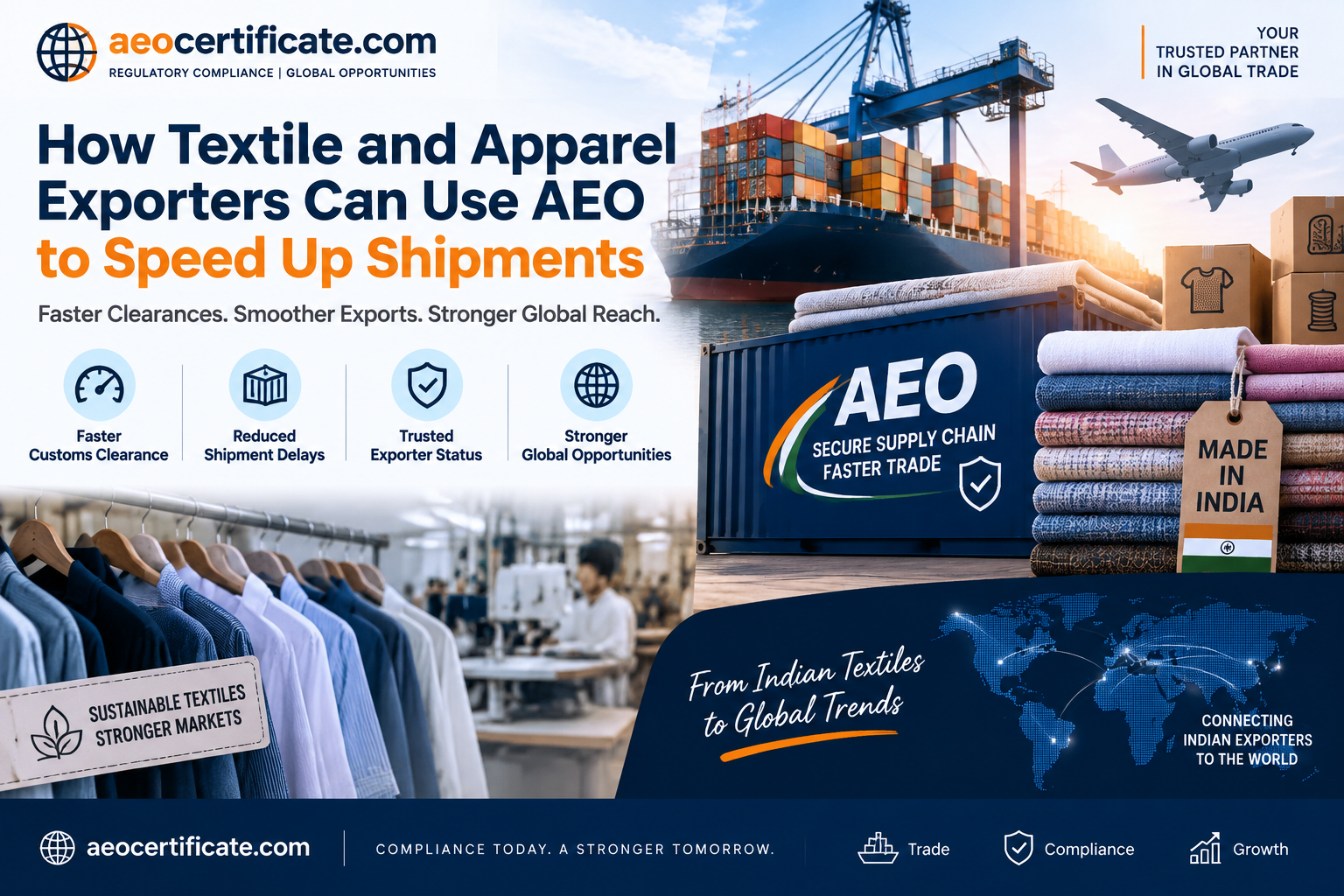
The textile and apparel industry operates on strict delivery timelines. Exporters supplying garments, fabrics, home textiles, and fashion products to international buyers must ensure that shipments reach customers within committed deadlines. Even a small delay in customs clearance can impact buyer relationships, production cycles, and future orders.
For textile exporters, adopting a strong customs compliance system is becoming increasingly important. AEO Certification for Textile Exporters provides a structured framework that helps businesses improve supply chain security, strengthen customs compliance, and achieve smoother export operations.
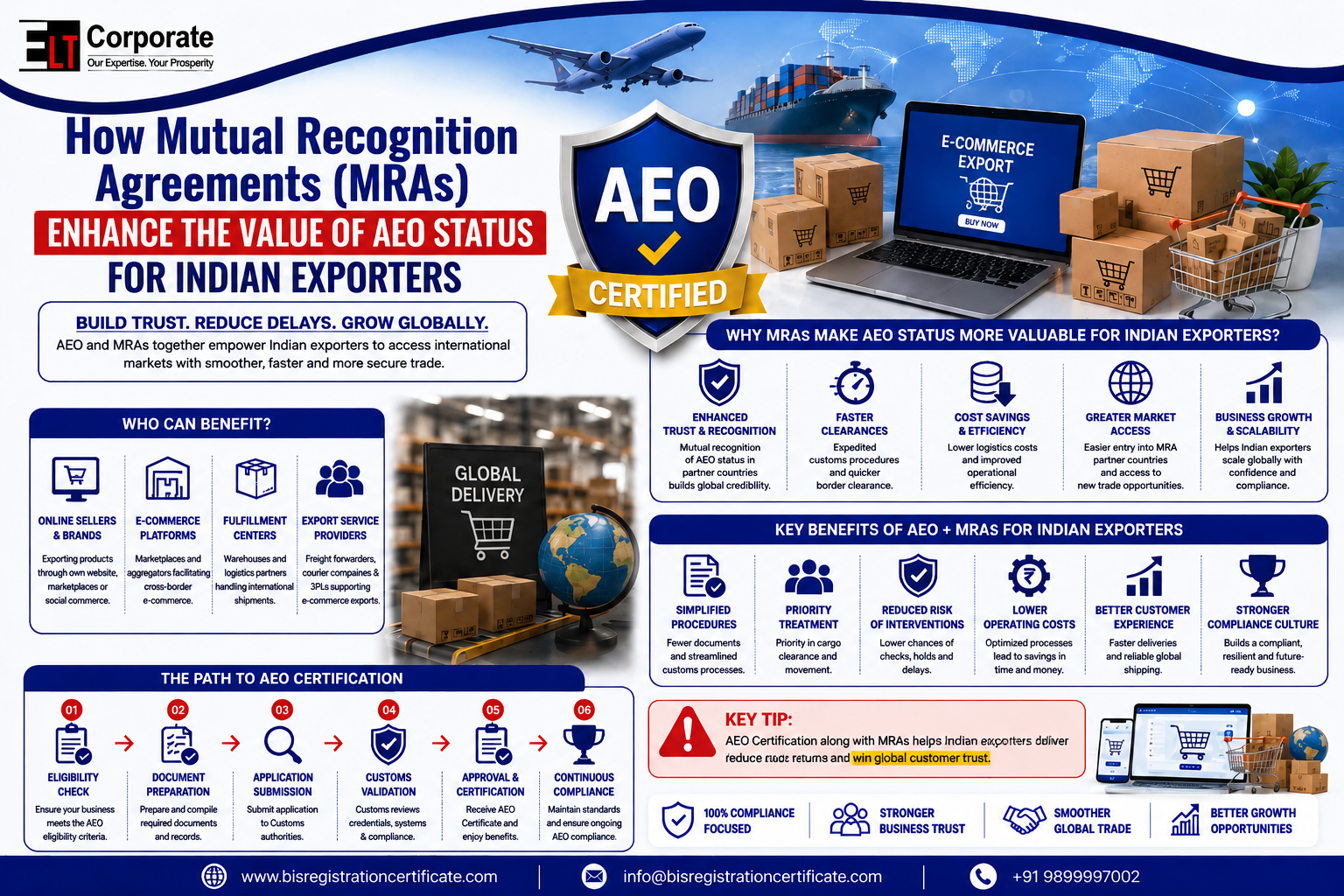
The Authorized Economic Operator (AEO) Programme is a trusted trader programme administered by Indian Customs that recognises businesses with strong compliance records and secure international supply chain practices. Eligible exporters can receive various customs facilitation benefits that help improve shipment predictability.
For textile and apparel exporters dealing with large export volumes, AEO certification can become a strategic advantage by reducing operational uncertainty and supporting faster movement of goods.
What is AEO Certification for Textile Exporters?
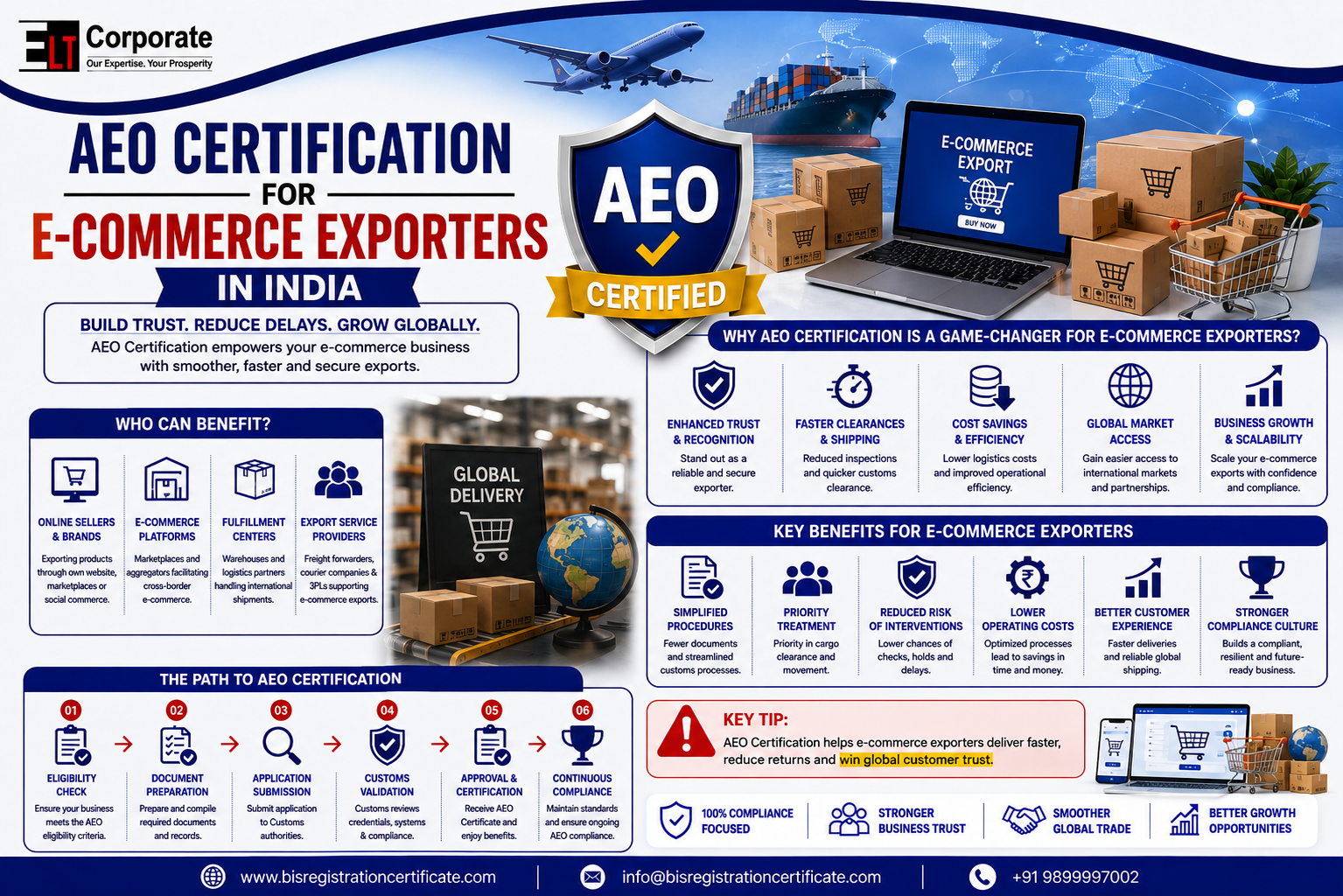
AEO Certification for Textile Exporters is a customs certification granted to exporters who demonstrate compliance with customs laws, proper record management, financial reliability, and supply chain security practices.
The certification is based on the concept of creating a partnership between customs authorities and compliant businesses. Instead of treating every shipment with the same level of scrutiny, trusted operators may receive facilitation benefits based on their compliance status.
Textile exporters involved in:
- Garment exports
- Fabric exports
- Home textile exports
- Textile machinery exports
- Apparel manufacturing and international supply chains
can evaluate their eligibility for AEO certification.
The AEO India program recognizes different categories and tiers depending on the applicant’s compliance maturity and business profile.
Why Textile Exporters Need Faster Customs Clearance
The textile export business depends heavily on AEO Certification for Textile Exporters heavily on timelines because:
- International buyers work on seasonal collections
- Fashion products have fixed launch schedules
- Retail supply chains require accurate delivery commitments
- Delays can increase logistics costs
- Late shipments can affect buyer confidence
Exporters supplying international brands often manage:
- High-volume shipments
- Multiple containers
- Tight vessel schedules
- Seasonal production cycles
AEO certification helps exporters establish reliable customs processes and improve shipment management.
How AEO Certification Helps Textile Exporters Speed Up Shipments
1. Faster Customs Clearance
One of the major advantages of AEO Certification for Textile Exporters is improved customs facilitation.
AEO-certified businesses may receive benefits such as faster processing and reduced delays due to their recognised compliance status.
For textile exporters, this means:
- Reduced shipment waiting time
- Better export schedule planning
- Improved supply chain efficiency
- Faster movement of goods
AEO Tier benefits include customs facilitation measures such as faster clearances and Direct Port Entry benefits for eligible exporters, subject to applicable conditions.
2. Reduced Risk of Shipment Delays
Export delays commonly occur due to:
- Documentation errors
- Incorrect declarations
- Compliance issues
- Verification requirements
- Missing records
AEO certification encourages exporters to maintain:
- Proper documentation systems
- Internal compliance checks
- Standard operating procedures
- Record management practices
This reduces the chances of shipment interruptions.
3. Better Supply Chain Control
Textile exports involve multiple stakeholders:
- Manufacturers
- Suppliers
- Job workers
- Transporters
- Freight forwarders
- Customs brokers
AEO Certification for Textile Exporters encourages businesses to create a secure supply chain management system.
Exporters should maintain:
- Vendor verification procedures
- Transportation security controls
- Access control systems
- Shipment tracking processes
- Data security measures
A strong supply chain system supports smoother export operations.
4. Improved Buyer Confidence
International buyers prefer suppliers who maintain reliable compliance systems.
AEO certification demonstrates that the exporter follows:
- Customs compliance practices
- Document control procedures
- Security standards
- Risk management systems
For textile exporters competing in global markets, this AEO Certification for Textile Exporters can strengthen credibility with international customers.
5. Better Preparedness for International Trade Requirements
Many global buyers focus on:
- Supply chain security
- Traceability
- Compliance management
- Ethical sourcing
AEO certification supports exporters in developing structured processes that align with international trade expectations.
India also participates in AEO Mutual Recognition Arrangements (MRAs), where compatible trusted-trader programs may recognize each other’s standards for eligible operators.
AEO Certification and Textile Export Supply Chain Security
A textile export supply chain involves multiple stages:
Raw Material Supplier
↓
Manufacturing Unit
↓
Quality Inspection
↓
Packaging
↓
Warehouse
↓
Transportation
↓
Customs Clearance
↓
International Buyer
AEO Certification for Textile Exporters focuses on securing each stage of this supply chain.
Businesses should evaluate risks related to:
- Unauthorized access
- Documentation errors
- Cargo security
- Information protection
How AEO Helps Textile Exporters Compete in Global Markets
The textile export market is highly competitive, with exporters from countries such as India, Bangladesh, Vietnam, and China competing for international buyers.
Global buyers increasingly evaluate suppliers based on:
- Delivery reliability
- Compliance practices
- Supply chain transparency
- Risk management
By obtaining AEO Certification for Textile Exporters, businesses can demonstrate that they follow internationally aligned customs compliance practices.
Future of AEO Certification for Textile Exporters in India
India’s textile export sector is expanding with increasing global demand for:
- Sustainable textiles
- Quality manufacturing
- Reliable supply chains
As international trade becomes more compliance-focused, trusted trader programmes like AEO are becoming increasingly important.
For textile exporters planning long-term international growth, establishing a strong customs compliance framework can support smoother operations and better supply chain management.
Importance of SOPs for AEO Certification in Textile Industry
Standard Operating Procedures (SOPs) are an important part of AEO compliance.
Important SOPs for textile exporters may include:
Export Documentation SOP
Covers:
- Invoice preparation
- Shipping bill filing
- Customs documentation review
- Record maintenance
Supplier Management SOP
Includes:
- Supplier verification
- Vendor approval process
- Supplier monitoring
Security SOP
Includes:
- Employee access control
- Visitor management
- Cargo security procedures
Incident Management SOP
Includes procedures for:
- Security incidents
- Documentation errors
- Compliance issues
Common Mistakes Textile Exporters Should Avoid During AEO Application
1. Applying Without Compliance Assessment
Many exporters submit applications without evaluating their existing processes.
A pre-application gap assessment helps identify improvement areas.
2. Missing Documentation
Incomplete records may delay the review process.
Exporters should maintain organized:
- Financial records
- Customs records
- SOP documents
- Security procedures
3. Lack of Employee Awareness
AEO compliance involves different departments.
Employees handling:
- Export documentation
- Warehouse operations
- Logistics
should understand their responsibilities.
4. Ignoring Post-Certification Compliance
Obtaining AEO certification is not the end of the process.
Companies must continue maintaining:
- Records
- Security systems
- Compliance procedures
AEO Certification Process for Textile Exporters
The general process includes:
Step 1: Eligibility Assessment
The exporter should evaluate:
- Export history
- Customs compliance record
- Financial position
- Documentation systems
- Security procedures
Step 2: Documentation Preparation
The exporter needs to prepare supporting documents demonstrating compliance systems.
Step 3: Application Submission
The application is submitted through the AEO Certification for Textile Exporters India portal with required information and supporting documents.
The official AEO application process includes preparation, submission, review, verification, and final decision stages.
Step 4: Verification Process
Customs authorities may verify:
- Business records
- Security controls
- Operational procedures
- Compliance systems
Step 5: Grant of AEO Certification
After successful evaluation, eligible businesses receive AEO certification.
Internal Systems Textile Exporters Should Develop Before Applying
Before applying for AEO Certification for Textile Exporters, companies should establish:
1. Export Documentation SOP
Maintain procedures for:
- Invoice preparation
- Shipping documentation
- Customs declarations
- Record retention
2. Supplier Management System
Maintain:
- Supplier approval records
- Vendor evaluation reports
- Job worker monitoring records
3. Employee Training System
Employees involved in exports should understand:
- Customs requirements
- Documentation procedures
- Security practices
4. Internal Compliance Audit
Regular internal reviews help identify:
- Documentation gaps
- Process weaknesses
- Compliance risks
Role of AEO Certification in Reducing Textile Export Delays
Textile exporters frequently deal with challenges such as shipment deadlines, customs documentation, and international buyer requirements. A delay in customs clearance can affect production schedules and delivery commitments.
AEO Certification for Textile Exporters helps companies create a structured compliance environment where export-related activities are managed through defined processes.
The certification supports exporters by encouraging:
- Accurate customs declarations
- Proper document management
- Internal compliance monitoring
- Secure supply chain practices
- Better coordination between departments
A well-managed compliance system helps reduce avoidable delays during export operations.
AEO Benefits for Garment Exporters
Garment exporters operate in a highly AEO Certification for Textile Exporters competitive market where timely delivery is essential. International fashion brands often work according to seasonal demand cycles.
AEO certification can support garment exporters by improving:
Shipment Planning
Exporters can achieve better control over:
- Production schedules
- Container planning
- Shipping timelines
- Customs documentation
Operational Efficiency
AEO compliance encourages companies to standardize processes related to:
- Export documentation
- Warehouse operations
- Transportation management
Better Customer Service
Reliable shipment processes help exporters provide better delivery commitments to overseas buyers.
How Textile Manufacturers Can Prepare Their Factory for AEO Certification
Before applying for AEO certification, textile manufacturers should review their internal systems.
Factory Security Management
Companies should maintain:
- Controlled factory entry points
- Visitor registration systems
- Employee identification systems
- Restricted access areas
Warehouse Security
Textile exporters should ensure:
- Proper inventory management
- Secure storage areas
- Shipment verification procedures
- Restricted warehouse access
Information Security
Exporters should protect:
- Customer information
- Shipment data
- Commercial documents
- Business records
AEO Certification Checklist for Textile Exporters
Before submitting an AEO Certification for Textile Exporters, exporters should verify:
Business Compliance
✔ Company registration documents available
✔ Valid IEC certificate
✔ GST compliance maintained
✔ Customs history reviewed
Export Documentation
✔ Shipping bills maintained
✔ Export invoices properly recorded
✔ Bill of lading records available
✔ Export transaction records maintained
Internal Procedures
✔ Export SOP prepared
✔ Employee responsibilities defined
✔ Record retention system established
✔ Internal review process available
Security Measures
✔ Factory access control implemented
✔ Visitor records maintained
✔ Warehouse security maintained
✔ Data security procedures documented
Common Challenges Textile Exporters Face During AEO Application
Incomplete Documentation
Many exporters have operational experience but lack documented procedures.
Weak Security Procedures
Businesses may need improvement in:
- Access control
- Visitor management
- Employee verification
Poor Record Management
Proper records are essential for demonstrating compliance.
Lack of Internal SOPs
AEO requires structured processes rather than informal working methods.
How AEO Certification Supports Long-Term Export Growth
Textile AEO Certification for Textile Exporters exporters operate in a competitive international environment where reliability is important.
AEO certification helps businesses develop:
- Better compliance culture
- Stronger supply chain management
- Improved customs relationship
- More predictable export operations
For companies planning long-term expansion in international markets, AEO certification can become an important part of their export strategy.
Documents Required for AEO Certification for Textile Exporters
Textile AEO Certification for Textile Exporters: Exporters generally require the following documents:
Company Documents
- Certificate of Incorporation
- PAN Card
- GST Registration Certificate
- Import Export Code (IEC)
- Company profile
- Organizational structure details
Export and Customs Documents
- Export shipment details
- Shipping bill records
- Customs declarations
- Bill of export documents
- Previous compliance records
Financial Documents
- Audited financial statements
- Balance sheets
- Income tax records
- GST returns
Compliance Documents
- Customs compliance records
- Internal audit reports
- SOPs for export operations
- Record management procedures
- Complaint handling procedures
Supply Chain Security Documents
- Factory security policy
- Employee access control procedure
- Visitor management records
- Transportation security procedures
- Data protection policy
Why Choose an AEO Certificate for AEO Certification Assistance?
The AEO Certification for Textile Exporters provides professional assistance to exporters seeking AEO approval and compliance support.
Our services include:
- AEO eligibility assessment
- Documentation preparation
- SOP development
- Compliance gap analysis
- Application support
- Audit preparation
- Customs compliance guidance
Our team helps textile and apparel exporters understand AEO requirements and prepare their organization for successful certification.
Conclusion
AEO Certification for Textile Exporters provides a structured approach to improving customs compliance, strengthening supply chain security, and supporting faster shipment movement.
For textile and apparel businesses, where delivery timelines directly impact customer relationships, having an organized customs compliance framework can provide significant operational benefits.
Exporters should focus on maintaining accurate documentation, implementing security procedures, and developing internal compliance systems to achieve and sustain AEO status.
With professional guidance on the AEO Certificate, textile exporters can simplify the certification process and build a stronger foundation for international trade growth.
Frequently Asked Questions
Q1. What is AEO Certification for Textile Exporters?
AEO Certification for Textile Exporters is a customs certification that recognises exporters.
Q2. How does AEO certification help textile exporters?
AEO certification helps exporters improve customs compliance and reduce shipment delays.
Q3. Is AEO certification mandatory for textile exporters?
No, AEO certification is voluntary. However, eligible exporters may apply to receive customs facilitation benefits.
Q4. What documents are required for AEO certification?
Documents generally include company details, export records, financial documents, SOPs, compliance records, and supply chain security documents.
Q5. Can small textile exporters apply for AEO certification?
Yes, eligible small and medium exporters can evaluate their eligibility based on prescribed AEO requirements.
Q6. How long does AEO certification take?
The timeline depends on documentation readiness, verification requirements, and application completeness.
Q7. Does AEO certification improve international buyer confidence?
AEO certification demonstrates structured compliance and supply chain security practices.