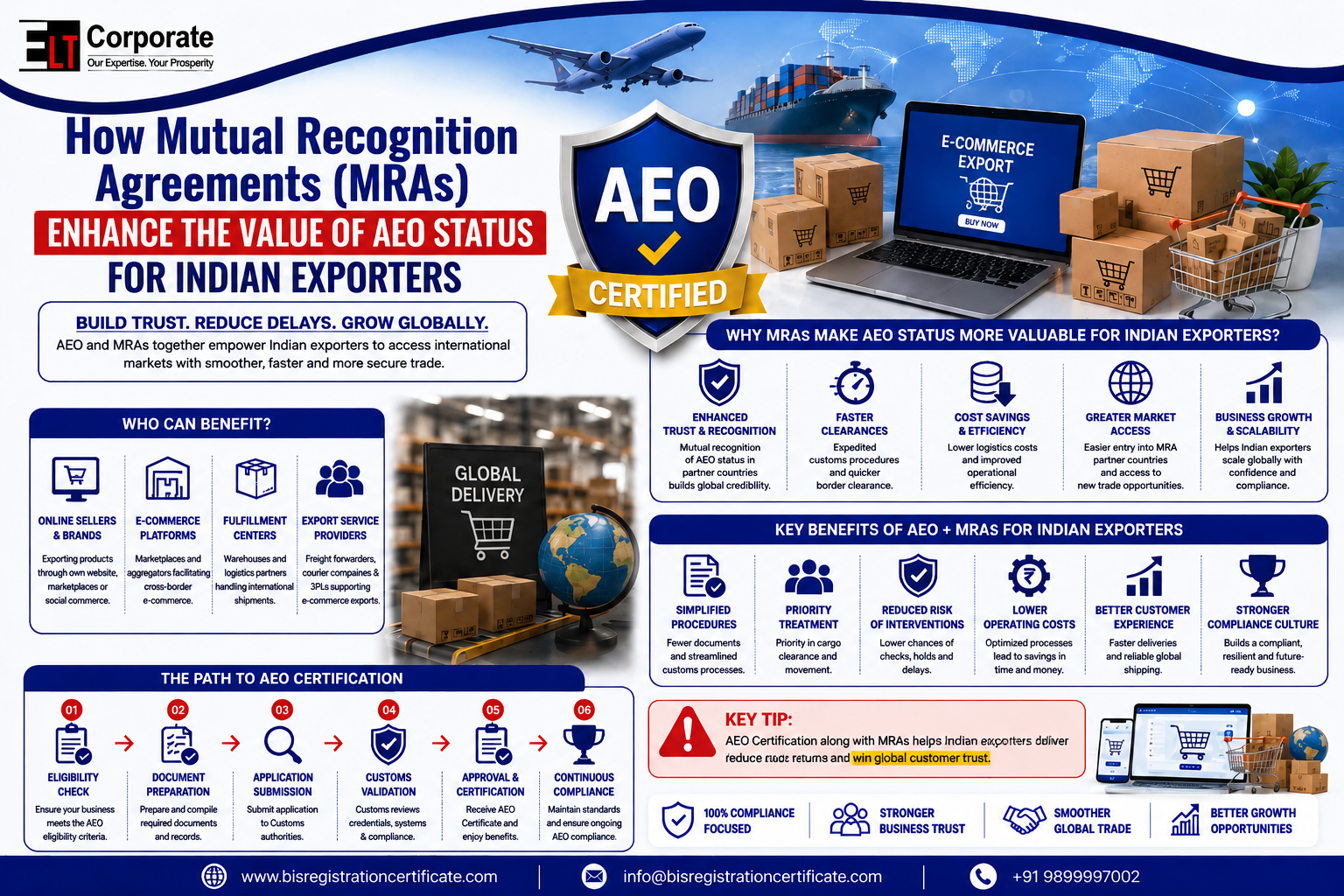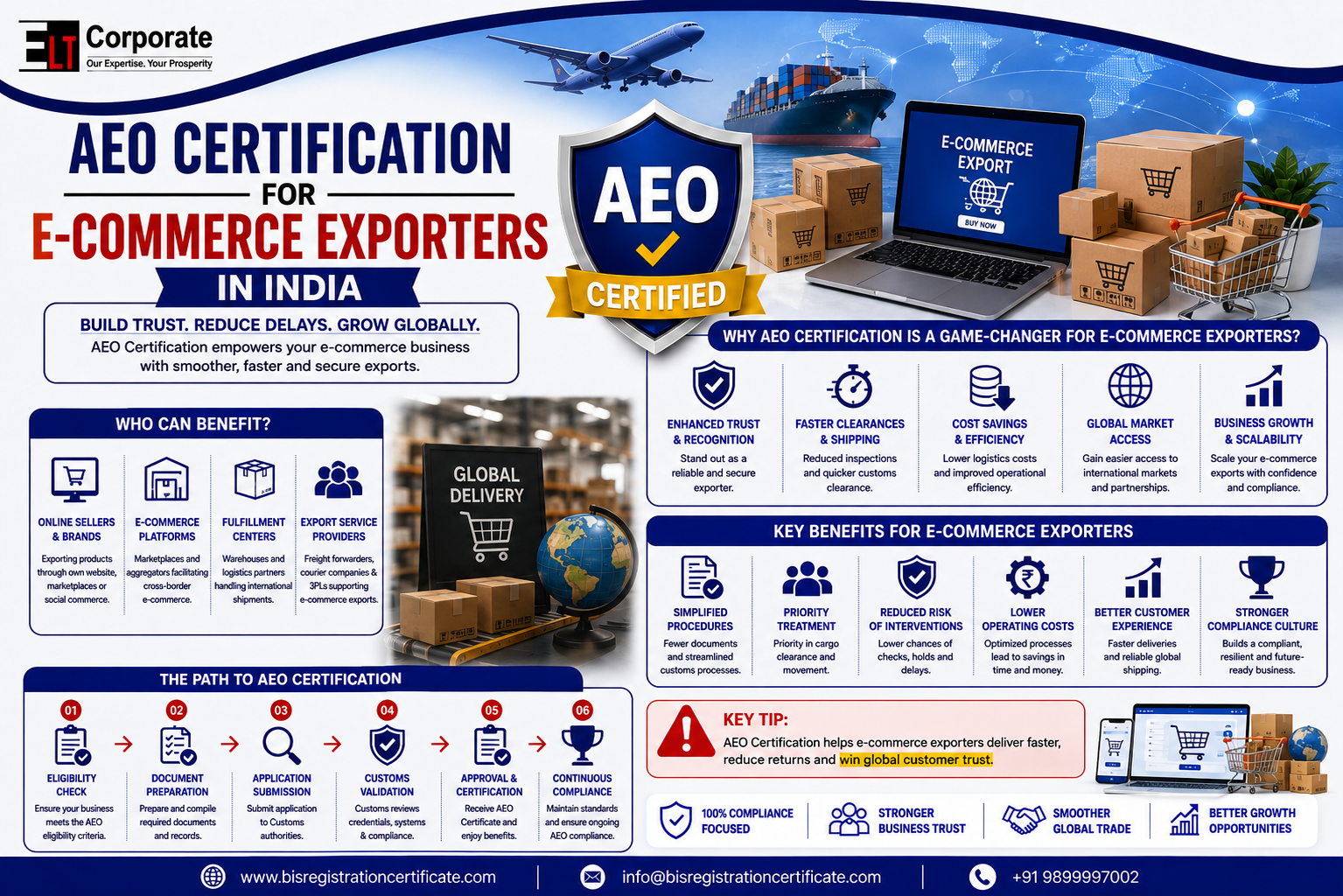
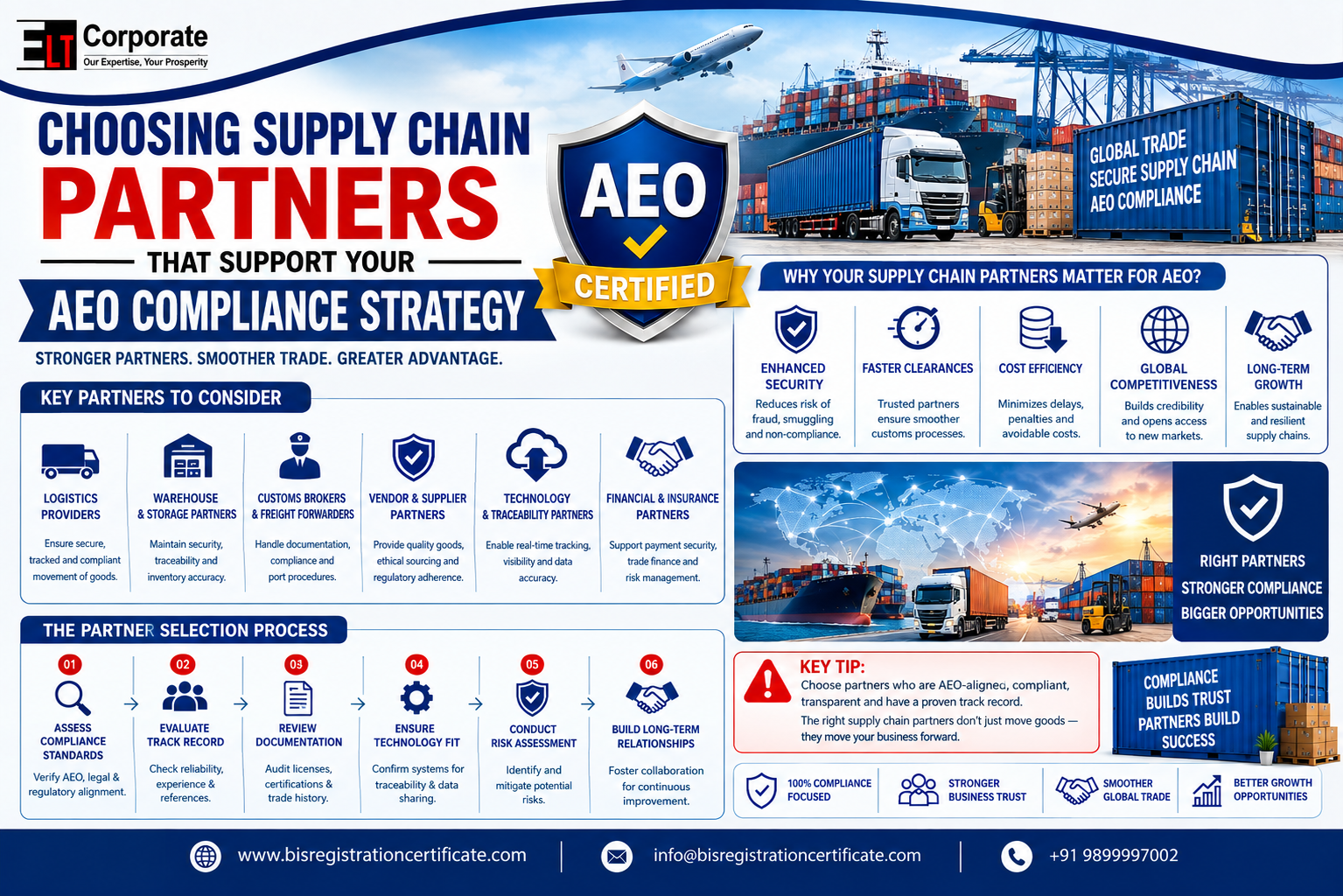
Earning an Authorised Economic Operator (AEO) certificate from India’s Central Board of Indirect Taxes and Customs (CBIC) is a significant achievement. It signals to customs authorities worldwide that your business operates to the highest standards of compliance, security, and transparency in international trade.
Your customs declarations are only as accurate as the commercial documents your suppliers send you. Your cargo security is only as strong as the sealing practices of the freight forwarder who loaded your container. Your post-market vigilance depends on the integrity of the customs broker who filed your Bill of Entry.
This is why choosing supply chain partners that actively support your AEO Compliance Strategy is not a peripheral concern—it is a core strategic imperative for every AEO-certified or AEO-aspiring business.
Why Supply Chain Partner Selection Matters for AEO Compliance Strategy
The AEO program evaluates holistically—not just your internal operations, but your entire supply chain ecosystem. CBIC’s AEO Compliance Strategy requires applicants to:
- Assess the security practices of key supply chain partners
- Prefer trading with AEO Compliance Strategy or equivalently vetted partners where possible
- Establish contractual security requirements on partners
- Demonstrate awareness of your supply chain’s risk profile
This means that when CBIC evaluates your AEO application—or reviews your compliance during a periodic audit—they are not just looking at what happens inside your four walls.
The AEO Compliance Supply Chain Ecosystem — Who Are Your Key Partners?
Before developing a partner selection framework, it is important to map the full ecosystem of supply chain partners whose actions directly impact your AEO compliance:
1. Overseas Suppliers and Manufacturers
Foreign suppliers are the origin point of your import supply chain. Their commercial documentation—invoices, packing lists, certificates of origin, and product specifications—forms the basis of your customs declarations.
2. Customs Brokers and Customs House Agents (CHAs)
Your CHA, or customs broker, files your import Bills of Entry and export Shipping Bills. They are the most direct influencer of your customs compliance record—the accuracy of HS code classification.
3. Freight Forwarders
Freight forwarders manage the physical movement of your goods—booking cargo space, coordinating with carriers, preparing shipping documentation, and managing the AEO Compliance Strategy. Their security practices, cargo handling standards, and AEO compliance.
4. Carriers—Shipping Lines, Airlines, Road Transporters
Carriers are responsible for the physical security of your cargo in transit. For importers, the carrier’s track record for container integrity, seal maintenance, and incident reporting matters.
Building Your AEO-Aligned Partner Selection Framework for AEO Compliance Strategy
A systematic, documented approach to supply chain partner selection is not just good business practice—it is an AEO program requirement. AEO Compliance Strategy evidence that you have a structured process for assessing and managing supply chain partner risk. Here is how to build it.
Framework Component 1 — Define Your Partner Compliance Criteria
Before evaluating any partner, establish clear, written criteria that a supply chain partner must meet to be considered AEO-compliant. These criteria should be calibrated to the partner’s role in your supply chain and their proximity to your cargo or customs documentation.
- Legal compliance—no criminal convictions or serious regulatory violations
- Business legitimacy—verifiable registration, licences, and tax compliance
- Financial stability—ability to meet financial obligations and operational continuity
- Honest and transparent business practices—no record of fraud or deceptive conduct
Role-Specific Criteria:
- Valid Customs Broker License under Customs Brokers Licensing Regulations (CBLR), 2018
- Clean regulatory record—no licence suspension, revocation, or serious penalty orders
- Proven HS code classification competence in your product categories
- AEO-LO certification (where available)—strong positive indicator
- References from existing importers/exporters in your industry
Framework Component 2—AEO and Equivalent Trusted Trader Status—The Gold Standard
The single most reliable indicator that a supply chain partner shares your commitment to compliance and security is their own AEO certification or equivalent trusted trader program membership.
In India: AEO-LO certification from CBIC is available to logistics operators, including customs brokers, freight forwarders, custodians, terminal operators, and warehouse keepers. An AEO-LO certified partner has been independently evaluated by CBIC.
Internationally: India’s MRAs with South Korea, Hong Kong, Taiwan, and the USA mean that suppliers and logistics partners in these countries who hold AEO Compliance Strategy status—Korea’s AEO program (KCSA), Hong Kong’s CTPAT-equivalent, and Taiwan’s AEO.
Practical prioritization strategy: When all other factors are equal, always prefer a supply chain partner who holds AEO or equivalent trusted trader status over one who does not. When you must work with non-AEO-certified partners.
Framework Component 3 — Due Diligence Process for New Partners
Every new supply chain partner should go through the diligence and AEO Compliance Strategy before any shipments or declarations are made through their services. A robust due diligence process includes:
Step 1—Preliminary Screening
- Verify business registration and licences (customs broker licence, warehouse licence, freight forwarder registration, factory licence, etc.)
- Check for any public records of regulatory violations, penalty orders, or licence suspensions
- Verify that the entity is not on any AEO Compliance Strategy (OFAC, UN Security Council, India’s MEA sanctions lists) or on CDSCO/customs authority watchlists
- Check for AEO or equivalent trusted trader certification
Step 2—Compliance Questionnaire: a structured compliance questionnaire:
- Overview of their compliance management system
- Description of their physical security measures (for partners handling cargo)
- Personnel security screening practices
- IT security and data protection measures
Step 3—Document Verification and Verify Copies of Key Documents:
- Customs Broker Licence or equivalent regulatory authorisation
- ISO/quality certifications
- AEO-LO certificate (where available)
- Latest compliance AEO Compliance Strategy
- Insurance certificates (cargo liability, professional indemnity)
Step 4—Site Visit:
- Physical security infrastructure (CCTV, access control, perimeter security)
- Cargo handling practices
- Documentation management systems
- Staff security awareness
Framework Component 4 — Contractual Security and Compliance Requirements
Your selection framework must be backed by contractual commitments. A supply chain partner who verbally agrees to AEO Compliance Strategy obligations is a compliance liability—not an asset.
Key requirements for AEO-aligned supply chain agreements:
Compliance Representation and Warranty: The partner represents and warrants that they hold all required licences and regulatory authorizations and that they comply with the AEO Compliance Strategy and regulations.
AEO / Security Standard Commitment: The partner commits to maintaining their own compliance and security standards at a level consistent with AEO Compliance Strategy—even if they are not themselves AEO-certified.
Documentation Accuracy Obligation: For overseas suppliers—an explicit obligation to provide complete, accurate, and truthful commercial documentation on every shipment.
Security Procedures Compliance: For logistics partners, the obligation to comply with your cargo security requirements, including container/vehicle inspection procedures, seal usage, and verification.
Framework Component 5—Ongoing Monitoring and Periodic Re-Assessment
Partner selection is not a one-time exercise. Compliance standards—and partner compliance—can deteriorate over time. AEO Compliance Strategy, which demands an ongoing partner monitoring program.
Transaction-Level Monitoring
- Review commercial documentation from key suppliers on every shipment for accuracy, completeness, and consistency.
- Monitor customs filing quality from your CHA—check filed Bills of Entry / Shipping Bills for HS code accuracy, value declarations, and description accuracy against your own records.
- Review cargo handover AEO Compliance Strategy and warehouse operators for irregularities
Periodic Performance Reviews
- Conduct formal quarterly or semi-annual compliance performance reviews with high-impact partners.
- Score partners against your defined compliance criteria
- Identify recurring issues and require corrective action plans
- Document review outcomes and corrective actions for your AEO audit trail
Specific Guidance for Key Partner Categories
Your customs broker is your most consequential compliance partner. The accuracy of every single customs declaration you file—and therefore, your entire customs compliance record—flows through their work.
What to look for in an AEO-aligned customs broker:
Technical Classification Competence: Your CHA must have deep expertise in HS code classification for your specific product categories. Incorrect classification is one of the most common causes of customs violations.
Systematic Pre-Filing Review Process: The best CHAs have an internal quality control process—a second-level review of all filings before submission. Ask prospective CHAs specifically how they check their own work before filing. A CHA who files immediately without internal review is a compliance risk.
Proactive Communication: Your CHA should proactively inform you of regulatory changes that affect your goods—new duty rates, classification rulings—rather than waiting for you to discover them. Reactive CHAs who are only suited to AEO compliance environments.
Transparent Error: Incident Management. No CHA is perfect. What AEO Compliance Strategy handles mistakes. A CHA who transparently reports errors and actions is a compliance asset.
Evaluating Overseas Suppliers for AEO Supply Chain Alignment
For importers, overseas suppliers are the most complex partner category—because they operate in foreign jurisdictions, under different regulatory AEO Compliance Strategy concepts of what “correct documentation” means.
Key practices for supplier management:
Supplier Onboarding: Create a standard onboarding documentation pack for all new overseas suppliers—specifying exactly what the AEO Compliance Strategy requires for every shipment, in what format, with what accuracy standards, and within what timeframe.
HS Code Pre-Agreement: Agree to the Indian HS code classification for every product with your supplier before the first shipment. Provide them with the exact description to use on commercial invoices.
Transaction Value: Documentation requires suppliers to provide commercial invoices that accurately reflect the transaction value—full CIF or FOB price, no undervaluation.
Certificate of Origin Verification: For goods where preferential duty rates depend on a valid certificate of origin (under India’s FTAs with ASEAN, South Korea, Japan, UAE, and others).
Selecting Freight Forwarders That Align With Your AEO Cargo Security Standards
Cargo security—preventing tampering, smuggling, and contamination of your goods between the supplier’s facility and your own—is a core AEO requirement. Your AEO Compliance Strategy is the custodian of cargo security during international transit.
Security capabilities to verify:
Cargo Inspection and Sealing Procedures: Does the freight forwarder have documented procedures for inspecting containers or vehicles before loading, verifying their structural integrity, and applying and verifying seals?
Seal Management: High-security seals complying with ISO 17712 are the standard for AET-compliant cargo. Your forwarder should use ISO 17712-compliant high-security seals for your shipments and maintain a seal log that tracks seal numbers from application through removal.
Warehouse / CFS Security: Where your cargo is consolidated, deconsolidated, or held in the forwarder’s warehouse or CFS facility, physical security standards—CCTV, AEO Compliance Strategy—directly affect cargo integrity.
Incident Reporting Track Record: Ask prospective forwarders directly: “Have you had any cargo tampering, theft, or contamination incidents in the past 3 years? How were they handled?”
Key factors for AEO-aligned warehouse partner selection:
AEO-LO Certification: An AEO-LO certified custodian or warehouse operator has been independently assessed by CBIC. For AEO-certified importers and exporters, using AEO-LO-certified storage and handling facilities is an AEO program best practice.
CCTV and Access Control: 24/7 CCTV coverage of all storage, handling, and access areas. Electronic access control with individual user logs. Visitor management system.
Inventory Management System: A digital inventory management system with real-time tracking and a documented audit trail is essential for AEO Compliance Strategy. Manual paper-based inventory systems carry large discrepancy risks.
Staff Security and Vetting: Background verification for all employees with access to goods—especially those with unsupervised access to high-value or sensitive cargo.
Compliance Communication Best Practices
AEO Supplier / Partner Onboarding Pack: Create a clear, readable document—in English and the relevant language for international partners—that explains:
- What AEO certification is and what it means for your business
- Why compliance from supply chain partners is essential to maintaining your AEO status
- The specific documentation and security requirements you expect
- How performance will be monitored
- What happens in the event of a compliance failure
Annual Compliance Communication: Send an annual communication to all key partners confirming your compliance expectations, noting any regulatory changes that affect their documentation obligations, and reminding them of their contractual commitments.
Regulatory Change Notifications: When significant regulatory changes occur—new HS code classifications, amended duty rates, new documentation requirements, or changes to FTA rules of origin.
Training and Awareness for Domestic Partners: Consider organizing compliance awareness workshops for your domestic supply chain partners—particularly CHAs and domestic freight forwarders—covering AEO requirements.
Documenting Your Supply Chain Partner Management for AEO Compliance Strategy Audit Purposes
CBIC’s AEO evaluation—and periodic audits of existing AEO certificate holders—requires evidence that your supply chain partner management program is real. Maintaining the following documentation protects your AEO status:
Partner Register: A current register of all significant supply chain partners—name, role, location, license/registration details, AEO status, date of last assessment, and current compliance rating.
Due Diligence Records: Completed due diligence questionnaires, document AEO Compliance Strategy visit reports, and reference check notes for each partner—maintained for at least 5 years.
Partner Assessment Reports: Formal records of periodic partner performance reviews—documenting compliance ratings, identified issues, AEO Compliance Strategy, and follow-up status.
Incident Log: A log of all supply chain compliance incidents—documentation errors, cargo discrepancies, security breaches, and partner regulatory violations—with details of investigation and resolution.
Contractual Agreement Copies: Copies of all supply chain contracts containing the compliance and security provisions described above.
The Business Case for an AEO-Aligned Supply Chain — Beyond Compliance
Building a supply chain aligned with your AEO compliance strategy is not just about maintaining your certificate. It delivers measurable business benefits that go well beyond regulatory compliance:
Fewer Customs Exceptions and Delays: When your CHAs file accurate declarations, your overseas suppliers provide correct documentation, and your freight forwarders, the frequency of customs queries and reassessments on every shipment will be lower.
Lower Risk of Duty Demands and Penalties: Accurate HS classification, correct valuation, and genuine origin documentation—systematically maintained through an AEO Compliance Strategy—dramatically reduce the risk of post-clearance duty demands, SCNs, and penalties.
Supply Chain Resilience: AEO-aligned partners tend to be operationally stronger businesses—better managed, better resourced, and less likely to cause disruption through their own regulatory or operational failures.
Conclusion
Choosing the right supply chain partners is a part of building and keeping a successful AEO compliance strategy. AEO compliance is not about what happens inside your company; it also covers every organization, service provider, and stakeholder that takes part in your international trade operations.
By working with suppliers and customs brokers that follow the rules, secure transport providers, trustworthy warehouse operators, and partners that have AEO certification whenever possible, your business can make the supply chain safer, make customs processes clearer, and lower the risk of non‑compliance. AEO compliance is achieved by these choices.
Frequently Asked Questions
Q1. Is it mandatory under the AEO program to use AEO-certified supply chain partners?
AEO certification of partners is not a strict mandatory requirement—the programme requires that you assess your partners’ security and compliance practices and show a preference for AEO-certified partners where possible.
Q2. How do we assess the compliance overseas where AEO or equivalent programs do not exist?
For suppliers in countries without AEO Compliance Strategy programs, focus on verifiable compliance indicators—valid manufacturing licences, ISO 9001 / ISO 14001 certifications, and trader certification.
Q3. What should we do if a key existing supply chain partner fails our AEO compliance assessment?
Issue a formal written notification of the AEO Compliance Strategy. Allow the partner a reasonable and time-bound period to implement corrective actions. Conduct a follow-up assessment.
Q4. Do we need to disclose our supply chain partner assessments to CBIC during the AEO evaluation?
CBIC’s AEO evaluation and site visits include questions about your supply chain partner management. You should be an AEO Compliance Strategy partner selection.
Q5. We work with a large number of overseas suppliers across multiple countries.
A risk-tiered approach is practical and defensible. Classify your suppliers by their impact on your customs compliance—high-impact suppliers.