As the world speeds up today, international trade is a large aspect of how companies grow. However, such expansion is not without risk—goods are stolen, needed documents are produced, and illegal items are transported. So, how do businesses ensure that their products are transported safely from the manufacturer to the buyer?
That’s where the AEO Certificate fits in. It makes businesses “trusted traders” to Customs and other authorities. Let’s understand.
What is an AEO Certificate (Authorized Economic Operator)?
AEO is short for Authorised Economic Operator. It’s a special certificate issued by the Indian Customs (CBIC) to businesses that comply with rules, maintain good internal processes, and are concerned with the security of their goods and workers.
It is a part of a global system designed by the World Customs Organisation (WCO) to enable smoother and more secure trade across the globe.
Types of AEO Certificates in India (T1, T2, T3, LO)
AEO-T1: Foundational level for importers/exporters
AEO-T2: Advanced level with visits to sites and additional checks
AEO-T3: Highest-level, trusted firms
AEO-LO: For logistics providers (such as transporters, warehouse operators, port handlers)
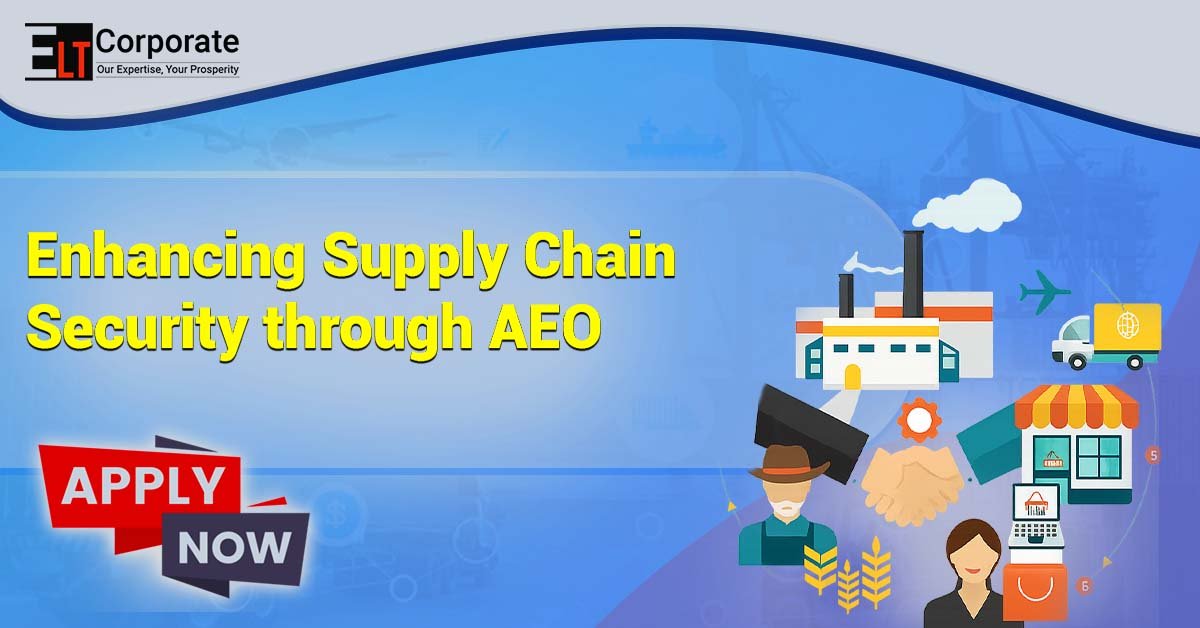
How AEO Certificate Improves Supply Chain Security
Supply chain is the entire process of a product, from the factory to the purchaser. It comprises transport, warehousing, customs inspections, etc. If only one step is compromised, it may result in:
Stolen or adulterated goods
Counterfeit or illegal merchandise is finding its way in
Delays in delivery
Loss of customer confidence
That’s why keeping this chain secure and strong is extremely essential.
How AEO Helps Keep Your Supply Chain Safe
When a business becomes AEO certified, it’s known as a trustworthy and secure partner to trade with around the world. Here’s why AEO makes an impact:
1. Customs Business Check
Customs verifies the following before awarding the AEO certificate:
- Your financial credibility
- Your history with Customs (whether you abide by rules)
- Security on your premises (such as cameras, ID checks)
- Data security measures (computer security)
- If your employees are trained and trustworthy
Only serious and compliant businesses clear this check.
2. Secured Warehouses & Access Control
- AEO-certified businesses are required to:
- Secure storage points with CCTV and restricted access
- Make use of sealed containers and tamper-proof packaging
- Have records of who came in and when
- This minimizes the likelihood of smuggling or stealing.
3. Improved Data & Document Control
AEO businesses utilize computerised systems to:
- Prevent fraud or modifications to shipping documents
- Monitor commodities at each point
- Maintain accurate documentation
- They frequently utilise ERP software to manage trade and customs information securely.
4. Trained and Reliable Personnel
AEO-certified company staff are:
- Trained on customs regulations and security procedures
- Screened their background to determine whether they work on sensitive duties
- Instructed on how to react in emergencies
- This constructs an effective and responsive staff.
5. Accelerated Customs Clearance
AEO firms are reputed, therefore:
- Their cargo is inspected less frequently
- They receive quicker clearances in ports and airports
- They incur less in storage or penalty fees
- Time-sensitive products (such as medicine) arrive speedily
- This is cost-saving and risk-reducing.
Benefits to Business from an AEO Certificate
Benefit: How it Assists
- Less Customs Inspection, quicker clearances, fewer delays
- Direct Port Delivery: Not having to relocate goods to the warehouse first
- Deferred Duty Payment
- Pay duties later → Improved cash flow
- Worldwide Recognition
- Trusted by other nations → Smooth exports
- Competitive Advantage
- Perceived as secure and professional → Increased business
- Dedicated Customs Support: Easier complaint fixing and swift assistance from authorities
- AEO and India’s Global Push
India is strongly promoting the AEO program to make trade easier. The government (CBIC) has simplified the process and keeps updating rules to help businesses apply easily.
India also has partnerships (MRAs) with countries like Japan and South Korea, and is working on more deals with the US, EU, etc. This means if you’re AEO certified in India, you’re treated as trustworthy in many other countries too.
Example: How AEO Benefited a Pharma Exporter
Suppose a firm exports vaccines, which are perishable if not stored cold. If they are kept waiting at Customs or if the handling is poor, they get spoiled.
After obtaining AEO:
Their products were cleared quickly
Warehouses were more secure
Employees were better trained
Result? Less wastage, improved brand image, and long-term contracts from international buyers.
How to Get AEO Certified?
Here’s an easy step-by-step:
1. Check Eligibility
- You should have processed a minimum of 25 customs consignments during the past year.
- You need to be active in exports and imports.
2. Gather Documents
- AEO Application Form (T1, T2, T3, or LO)
- PAN, IEC, GST, shipping records
- Information about staff, site, security, finances, and IT systems
3. Submit the Form
- Online at the CBIC AEO portal
- Or hand it over to your Customs officer
4. Verification & Visit
- For T2/T3/LO: Customs will visit and scrutinise your premises and documents.
5. Obtain the Certificate
- If approved, AEO status is given for 3 years
- Can be renewed before expiry
Renewal of AEO Certificate
Status under the Authorized Economic Operator (AEO) program remains active for thirty-six months from the date of issuance. Firms wishing to retain associated advantages must file a renewal application prior to lapse. The procedure is streamlined and can be accomplished electronically through the CBIC AEO portal.
Upload a self-declaration attesting to continual adherence to AEO requirements.
Include revised security, financial, and personnel information where modifications have occurred.
Customs may carry out targeted verifications on Tier-2, Tier-3, or Logistics Operator certificate holders.
A prompt renewal averts disruption of benefits that include expedited clearance, enhanced international standing, and a lower incidence of inspections.
Conclusion
Getting an AEO certificate is not just about following the rules—it’s about showing the world that your business is secure, responsible, and ready for international growth.
If you’re an exporter, importer, or logistics provider, AEO helps you:
- Avoid delays
- Gain customer trust
- Get international recognition
In the world of delays, dangers, and growing regulations, today’s world, AEO is not a choice—it’s the intelligent path forward.
FAQ
- How does AEO certification make supply chains secure?
AEO-certified companies have high-security and compliance measures, reducing the chance of fraud and other illegal activities. It provides secure transport.
- What are the obligatory security elements in AEO certification?
Organisations must provide physical security (e.g. CCTV, access control), personnel screening, a secure IT environment, and written instructions.
- Will AEO certification assist in case of customs delays or worldwide issues?
Yes. AEO-certified businesses are low risk, and therefore they receive precedence clearance and support.