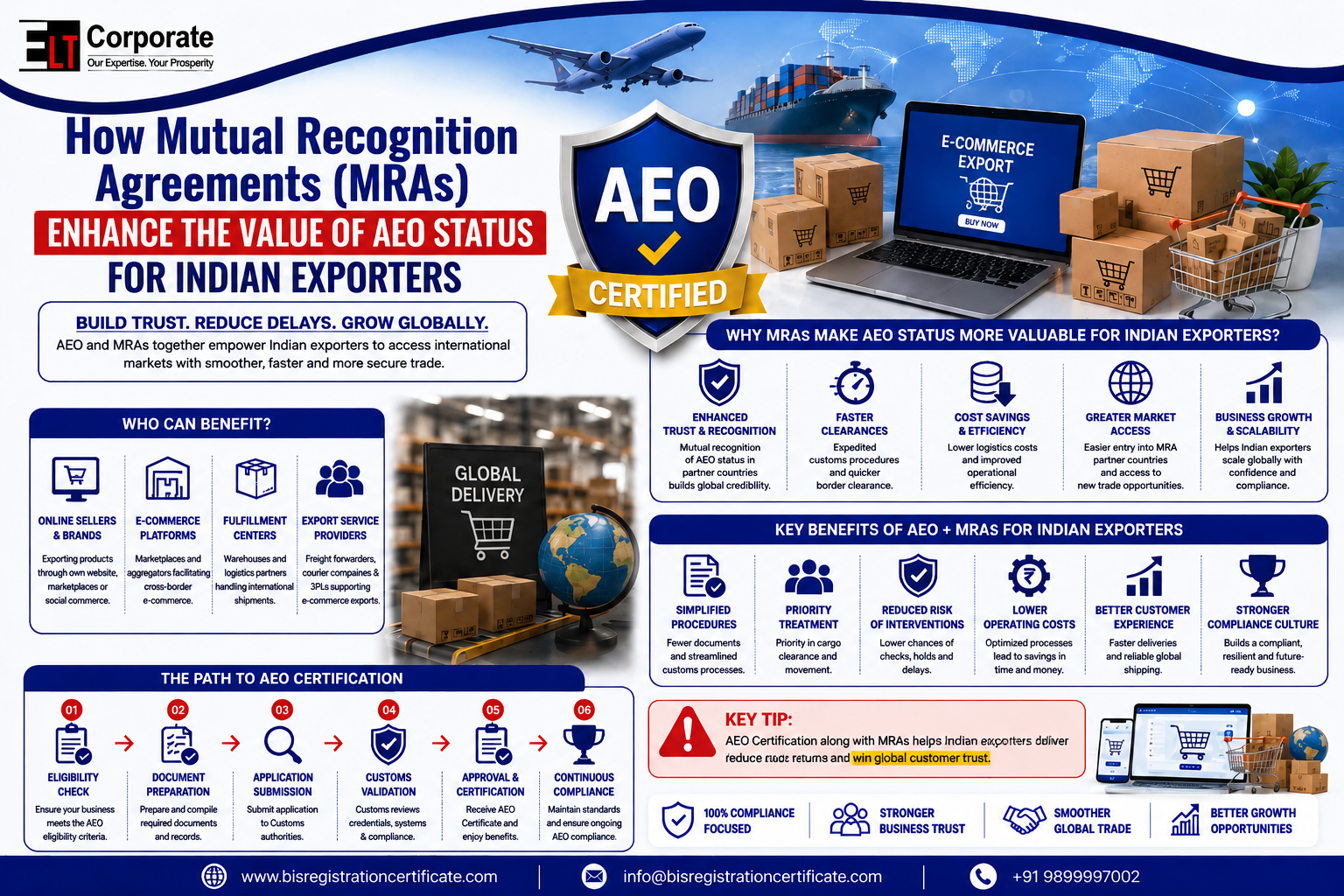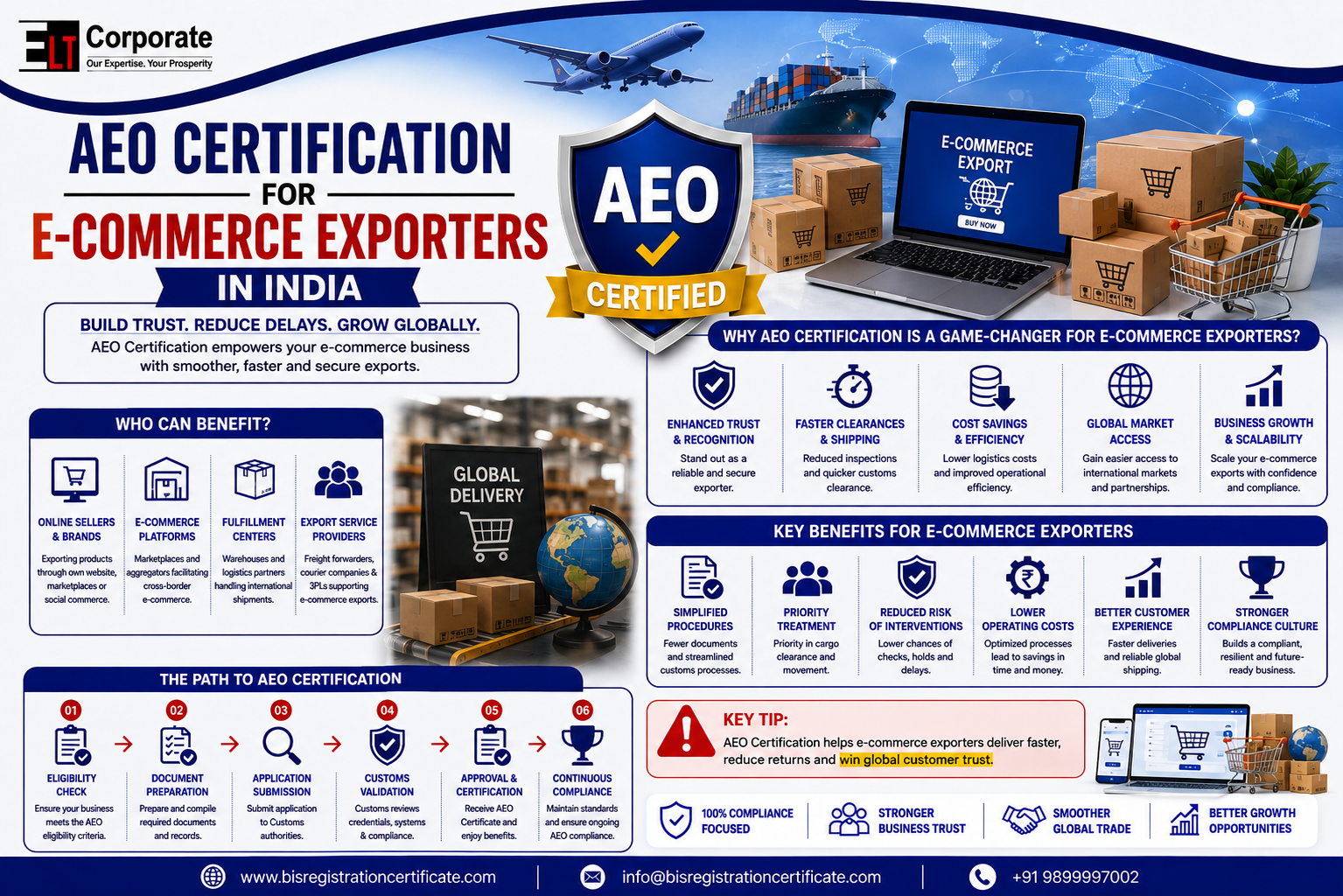
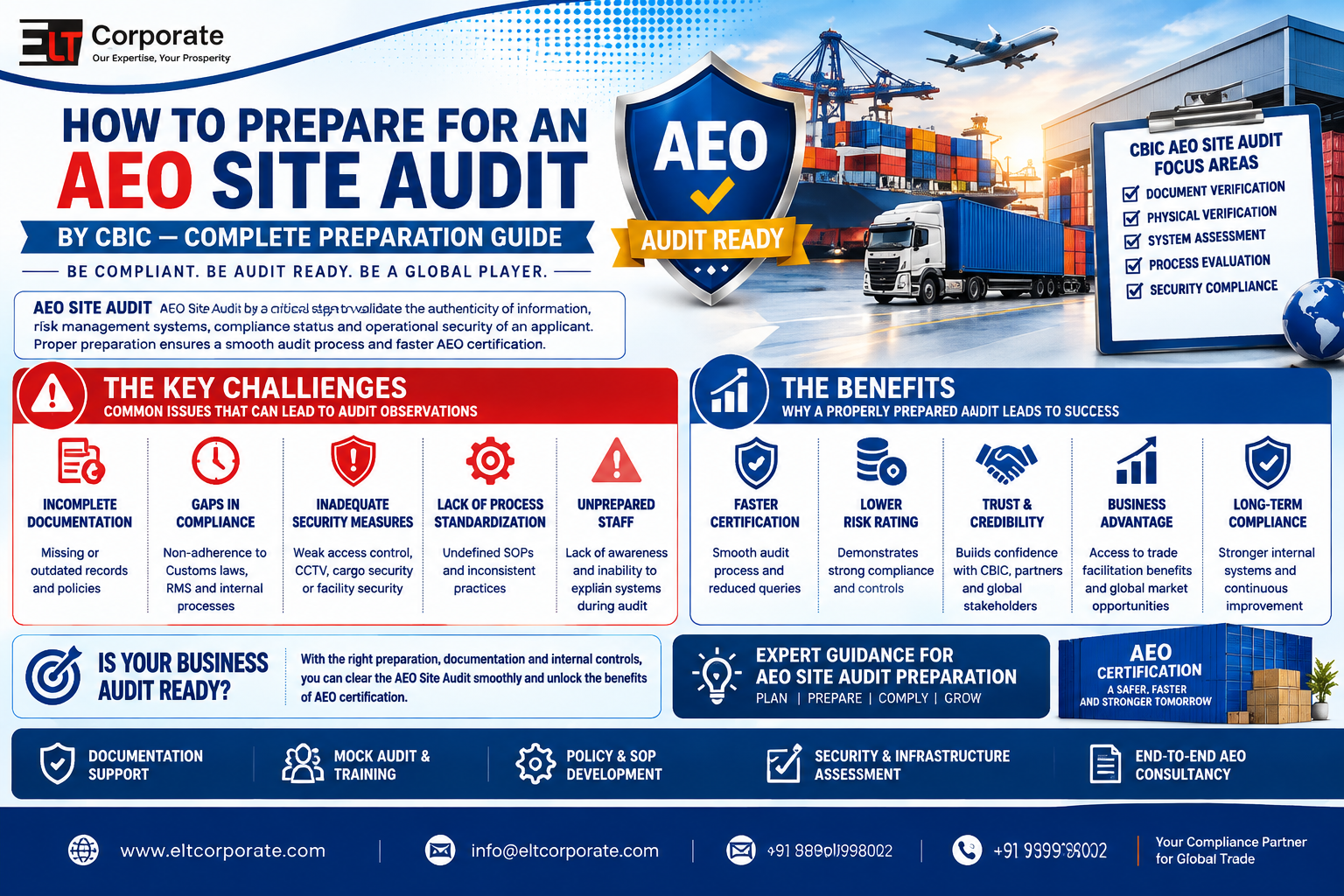
The AEO Site Audit by CBIC is an important part of the Authorized Economic Operator (AEO) certification process for businesses involved in international trade activities.
The AEO program recognizes businesses that maintain strong customs compliance, secure supply chain practices, and effective internal control systems. The program is administered by the Central Board of Indirect Taxes and Customs (CBIC) in India.
For companies applying for higher AEO certification levels, preparation for the AEO Site Audit by CBIC is essential because customs officials evaluate business processes, security measures, documentation systems, and compliance practices.
A well-prepared organization can demonstrate transparency, reliability, and readiness during the audit process.
What is an AEO Site Audit by CBIC?
An AEO Site Audit by CBIC is a physical verification process where customs authorities review the applicant’s operational procedures, security controls, and compliance systems.
During the audit, CBIC officers may examine:
- Company infrastructure
- Import-export records
- Customs compliance history
- Supply chain security measures
- Employee verification procedures
- IT security systems
- Cargo handling processes
- Warehouse security
- Documentation controls
The objective of the AEO Site Audit by CBIC is to verify whether the applicant maintains the required standards for becoming a trusted trade partner.
Why is the AEO Site Audit by CBIC Important?
The AEO Site Audit by CBIC helps customs authorities assess whether an applicant has:
✔ Effective customs compliance procedures
✔ Secure supply chain management
✔ Proper documentation systems
✔ Risk management practices
✔ Internal monitoring mechanisms
AEO Site Audit by CBIC is based on trust between customs and businesses involved in global trade. The Indian AEO program includes different certification levels such as AEO T1, AEO T2, and AEO T3.
AEO Site Audit by CBIC: Corrective Action Management
If CBIC identifies observations during the audit, businesses should respond properly.
The corrective action process includes:
- Understanding the observation
- Identifying the root cause
- Implementing corrective measures
- Documenting improvements
- Providing supporting evidence
A structured corrective action in an AEO Site Audit by CBIC demonstrates continuous improvement.
Role of SOPs in AEO Site Audit by CBIC
Standard Operating Procedures (SOPs) play a critical role during the AEO Site Audit by CBIC.
Companies should maintain SOPs for:
- Import-export operations
- Customs compliance
- Cargo handling
- Warehouse management
- Security controls
- Employee access
- Incident reporting
Well-documented SOPs help demonstrate that business processes are controlled and consistently followed.
Continuous Compliance After AEO Certification
Preparing only for the AEO Site Audit by CBIC is not enough.
After obtaining AEO certification, businesses should continue maintaining:
- Updated security procedures
- Regular internal reviews
- Employee training
- Compliance monitoring
- Proper record maintenance
AEO certification requires ongoing commitment to AEO Site Audit by CBIC compliance and supply chain security.
Why Choose an AEO Certificate for AEO Site Audit by CBIC Preparation?
Businesses preparing for the AEO Site Audit by CBIC often require expert assistance with documentation, compliance assessment, and audit readiness.
The AEO Certificate provides professional AEO compliance services, including:
AEO Certification Consultancy
Support for businesses applying for AEO certification.
AEO Documentation Preparation
Assistance with:
- Application documentation
- Self-assessment forms
- SOP preparation
- Compliance records
AEO Site Audit by CBIC Preparation Support
Services include:
- Pre-audit assessment
- Compliance gap analysis
- Mock audit support
- Documentation review
AEO Renewal and Compliance Support
Assistance in maintaining AEO Site Audit by CBIC after certification.
Importance of Management Support During AEO Site Audit by CBIC
Senior management involvement improves audit readiness.
Management should support:
- Compliance policies
- Security investments
- Employee training
- Internal monitoring
- Process improvements
AEO compliance requires organization-wide participation.
AEO Site Audit by CBIC: Security Measures Companies Should Maintain
Security is a major evaluation area.
Companies should implement:
Physical Security
- CCTV surveillance
- Security guards
- Entry restrictions
- Visitor logs
Information Security
- Password policies
- User permissions
- Data backup
- Cybersecurity controls
Transportation Security
- Verified transporters
- Vehicle monitoring
- Shipment tracking
AEO Site Audit by CBIC Preparation Checklist
Proper preparation is the key to successfully completing an AEO Site Audit by CBIC.
Businesses should prepare the following areas before the audit.
1. Review AEO Eligibility Requirements
Before facing the AEO Certification, companies should confirm that they meet the basic eligibility requirements.
Important factors include:
- Business establishment in India
- Customs-related activities
- Satisfactory compliance history
- Financial stability
- Proper customs documentation
CBIC guidelines specify eligibility conditions for entities applying under the AEO program.
2. Prepare Complete AEO Documentation
Documentation is one of the most important areas during an AEO Site Audit by CBIC.
Companies should maintain:
Company Documents
- Certificate of Incorporation
- PAN Card
- GST Registration Certificate
- Import Export Code (IEC)
- Organization structure
- Company profile
Customs Documents
- Bills of Entry
- Shipping Bills
- Customs declarations
- Import-export records
- Duty payment records
- Customs correspondence
Financial Documents
- Audited financial statements
- Balance sheets
- Profit and loss statements
- Bank details
Compliance Documents
- Internal compliance policies
- SOP manuals
- Risk management documents
- Audit reports
3. Prepare Supply Chain Security Documents
During the AEO Site Audit by CBIC, supply chain security is a major focus area.
Companies should maintain procedures related to:
Cargo Security
- Cargo handling procedures
- Container security process
- Loading and unloading controls
- Seal management system
Warehouse Security
- CCTV monitoring
- Restricted access areas
- Visitor records
- Security monitoring
Transportation Security
- Transporter verification
- Vehicle tracking process
- Route monitoring procedures
4. Employee Security and HR Documentation
CBIC may review employee-related security measures during the AEO Site Audit by CBIC.
Companies should maintain:
- Employee background verification records
- Identity verification process
- Training records
- Security awareness programs
- Employee access control records
5. IT Security Preparation for AEO Site Audit by CBIC
Modern businesses depend heavily on digital systems.
During the AEO Certification, companies should demonstrate proper IT security controls.
Important documents include:
- IT security policy
- User access controls
- Password management policy
- Data backup procedures
- Cybersecurity measures
- ERP system controls
6. Customs Compliance Management System
A strong customs compliance system improves readiness for the AEO Site Audit by CBIC.
Companies should maintain:
- Customs compliance checklist
- Classification procedures
- Valuation procedures
- Record retention policy
- Internal review mechanism
- Error correction procedures
7. Conduct an Internal Mock AEO Audit
Before the actual AEO Certification, companies should conduct an internal assessment.
A mock audit helps identify:
- Missing documents
- Process gaps
- Security weaknesses
- Documentation issues
- Employee awareness gaps
The internal review should cover all areas that CBIC officers may examine during the site visit.
How to Prepare Employees for AEO Site Audit by CBIC
Employee awareness is an important part of audit preparation.
Businesses should train employees on:
- AEO program objectives
- Security responsibilities
- Document handling procedures
- Reporting suspicious activities
- Access control policies
- Emergency procedures
Employees should be able to explain their roles during the AEO Site Audit by CBIC.
Common Mistakes During AEO Site Audit by CBIC
1. Poor Documentation Management
Incomplete records can create difficulties during the audit.
2. Lack of Security Procedures
Companies should have documented security systems rather than informal practices.
3. Employee Awareness Issues
Employees should understand their responsibilities related to supply chain security.
4. No Internal Audit Process
A company should regularly review its compliance status.
5. Incorrect Information in Application
Information submitted during the AEO application should match actual business practices.
How to Successfully Complete an AEO Site Audit by CBIC
Follow these steps:
Step 1: Conduct Gap Analysis
Identify differences between current processes and AEO requirements.
Step 2: Prepare Documentation
Organize all required documents before the audit.
Step 3: Train Employees
Ensure employees understand security and compliance procedures.
Step 4: Review Physical Security
Check warehouses, offices, and operational locations.
Step 5: Conduct Mock Audit
Simulate the actual CBIC audit process.
Step 6: Maintain Transparency
Provide accurate information and supporting documents.
Technology and Digital Systems in AEO Compliance
Modern technology helps businesses improve AEO readiness.
Companies can use:
- ERP systems
- Digital document management
- Inventory tracking systems
- CCTV monitoring
- Access control software
- Shipment tracking solutions
During the AEO Site Audit by CBIC, effective technology systems can demonstrate better control over business operations.
Benefits of Being Prepared for AEO Site Audit by CBIC
Proper preparation helps businesses:
- Improve audit readiness
- Reduce compliance risks
- Strengthen supply chain security
- Improve operational controls
- Build trust with customs authorities
AEO Site Audit by CBIC: Customs Record Retention Requirements
Maintaining proper records is essential for audit readiness.
Businesses should maintain:
- Import documents
- Export documents
- Commercial invoices
- Packing lists
- Purchase orders
- Bills of Entry
- Shipping Bills
- Duty payment records
- Customs correspondence
Proper record retention helps demonstrate transparency during the AEO Site Audit by CBIC.
Documents Required for AEO Site Audit by CBIC
A complete documentation AEO Site Audit by CBIC checklist includes:
- Incorporation certificate, GST, IEC
- Bills of Entry, Shipping Bills
- Audited financial statements
- CCTV records, access policies
- Employee verification documents
- Cybersecurity policies
- Process manuals
How an AEO Certificate Helps Businesses with an AEO Site Audit by CBIC
Preparing for an AEO Certification requires a detailed understanding of compliance requirements, documentation standards, and audit procedures.
The AEO Certificate provides professional support for businesses seeking AEO Certification in India.
Their services include:
AEO Certification Consultancy
Guidance for businesses applying for AEO T1, T2, T3, and other applicable certifications.
AEO Documentation Support
Assistance in preparing:
- AEO application documents
- Self-assessment forms
- Compliance records
- SOP documentation
AEO Audit Preparation
Support for preparing companies for the AEO Site Audit by CBIC, including:
- Gap analysis
- Compliance review
- Documentation checking
- Mock audit preparation
Supply Chain Security Assessment
Evaluation of:
- Warehouse security
- Cargo handling procedures
- IT security systems
- Employee security controls
End-to-End AEO Compliance Support
From application preparation to audit readiness, businesses can receive complete guidance for achieving and maintaining AEO compliance.
Conclusion
The AEO Certification is a detailed evaluation of a company’s customs compliance, documentation practices, and supply chain security systems.
Successful preparation requires:
✔ Complete documentation
✔ Strong internal controls
✔ Secure operational procedures
✔ Employee awareness
✔ Proper compliance management
Businesses planning to apply for AEO Certification should begin preparation early and ensure that their processes meet CBIC expectations.
With professional guidance from AEO Certificate, companies can improve their readiness and approach the AEO Site Audit by CBIC with confidence.
Frequently Asked Questions
Q1. What is an AEO Site Audit by CBIC?
An AEO Certification is a physical verification conducted by Customs authorities to assess an applicant’s compliance, security, and operational processes.
Q2. What documents are required for an AEO Site Audit by CBIC?
Documents include company records, customs documents, financial records, security policies, HR records, and IT security documents.
Q3. How can a company prepare for an AEO Site Audit by CBIC?
Companies should conduct a gap analysis, organize documents, review security procedures, train employees, and perform mock audits.
Q4. Is physical verification required for AEO Certification?
For certain AEO categories, CBIC may conduct site verification as part of the assessment process.
Q5. Can consultants help with AEO Site Audit preparation?
Yes, professional AEO consultants can assist with documentation, compliance review, gap analysis, and audit preparation.