If you run a small or medium-sized export business in India, you have probably heard about AEO certification. Maybe your customs broker mentioned it. Maybe a larger competitor has it. Or maybe you came across it while trying to understand why your shipments keep getting held up at ports.
And the question you are really asking is: Is it actually worth my time, effort, and money?
The honest answer — yes, but with important nuances that most generic articles skip over. This guide gives you the real picture: what AEO certification does for small and medium exporters specifically, what the CBIC has done to make it accessible, what challenges still exist, and how to decide whether now is the right time for your business.
What Is AEO Certification?
AEO stands for “Authorised Economic Operator.” It is a voluntary certification program run by the Central Board of Indirect Taxes and Customs (CBIC), based on the World Customs Organisation’s SAFE Framework of Standards. India launched it through Circular 33/2016-Customs (July 22, 2016), aligned with Article 7.7 of the WTO Trade Facilitation Agreement.
In simple terms, it is a “trusted trader” status. Businesses that demonstrate high standards of compliance, financial solvency, and supply chain security are recognised by Indian Customs as low-risk and rewarded with significant trade facilitation benefits.
There are four tiers:
| Tier | Who It’s For | Verification Type |
| AEO-T1 | Any exporter/importer — including MSMEs | Document-based, self-declaration |
| AEO-T2 | Established, compliant businesses | Document + physical site verification |
| AEO-T3 | Large, high-compliance companies | Comprehensive audit + inspection |
| AEO-LO | Logistics operators, customs brokers, and warehouses | Sector-specific verification |
For most small and medium exporters, the starting point is AEO-T1 — and that is where the real conversation begins.
The Reality Check: What SMEs Actually Struggle With
Before diving into benefits, it is worth being honest about why many small and medium exporters have historically stayed away from AEO certification. According to a joint report by the International Chamber of Commerce, WCO, and WTO on MSME integration into AEO programs, the core barriers are
- Lack of awareness: Many SMEs simply do not know the programme exists or find available guidance too complex to act on
- Resource constraints: Smaller firms often lack the dedicated compliance staff that larger companies take for granted
- Perceived cost-benefit imbalance: Some SMEs doubt whether the benefits outweigh the effort of certification
- Documentation burden: The original AEO framework was built with larger enterprises in mind
CBIC acknowledged these barriers—and in December 2020, introduced the Liberalized MSME AEO Package specifically to address them. The program has been significantly more accessible to small businesses ever since.
The MSME AEO Package: What Changed for Small Exporters
Through CBIC Circular No. 54/2020-Customs (December 15, 2020), the following relaxations were introduced for MSMEs:
| Requirement | Earlier (Non-MSME) | Now (MSME Package) |
| Minimum customs documents per year | 25 documents | 10 documents (5 per half-year) |
| Years of customs activity required | 3 financial years | 2 financial years |
| AEO-T1 processing time | 30 days | 15 working days |
| AEO-T2 processing time | 6 months | 3 months |
| Annexures for AEO-T1 | Multiple (complex) | 2 simplified annexures |
| Annexures for AEO-T2 | Multiple (complex) | 3 simplified annexures |
| Bank Guarantee (MSME AEO-T1) | 50% of the non-AEO requirement | 25% of the non-AEO requirement |
| Bank Guarantee (MSME AEO-T2) | 25% of the non-AEO requirement | 10% of the non-AEO requirement |
Additionally, the application fee for AEO certification is zero. There is no government fee to apply.
This is a meaningful shift. A small textile exporter in Surat or a mid-sized engineering goods exporter in Pune—with 10+ annual customs documents and 2 years of activity — is now fully eligible for AEO-T1.
What AEO-T1 Actually Gives a Small Exporter: The Real Benefits
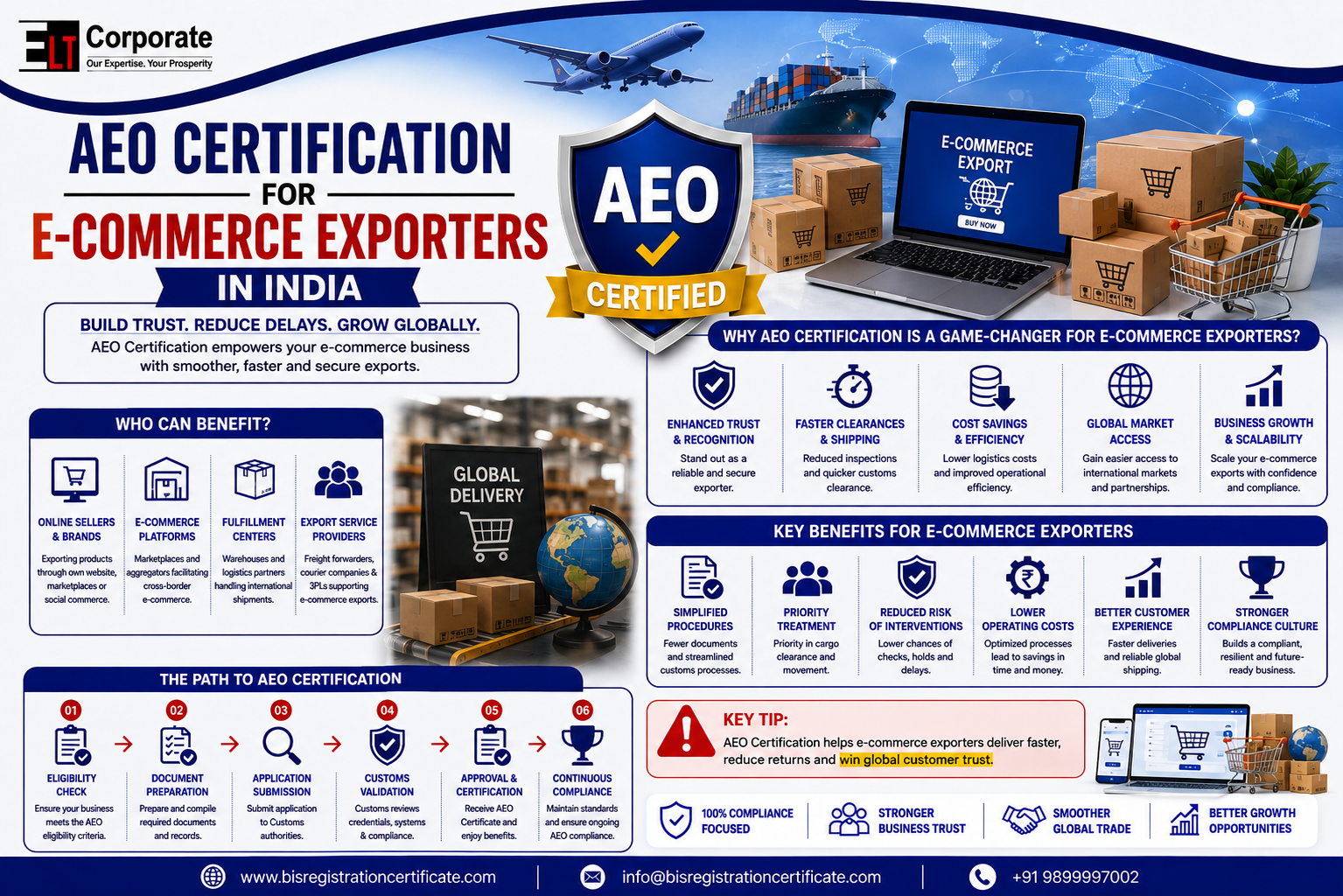
Let us be specific. Here is what AEO-T1 certification delivers for small and medium exporters in practical terms:
1. Faster Customs Clearance — Every Single Shipment
AEO-certified businesses are flagged as low-risk in CBIC’s automated risk management system. This means your shipments receive priority processing, fewer document checks, and significantly less cargo inspection. For a business shipping regularly, this compounds into meaningful time savings across the year.
For context: a pharmaceutical exporter with AEO-T2 certification has been cited as experiencing up to 40% faster customs clearance times — directly enabling timely delivery commitments to overseas buyers.
2. Direct Port Entry (DPE) for Export Shipments
AEO holders can avail of Direct Port Entry for factory-stuffed containers meant for export. This means your container moves directly to the port without waiting in common yards—cutting dwell time and reducing risk of cargo damage or pilferage.
3. Direct Port Delivery (DPD) for Imports
For businesses that both import and export (common in manufacturing), AEO-T1 enables Direct Port Delivery—goods move from the port directly to your warehouse for just-in-time inventory management without sitting in CFS (Container Freight Stations).
4. Significantly Reduced Bank Guarantee Requirements
For MSME AEO-T1 holders, bank guarantees are reduced to just 25% of what non-AEO exporters are required to furnish. For AEO-T2, this drops further to 10%. For businesses where capital is always constrained, this directly frees up working capital.
5. Priority Duty Drawback Dispersal
AEO-certified entities receive faster dispersal of drawback amounts. For exporters who depend on duty drawback as a core part of their margin calculation, faster refunds directly improve cash flow, which matters enormously for smaller businesses.
6. Self-Declaration of SION (Major for Advanced Authorization Users)
Under the Foreign Trade Policy, AEO exporters can self-declare Standard Input Output Norms (SION) when they are not officially notified. This eliminates the need to approach the Norms Committee—saving significant time for exporters using Advance Authorisation schemes to import inputs duty-free.
7. Acceptance of Self-Certified Copies of FTA/PTA Certificates
For exporters leveraging Free Trade Agreements (FTAs) or Preferential Trade Agreements (PTAs), AEO holders can submit self-certified copies of origin certificates rather than getting them attested each time—reducing paperwork and administrative burden per shipment.
8. Dedicated Client Relationship Manager (AEO-T2 onwards)
At AEO-T2, businesses receive a dedicated customs officer as a single point of contact for resolving concerns. For smaller businesses that lack in-house expertise to navigate customs queries, this is genuinely valuable.
What About International Recognition?
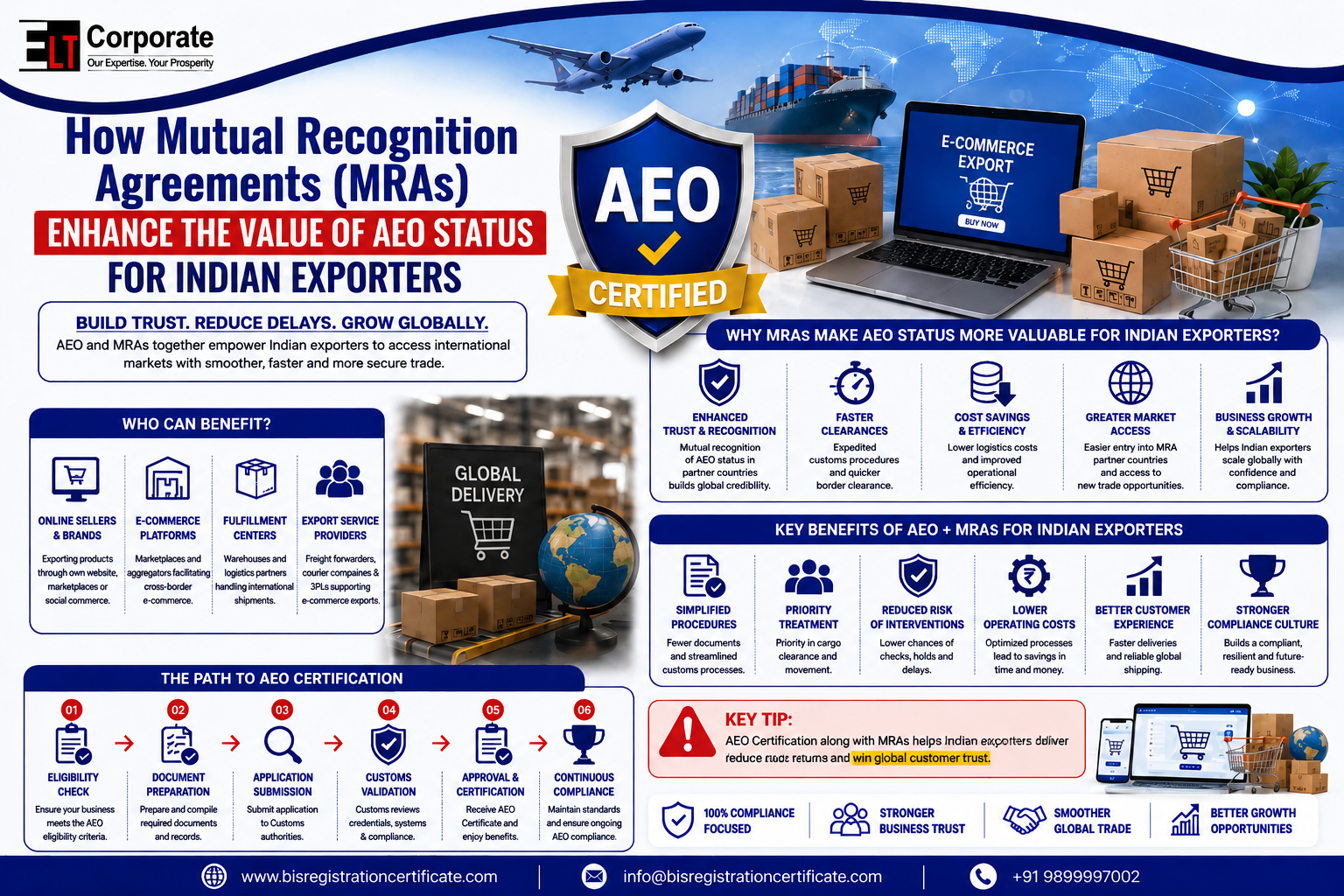
India has signed Mutual Recognition Arrangements (MRAs) with several countries—meaning your AEO status is recognised by partner customs administrations, translating into expedited treatment on arrival in those markets too.
India’s current MRA network (2025):
- South Korea — in force
- Hong Kong — in force
- Singapore — signed May 2025
- USA, UAE, Taiwan, EU — negotiations in progress
For small exporters targeting South Korea, Singapore, or Hong Kong, AEO status means your shipments face fewer inspections on the other end too — a real competitive advantage when competing with other suppliers from non-MRA countries.
Is There Any Downside for Small Exporters?
Yes — and it is worth being honest about this.
Documentation Preparation Takes Effort
Even with the MSME relaxations, AEO-T1 requires organized compliance records, proper books of accounts, basic security infrastructure (CCTV, visitor logs, restricted access), and a clean customs record with no major Show Cause Notices in the last 3 years. If your business has gaps in any of these areas, you will need to address them before applying.
Ongoing Compliance is Required
AEO is not a one-time certification and done. You must maintain compliance continuously. CBIC can suspend or revoke AEO status if post-certification audits reveal violations. This requires a minimum level of internal discipline that very small businesses sometimes underestimate.
Benefits are Most Felt at Higher Shipment Volumes
If you are shipping only 10–15 consignments per year, the per-shipment benefits of faster clearance, while real, may not add up to transformative savings immediately. AEO-T1 begins to deliver its strongest ROI when you are shipping regularly and customs delays have a direct, measurable cost.
Show Cause Notices (SCNs) Can Block Eligibility
If your company has received a significant Show Cause Notice involving fraud, misclassification, or non-payment of taxes in the last 3 years, you are not eligible until that is resolved. This is a hard barrier that must be addressed before applying.
Who Should Apply Right Now?
AEO-T1 is worth pursuing immediately if your business:
- Has handled at least 10 customs documents in the last financial year (MSME package threshold)
- Has been involved in customs-related activities for at least 2 financial years
- Has a clean compliance record — no major SCNs in the last 3 years
- Maintains proper books of accounts and basic security infrastructure
- Ships regularly enough that customs delays have a measurable cost — demurrage, delayed buyer payments, inventory disruption
- Exports to or imports from South Korea, Singapore, or Hong Kong (MRA countries)
- Uses Advance Authorization — SION self-declaration benefit alone can justify certification
Consider waiting or preparing first if:
- You have active SCNs or compliance disputes with customs
- Your record-keeping and documentation systems need significant improvement
- You are below the 10-document annual threshold
Sector-Wise: Which SME Exporters Gain the Most?
| Sector | Why AEO Matters Most |
| Textiles & Garments | Seasonal deadlines — clearance delays mean missed buyer windows |
| Engineering Goods | High-value cargo; just-in-time delivery commitments to OEM buyers |
| Pharmaceuticals | Time-sensitive, regulated cargo; 40% faster clearance reported |
| Gems & Jewellery | CBIC has specifically extended AEO status to this sector (2024–25) |
| Agri-Exports & Perishables | Cargo spoilage risk — every hour at port is a direct loss |
| Chemicals & Specialty Products | High inspection frequency without AEO — certification dramatically reduces this |
The Numbers Tell the Story
As of April 30, 2025, India has:
- 3,480 AEO-T1 companies registered
- 1,191 AEO-T2 companies registered
- 212 AEO-T3 companies registered
- 940 AEO-LO logistics operators registered
India’s AEO program has received global recognition at the WTO specifically for boosting MSME participation in international trade and streamlining customs compliance. The program has demonstrably reduced port dwell times and lowered compliance costs across India’s trade ecosystem.
The businesses getting certified now — including small and medium exporters — are the ones who will have a measurable advantage as India’s export volumes scale toward the $5 trillion economy target.
So — Is It Worth It?
For most small and medium exporters who meet the basic eligibility criteria: yes, unambiguously.
The application is free. The MSME package has dramatically lowered the eligibility bar and the documentation burden. The benefits — faster clearance, reduced bank guarantees, faster drawback, DPE/DPD privileges, and growing MRA coverage — are tangible and compounding.
The real question is not whether AEO is worth it. The real question is: how long can your business afford to compete without it while your competitors who have it get faster clearances, lower costs, and preferred treatment from international buyers?
Ready to Apply? Here Is What to Do Next
Getting AEO-T1 as an MSME is the most achievable starting point—and with faster processing timelines (often within a few weeks for MSMEs, subject to application completeness)
We help small and medium exporters across India with:
- Eligibility assessment — know exactly where you stand before applying
- Compliance gap analysis — identify and close gaps before submission
- Complete AEO-T1 and T2 application preparation
- Document compilation and annexure preparation (MSME package)
- Query handling and follow-up with CBIC
Don’t let the paperwork hold you back. Talk to our AEO certification experts today →