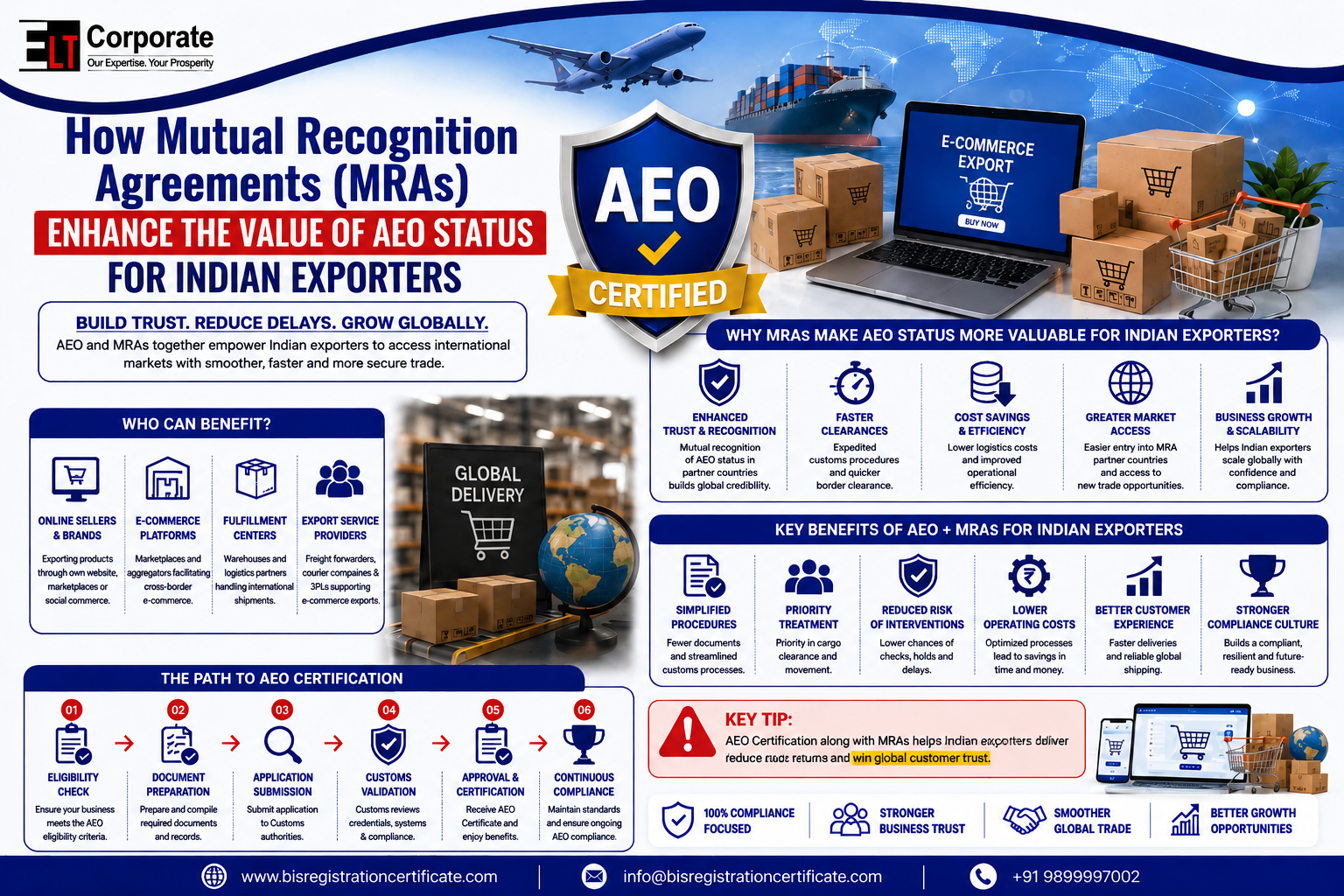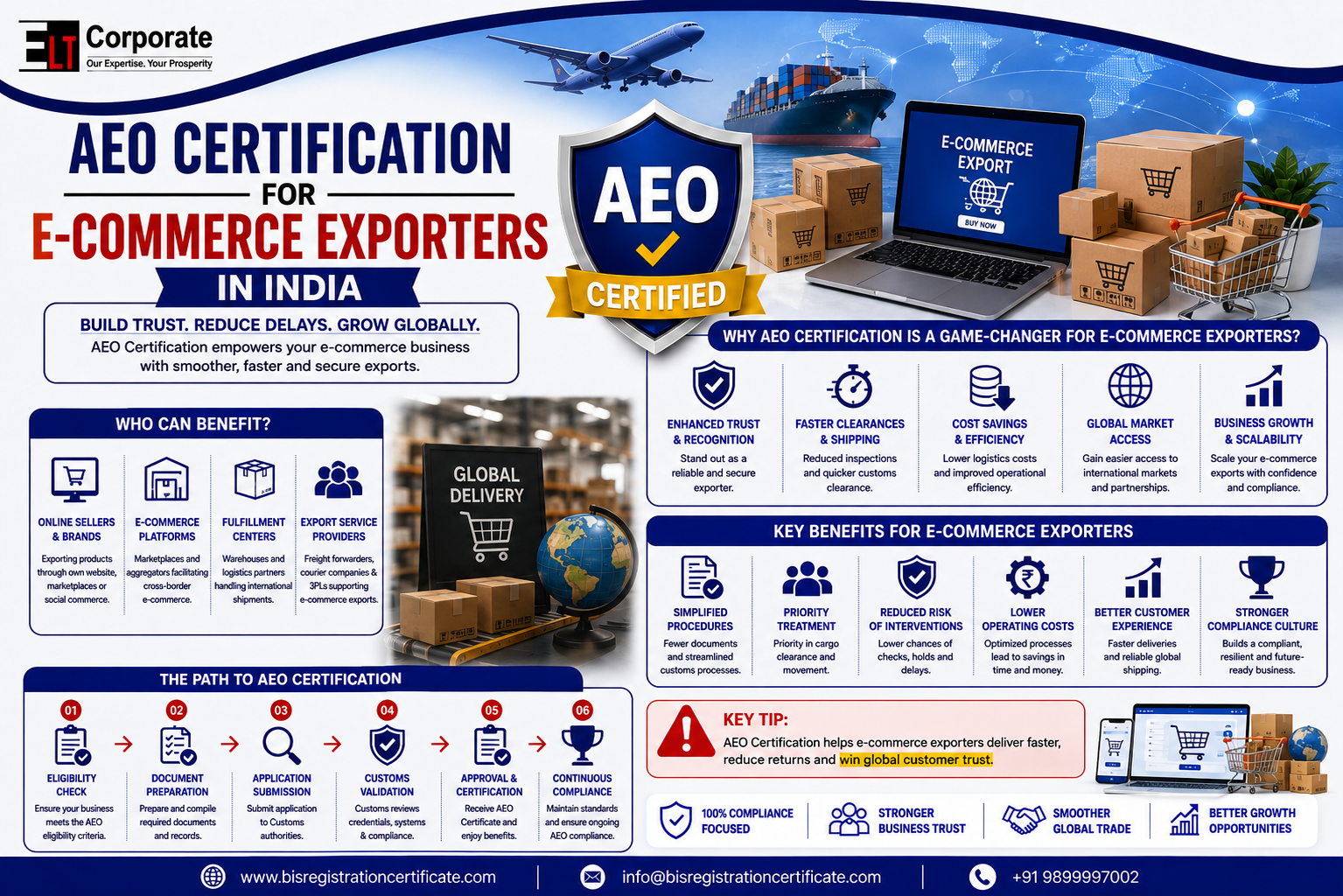

The AEO application is free. The portal is online. The guidelines are publicly available on aeoindia.gov.in. So why do so many businesses — importers, exporters, manufacturers — end up with delayed approvals, repeated CBIC queries, or outright rejections when they attempt the process on their own?
The answer is not that AEO is complicated in theory. It is that the gap between understanding AEO and executing a successful application is wider than most businesses anticipate — and the cost of that gap is measured in months, not days.
This guide gives you an honest, specific look at where self-applications go wrong, what professional AEO consulting actually does, and how to decide whether it makes sense for your business.
First: Is Self-Application Even Possible?
Yes — and for AEO-T1, a well-organised business with clean compliance records, complete documentation, and an experienced in-house trade compliance team can absolutely self-apply successfully.
But here is the reality for most businesses:
- The application requires a thorough internal compliance gap analysis — most businesses have never done one
- The annexures require precise, structured documentation of security protocols, SOPs, financial records, and trade history — formats that are unfamiliar to most finance or logistics teams
- For AEO-T2 and T3, a mandatory physical site inspection by CBIC officers requires preparation that goes far beyond form-filling
- Show Cause Notice history must be evaluated carefully before applying — an overlooked SCN can cause immediate rejection
- Any deficiency noticed within 30 days triggers a formal deficiency notice — and the clock resets
The question is not whether self-application is possible. It is whether the time, internal resources, and risk of errors are worth it compared to working with experienced consultants.
For most businesses — particularly those applying for T2, T3, or AEO-LO — the answer consistently favours professional support.
The Real Cost of a Delayed or Rejected AEO Application
Before we get into what consulting does, it is worth being specific about what is at stake when an application goes wrong.
1. Lost Time = Lost Benefits
Every month your AEO application is delayed is a month your business continues to operate without:
- Faster customs clearance on every shipment
- Reduced or waived bank guarantees
- Direct Port Entry and Direct Port Delivery privileges
- Priority duty drawback processing
- Deferred duty payment (T2/T3)
For a business shipping 50 consignments per year, even a 3-month delay in certification translates to approximately 12–15 shipments processed without AEO benefits — with all the associated clearance delays, inspection costs, and capital locked in bank guarantees.
2. Each Query Cycle Costs 4–8 Weeks
When CBIC raises a deficiency notice or query, your application is paused until you respond. A complete, well-evidenced response can move things forward quickly. A partial or unclear response triggers another round. Each cycle adds 4–8 weeks to your timeline — compounding if there are multiple deficiencies.
3. Rejection Means Starting Over
If your application is rejected, you can reapply — but only after correcting the underlying issues. Rejection resets the entire process. For AEO-T1, this means another 30-working-day review cycle from scratch. For T2 and T3, it means another round of site inspections and document verification — adding months to what should have been a single-pass process.
4. SCN-Related Rejections Can Be Avoided
One of the most common — and most preventable — rejection reasons is an undisclosed or unresolved Show Cause Notice (SCN). A big hurdle in AEO applications is Show Cause Notices. If your company received an SCN in the last 3 years involving fraud, misclassification, suppression, or non-payment of collected taxes, you may not be eligible. An experienced consultant identifies SCN exposure before the application is filed — not after rejection.
What Specifically Goes Wrong in Self-Applications
Based on common rejection patterns from CBIC’s AEO review process, these are the most frequent failure points for businesses that apply without professional support:
| Common Self-Application Failure | What Actually Happens |
| Eligibility not properly assessed before applying | SCN history, IEC/GST inconsistencies, or document volume shortfall causes rejection after significant time investment |
| Annexures incomplete or incorrectly formatted | CBIC issues deficiency notice within 30 days — timeline resets |
| Security questionnaire (Annexure B) poorly completed | For T2/T3, weak security documentation triggers site inspection failures |
| SOPs not documented in required format | Customs inspector identifies gaps during site visit — additional submissions required |
| Financial records not presented correctly | Solvency and compliance profile questioned — query raised |
| Compliance history gaps not addressed proactively | CBIC queries specific transactions or periods — response takes weeks |
| Wrong tier selected for current business profile | Ineligible for selected tier — entire application must be refiled under correct tier |
| Business partner AEO status not verified (T3) | Mandatory T3 requirement missed — application rejected at eligibility stage |
What Professional AEO Consulting Actually Does
This is where we move beyond the generic “we help you get certified” narrative. Here is specifically what experienced AEO consultants do that self-applicants typically cannot replicate:
1. Pre-Application Eligibility Audit
Before a single form is filled, a professional consultant conducts a structured review of:
- Your customs transaction history — Bills of Entry, Shipping Bills, volumes, and patterns
- SCN history — identification of any notices that could affect eligibility, with assessment of whether they are within the 3-year disqualification window
- GST and IEC compliance status
- Financial health indicators
- Existing security infrastructure against AEO requirements
This audit tells you, before you invest time in documentation: are you ready to apply, and which tier is the right starting point?
2. Compliance Gap Analysis and Remediation
Most businesses have gaps between where they are and where AEO standards require them to be. A consultant identifies these gaps specifically:
- Missing or informal SOPs for cargo handling, access control, or employee security
- Incomplete physical security infrastructure (CCTV coverage, visitor management, restricted areas)
- Accounting systems not meeting the required audit-trail standards
- Business partner compliance gaps (critical for T3)
Crucially, these gaps are identified and closed before the application is submitted — not discovered during a CBIC site inspection.
3. Annexure and Documentation Preparation
AEO applications require precise completion of multiple annexures — each covering different aspects of your compliance, security, and financial profile. Many businesses hire experts to prepare accurate SOPs and documentation, streamline the application process, and minimize delays, rejections, or unnecessary objections from customs.
Specifically, consultants prepare:
- Annexure A — Main AEO application form (all tiers)
- Annexure B — Security questionnaire (T2 and T3 mandatory)
- Annexure F — Business partner compliance (T3 mandatory)
- Supporting SOPs, process maps, and security documentation
- Financial solvency declarations and compliance history summaries
4. Site Inspection Preparation (T2 and T3)
For AEO-T2 and T3, a mandatory physical inspection by CBIC officers is a critical milestone. For AEO-T2/LO, customs officials conduct a mandatory physical on-site audit within 90 days to validate security protocols.
Professional consultants prepare your business for this inspection by:
- Conducting a mock inspection against CBIC’s actual checklist
- Identifying and closing facility gaps before the real inspection
- Briefing key staff on what to expect and how to respond to inspector queries
- Ensuring all SOPs and documentation are accessible and organised on-site
A failed site inspection does not just delay your application — it requires another inspection scheduling cycle, which can add months.
5. Application Submission and CBIC Liaison
Consultants manage the submission process on the AEO portal, verify that all documents are correctly uploaded and within format requirements, confirm fee payment, and obtain your acknowledgement. They also maintain ongoing communication with the relevant Zonal AEO Cell — following up professionally on application status without triggering friction.
6. Query Response Management
If CBIC raises queries post-submission, a consultant prepares responses that are:
- Complete — addressing every point raised, not just the obvious ones
- Evidence-backed — supported by documentary proof, not just declarations
- Consistent — aligned with all other submitted documents
- Timely — submitted within CBIC’s expected response windows
This is arguably where consulting value is highest — because partial or unclear query responses are the primary driver of extended timelines.
The Time Calculation: DIY vs. Professional Support
| Stage | DIY (Typical) | With Professional Consultant |
| Eligibility assessment | 2–4 weeks (internal research) | 3–5 days (structured audit) |
| Gap identification and closure | Often skipped — gaps discovered during CBIC review | Done proactively before submission |
| Annexure and document preparation | 4–8 weeks (unfamiliar format) | 1–2 weeks (template-ready, experienced) |
| CBIC query cycles (average) | 2–3 cycles (+3–6 months) | 0–1 cycles (complete first submission) |
| Site inspection outcome (T2/T3) | Pass rate lower without preparation | Mock inspection eliminates most failure risk |
| Total timeline (AEO-T1) | 3–6 months | 30–45 working days (MSME) / 60 days (others) |
| Total timeline (AEO-T2) | 9–18 months | 3–6 months |
Risk Reduction: The Less Visible Value of Consulting
Beyond timeline savings, professional AEO consulting reduces several risks that businesses often underestimate until they experience them:
Risk 1: Suspension or Revocation Post-Certification
Customs may suspend or revoke AEO status if the entity fails to maintain compliance or is involved in fraudulent activities. A consultant does not just get you certified — they help you build the internal systems and discipline needed to stay certified. Businesses that rush through certification without embedding genuine compliance culture are at higher risk of post-certification issues.
Risk 2: Benefits Not Actually Activated
Many AEO-certified businesses do not fully activate all their benefits — particularly deferred duty payment, Direct Port Delivery, and Self-Ratification Advance Authorisation. These require separate registrations and notifications to specific customs authorities. Consultants ensure benefits are operationally activated, not just theoretically available.
Risk 3: Non-Transferability of AEO Status
AEO benefits are entity-specific and cannot be transferred to subsidiaries or associated entities unless they are individually certified. Each IEC must apply separately for AEO certification unless operations are legally consolidated under one IEC. For business groups with multiple entities, a consultant structures the certification strategy to ensure the right entities are certified efficiently.
Risk 4: MRA Benefits Not Leveraged
India’s Mutual Recognition Arrangements with South Korea, Hong Kong, and Singapore (2025) require specific activation steps to benefit from expedited treatment in partner countries. Without guidance, many businesses hold AEO-T2 or T3 status without ever realising the MRA facilitation benefits they are entitled to.
When Is Self-Application Reasonable?
Professional consulting is not the answer for every business in every situation. Self-application can work if:
- You are applying for AEO-T1 only
- Your business has a dedicated, experienced trade compliance team
- You have zero SCN history and clean compliance records
- You have time to invest — 3–6 months of internal effort
- Your documentation systems and SOPs are already well-organised
For AEO-T2, T3, or AEO-LO — or for any business without dedicated compliance resources — professional support consistently delivers faster approvals, higher first-pass success rates, and more complete benefit activation.
What to Look for in an AEO Consultant
Not all AEO consulting is equal. When evaluating consultants, look for:
- Verifiable track record — ask specifically about T2 and T3 approvals, not just T1
- CBIC process knowledge — they should know the difference between Zonal AEO Cells and DGPM, and when each is relevant
- Industry-specific experience — manufacturing, pharma, gems, textiles have different compliance profiles
- Post-certification support — do they help you activate benefits and maintain compliance, or just file and disappear?
- Transparent scope — what exactly is included: gap analysis, annexure prep, inspection prep, query handling?
The Bottom Line
AEO certification is one of the most valuable investments an Indian trading business can make — and it is free to apply for. The cost is time, preparation, and precision.
Professional AEO consulting does not add cost to a free process. It removes the far larger hidden costs: months of delayed approval, repeated query cycles, failed inspections, unclaimed benefits, and the risk of rejection that resets everything.
For businesses where AEO benefits translate into real operational and financial advantages — and that is most importers and exporters operating at meaningful volumes — professional support consistently delivers faster certification, cleaner approvals, and more complete benefit activation than self-application.
The question is not whether consulting is worth the fee. It is whether the cost of not having it is worth bearing.
Ready to Get Certified — The Right Way?
We provide end-to-end AEO certification support for businesses across all tiers — AEO-T1, T2, T3, and AEO-LO — with a track record of clean, first-pass approvals and complete benefit activation.
- Eligibility and SCN assessment
- Compliance gap analysis and remediation
- Complete annexure and documentation preparation
- Site inspection preparation (T2, T3, LO)
- CBIC liaison and query handling
- Post-certification benefit activation and compliance support
Get a free eligibility assessment today. Talk to our AEO consulting team →