India is the world’s third-largest pharmaceutical producer by volume and the fourteenth by value. With pharmaceutical exports reaching USD 30.4 billion in FY25 — a 9%+ jump year-on-year — Indian medicines now reach over 200 markets worldwide. More than 60 percent of these exports go to stringent regulatory destinations: the United States accounts for approximately 34 percent, Europe around 19 percent.
In this environment, pharma exporters are not just competing on product quality and price. They are competing on speed, reliability, and supply chain integrity — the ability to deliver temperature-sensitive, regulated pharmaceutical cargo to international buyers on time, every time, without customs-related disruptions. This is where AEO-T1 Certification becomes a strategic starting point, enabling pharma exporters to establish trust with customs authorities, reduce delays, and build a foundation for faster and more predictable clearance processes.
This is precisely where AEO certification delivers its most compelling value for the pharmaceutical sector — and why India’s leading pharma exporters are increasingly making it a core part of their trade compliance strategy.
The Pharma Export Challenge: Why Customs Matters More Than Most Sectors
Pharmaceutical exporters in India face a unique combination of pressures that make customs efficiency not just operationally important — but commercially critical:
Temperature-Sensitive Cargo Has Zero Tolerance for Delay
A significant portion of pharma exports — biologics, vaccines, insulin, temperature-sensitive APIs — require strict cold chain management throughout transit. Customs holds, routine inspection delays, and documentation failures that might be a minor inconvenience for a garment exporter can result in irreversible cargo damage for a pharma exporter — and direct financial loss running into lakhs or crores per consignment.
International Buyers Demand Delivery Reliability
Pharma supply contracts — particularly with regulated market buyers in the US, EU, and UK — carry strict delivery timeline commitments. A single missed delivery window due to customs delay can trigger penalties, relationship damage, or loss of the contract entirely. In a sector where US FDA inspections, EU GMP compliance, and buyer due diligence are already major compliance burdens, adding customs unpredictability is a risk that well-managed pharma companies are actively working to eliminate.
Multi-Regulatory Compliance Is Already the Norm
Indian pharma exporters already operate under CDSCO, WHO-GMP, US FDA, EU GMP, UK MHRA, and destination-country regulatory frameworks. The compliance culture, documentation discipline, and internal audit readiness that these certifications require is exactly what AEO certification builds on — making pharma exporters among the best-positioned businesses in India to obtain AEO status efficiently.
Rising Pricing Pressure Makes Cost Efficiency Non-Negotiable
Pharma exporters in 2025 are navigating rising API prices, supply chain volatility, heightened competition from emerging manufacturing markets, and changing GMP requirements. In this margin-compressed environment, every rupee saved on demurrage, bank guarantees, and customs-related inefficiencies directly improves competitiveness. AEO certification delivers measurable financial benefits — not just operational ones.
What Is AEO Certification?
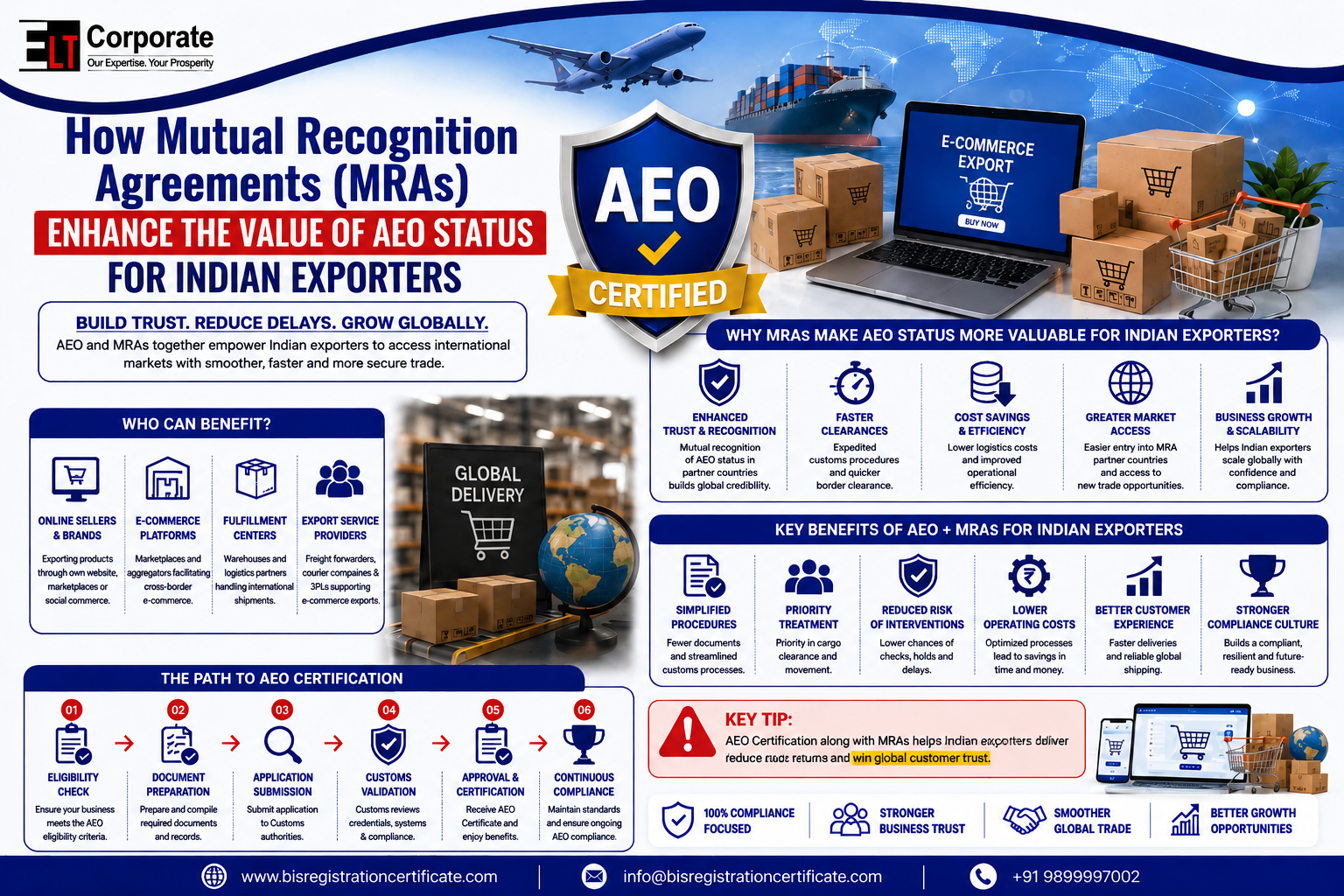
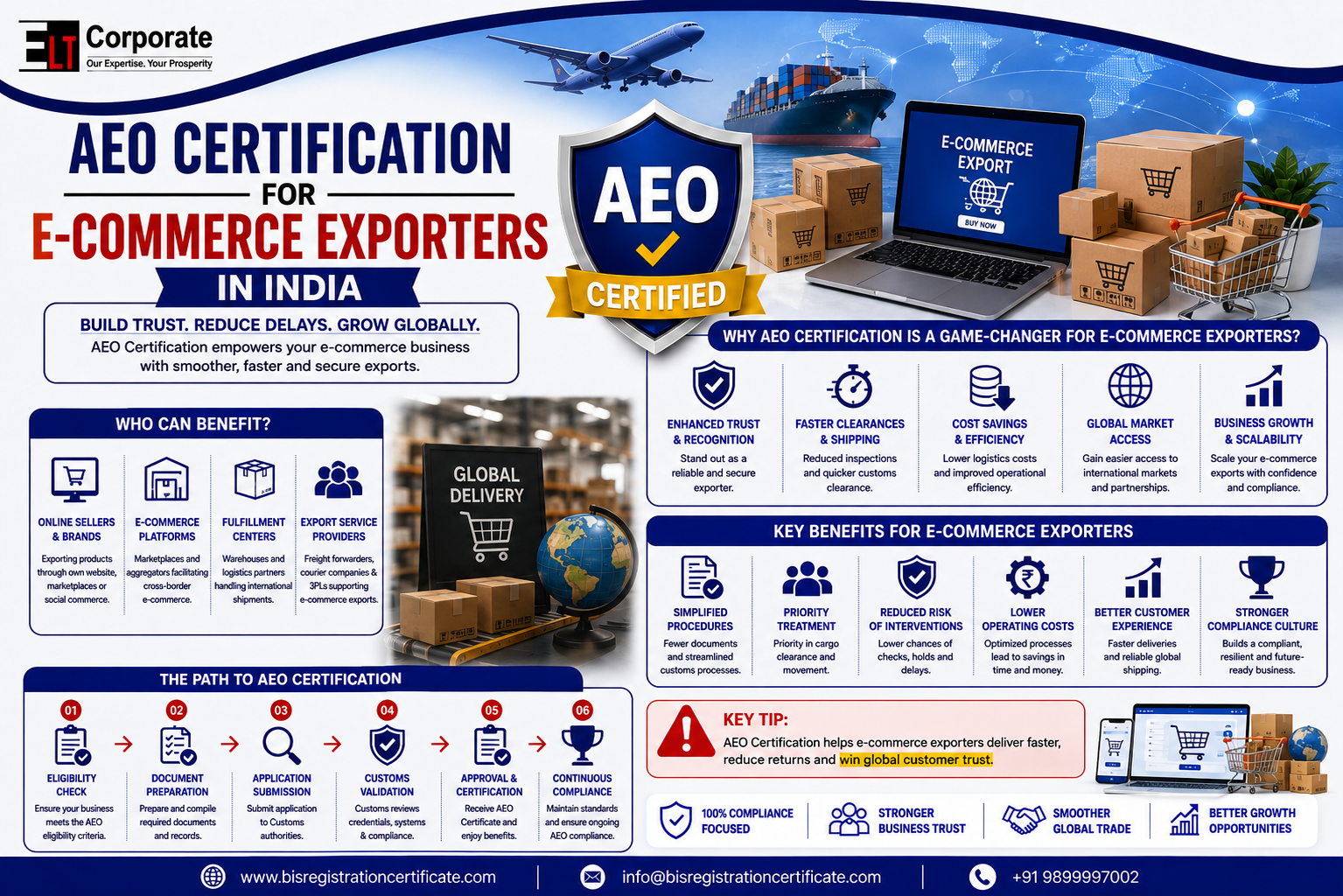
AEO stands for Authorized Economic Operator — a globally recognized certification programme administered in India by the Central Board of Indirect Taxes and Customs (CBIC), based on the World Customs Organization’s SAFE Framework of Standards.
AEO-certified companies are recognised as low-risk operators by customs authorities — and rewarded with significant trade facilitation benefits. Think of it as a trust mark for businesses operating in cross-border trade that proves your commitment to compliance, security, and supply chain integrity.
India’s AEO programme has three tiers for exporters and importers:
| Tier | Level | Key Benefits | Validity |
| AEO-T1 | Entry | Priority clearance, reduced inspections, reduced bank guarantee | 3 years |
| AEO-T2 | Intermediate | All T1 benefits + deferred duty, DPE/DPD, dedicated CRM, MRA recognition | 3 years |
| AEO-T3 | Highest | All T2 benefits + complete bank guarantee waiver, scanning exemption, 5-year validity | 5 years |
As per recent CBIC data (approx.), India has several thousand AEO-certified entities across T1, T2, and T3 levels across the country. For pharma exporters competing in regulated global markets, being among this group is increasingly a competitive differentiator — not just a compliance achievement.
10 Reasons Why Pharma Exporters Should Apply for AEO Certification
1. Priority Customs Clearance — Every Consignment, Every Port
AEO-certified companies get priority clearance — fewer document inspections, less cargo inspection, and quicker release of cargo. Your goods advance above others, particularly in peak port congestion or system overload. For pharma exporters shipping time-sensitive formulations, APIs, or biologics, predictable, priority clearance is not a convenience — it is a supply chain requirement.
Many AEO-certified pharma exporters report significantly faster clearance and improved predictability in shipment release timelines. and improved predictability in shipment release timelines. Directly enabling consistent delivery commitments to international buyers.
2. 24×7 Customs Clearance for Temperature-Sensitive Shipments
AEO-T3 certified businesses may avail 24×7 customs clearance at notified ports and locations, subject to operational feasibility and customs approval.
3. Significant Reduction in Physical Cargo Examinations
Routine physical examination of pharmaceutical cargo creates real risks — temperature excursions during examination, potential contamination, packaging damage, and documentation of examination that some international buyers treat as a chain of custody concern. AEO certification dramatically reduces routine examination frequency — protecting both cargo integrity and compliance documentation.
4. Complete Bank Guarantee Waiver (AEO-T3)
Companies holding AEO-T3 certification may be eligible for full or substantial waiver of bank guarantees, subject to applicable customs provisions. For large pharma exporters handling hundreds of crores in annual exports, the capital freed from bank guarantee requirements is significant and immediately deployable into R&D, manufacturing capacity, or market development.
Even at AEO-T1 under the MSME package, bank guarantees drop to just 25% of the non-AEO requirement — a meaningful working capital benefit for mid-sized pharma exporters.
5. Deferred Customs Duty Payment (AEO-T2 and T3)
AEO-T2 and T3 holders can pay customs duties after goods are cleared — not before. For pharma companies importing Active Pharmaceutical Ingredients (APIs), excipients, packaging materials, and laboratory equipment, deferred duty payment directly improves working capital across every import cycle — reducing the cash flow pressure of paying duty upfront on each consignment.
6. On-Arrival Storage and Clearance at Own Premises (2025 Update)
CBIC has notified new Customs On-Arrival Movement Regulations, 2025 for AEO-T2 and T3 importers — allowing goods to be stored and cleared at the importer’s own authorised premises on arrival, rather than sitting in CFS or port warehouses. For pharma companies importing raw materials with strict storage temperature requirements, this is a significant cold chain and quality control benefit.
7. Priority Duty Drawback and IGST Refund Processing
AEO-certified entities receive priority processing for duty drawback and IGST refunds, leading to faster turnaround compared to non-AEO applicants. For pharma exporters where drawback amounts are significant, faster refunds directly improve quarterly cash flow and reduce the financing cost of outstanding refund claims.
8. Mutual Recognition — Direct Benefit in Key Pharma Export Markets
India’s Mutual Recognition Arrangements (MRAs) with partner countries mean AEO status granted by India is recognized by partner customs administrations — translating into expedited treatment, reduced inspections, and priority handling on arrival. India’s current MRA network (2025):
- South Korea — in force (significant generics market)
- Hong Kong — in force (regional distribution hub)
- Singapore — signed May 2025 (major pharmaceutical transit and distribution hub)
- USA — MRA under discussion (not yet implemented) (India’s largest pharma export destination)
- EU, UAE, Taiwan — negotiations in progress
For pharma exporters shipping to Singapore and South Korea — key markets and transit points for Indian generics — AEO certification now delivers tangible clearance benefits at the destination, not just at Indian ports.
9. Self-Ratification of Advance Authorisation — Critical for API Importers
One of AEO certification’s most underappreciated benefits for pharma exporters is the ability to self-declare Standard Input Output Norms (SION) under Advance Authorisation when they are not officially notified. This eliminates the need to approach the Norms Committee — saving significant time for pharma manufacturers who import APIs and excipients duty-free under Advance Authorisation to produce for export.
For pharma companies regularly launching new products with unlisted SION, this benefit alone can justify AEO-T2 certification.
10. Competitive Differentiation with International Buyers and Partners
AEO certification is an internationally recognised trust mark — documented proof that your business maintains high compliance, financial solvency, and supply chain security standards verified by Indian Customs. For pharma exporters competing for contracts with regulated-market buyers — hospitals, government procurement agencies, large distributors — AEO status adds a layer of strong credibility that complements your US FDA, WHO-GMP, and other regulatory certifications.
In a sector where buyer due diligence has intensified significantly, AEO is the customs equivalent of your regulatory certification portfolio — and it belongs on your company profile.
AEO and Your Existing Pharma Compliance Framework
Many pharma exporters assume AEO requires building a parallel compliance system on top of their existing US FDA, WHO-GMP, or EU GMP framework. The reality is the opposite.
The compliance culture, documentation discipline, and internal audit readiness that pharma companies develop through regulatory inspections directly supports AEO certification:
| Your Existing Compliance | How It Supports AEO |
| WHO-GMP / EU GMP certification | Demonstrates systematic QMS discipline — directly relevant to AEO’s procedural documentation requirements |
| US FDA inspection readiness | Facility audit culture, SOP documentation, and access control systems align closely with AEO site inspection requirements |
| PHARMEXCIL RCMC registration | Establishes your pharma export track record — cross-referenced by CBIC during AEO review |
| ISO 9001 / ISO 14001 | Quality management documentation directly usable in AEO annexure preparation |
| Cold chain SOPs and temperature records | Support the security and procedural documentation required for AEO-T2 site inspection |
| Clean customs compliance record | Core eligibility requirement — most well-run pharma exporters already meet this |
For most established pharma exporters, the gap between current compliance posture and AEO eligibility is smaller than anticipated. The incremental effort is primarily in structuring existing documentation into the AEO annexure format — not in building new systems from scratch.
Which AEO Tier Is Right for Your Pharma Business?
| Business Profile | Recommended Tier | Primary Benefit |
| MSME pharma exporter, 10–25 Shipping Bills/year, 2+ years | AEO-T1 (MSME Package) | 15-day decision, 25% bank guarantee reduction, priority clearance |
| Mid-size pharma exporter, 25+ Shipping Bills, WHO-GMP certified | AEO-T2 | Deferred duty on API imports, DPE/DPD, dedicated CRM, MRA benefits |
| Large pharma exporter/importer, US FDA/EU GMP approved, high volumes | AEO-T3 | Complete bank guarantee waiver, scanning exemption, 24×7 clearance, 5-year validity |
| CFA / pharma logistics operator, 3PL, cold chain warehouse | AEO-LO | Logistics Operator certification — positions you as preferred partner for AEO-T3 pharma clients |
Eligibility Checklist for Pharma Exporters
Before applying, confirm your eligibility:
- Valid IEC — active and current at DGFT
- Valid GST registration — all returns filed, no outstanding dues
- PHARMEXCIL RCMC — active and current
- Minimum 25 Shipping Bills in the last financial year (or 10 for MSME applicants)
- Minimum 3 financial years of operations (2 for MSME applicants)
- Positive net worth in previous financial year
- Clean compliance record — no significant SCNs involving fraud, misclassification, or suppression in last 3 years
- WHO-GMP, CDSCO, or equivalent manufacturing compliance in order
Common Challenges Pharma Exporters Face in AEO Applications — And How to Avoid Them
| Challenge | How to Address It |
| Multiple manufacturing sites — unclear which to include | Each operational site may require separate assessment depending on customs evaluation. |
| Advance Authorisation compliance gaps | Resolve all outstanding export obligation shortfalls before applying |
| SCN history from API misclassification disputes | Legal assessment of SCN status mandatory before application — consult before filing |
| Cold chain and temperature-controlled area not included in site layout | For T2 site inspection, cold storage areas must be included in facility map and security SOPs |
| Benefits not activated post-certification | Deferred duty, DPD/DPE, and SION self-declaration each require separate activation — do this immediately after certification |
| PHARMEXCIL RCMC not current at time of application | Renew RCMC before filing — compliance cross-referencing by CBIC will identify a lapsed certificate |
India’s Pharma Export Ambition — And Why AEO Fits
India is today the world’s third-largest pharmaceutical producer by volume and fourteenth by value, with more than 3,000 companies, 10,500 manufacturing units and over 60,000 generic brands across 60 therapeutic areas. Indian medicines reach over 200 markets worldwide, with more than 60 percent of exports going to stringent regulatory destinations.
The Indian pharmaceutical industry is projected to grow at a CAGR of over 10%, with its market size expected to reach $130 billion. Competing at this scale in stringent regulatory markets requires not just product quality — it requires institutional trust. AEO certification is the customs layer of that institutional trust: verified by CBIC, recognised internationally under MRAs, and operationally visible to international buyers and logistics partners.
Pharma exporters who secure AEO certification now are building a competitive moat that will only grow more valuable as India’s MRA network expands — particularly if US negotiations conclude successfully.
The Bottom Line
Indian pharma exporters have built a globally respected industry on the foundations of compliance discipline, regulatory rigor, and supply chain reliability. AEO certification extends that discipline to the customs dimension — and delivers tangible, measurable rewards: faster clearances on every shipment, reduced capital tied up in bank guarantees, deferred duty on API imports, priority refunds, and growing international recognition.
For an industry where delivery reliability is a competitive advantage, cargo integrity is non-negotiable, and margin pressure makes every efficiency count — AEO certification is not a compliance formality. It is a business decision.
The application is free. The eligibility bar for established pharma exporters is achievable. The benefits are real and compounding. The question is simply: how long will you wait?
Ready to Apply? We Help Pharma Exporters Get AEO Certified
We provide end-to-end AEO certification support specifically structured for pharmaceutical exporters — from eligibility assessment to certificate in hand:
- Eligibility and SCN assessment — including Advance Authorisation compliance review
- Compliance gap analysis leveraging your existing WHO-GMP and CDSCO documentation
- Complete Annexure preparation (T1, T2, T3 — MSME package available)
- Cold chain facility documentation for T2 site inspection
- PHARMEXCIL RCMC cross-reference and compliance alignment
- Portal submission and CBIC query handling
- Post-certification benefit activation — deferred duty, SION self-declaration, DPE/DPD
Book your free AEO eligibility assessment today and reduce customs delays for your pharma exports.