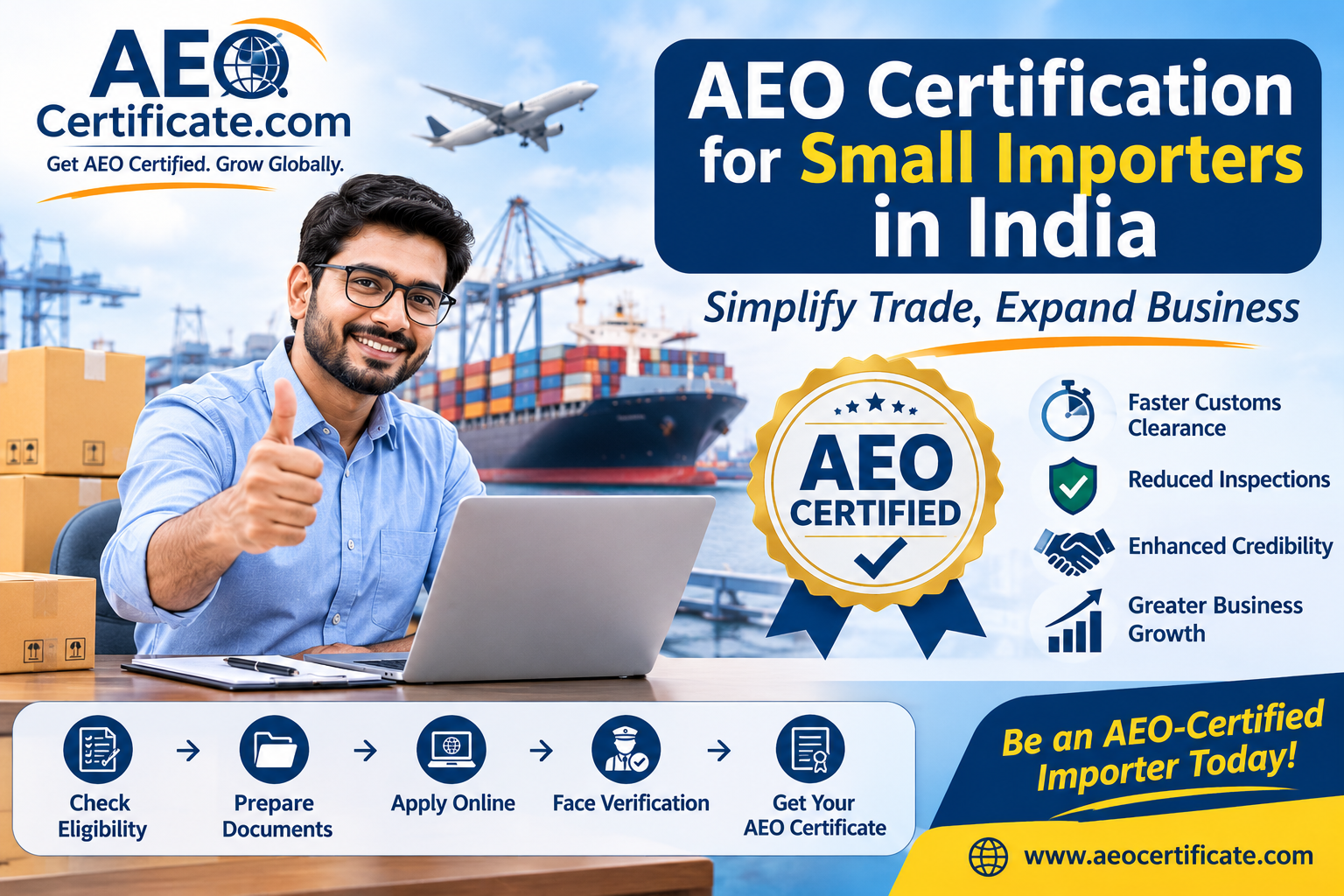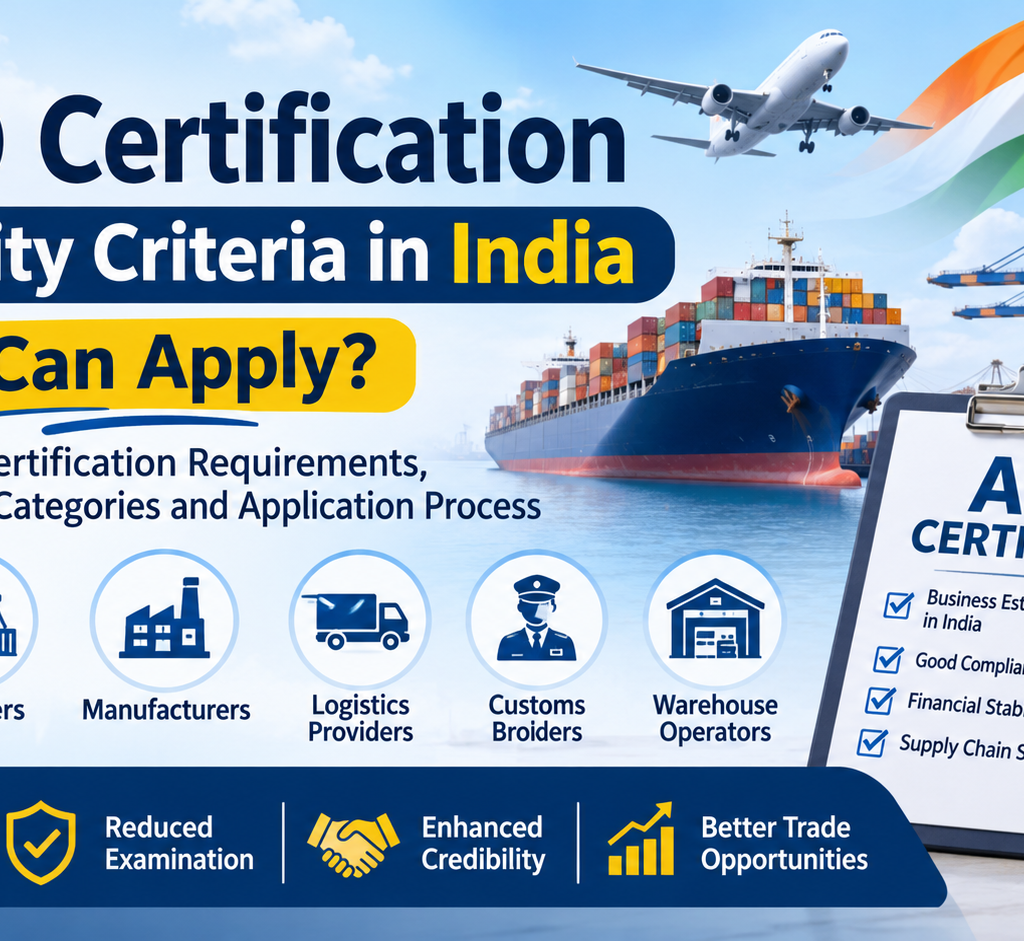

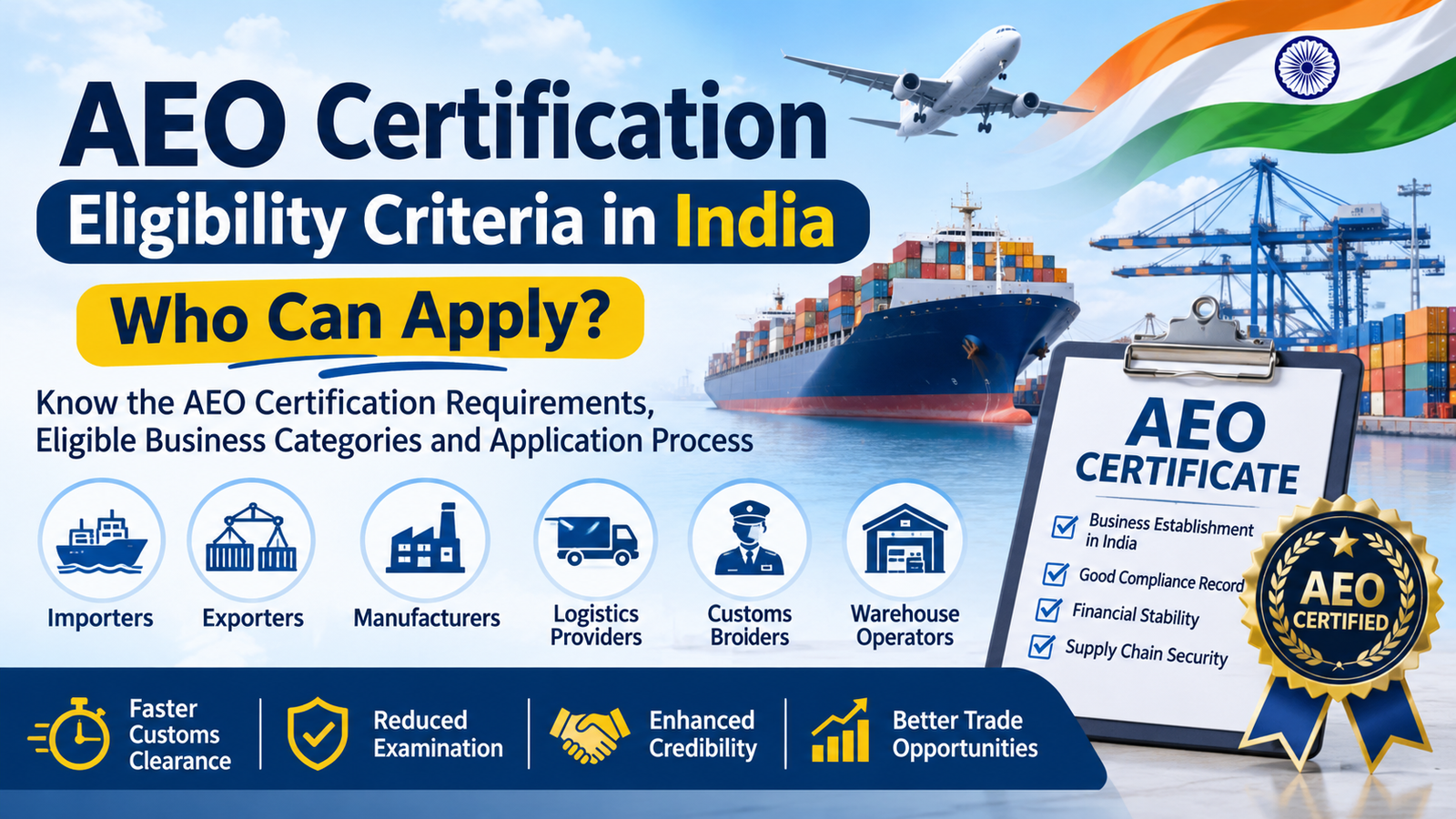
The Authorized Economic Operator (AEO) Program is an important initiative introduced by the Central Board of Indirect Taxes and Customs (CBIC) to make international trade more secure, transparent, and efficient. It recognizes businesses that maintain good customs compliance, proper documentation, and reliable supply chain security practices.
For businesses involved in importing, exporting, manufacturing, transportation, warehousing, and logistics, obtaining an AEO certificate can provide several operational advantages.
However, before applying, businesses must understand the AEO Certification Eligibility Criteria in India and determine whether their business activities meet the prescribed requirements.
One common question among business owners is, “Who can apply for AEO certification in India?”
The program is open to eligible businesses of different sizes, including MSMEs, provided they undertake customs-related activities in the international supply chain and satisfy the applicable eligibility and compliance conditions.
In this guide, we will explain the AEO Certification Eligibility Criteria in India, eligible business categories, required documents, different certification levels, and the application process.
What Is AEO Certification in India?
AEO stands for Authorized Economic Operator. It is a voluntary certification program administered by Indian Customs under CBIC.
The program identifies businesses that demonstrate a strong record of customs compliance and maintain appropriate security measures throughout their international supply chain operations.
An AEO certificate helps eligible businesses establish themselves as trusted participants in international trade.
The main objectives of the AEO program include:
- Improving international supply chain security.
- Encouraging customs compliance and transparency.
- Reducing unnecessary customs delays.
- Supporting faster and more predictable cargo clearance.
- Improving coordination between businesses and customs authorities.
- Promoting ease of doing business in India.
Businesses that meet the AEO Certification Eligibility Criteria in India can apply under the appropriate certification category.
AEO Certification Eligibility Criteria in India: Who Can Apply?
Any eligible business entity involved in the international supply chain and undertaking customs-related activities in India may apply for AEO certification.
The program is not restricted to large corporations. Small businesses, medium-sized enterprises, and established organizations can also apply.
The following business categories may qualify:
A. Importers
Importers bringing products, machinery, equipment, raw materials, or other goods into India can apply for an AEO certificate if they satisfy the prescribed requirements.
Examples include
- Pharmaceutical importers.
- Medical device importers.
- Cosmetics importers.
- Electronics importers.
- Industrial machinery importers.
- Chemical and raw material importers.
B. Exporters
Businesses exporting products from AEO Certification Eligibility Criteria in India to international markets can also apply.
Eligible exporters may include:
- Textile and garment exporters.
- Pharmaceutical exporters.
- Agricultural product exporters.
- Engineering goods exporters.
- Automobile component exporters.
- Food product exporters.
C. Manufacturers
Manufacturers involved in international trade activities may qualify for AEO certification.
For example, an Indian manufacturer importing raw materials and exporting finished products can explore AEO Certification Eligibility Criteria in India.
D. Logistics Service Providers
Logistics companies involved in AEO Certification Eligibility Criteria in India in international cargo transportation and supply chain management can apply under the applicable category.
These may include:
- Freight forwarders.
- Transport operators.
- Shipping and cargo service providers.
- International logistics companies.
- Carriers and other eligible service providers.
E. Customs Brokers
Customs brokers involved in customs clearance and international trade documentation can also apply for AEO certification.
F. Warehouse Operators and Custodians
Eligible warehouse owners, custodians, and terminal operators handling imported or exported goods may also qualify.
Other eligible participants can include port operators, authorized couriers, and stevedores.
Important: A business that does not undertake customs-related activities in the international supply chain generally cannot apply merely because it provides services to importers or exporters.
Important AEO Certification Eligibility Criteria in India
Understanding the basic requirements of AEO Certification Eligibility Criteria in India essential before submitting an application.
The following are important eligibility areas that businesses should review.
3.1 Business Establishment in India
The applicant must be an entity established in India.
It should be able to provide AEO Certification Eligibility Criteria in India appropriate evidence of its legal establishment and business identity.
Examples of supporting documents include
- Certificate of Incorporation.
- GST Registration Certificate.
- PAN Card.
- Business registration documents.
- Registered office details.
3.2 Minimum Business Experience
The applicant must satisfy the applicable business-experience requirement.
Generally, the standard requirement is at least three financial years of business activity preceding the application.
For eligible MSME applicants, this AEO Certification Eligibility Criteria in India requirement has been relaxed to two financial years.
In certain exceptional cases, a newly established business may also be considered based on physical verification of its internal controls, subject to the applicable provisions.
3.3 Customs-Related Business Activities
The applicant must demonstrate actual involvement in customs-related activities.
For example, importers should be able to demonstrate their import transactions through Bills of Entry, while AEO Certification Eligibility Criteria in India exporters should maintain relevant shipping bill records.
Businesses should check the applicable transaction-document requirements for their category and certification tier before applying.
3.4 Good Compliance History
A good compliance record is an important part of the AEO Certification Eligibility Criteria in India.
Applicants should maintain proper records of their customs transactions and comply with applicable laws and regulations.
Important areas include:
- Customs compliance.
- GST compliance.
- Income tax compliance.
- Import and export documentation.
- Applicable licensing requirements.
- Timely submission of statutory returns.
3.5 Financial Solvency
The applicant should demonstrate financial stability and the ability to meet its financial obligations.
Customs authorities may review AEO Certification Eligibility Criteria in India to examine relevant financial information to assess the applicant’s financial position.
Businesses should maintain:
- Audited financial statements.
- Balance sheets.
- Profit and loss statements.
- Financial records.
- Relevant banking and statutory information.
Different Types of AEO Certification in India
Before applying, businesses should understand the different AEO certification categories. Selecting the correct category is an important part of meeting the AEO Certification Eligibility Criteria in India.
AEO certification has four main categories:
AEO-T1 Certification
AEO-T1 is an entry-level certification for eligible importers and exporters.
It is suitable for businesses that have AEO Certification Eligibility Criteria in India and want to establish their compliance credentials and receive customs facilitation benefits.
AEO-T2 Certification
AEO-T2 is designed for eligible importers and exporters who can demonstrate stronger compliance, record AEO Certification Eligibility Criteria in India management, and applicable safety and security standards.
It provides additional benefits compared with AEO-T1.
AEO-T3 Certification
AEO-T3 is the higher certification level for AEO Certification Eligibility Criteria in India, for eligible AEO-T2 holders who satisfy the prescribed additional requirements.
It offers enhanced facilitation benefits to qualifying businesses.
AEO-LO Certification
AEO-LO is designed for eligible logistics operators and other supply chain participants, such as:
- Customs brokers.
- Freight forwarders.
- Warehouse operators.
- Custodians.
- Terminal operators.
- Eligible logistics service providers.
| Certification | Suitable applicants |
| AEO-T1 | Eligible importers and exporters |
| AEO-T2 | Eligible importers and exporters meeting higher requirements |
| AEO-T3 | Eligible AEO-T2 holders |
| AEO-LO | Eligible logistics operators |
The correct category depends on the applicant’s business activities and applicable CBIC guidelines.
Can MSMEs Apply for AEO Certification in India?
Yes. Micro, Small, and Medium Enterprises (MSMEs) can apply for AEO certification in India.
The program encourages smaller businesses to improve their customs compliance and participate in international trade with greater confidence.
MSMEs involved in AEO Certification Eligibility Criteria in India, including importing, exporting, manufacturing, and eligible logistics activities, can explore the certification.
Some important considerations for MSME applicants include:
- The applicant should be established in India.
- It should undertake eligible customs-related activities.
- It should maintain proper business and transaction records.
- It should demonstrate financial solvency.
- It should maintain the required compliance and security arrangements.
- It should meet the applicable MSME-specific eligibility conditions.
Business experience relaxation: The general requirement of three financial years is relaxed to two financial years for eligible MSME applicants.
MSMEs should also review the applicable AEO-T1 or AEO-T2 checklist before submitting their applications.
Documents Required to Meet AEO Certification Eligibility Criteria in India
Proper documentation plays an important role in the AEO Certification Eligibility Criteria in India process.
Businesses should prepare their documents before applying to avoid unnecessary delays or clarification requests.
The commonly required documents and records may include:
| Document | Purpose |
| Certificate of Incorporation | Proof of business establishment |
| PAN Card | Business identification |
| GST Registration | Tax registration details |
| IEC Certificate | Import-export identification, where applicable |
| Financial Statements | Financial solvency assessment |
The exact document checklist depends on the applicant’s business type and AEO category. Applicants should follow the latest official AEO portal checklist rather than treating this illustrative list as exhaustive.
Who Is Not Eligible for AEO Certification in India?
Not every business can apply for AEO certification.
The program is specifically designed for entities participating in the international supply chain and undertaking customs-related activities.
Businesses that generally do not qualify include:
- Companies without customs-related activities.
- Businesses operating only in domestic markets without eligible international supply chain involvement.
- General consultancy firms without qualifying customs-related operations.
- Banks and insurance companies that do not undertake eligible international supply chain activities.
- Entities unable to demonstrate the prescribed compliance requirements.
Another important point is that AEO Certification Eligibility Criteria in India is granted to the legal entity that applies.
For example, if a company has multiple group companies, obtaining an AEO certificate for one legal entity does not automatically provide certification to the other group companies.
How to Apply for an AEO Certificate in India?
Once a business understands the AEO Certification Eligibility Criteria in India, it can begin preparing its application.
The general application process involves the following steps:
Step 1: Check Your Business Eligibility
Identify whether your business is an importer, exporter, manufacturer, customs broker, warehouse operator, or another eligible supply chain participant.
Step 2: Select the Appropriate AEO Category
Choose between AEO-T1, AEO-T2, AEO-T3, or AEO-LO based on your business activities and eligibility.
Step 3: Prepare the Required Documents
Organize business registration documents, financial statements, customs records, compliance information, and applicable security documents.
Step 4: Review Internal Compliance
Check whether your company maintains proper records, documented procedures, financial information, and required security controls.
Step 5: Submit the Application
Complete the applicable application process through the official Indian AEO portal.
Benefits of Obtaining an AEO Certificate in India
Obtaining an AEO certificate can provide several advantages to eligible businesses involved in international trade.
Some important benefits include:
- Faster Customs Clearance: Eligible businesses can benefit from facilitated customs procedures.
- Reduced Examination: Qualifying AEO entities may receive reduced levels of routine cargo examination.
- Priority Processing: AEO status can provide priority treatment under applicable customs facilitation measures.
- Improved Business Credibility: Certification demonstrates a commitment to customs compliance and supply chain security.
- Better International Trade Opportunities: AEO recognition and mutual recognition arrangements can support trade facilitation with participating countries.
- Operational Efficiency: More predictable customs processes can help businesses plan their import and export operations.
The exact benefits depend on the AEO category and applicable customs provisions.
Common Reasons Why AEO Applications May Face Delays
Even when a business appears eligible, an incomplete application or weak documentation can create difficulties.
Some common reasons include:
- Incomplete business registration documents.
- Inconsistent company information across records.
- Missing import or export transaction details.
- Poorly maintained commercial records.
- Inadequate documented operating procedures.
- Missing evidence of applicable security controls.
- Delayed responses to clarification requests.
Businesses should review their documentation carefully and ensure that their actual operating procedures match the evidence submitted with the application.
Why Choose Professional AEO Certification Consultants in India?
Applying for an AEO certificate requires proper documentation, compliance preparation, and an understanding of the applicable customs regulations.
Many businesses face difficulties identifying the correct certification category, preparing documents, and understanding the security requirements.
Working with experienced AEO certification consultants can help businesses:
- Understand the AEO Certification Eligibility Criteria in India.
- Identify the appropriate certification category.
- Prepare the required application documents.
- Review customs compliance records.
- Organize internal SOPs and supporting evidence.
- Prepare for verification and assessment.
- Address documentation gaps and clarification requests.
Professional guidance can make the application process more organized and help businesses avoid common documentation mistakes.
Visit AEO Certificate – ELT Corporate to explore AEO certification consultancy services.
Conclusion
Understanding the AEO Certification Eligibility Criteria in India is the first step towards obtaining an AEO certificate.
Importers, exporters, manufacturers, MSMEs, and eligible logistics operators can benefit from this program by strengthening their customs compliance, maintaining proper documentation, and following the prescribed supply chain security requirements.
Before submitting an application, businesses should evaluate their eligibility, select the appropriate AEO category, and prepare all necessary documents.
If your business is involved in international trade, now is a good time to assess whether it qualifies for AEO certification.
Frequently Asked Questions
Q1. Who is eligible to apply for AEO certification in India?
Importers, exporters, manufacturers involved in international trade, logistics service providers, customs brokers, warehouse operators, and custodians.
Q2. Can a small business apply for an AEO certificate?
Yes. MSMEs can apply for AEO certification if they meet the applicable requirements.
Q3. Is GST registration mandatory for AEO certification?
Businesses should maintain applicable tax registrations and compliance records.
Q4. How many years of business experience are required for AEO certification?
Generally, three financial years of business activity are required.
Q5. Can manufacturers apply for AEO certification?
Yes. Manufacturers involved in customs-related international supply chain activities for finished products may qualify.