
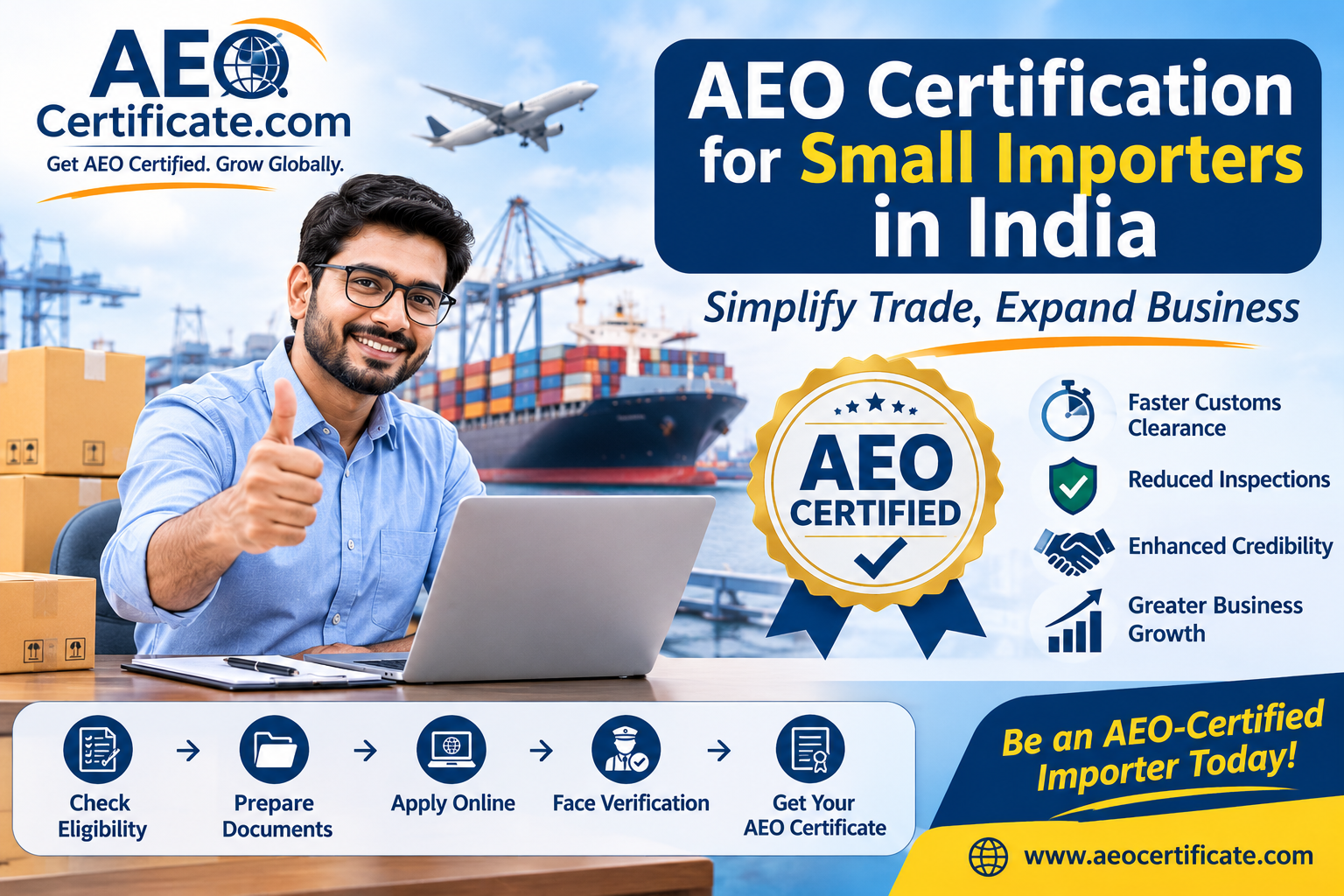
Importing goods into India can be AEO Certification for Small Importers in India challenging for small businesses. Importers often deal with customs documentation, regulatory requirements, cargo clearance procedures, duty payments, and coordination with shipping companies, customs brokers, and other stakeholders. Delays in any of these activities can affect business operations, cash flow, and customer commitments.
To support compliant businesses and improve international trade, the Central Board of Indirect Taxes and Customs (CBIC) introduced the Authorised Economic Operator (AEO) Programme in India.
AEO Certification for Small Importers in India is an important opportunity for eligible small businesses and MSMEs involved in international trade. Through this program, qualifying importers can receive customs facilitation benefits by demonstrating a satisfactory compliance record, proper documentation, and suitable business controls.
An AEO Certificate recognizes an eligible business as a trusted participant in the international supply chain. It can help small importers improve their customs processes, strengthen business credibility, and make import operations more predictable.
In this guide, we explain the eligibility requirements, benefits, documents, application process, and important considerations for small importers planning to obtain an AEO Certificate in India.
What Is AEO Certification for Small Importers in India?
AEO stands for Authorised Economic Operator. It is a voluntary trade facilitation program administered by Indian Customs under CBIC.
The program recognizes businesses that participate in the international supply chain and maintain appropriate customs compliance, record management, and security practices.
Small importers involved in customs-related activities may apply for AEO status if they satisfy the applicable eligibility conditions.
An AEO Certification for Small Importers in India can be valuable for businesses that regularly import raw materials, machinery, components, finished products, packaging materials, or other goods from international suppliers.
For example, an Indian manufacturing MSME importing machinery parts from Germany or electronic components from China may explore AEO certification to strengthen its import operations.
The program includes different certification categories, including AEO-T1, AEO-T2, AEO-T3, and AEO-LO. Importers generally explore the importer/exporter tiers based on their eligibility and compliance readiness.
Who Can Apply for AEO Certification for Small Importers in India?
AEO certification is not restricted to large companies or multinational organizations. Eligible small businesses and MSMEs can also participate in the program.
Businesses involved in customs-related international trade activities may include:
- Small-scale importers and exporters
- Manufacturing companies importing raw materials
- Trading companies importing finished products
- MSMEs involved in international supply chains
- Businesses importing machinery and industrial equipment
- Electronics and electrical goods importers
- Pharmaceutical and chemical product importers, subject to applicable regulations
- Businesses importing components for manufacturing
However, simply having a business registration or Import Export Code (IEC) does not automatically make a company eligible.
The applicant must meet the AEO Certification for Small Importers in India applicable AEO program requirements, including relevant business activity, customs compliance, documentation, financial solvency, and other conditions prescribed for the selected category.
AEO Certification Eligibility Criteria for Small Importers in India
Understanding eligibility is one of the most important steps before applying for an AEO Certificate.
The eligibility requirements depend on the applicable AEO category and current CBIC guidelines.
Small importers should review the following areas before starting the application:
A. Business Establishment in India
The applicant should be an AEO Certification for Small Importers in India–eligible business entity established in India. It should be able to provide appropriate evidence of its legal identity, business registration, and operational activities.
B. Import and Customs-Related Activities
The business should be involved in international trade and undertake customs-related activities in India.
Importers should maintain relevant records of their import transactions, including Bills of Entry and supporting documents.
C. Business Activity and MSME Considerations
The AEO program has provisions relevant to MSMEs. Applicable business-history requirements and relaxations should be checked against the latest CBIC guidelines.
Small businesses should not assume that every new company automatically qualifies. The prescribed conditions and any exceptional provisions must be examined before applying.
D. Customs and Legal Compliance
Applicants should maintain an AEO Certification for Small Importers in India satisfactory record of compliance with applicable customs laws and other relevant legal requirements.
Businesses should review their previous import transactions, customs declarations, pending matters, and compliance records.
E. Financial Solvency
The applicant should be able to AEO Certification for Small Importers in India demonstrate financial solvency as required under the relevant AEO category.
Financial statements and other supporting records may be examined during the application assessment.
F. Record Management and Internal Controls
Importers should maintain organised commercial and transport records. They should also have documented procedures for handling import transactions, managing records, and addressing operational issues
Important: The exact eligibility conditions, document requirements, and relaxations can change through CBIC notifications and circulars. Always check the latest official AEO guidelines before submitting an application.
Benefits of AEO Certification for Small Importers in India
Obtaining an AEO Certificate can provide several operational advantages to eligible import businesses.
1. Faster Customs Clearance
AEO-certified entities may receive customs facilitation that supports faster and more predictable processing of eligible consignments.
This can help importers plan their supply chains more effectively.
2. Reduced Customs Examinations
Eligible AEO Certification for Small Importers in India: entities may benefit from reduced routine examinations and risk-based facilitation, subject to applicable customs procedures.
This can help reduce unnecessary operational delays.
3. Bank Guarantee Benefits
AEO status provides certain bank guarantee-related benefits under the applicable rules.
Eligible MSME AEO-T1 entities may receive an additional reduction in the bank guarantee requirement, subject to prescribed conditions.
4. Improved Business Credibility
An AEO Certificate demonstrates that a business has undergone an assessment under the customs trusted-trader program.
This can strengthen confidence among international suppliers, logistics partners, and business stakeholders.
5. Better Import Planning
More predictable customs processes can help AEO Certification for Small Importers in India businesses coordinate inventory, production schedules, and delivery commitments.
6. Support for Business Growth
For small importers planning to expand their international sourcing activities, AEO certification can form part of a broader compliance and supply-chain improvement strategy.
The availability of individual benefits depends on the AEO tier, applicable customs procedures, and the business’s eligibility.
Step-by-Step Process for AEO Certification for Small Importers in India
The AEO application process requires AEO Certification for Small Importers in India preparation, submission of information, and assessment by the concerned authorities.
Here is a general overview:
Step 1: Check AEO Eligibility
First, identify the appropriate AEO category for your business.
Review your business history, import activity, customs compliance, financial records, and documentation.
Step 2: Prepare the Required Documents
Collect business registration AEO certification for small importers in India documents, IEC details, import records, financial statements, and applicable compliance information.
Ensure that the business name, address, and other details are consistent across the documents.
Step 3: Review Internal Procedures
Check whether your business has proper systems for maintaining commercial records, handling import transactions, and monitoring compliance.
Prepare or improve SOPs wherever required.
Step 4: Submit the AEO Application
Register or log in through the AEO Certification for Small Importers in India official Indian AEO portal and follow the application instructions for the relevant category.
Complete the required information and upload the prescribed documents.
Step 5: Respond to Queries and Clarifications
The AEO assessment team may review the application and request additional information or clarification.
Applicants should respond accurately and provide the requested supporting evidence.
Step 6: Verification and Assessment
Depending on the category and applicable process, the AEO Certification for Small Importers in India authorities may verify the submitted information, records, internal controls, and relevant premises.
The applicant should ensure that responsible employees and supporting records are available when required.
Step 7: AEO Certification Decision
After the assessment process, the competent authority communicates its decision.
If approved, the eligible applicant receives the relevant AEO status and must continue meeting applicable post-certification obligations.
Common Mistakes Small Importers Should Avoid During AEO Application
Many application-related difficulties with AEO Certification for Small Importers in India arise because businesses do not prepare their documents and internal procedures properly.
Here are some common mistakes to avoid:
- Submitting Incomplete Documents: Missing registration records, financial information, or import documents can lead to additional queries.
- Incorrect Business Information: Differences in business names, addresses, IEC details, or registration information can create verification issues.
- Poor Record Management: Importers should maintain organized records of customs transactions and supporting documents.
- Lack of Documented Procedures: Businesses should be able to explain how they manage import records, compliance responsibilities, and relevant internal controls.
- Ignoring Customs Compliance: Applicants should review their compliance history and address outstanding issues wherever required.
- Selecting the Wrong AEO Category: The applicant should understand the eligibility and requirements of the relevant AEO tier before applying.
Proper preparation can help reduce avoidable application deficiencies, although certification is always subject to official assessment.
Why Small Importers Should Consider Professional AEO Certification Assistance
Understanding the AEO Certification for Small Importers in India and preparing an application can require careful attention to customs regulations, documentation, and internal business procedures.
Small importers may not always have a dedicated compliance team to manage these activities.
Professional AEO certification assistance can help businesses with:
- Understanding applicable AEO eligibility conditions
- Identifying the relevant certification category
- Preparing document checklists
- Reviewing import and customs records
- Organizing compliance documentation
- Preparing standard operating procedures
- Identifying possible documentation gaps
Professional guidance does not AEO Certification for Small Importers in India guarantee approval. The final decision rests with the competent customs authority after examining the application and applicable requirements.
How an AEO Certificate Can Support Small Importers’ Business Growth
Small importers often compete with larger businesses that have established international supply chains and dedicated compliance departments.
An AEO Certificate can help eligible small businesses strengthen their customs compliance framework and improve their participation in international trade.
For example, an MSME importing raw materials for manufacturing may benefit from more predictable customs facilitation, improved record management, and stronger relationships with supply chain partners.
Similarly, a small trading company importing products from overseas suppliers can use the AEO program as part of its long-term compliance and operational improvement strategy.
However, AEO Certification for Small Importers in India should not be treated as a substitute for other import licences, product approvals, customs declarations, or regulatory permissions. Importers must continue meeting all requirements applicable to their products and business activities.
Documents Required for an AEO Certificate for Small Importers
Proper documentation is essential for a smooth AEO application process.
Small importers should organize their documents before starting the application.
The following is an AEO Certification for Small Importers in India general preparation checklist. The actual annexures and supporting evidence depend on the applicant’s category and current official requirements.
Business and Registration Documents
- Certificate of Incorporation, where applicable
- Partnership deed or proprietorship-related business proof, as applicable
- PAN card of the business
- GST registration certificate, where applicable
- Import Export Code (IEC)
- Registered office and business address proof
- Details of business locations involved in international trade
Import and Customs Documents
- Bills of Entry
- Import transaction records
- Customs-related declarations and supporting documents
- Details of customs brokers and logistics partners
- Relevant shipping and transport records
- Import purchase orders and commercial invoices
Maintaining complete and consistent records can help businesses respond to application queries and verification requirements.
Why Choose AEOCertificate.com for AEO Certification Assistance?
Businesses planning to apply for AEO status may need professional support to understand the process and organize their documentation.
AEOCertificate.com provides AEO certification-related consulting and assistance for businesses involved in international trade.
The team can support businesses with understanding applicable eligibility requirements, preparing documentation, reviewing compliance readiness, and navigating the AEO application process.
Whether you are a small importer, an MSME, a manufacturer, or an established trading company, obtaining the right guidance can help you approach the certification process in a more organized manner.
Visit https://aeocertificate.com/ to explore AEO certification assistance and discuss your business requirements.
Conclusion
AEO Certification for Small Importers in India offers eligible businesses an opportunity to strengthen their customs compliance, improve supply chain practices, and access applicable trade facilitation benefits.
From understanding eligibility and preparing documents to submitting an application and completing verification, every stage requires proper planning.
Small importers and MSMEs should review their business records, customs compliance, and internal procedures before applying for an AEO Certificate.
With suitable preparation and professional guidance, businesses can approach the AEO certification process with greater clarity and confidence.
If your business regularly imports goods into India, explore the AEO program and understand whether your organization is ready to apply.
Visit AEOCertificate.com for professional guidance on AEO certification in India.
Frequently Asked Questions
Q1. What is AEO Certification for Small Importers in India?
AEO Certification for Small Importers in India is part of the Indian Customs Trusted Trader Program.
Q2. Can a small importer apply for an AEO Certificate?
Yes. Eligible small importers and MSMEs can apply if they satisfy the applicable AEO program conditions.
Q3. Is AEO Certification mandatory for importers in India?
No. AEO certification is a voluntary program. However, eligible businesses may choose to apply to access applicable customs facilitation benefits.
Q4. What documents are required for an AEO Certificate?
Common documents include business registration proof, PAN, IEC, import records, financial statements, and relevant compliance documentation.
Q5. Which AEO category is suitable for small importers?
AEO-T1 is generally the entry-level category for eligible importers and exporters. The appropriate category should be selected after reviewing the latest eligibility conditions.