International trade AEO certification for supply chain security is becoming increasingly complex, with businesses facing challenges such as cargo theft, customs delays, security threats, documentation errors, and supply chain disruptions. To overcome these challenges, Indian importers and exporters need effective security management systems and reliable customs compliance practices.
AEO Certification for Supply Chain Security provides an opportunity for businesses to strengthen international trade operations while receiving customs facilitation benefits.
The Authorised Economic Operator (AEO) Programme, administered by the Central Board of Indirect Taxes and Customs (CBIC), recognises businesses that demonstrate satisfactory customs compliance, financial reliability, and secure supply chain practices.
In 2026, AEO Certification for Supply Chain Security** remains an important tool for Indian businesses seeking efficient Customs clearance, improved cargo protection, and reliable international trade operations.
This guide explains the importance, requirements, benefits, security standards, and application process for AEO certification in India.
What Is AEO Certification for Supply Chain Security?
AEO Certification for Supply Chain Security is a voluntary customs certification program that recognizes eligible businesses involved in international trade.
AEO Certification for Supply Chain Security encourages businesses to establish reliable Customs compliance systems, maintain appropriate documentation, and implement suitable security procedures.
In India, the AEO Program covers several categories of international trade participants, including
– Importers and exporters.
– Manufacturers involved in international trade.
– Customs brokers.
– Freight forwarders.
– Warehouse operators.
– Logistics service providers.
– Custodians and terminal operators.
Through AEO Certification for Supply Chain Security, eligible businesses can demonstrate their commitment to secure and compliant international trade operations.
Why Is AEO Certification for Supply Chain Security Important in 2026?
Global supply chains involve AEO Certification for Supply Chain Security manufacturers, suppliers, logistics companies, warehouses, customs authorities, and transportation providers.
Security weaknesses at any stage can result in cargo losses, documentation discrepancies, shipment delays, and financial risks.
AEO Certification for Supply Chain Security helps businesses establish stronger operational controls and improve their supply chain management practices.
Important advantages include:
Improved Cargo Protection: Security procedures help reduce risks involving theft, tampering, and unauthorized cargo access.
Faster Customs Clearance: Eligible AEO-certified businesses receive preferential customs facilitation based on their certification category.
Reduced Operational Delays: Improved documentation and risk management can reduce avoidable supply chain disruptions.
International Recognition: Applicable Mutual Recognition Arrangements (MRAs) provide reciprocal facilitation opportunities.
Better Compliance Management: Structured systems support consistent Customs compliance and accurate recordkeeping.
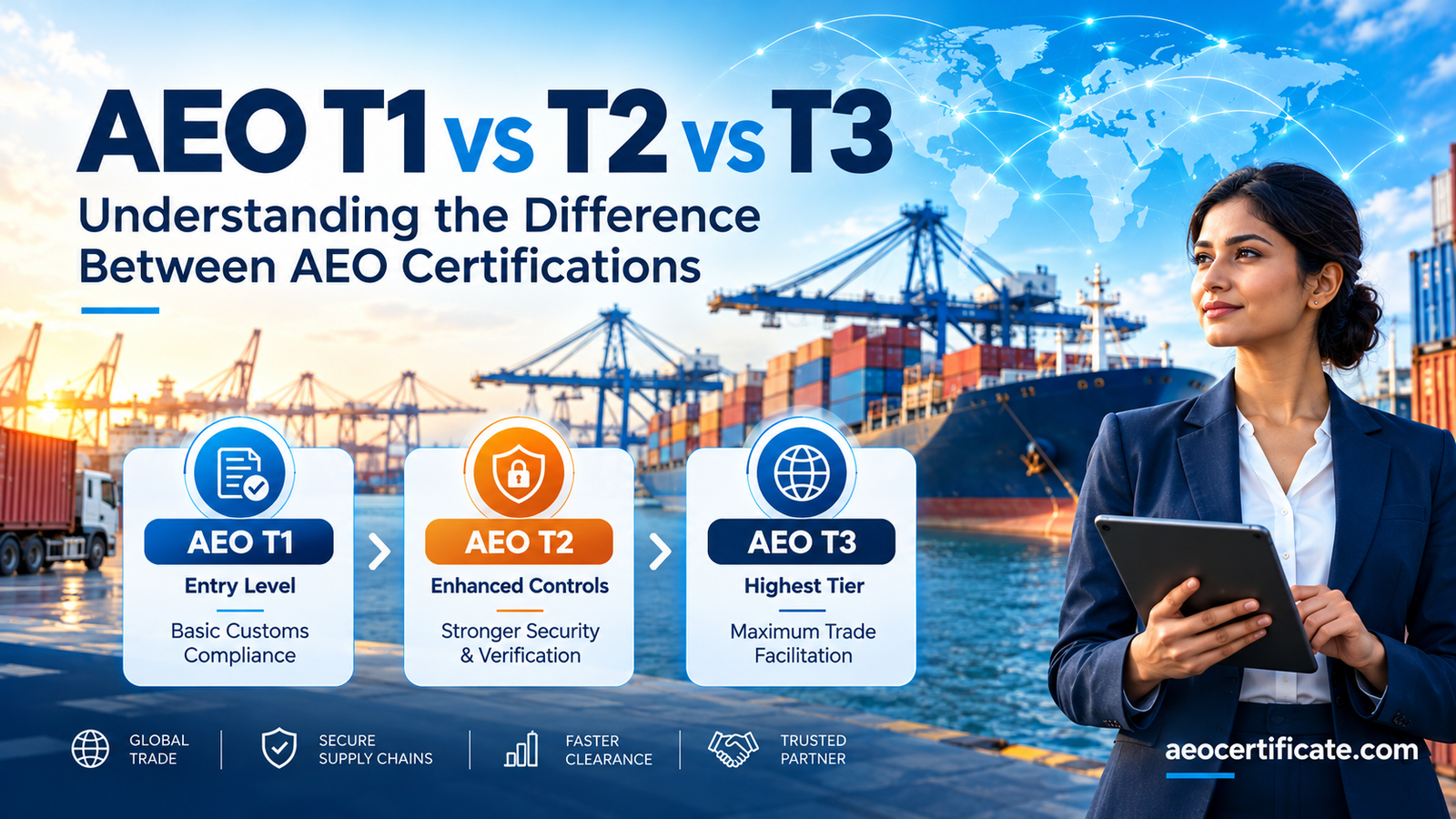
Types of AEO Certification for Supply Chain Security in India
The Indian AEO Program provides different certification categories based on the applicant’s activities and compliance readiness.
AEO-LO is specifically designed for eligible logistics and international AEO Certification for supply chain security supply chain service providers.
Businesses should select the certification category that matches their operations and regulatory eligibility.
Key Security Requirements for AEO Certification for Supply Chain Security
Businesses applying for advanced AEO Certification for Supply Chain Security must implement appropriate security controls.
1. Physical Security
Physical security protects warehouses, factories, cargo handling areas, and other operational premises.
Important measures may include CCTV surveillance, secure entry points, restricted areas, adequate lighting, and boundary protection.
2. Cargo Security
Businesses should establish procedures to prevent cargo tampering, theft, unauthorized access, and other security incidents.
These procedures may include cargo inspections, seal verification, shipment reconciliation, and controlled loading activities.
3. Personnel Security
Employee screening, identification systems, access permissions, and security awareness training help reduce personnel-related risks.
4. Information Security
Import-export businesses should maintain secure systems for managing Customs declarations, commercial records, shipping documents, and confidential trade information.
5. Business Partner Security
Companies should evaluate relevant suppliers, transporters, freight forwarders, and other supply chain partners to identify potential security weaknesses.
These controls support effective AEO certification for supply chain security and improve the reliability of international trade operations.
Future of AEO Certification for Supply Chain Security in India
As Indian businesses expand into international markets, customs compliance and supply chain security are likely to remain important factors in cross-border trade.
Digitalization, electronic documentation, improved cargo visibility, and closer collaboration between customs authorities and businesses can contribute to more efficient trade operations.
AEO Certification for Supply Chain Security provides a structured framework through which eligible companies can demonstrate their commitment to regulatory compliance and secure business practices.
Manufacturers, exporters, importers, and logistics operators should assess their certification eligibility and review opportunities to strengthen their existing security systems.
By combining regulatory preparedness, employee training, effective risk management, and appropriate technology, businesses can build more resilient international supply chains.
Benefits of AEO Certification for Supply Chain Security for Indian Businesses
AEO certification provides several operational and customs-related advantages, depending on the certification category.
Faster Customs Clearance
AEO-certified businesses may receive faster processing of eligible import and export consignments through risk-based customs facilitation.
Reduced Customs Interventions
Trusted operators generally receive fewer routine interventions, although Customs retains the authority to conduct examinations based on risk or intelligence.
Bank Guarantee Concessions
Eligible AEO Certification for Supply Chain Security holders can receive concessions on bank guarantee requirements under applicable customs procedures.
AEO-T3 provides the highest level of exemption, subject to prescribed exceptions.
Direct Port Delivery and Direct Port Entry
Eligible businesses may benefit from Direct Port Delivery (DPD) for imports and Direct Port Entry (DPE) for exports.
Improved Cash Flow
AEO-T2 and AEO-T3 importers may use the notified deferred customs duty payment facility, subject to applicable conditions.
International Trade Facilitation
Under applicable MRAs, certified businesses may receive trade facilitation benefits from participating foreign customs administrations.
These benefits make AEO Certification for Supply Chain Security valuable for companies managing regular international shipments.
Step-by-Step Process for AEO Certification for Supply Chain Security
Following satisfactory evaluation, the competent authority may grant the applicable AEO certification.
The certification provides AEO Certification for Supply Chain Security access to relevant customs facilitation benefits, subject to prescribed conditions.
Step 1: Determine Eligibility
Identify the appropriate certification category based on the company’s international trade operations, compliance history, and security arrangements.
Step 2: Conduct a Compliance Assessment
Review Customs records, financial documentation, internal controls, and security procedures.
Identify and address gaps before submitting the application.
Step 3: Prepare the Documentation
Complete the prescribed application annexures and supporting documents.
Ensure that business information and security procedures accurately reflect actual operations.
Step 4: Apply Through the Official Portal
Visit the Indian Customs AEO portal:
Register or log in and access the relevant certification application process.
Step 5: Submit the Application
Complete the required application details and upload the prescribed documentation.
Step 6: Departmental Review
The competent AEO authority reviews the application and may request additional information or clarification.
Step 7: Security Verification
For certification categories requiring physical verification, the AEO Programme Team may assess relevant business premises and security arrangements.
Continuous Improvement Through AEO Certification for Supply Chain Security
International supply chains are constantly changing due to new technologies, evolving security threats, regulatory updates, and changing business operations.
For this reason, security management should be treated as a continuous process.
AEO Certification for Supply Chain Security encourages organizations to maintain applicable security and compliance standards throughout the certification period.
Businesses should periodically review risk assessments, security plans, operating procedures, and employee training programs.
Changes in warehouses, transportation routes, logistics partners, or information systems may require updates to existing controls.
Continuous improvement can help companies maintain certification readiness and respond effectively to emerging supply chain challenges.
Role of Risk Management in AEO Certification for Supply Chain Security
Effective risk management is AEO Certification for Supply Chain Security essential for maintaining secure international supply chains.
Businesses should regularly identify and assess risks involving cargo movement, documentation, warehouse access, transportation, and information security.
A practical risk management system includes:
- Identifying potential supply chain threats.
- Evaluating operational vulnerabilities.
- Implementing appropriate security controls.
- Training employees on risk prevention.
- Maintaining incident reporting procedures.
- Conducting periodic compliance reviews.
- Implementing corrective and preventive actions.
For example, an exporter transporting high-value electronic components may introduce shipment tracking, secure packaging, seal controls, and transporter verification procedures.
These measures strengthen operational security and support ongoing AEO Certification for Supply Chain Security compliance.
How AEO Certification for Supply Chain Security Helps Reduce Business Costs
Supply chain security weaknesses can lead to financial losses, delayed shipments, additional inspections, and increased handling expenses.
AEO certification can help eligible businesses reduce certain operational costs through improved Customs facilitation and stronger internal controls.
Potential savings may arise from reduced cargo dwell time, lower avoidable AEO Certification for Supply Chain Security storage expenses, streamlined customs procedures, and bank guarantee concessions.
However, actual savings depend on shipment volumes, certification category, operational efficiency, and applicable Customs requirements.
Businesses should evaluate the potential benefits against their specific import-export activities.
Maintaining Compliance After AEO Certification for Supply Chain Security
Businesses must continue maintaining the applicable AEO Certification for Supply Chain Security standards throughout the certification period.
Important practices include:
- Accurate customs documentation.
- Employee training and awareness programs.
- Monitoring of relevant business partners.
- Reporting significant business changes.
- Maintaining financial reliability.
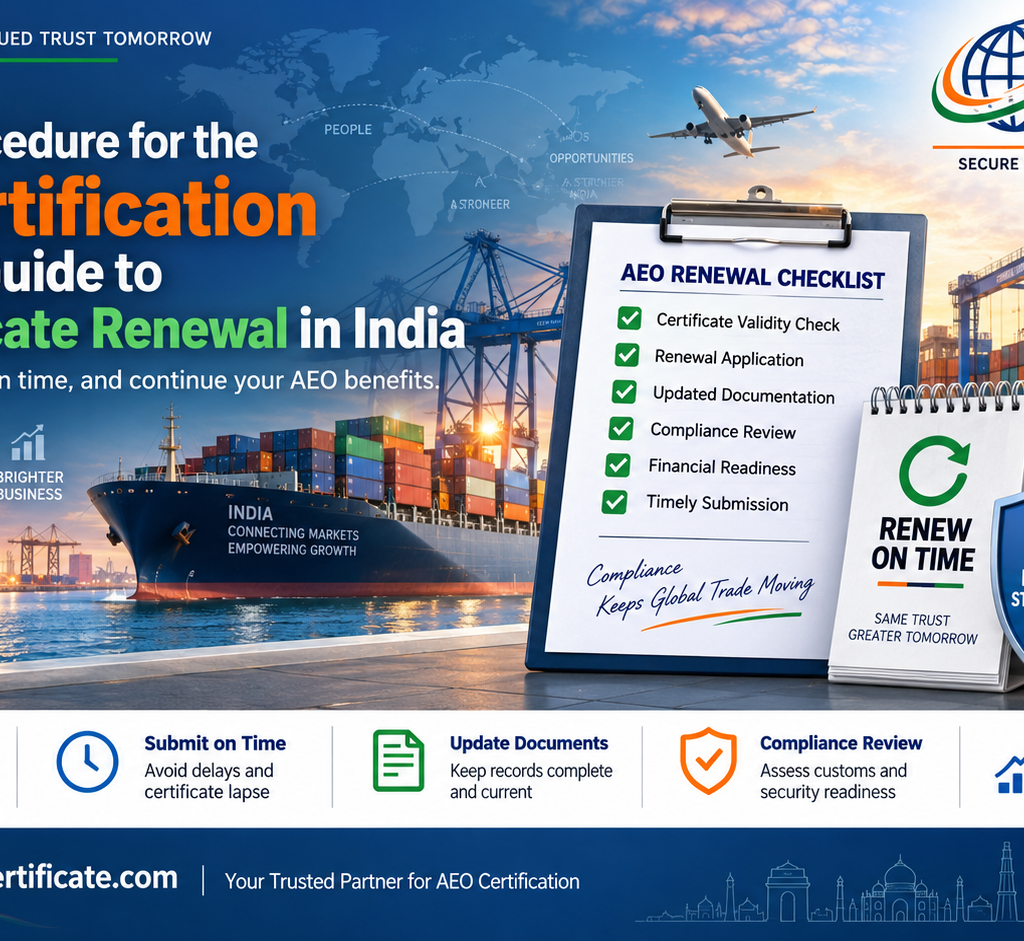
- Completing applicable renewal requirements.
Continuous monitoring helps organizations maintain their certification and reduce the risk of suspension or revocation.
Documents Required for AEO Certification for Supply Chain Security
The documents required for AEO Certification for Supply Chain Security depend on the certification category.
Common supporting records may include:
- Importer Exporter Code (IEC).
- PAN and GST registration details.
- Company incorporation or constitution documents.
- Relevant customs transaction records.
- Audited financial statements and solvency documentation.
- Details of business activities and operational premises.
- Applicable import-export licenses.
- Commercial
Role of Internal Security Audits in AEO Certification for Supply Chain Security
Regular internal security audits help businesses determine whether their established security measures are functioning effectively.
An internal audit may examine warehouse access controls, cargo handling procedures, employee security practices, transportation arrangements, and information management systems.
For AEO Certification for Supply Chain Security, periodic internal reviews can help identify compliance gaps before departmental verification.
Businesses should maintain documented audit findings, assign responsibility for corrective actions, and monitor their implementation.
The frequency of internal audits should reflect the company’s operational complexity and identified risks.
A systematic audit programme can strengthen ongoing compliance and improve security performance
How AEO Certification for Supply Chain Security Supports Global Trade Competitiveness
International customers increasingly value supply chain reliability, regulatory compliance, and consistent shipment performance.
Businesses with structured Customs compliance and security management systems may be better positioned to meet these expectations.
AEO Certification for Supply Chain Security can strengthen commercial credibility by demonstrating participation in a recognised Customs compliance programme.
Eligible certified businesses may also receive trade facilitation benefits under applicable Mutual Recognition Arrangements between Customs administrations.
These arrangements can help improve international supply chain coordination and reduce certain Customs-related barriers.
For Indian manufacturers and exporters, this provides an opportunity to build stronger relationships with overseas customers and logistics partners.
Importance of Incident Reporting in AEO Certification for Supply Chain Security
Security incidents can occur despite the implementation of preventive measures.
Businesses should therefore establish procedures for detecting, recording, investigating, and responding to incidents involving cargo, premises, personnel, or business information.
A documented incident management system supports AEO Certification for Supply Chain Security by helping organisations address weaknesses and prevent recurrence.
For example, if a shipment seal is found damaged, the company should follow an established escalation procedure, preserve relevant evidence, investigate the circumstances, and take appropriate corrective action.
Where required, relevant incidents should also be reported to the competent authorities.
Maintaining accurate incident records can demonstrate that the business actively manages supply chain security risks.
Why Choose ELT Corporate for AEO Certification for Supply Chain Security?
Obtaining AEO Certification for Supply Chain Security requires regulatory knowledge, accurate documentation, and a clear understanding of international supply chain security requirements.
ELT Corporate Pvt. Ltd. provides professional consultancy assistance to Indian importers, exporters, and logistics operators seeking AEO certification.
Our services include:
- AEO eligibility assessment.
- Selection of the appropriate AEO category.
- Customs compliance gap analysis.
- Security documentation assistance.
- Preparation of prescribed application annexures.
- Process map and security plan support.
- Application filing assistance.
- Departmental query handling.
- Support during applicable customs verification.
- AEO renewal and certification upgrade assistance.
ELT Corporate helps businesses prepare for AEO Certification for Supply Chain Security through a structured and compliance-focused approach.
Conclusion
AEO Certification for Supply Chain Security helps Indian businesses establish stronger customs compliance systems, improve cargo protection, and enhance international trade efficiency.
By implementing appropriate security measures and maintaining reliable operational controls, companies can reduce supply chain risks while accessing valuable Customs facilitation benefits.
For businesses seeking sustainable international trade growth in 2026, AEO Certification for Supply Chain Security provides an opportunity to strengthen operational reliability and regulatory credibility.
ELT Corporate Pvt. Ltd. offers professional assistance with AEO registration, documentation, compliance assessment, and certification upgrades.
Frequently Asked Questions
Q1. What is AEO Certification for Supply Chain Security?
It is a customs certification program that recognizes eligible international trade participants demonstrating satisfactory compliance and appropriate supply chain security standards.
Q2. Is AEO certification mandatory in India?
No. AEO certification is voluntary and provides Customs facilitation benefits to eligible businesses.
Q3. Which AEO certification offers the highest benefits?
AEO-T3 provides the highest level of Customs facilitation for eligible importers and exporters.
Q4. Can small businesses apply for AEO certification?
Yes. Eligible MSMEs may apply under the applicable AEO framework, which includes certain relaxed eligibility conditions and additional facilitation benefits.
Q5. Does AEO certification guarantee exemption from Customs inspections?
No. Customs authorities may still conduct examinations or other interventions based on applicable risk assessment and intelligence.