Due to a continuously evolving set of customs regulations, safety regulations, documentation rules, and supply chain risks, global trade is becoming increasingly complicated. Companies that are involved in international trade must be able to provide transparency, accuracy, and compliance at all stages of the logistics process. If we want to be successful in all of this, then technology-based solutions will be necessary to promote the establishment of effective AEO-compliant operations.
The aim of the Authorised Economic Operator (AEO) initiative is to motivate businesses to secure and comply with their supply chains through various incentives such as accelerated customs procedures, fewer inspections, and increased reputation with authorities. However, in order to achieve and maintain AEO status, it is required to constantly monitor the situation, keep proper documentation, manage risks, and build cooperation among stakeholders.
Digital logistics platforms and Software-as-a-Service (SaaS) systems become the most effective means of establishing and running AEO-compliant operations due to automation of processes, improved visibility, and reduced compliance risks.
How Digital Transformation is Changing AEO-Compliant Operations
Conventional logistics management typically relies upon manual documentation and the use of various disconnected systems, spreadsheets, and emails. Such techniques increase the risk of delays, inaccuracies, and compliance loopholes.
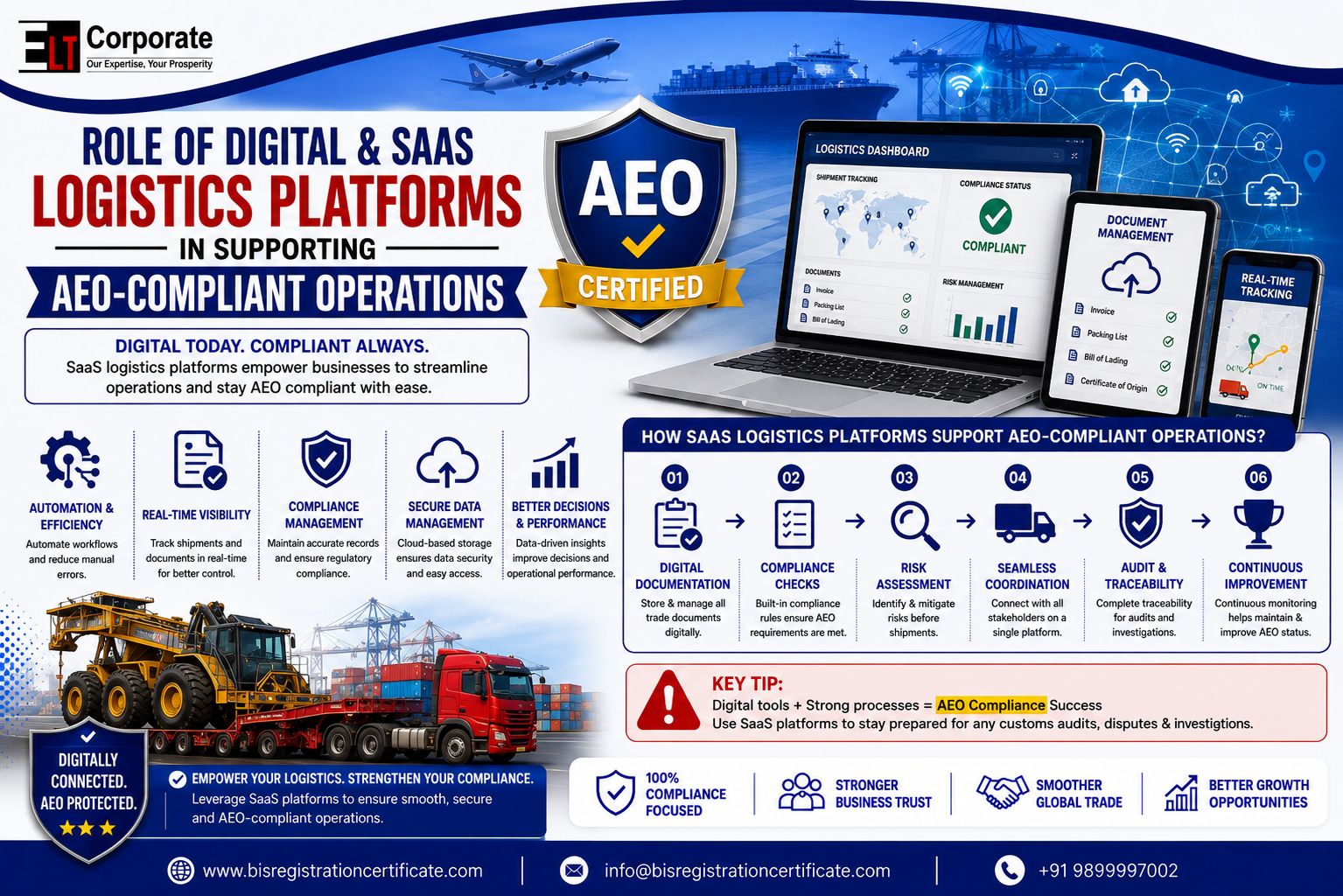
By integrating shipment handling, documentation, customs information, supplier interaction, and compliance tracking into a single platform, digital logistics platforms for AEO-compliant operations streamline the entire logistics process.
Digital platforms offer:
- Compliance alert and notification system
- Electronic record-keeping
- Automation of document management
- Real-time shipment tracking
- Enhanced transparency in shipping
- Improved communication between shippers, customs, importers, and freight forwarders
Automation allows a company to complete essential compliance processes promptly.
SaaS Logistics Platforms Improve AEO-Compliant Operations
Software-as-a-Service (SaaS) logistics platforms allow companies to manage supply chain functions in the cloud without needing to make large investments in IT infrastructure.
With SaaS platforms, AEO-compliant operations can be flexible, scalable, and constantly updated as business needs and laws change.
Some of the main benefits of SaaS logistics platforms are
Centralized Compliance Data Management That Is Required for AEO-Compliant Operations
Every organization that must comply with AEO requirements needs to keep detailed records to track the following shipment-related details:
- shipment details
- customs declarations
- information regarding suppliers
- security procedures
- internal controls
SaaS platforms allow for the creation of a centralized database that helps companies store and access compliance-related information when needed.
This ensures effective performance in the following areas:
- AEO applications
- customs audits
- internal compliance audits
- evaluating the security of the supply chain
The Impact of Digital Documentation Systems on AEO-Compliant Practices
One of the significant factors affecting customs compliance is the accuracy of documentation. Mistakes in invoices, packing lists, certificates, declarations, and shipments can lead to penalties and delays.
Digital documentation systems are every bit of help in ensuring AEO-Compliant Operations activities by:
- Reducing dependencies on paperwork
- Standardizing document formats
- Keeping audit trails
- Preventing missing documentation
- Providing fast access to historical records
A digital document management system allows companies to demonstrate transparency and control in their international trading activities.
Role of Cloud-Based Logistics Platforms in AEO-Compliant Operations
Cloud technology facilitates the storage and management of logistics information online from any location. It supports AEO-compliant operations, enhancing accessibility and collaboration while ensuring compliance.
Some aspects to consider:
- Storing documents in the cloud
- Accessing compliance information from any location
- Automatic updates
- Security of data
- Cooperation of teams
Real-Time Visibility and AEO-Compliant Operations
Visibility of the supply chain is imperative to ensure safety in logistics. Companies have to know where the products are, who is involved in transportation, and whether any risks arise during transportation.
Digital logistics platforms contribute positively to the improvement of AEO-compliant operations by offering:
- shipment tracking capabilities in real time
- tracking of shipment routes
- updates on delivery status
- alerts on exceptions
- analysis of carrier performance
Increased visibility ensures that firms can identify risks early and take the necessary corrective actions, which will prevent these risks from impacting customs compliance.
Challenges and Solutions in Digital AEO-Compliant Operations
| Challenge | Short Explanation | Solution |
| High Implementation Cost | Digital platforms require initial investment for software, integration, and training. | Adopt scalable and cost-effective cloud solutions. |
| Employee Resistance | Employees may find it difficult to shift from manual processes to digital systems. | Provide proper training and awareness programs. |
| Data Security Risks | Digital systems may face risks related to data theft and cyber threats. | Use cybersecurity controls, encryption, and access management. |
| System Integration Issues | New platforms may not easily connect with existing ERP or business systems. | Select compatible solutions with integration support. |
| Poor Data Accuracy | Incorrect data can affect compliance reports and decision-making. | Maintain data validation and regular reviews. |
Risk Management Tools for AEO-Compliant Operations
One of the main components of the AEO program is risk evaluation. Companies need to assess any possible threats that may relate to cargo security, unauthorized access to the premises, document inaccuracies, and interruptions in the supply chain.
Modern cloud software provides tools for AEO-compliant operations risk management, such as
- Automated risk rating
- Supplier assessment tool
- Compliance dashboards
- Incident tracking systems
- Follow-up control over corrective actions
Such tools enable organizations to shift from a proactive approach to risk management and start dealing with compliance problems only after they arise.
Data Analytics Decision-Making in AEO-Compliant Operations
Data plays a vital role in enhancing supply chain efficiency and compliance effectiveness. Digital platforms gather valuable data concerning shipments, customs operations, suppliers, and operational performance.
Analytics-enabled solutions reinforce an AEO-compliant operation by enabling enterprises to:
- Identify common compliance challenges.
- Measure logistics performance.
- Monitor supplier dependability.
- Examine shipment patterns.
- Enhance operational procedures.
Improved data visibility allows firms to make informed decisions and enhance compliance systems consistently.
Integration of ERP and Logistics Software for AEO Compliant Operations
Companies in many parts of the world have already implemented Enterprise Resource Planning (ERP) software to handle their financial, inventory, purchasing, and production processes. By combining ERP software with a logistics system, a unified environment is created, which allows compliance tasks in an easier way.
ERP software integration enhances AEO-compliant operations through:
– Automatic data transfer
– High-quality records of inventory
– Better planning of shipments
– Improvements in the customs clearance process
– Reduced workload duplication
A unified digital environment helps increase efficiency and maintain consistency across different departments of business firms.
Role of Artificial Intelligence in Future AEO-Compliant Operations
In the logistics sector, Artificial Intelligence (AI) is impacting the field by enhancing prediction, automation, and decision-making processes.
AI technologies can positively contribute to AEO-compliant operations through:
- Predictive risk analysis
- Document verification
- Fraud detection
- Smart route planning
- Compliance recommendations
With the ongoing evolution of trade regulations globally, AI technologies will play an enormous role in securing supply chains and ensuring compliance.
Challenges in Digital Systems for AEO-Compliant Operations
While technology brings great advantages, it can also lead to challenges when it comes to implementing digital systems.
Some of these challenges include:
– Initial implementation costs
– Employee training
– Security of data
– Integration of existing software
– Resistance to the implementation of new technologies
Firms must choose systems that can be scaled, provide staff training, and develop a comprehensive plan for digital transformation in order to manage the difficulties faced.
Best Practices for Building Successful AEO-Compliant Operations Technology
Companies can boost their AEO-compliant operations by applying these best practices:
- Choose logistics systems that align with customs compliance needs.
- Keep accurate and current electronic records.
- Continuously assess supply chain risks.
- Train employees on electronic compliance technology.
- Ensure integration of logistics technology into existing operations.
- Use compliance dashboards to monitor performance.
- Perform periodic internal audits.
It is important to understand technology as not only a practical tool but also a powerful arm in compliance.
Prospects of Digital Platforms in AEO-Compliant Operations
The international trading phase of the future will rely heavily on reliable, transparent, and technology-enabled supply chains. Governments and organizations globally are opting for digital customs systems, electronic documents, and automated compliance monitoring systems.
Both digital and SaaS logistics platforms will continue to contribute significantly to the advancement of AEO-compliant operations in terms of the following areas:
- Transparency of supply chains
- Collaboration with customs organizations
- Accuracy of data
- Management of security issues
- Enhancement of operational performance
Companies that implement solutions early in the digital field will gain a more advantageous position and succeed more in trade.
How blockchain technology can enhance AEO-compliant operations
Blockchain technology ensures the security and transparency of records of supply chain transactions. Also, AEO certification largely emphasizes maintaining the integrity and transparency of data in supply chains. Therefore, blockchain technology can assist immensely in AEO-compliant operations.
Blockchain technology ensures an immutable record of all transactions, meaning fraud is reduced, and trust can be built among customs authorities, exporters, importers, and logistics service providers.
How blockchain technology assists in AEO-compliant operations:
- Security of supply chain records.
All actions related to shipping can be recorded securely.
- Enhanced validity of documents.
Certificates and invoices can be easily validated.
- Improved communication among stakeholders.
Exporters and customs authorities can receive information from trusted sources.
- The risk of fraud is decreased.
Blockchain prevents fraudulent documents from being used.
Importance of Supply Chain for AEO-Compliant Operations
Supply chain visibility is one of the essential aspects of compliance with customs laws. The business needs to know where goods are, who is handling them, and if there are any threats. Visibility tools enable businesses to maintain clear and regulated operations for the purpose of AEO compliance.
How visibility tools help in AEO compliance:
- Tracking shipments: A real-time mode. Businesses have the opportunity to trace cargoes along their way from the place of origin to the place of delivery.
- Detection of risk: The application of the tools allows determining delays in shipping, changes of routes, and security issues.
- Supplier observation: With the help of visibility tools, companies can track the performance of their suppliers.
- Better coordination with customs: Information about the shipment helps the company avoid delays with customs authorities.
Use of IoT Technology in Improving AEO-Compliant Operations
Internet of Things (IoT) devices provide current information concerning the transport of cargo, its location, and surrounding conditions.
IoT technology helps to create safe and clear supply chains, which are important for AEO-compliant operations.
- IoT Applications:
- Tracking cargo using GPS
- Using smart containers
- Monitoring temperature
- Sending security alerts
- Providing real-time data on shipments
Documentation Checklist for AEO Certification in India
AEO certification requires businesses to submit various documents related to legal status, customs compliance, financial records, security procedures, and supply chain management.
- Introduction to AEO documentation requirements
- Company registration documents
- Import Export Code (IEC) documents
- GST and tax compliance documents
- Customs-related records
- Financial documents
- Security policy documents
- Supply chain partner details
- Employee and access control records
- Internal compliance procedures
Future Trends in Technology-Driven AEO-Compliant Operations
International trade is expected to become ever more technology-dependent and will rely on automation, artificial intelligence, e-customs systems, and interconnected supply chains.
Businesses that implement modern technology will be ahead in this area, providing better results with AEO-compliant operations from a long-term perspective.
Forthcoming Trends:
- Artificial intelligence-based customs compliance
- Blockchain technology-based documentation of trade
- Use of automated risk evaluation
- Virtual customs clearance
- Smart supply chain management
Conclusion
Obtaining AEO certification is a process that consists of satisfying not only the regulatory framework but also providing a safe and efficient environment for operations. Digital logistics platforms and SaaS solutions offer businesses tools to control documentation, keep track of possible risks, enhance visibility, and sustain compliance at all times.
Modern technology solutions can help businesses develop solid AEO-compliant operations that lead to quicker customs procedures and increased safety of the supply chain, which promotes long-term growth.
In modern times, digital transformation is the most important trend in international trade since it has become one of the basic elements in establishing AEO-compliant operations.
Frequently Asked Questions
Q1: What is needed in documents for obtaining AEO certification?
For AEO certification, companies need to submit facts about the company as well as information on IEC, GST references, customs records, financial documentation, SOPs, security procedures, and compliance records.
Q2: Is it necessary to prepare documentation for getting AEO approval?
Yes, good documentation is what will prove that the business has compliance, security controls, and risk management.
Q3: What types of SOPs are being required for AEO certification?
The major types of SOPs that must be submitted for AEO certification are those connected to security management, warehouse operations, transportation, employee access control, and vendor management.
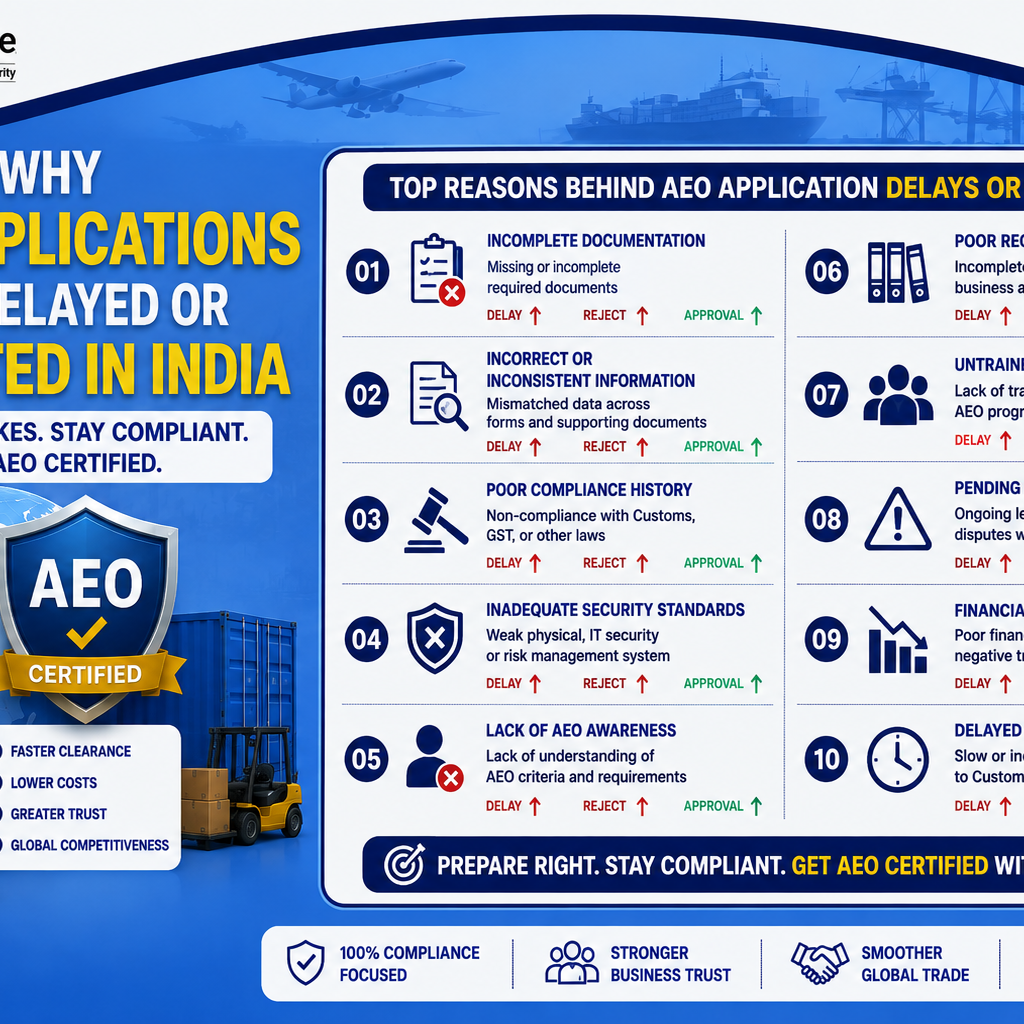
Q4: Why is the timeline of AEO applications getting longer?
The application timeline may be longer because of insufficient documents, lack of proof, and wrong information.
Q5: Is it beneficial to keep digital records for the purposes of AEO compliance?
Absolutely yes, keeping documentation for AEO helps maintain an accurate account and makes audit preparation easier.
Q6: What types of documents are being audited in AEO?
Customs may check import-export documentation, SOPs, all documents connected with security, employee records, etc.
Q7: Can a consultant help in preparing all necessary documents for AEO?
Yes, consultants can assist with document preparation, gap analysis, SOP development, and AEO application support.