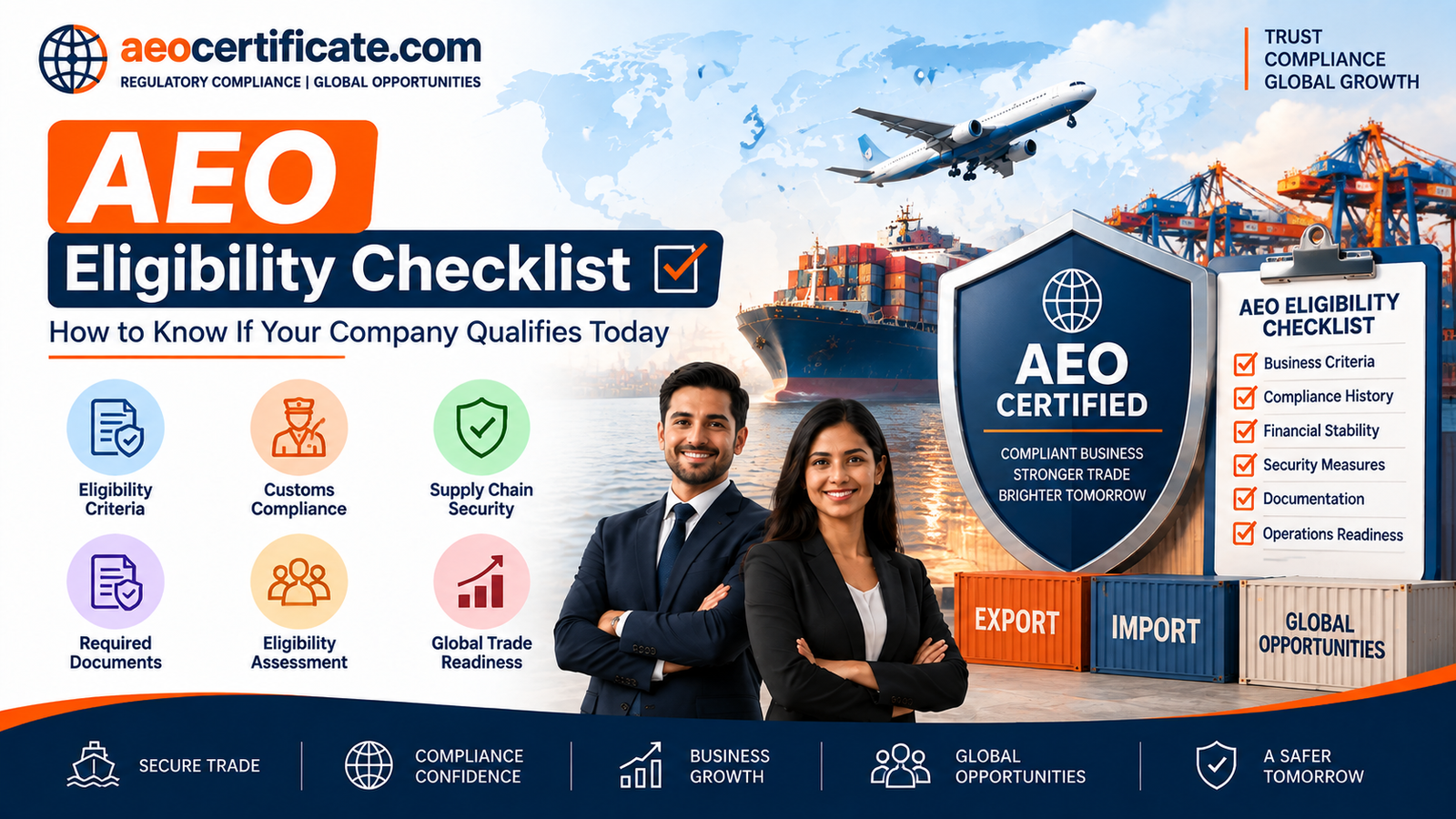
International trade is becoming increasingly competitive, and businesses involved in import and export activities must demonstrate strong compliance, transparency, and supply chain security. Customs authorities across the world are focusing on creating a secure and reliable trading environment where compliant businesses receive better facilitation.
The AEO Eligibility Checklist helps businesses understand whether they meet the basic requirements for obtaining Authorized Economic Operator (AEO) Certification. It allows exporters, importers, manufacturers, logistics companies, and other trade participants to evaluate their readiness before applying.
AEO Certification is a globally recognized customs compliance program introduced under the framework of the World Customs Organization (WCO). In India, the AEO program is administered by Indian Customs under CBIC to recognize businesses that maintain high standards of customs compliance and supply chain security.
Before applying for AEO Certification, companies should carefully review the AEO Eligibility Checklist to identify whether they qualify and whether their internal systems are ready for assessment.
What is AEO Certification?
AEO (Authorized Economic Operator) Certification is a status granted to businesses that demonstrate strong compliance with customs regulations, proper record management, financial stability, and secure supply chain practices.
An AEO-certified company is recognized as a trusted business partner by customs authorities.
The certification is available in different categories:
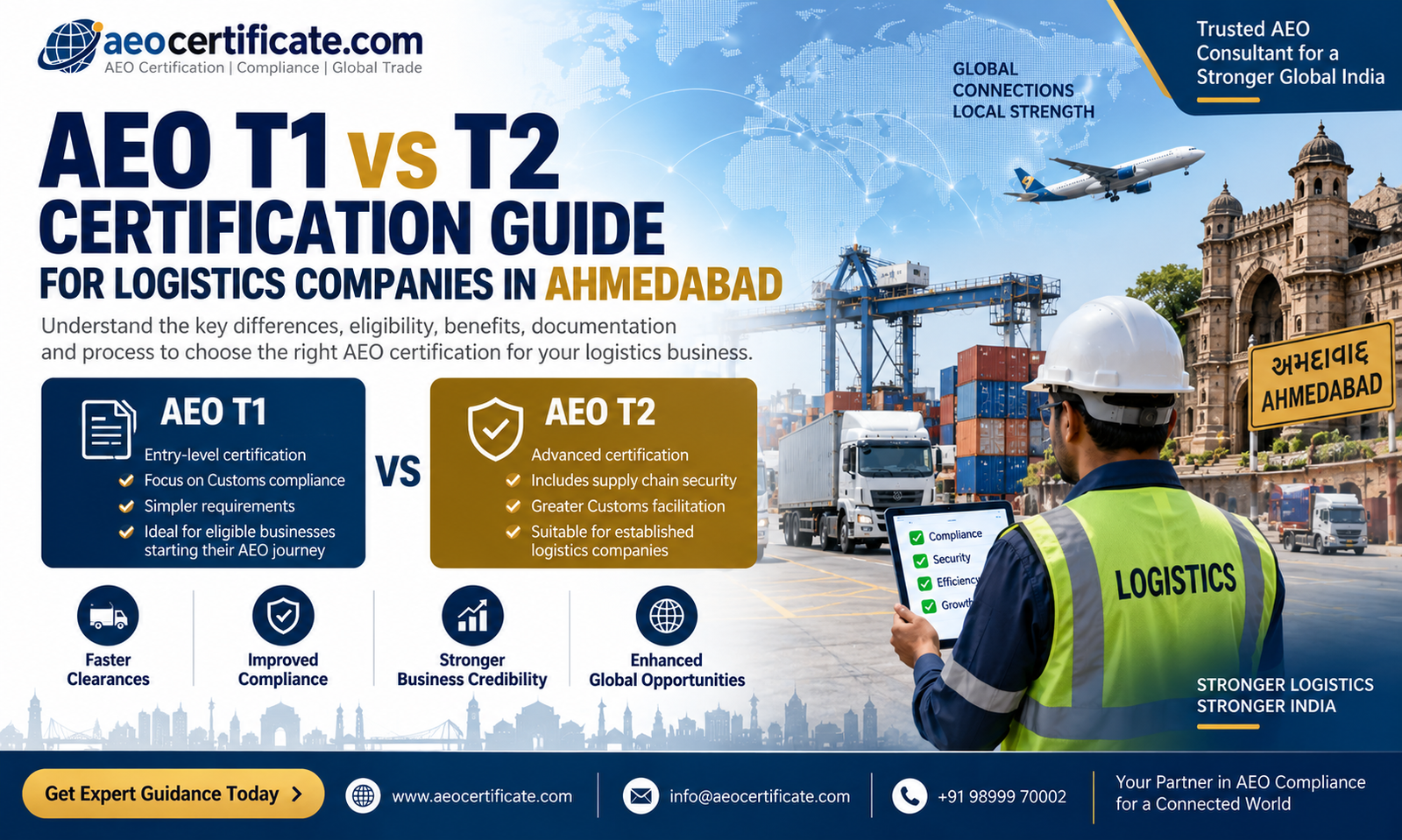
AEO T1 Certification
AEO T1 is generally suitable for businesses that meet basic customs compliance and security requirements.
AEO T2 Certification
AEO T2 requires stronger internal controls, compliance systems, and supply chain security measures.
AEO T3 Certification
AEO T3 is the highest level and is intended for businesses with advanced compliance systems and extensive trade operations.
The AEO Eligibility Checklist helps companies determine which category may be suitable based on their operations and compliance maturity.
Why Businesses Should Review the AEO Eligibility Checklist Before Applying
Many companies directly start the application process without evaluating their internal readiness. This can result in delays, additional queries, or the need for corrective actions.
A proper AEO eligibility checklist helps businesses:
- Understand eligibility requirements
- Identify missing compliance documents
- Evaluate customs history
- Review security practices
- Prepare internal procedures
- Improve chances of successful approval
AEO certification is not only about submitting an application; it requires businesses to demonstrate continuous compliance and operational control.
AEO Eligibility Checklist: Basic Requirements for Companies
Businesses should review the following important areas before applying for AEO Certification.
1. Valid Business Registration and Legal Documents
The first requirement in the AEO Eligibility Checklist is ensuring that the company has proper legal registration and business documentation.
Companies should have:
- Certificate of Incorporation / Registration Certificate
- PAN Card
- GST Registration Certificate
- Import Export Code (IEC)
- Partnership Deed / LLP Agreement (where applicable)
- Memorandum and Articles of Association (for companies)
- Details of directors, partners, or proprietors
Proper legal documentation establishes the identity and legitimacy of the applicant.
2. Customs Compliance History
A strong customs compliance record is one of the most important parts of the AEO Eligibility Checklist.
Businesses should evaluate:
- History of customs transactions
- Import and export declarations
- Compliance with customs laws
- Duty payment records
- Previous notices or penalties
- Accuracy of trade documentation
Companies with consistent compliance practices are better prepared for AEO assessment.
3. Financial Stability of the Company
Financial stability demonstrates that a company has reliable business operations.
The AEO Eligibility Checklist should include:
- Audited financial statements
- Balance sheets
- Profit and loss statements
- Income tax returns
- GST return records
- Banking details
A financially stable company is considered better positioned to maintain long-term compliance systems.
4. Proper Record-Keeping System
Maintaining accurate records is an essential requirement for AEO Certification.
Companies should check whether they have:
- Import-export records
- Invoice records
- Shipping documents
- Customs documents
- Supplier records
- Customer records
- Accounting records
The AEO Eligibility Checklist helps businesses verify whether their documentation systems are organized and easily accessible.
5. Internal Compliance Procedures
AEO applicants should have structured internal processes to manage compliance responsibilities.
Businesses should maintain:
- Standard Operating Procedures (SOPs)
- Compliance policies
- Employee responsibility matrix
- Internal review procedures
- Risk management procedures
A well-defined compliance system demonstrates that the company manages trade activities professionally.
6. Supply Chain Security Measures
Supply chain security is a major part of the AEO Eligibility Checklist.
Businesses should evaluate whether they have:
Premises Security
- Secure office and warehouse facilities
- Controlled access points
- CCTV monitoring systems
Cargo Security
- Secure cargo handling procedures
- Transportation security controls
- Shipment monitoring processes
Access Control
- Employee identification systems
- Visitor management procedures
- Restricted access areas
These measures help reduce risks associated with international trade operations.
7. Employee Management and Training
Employees play an important role in maintaining compliance standards.
The AEO Eligibility Checklist should include:
- Employee identification records
- Role and responsibility details
- Background verification procedures
- Security awareness training
- Compliance training records
Companies should ensure employees understand their responsibilities related to trade security.
8. Business Partner Management
AEO compliance also considers how companies manage their suppliers, vendors, logistics partners, and other business associates.
Companies should maintain:
- Vendor details
- Supplier evaluation records
- Logistics partner information
- Customs broker details
- Partner verification procedures
The AEO Eligibility Checklist helps businesses review whether their entire supply chain follows secure practices.
9. Import/Export Experience and Operations
Companies should review their international trade activities before applying.
Important factors include:
- Number of import/export transactions
- Nature of goods traded
- Customs locations used
- Trade volume
- Business continuity plans
Companies with established import-export operations may find it easier to demonstrate compliance readiness.
Detailed AEO Eligibility Checklist: Step-by-Step Assessment Guide
Before submitting an application for AEO Certification, businesses should conduct a detailed internal assessment. The following AEO Eligibility Checklist helps organizations evaluate their readiness across different compliance areas.
Business Operations and Process Control Checklist
A company applying for AEO Certification should have clearly defined business processes. Customs authorities evaluate whether the applicant has proper control over its trade operations.
The AEO Eligibility Checklist for business process control includes:
✅ Defined import and export procedures
✅ Document approval workflows
✅ Responsibility assignment for employees
✅ Internal monitoring systems
✅ Error identification and correction procedures
✅ Process improvement mechanisms
Companies should ensure that their daily operations are systematic and properly documented.
Risk Management System Checklist
Risk management is an important element of AEO compliance. Businesses should identify possible risks related to customs, logistics, and supply chain operations.
The AEO Eligibility Checklist should include:
- Identification of trade-related risks
- Risk assessment procedures
- Corrective action plans
- Periodic compliance reviews
- Internal audit mechanisms
- Emergency response procedures
A structured risk management system demonstrates that the company proactively manages potential compliance issues.
Warehouse Security Checklist for AEO Certification
Warehouses play a crucial role in international trade security. Companies should maintain secure storage and handling practices.
The AEO Eligibility Checklist for warehouses includes:
Physical Security
- Boundary protection
- Secure entry and exit points
- CCTV surveillance
- Adequate lighting
- Restricted access areas
Inventory Security
- Stock monitoring system
- Goods identification process
- Prevention of unauthorized movement
- Regular inventory verification
Loading and Unloading Controls
- Authorized personnel handling
- Shipment verification process
- Proper documentation before dispatch
Strong warehouse security helps businesses demonstrate supply chain reliability.
Transportation Security Checklist
Transportation is a critical part of international supply chains. Businesses should evaluate whether their logistics operations maintain adequate security standards.
The AEO Eligibility Checklist for transportation includes:
- Selection of reliable transport providers
- Vehicle security procedures
- Driver identification records
- Shipment tracking systems
- Cargo protection measures
- Delivery confirmation records
Secure transportation practices reduce risks during the movement of goods.
IT Security and Data Protection Checklist
Modern international trade depends heavily on digital systems. Companies should maintain proper IT security controls.
The AEO Eligibility Checklist for IT systems includes:
- User access controls
- Password management policy
- Data backup procedures
- Cybersecurity measures
- Software security controls
- Protection of trade-related information
Strong IT controls help protect sensitive business and customs information.
Customs Broker Management Checklist
Many businesses appoint customs brokers for handling import-export procedures. Proper management of customs brokers is important for maintaining compliance.
The AEO Eligibility Checklist should include:
- Customs broker appointment records
- Broker authorization documents
- Review of broker performance
- Communication procedures
- Compliance monitoring
Businesses should ensure their customs representatives follow proper procedures.
Supplier and Vendor Compliance Checklist
A company’s supply chain includes multiple external partners. Businesses should ensure their suppliers maintain reliable practices.
The AEO Eligibility Checklist for suppliers includes:
- Supplier verification process
- Vendor approval system
- Supplier compliance evaluation
- Contractual obligations
- Security requirements for vendors
Proper vendor management strengthens overall supply chain security.
Record Retention and Document Management Checklist
Proper record maintenance is essential for demonstrating compliance.
Businesses should maintain:
- Import documents
- Export documents
- Invoices
- Purchase records
- Shipping documents
- Customs communications
- Payment records
The AEO Eligibility Checklist ensures that companies can easily retrieve required information during assessment.
Internal Audit Checklist for AEO Readiness
Before applying, companies should conduct internal audits to identify gaps.
The internal AEO Eligibility Checklist audit should review:
✔ Customs compliance
✔ Documentation accuracy
✔ Security procedures
✔ Employee awareness
✔ Vendor controls
✔ Warehouse practices
✔ Transportation security
Internal audits help companies improve their readiness before customs verification.
AEO Eligibility Checklist for Export-Oriented Companies
Exporters should focus on specific areas before applying for AEO Certification.
The checklist includes:
- Valid Export Import Code (IEC)
- Regular export activities
- Proper export documentation
- Shipping bill records
- Foreign buyer details
- Logistics management system
- Compliance history
The AEO Eligibility Checklist helps exporters understand their preparedness for international trade facilitation.
AEO Eligibility Checklist for Importers
Importers should evaluate:
- Import transaction history
- Bill of Entry records
- Customs duty payment history
- Supplier verification process
- Product documentation
- Warehouse management system
A strong compliance structure helps importers demonstrate responsible trade practices.
AEO Eligibility Checklist for Manufacturers
Manufacturers involved in exports should review:
- Manufacturing facility security
- Raw material supplier management
- Production records
- Finished goods tracking
- Quality management systems
- Dispatch procedures
Manufacturing companies can use AEO Certification to strengthen their position as reliable global suppliers.
AEO Eligibility Checklist for MSMEs
Small and medium enterprises often believe AEO Certification is only suitable for large companies. However, eligible MSMEs involved in international trade can also apply.
The AEO Eligibility Checklist for MSMEs includes:
- Valid IEC
- Regular import/export activity
- Proper documentation system
- Basic security procedures
- Financial records
- Compliance practices
AEO Certification can help MSMEs improve credibility and create better opportunities in global markets.
Common Reasons Companies May Not Qualify for AEO Certification
Before applying, businesses should identify possible challenges.
Common issues include:
- Poor customs compliance history
- Missing documentation
- Weak internal controls
- Lack of security procedures
- Incomplete records
- Untrained employees
- Poor vendor management systems
Using an AEO Eligibility Checklist before submission allows companies to identify and resolve these issues.
Documents Required Under AEO Eligibility Checklist
Common documents required for AEO assessment include:
- Company registration documents
- IEC certificate
- GST certificate
- PAN details
- Import-export records
- Financial statements
- Customs transaction details
- SOPs and policies
- Security procedures
- Employee records
- Vendor management documents
The exact requirements may vary depending on the AEO category and business profile.
How an AEO Consultant Helps With Eligibility Assessment
Preparing for AEO Certification requires a detailed understanding of customs compliance and documentation requirements.
An experienced AEO consultant can help businesses with:
- Eligibility evaluation
- Gap analysis
- Document preparation
- SOP development
- Compliance improvement
- Application support
- Assessment preparation
A professional review of the AEO Eligibility Checklist can help businesses identify improvement areas before submitting their application.
Conclusion
AEO Certification provides businesses with an opportunity to demonstrate their commitment to compliance, security, and responsible international trade practices.
The AEO Eligibility Checklist acts as a roadmap for companies to evaluate their readiness and understand whether they meet the requirements for AEO Certification.
By reviewing legal documents, customs compliance history, financial stability, record management systems, and supply chain security practices, businesses can prepare themselves for a successful application process.
Whether you are an exporter, importer, manufacturer, logistics provider, or MSME, completing the AEO Eligibility Checklist is the first step toward building a stronger compliance framework and improving your position in global trade.
Frequently Asked Questions
Q1. What is an AEO Eligibility Checklist?
The AEO Eligibility Checklist is a guide that helps businesses evaluate whether they meet the requirements for obtaining AEO Certification.
Q2. Who can apply for AEO Certification?
Importers, exporters, manufacturers, logistics companies, customs brokers, and eligible trade-related businesses can apply.
Q3. Is AEO Certification mandatory?
No, AEO Certification is voluntary, but it provides recognition as a trusted and compliant trade partner.
Q4. What are the main requirements for AEO Certification?
Major requirements include customs compliance, financial stability, proper documentation, record-keeping, and supply chain security.
Q5. Can MSMEs apply for AEO Certification?
Yes, eligible MSMEs involved in international trade can apply for AEO Certification.