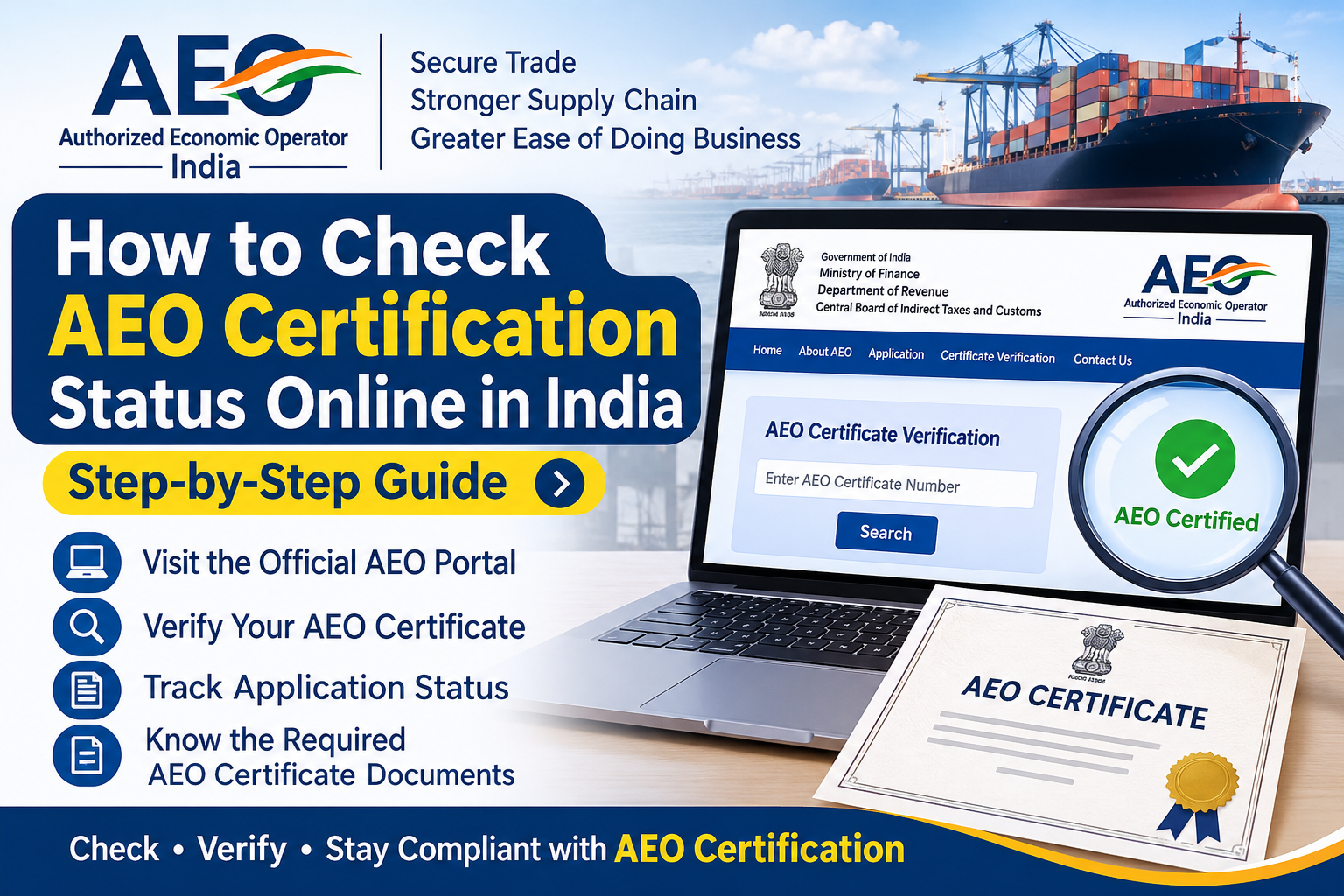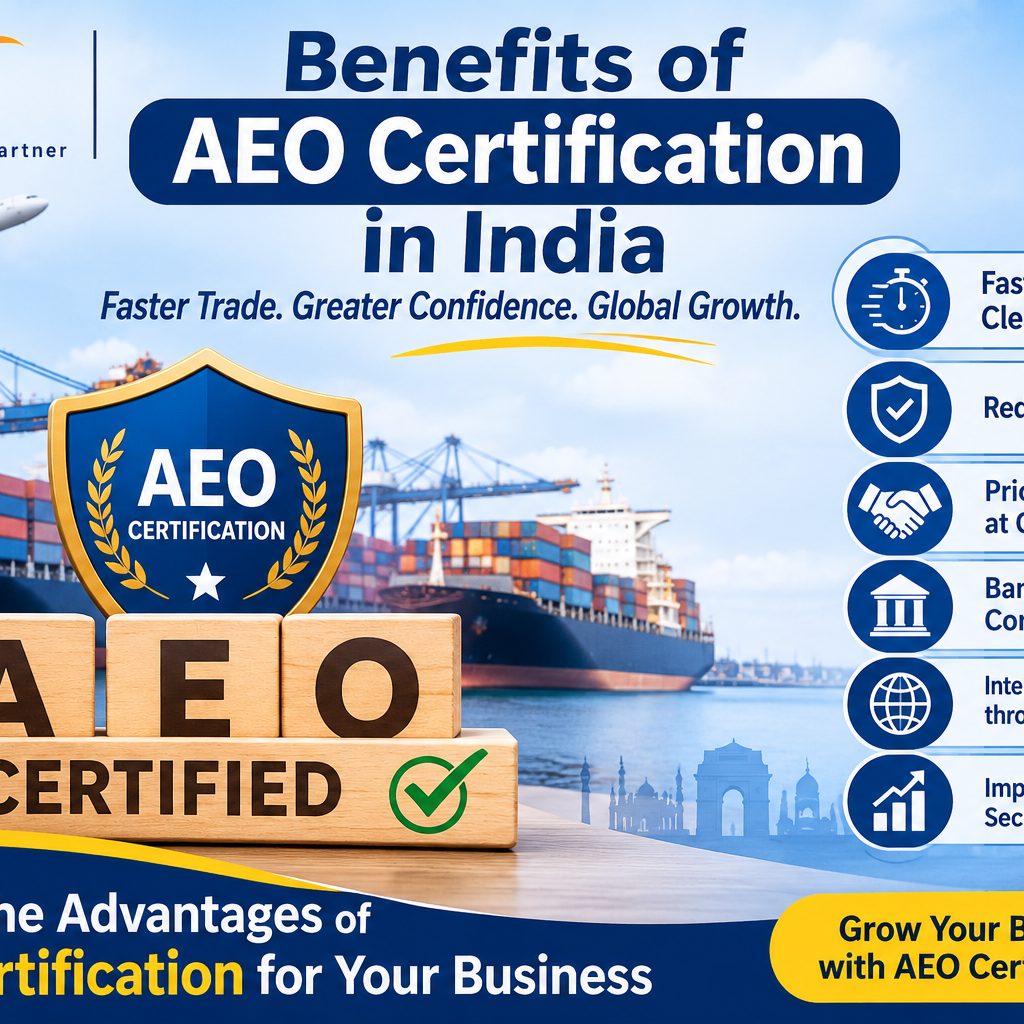

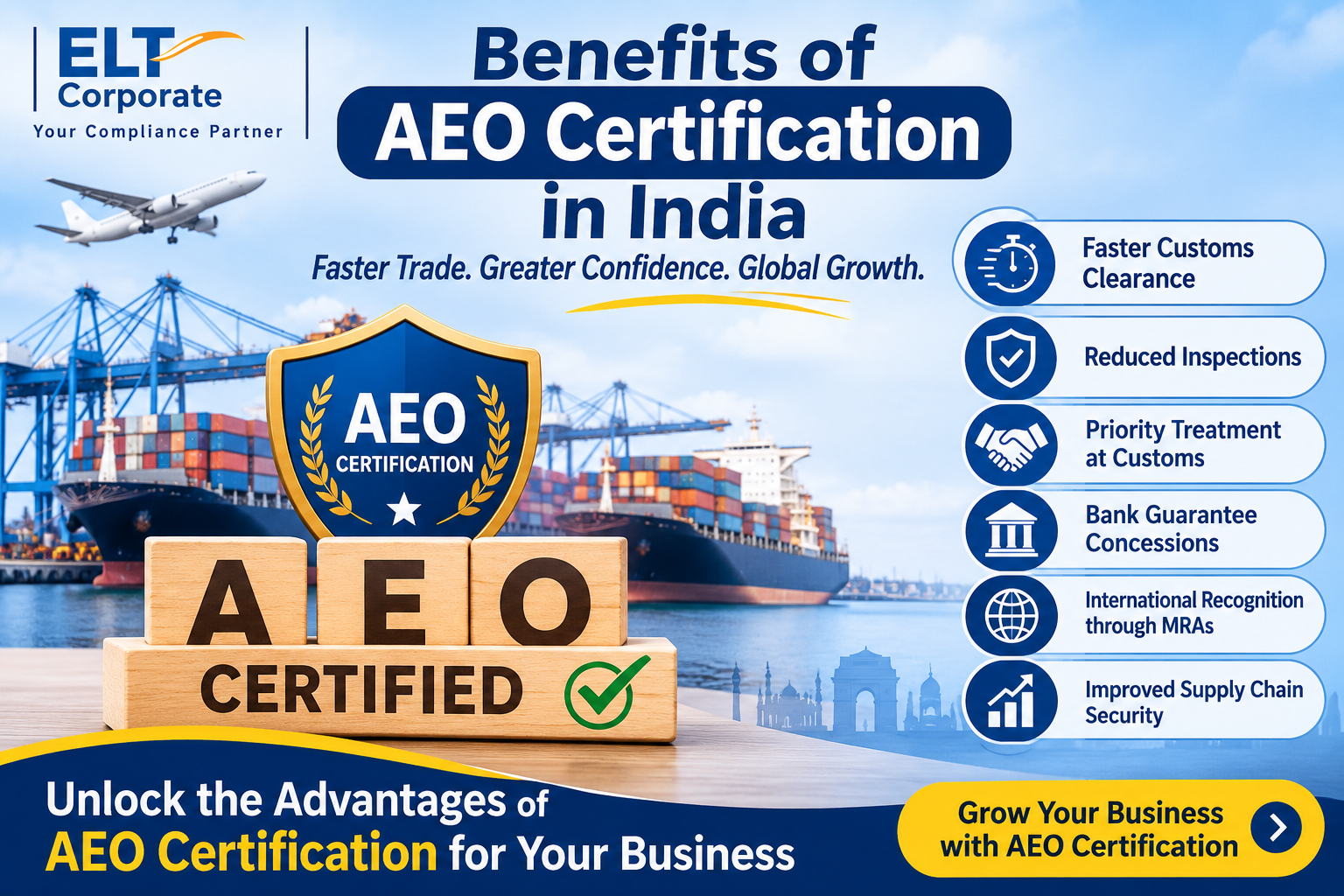
Every day, thousands of Indian importers and exporters lose time and money at the border. A container waits for examination, a document query comes up at the last minute, and a buyer abroad grows impatient. These delays are rarely caused by dishonest trade. They happen because customs authorities cannot instantly tell which businesses are safe and compliant, so they check many consignments just to be sure.
This is exactly the problem the Authorized Economic Operator (AEO) program was designed to solve. When your business becomes AEO certified, customs formally recognises you as a trusted, low-risk partner. The practical benefits of AEO certification include faster clearance, fewer inspections, better credibility with global buyers, and a stronger compliance system inside your own company.
In this detailed guide, you will learn what AEO certification is, the major advantages it offers, how the benefits differ across AEO-T1, AEO-T2, AEO-T3, and AEO-LO, who should apply, and how to start the process without costly mistakes.
What Is AEO Certification in India?
AEO stands for Authorized Economic Operator. It is a voluntary trusted-trader program implemented in India by the Central Board of Indirect Taxes and Customs (CBIC). The program follows the SAFE Framework of Standards of the World Customs Organization (WCO), which encourages customs administrations and businesses to work together to secure and speed up international trade.
In India, the program is governed by CBIC circulars, including Circular 33/2016 and Circular 54/2020. These circulars explain the eligibility conditions, the different tiers, the application process, and the facilitation that certified operators can expect.
The idea is simple. If a company keeps accurate records, follows customs laws, maintains financial stability, and secures its supply chain, customs should not need to treat it like an unknown risk. In return for this transparency, the company receives AEO status and the facilitation that comes with it.
Why Does AEO Certification Matter for Your Business?
International trade runs on trust and speed. Customs wants security and compliance. Businesses want predictability and low cost. AEO certification brings both sides together.
For a business owner, AEO is not just a certificate to hang on the wall. It is a commercial tool. It can reduce the cost of delays, make your delivery promises more reliable, and give you an advantage over competitors who are still treated as general-risk traders. In markets where buyers ask about compliance and supply chain security before placing orders, the benefit of AEO certification can also become a deciding factor.
Top 10 Benefits of AEO Certification
For exporters, it means shipments are cleared and loaded on time, which protects delivery schedules and shipping-line cut-offs.
1. Faster Customs Clearance
The most talked-about benefit is speed. Because AEO operators are considered low risk, their consignments are generally processed with benefits of AEO certification greater priority. For importers, this means goods reach the factory or warehouse sooner.
2. Fewer Physical Inspections and Document Checks
Risk management systems decide which consignments are examined. A verified compliance record helps lower your risk profile, so you can benefits of AEO certification expect fewer random or repeated examinations. Every avoided inspection saves labour, handling charges, and the risk of cargo damage.
3. Lower Demurrage, Detention, and Storage Costs
When containers sit at the port, you pay for it. Demurrage, detention, and storage charges can quietly eat a large part of your profit, especially for time-sensitive or high-value cargo. Faster clearance directly reduces these costs, which makes the benefits of AEO certification measurable on your balance sheet.
4. Recognition Through Mutual Recognition Agreements (MRAs)
One of the strongest long-term advantages is international recognition. India has been signing mutual recognition agreements with selected countries. Under an MRA, the partner customs administration can recognize your AEO status and offer facilitation for your shipments. For exporters, this can mean smoother clearance in destination markets. The list of MRA partners keeps changing, so always confirm the current list on the official website before making commercial promises to buyers.
5. Higher Credibility With Overseas Buyers
A foreign buyer cannot easily judge how compliant your factory is. An AEO certificate gives them the government-backed benefits of AEO certification, signaling that your business meets recognized standards. This can help when negotiating with new customers, responding to tenders, or applying for approved-vendor status with large global companies.
6. Better Relationships With Shipping Lines, Freight Forwarders, and Logistics Partners
Supply chain partners prefer working with predictable, low-risk clients. Certified operators often find it easier to build benefits of AEO certification long-term relationships, negotiate service levels, and resolve operational issues quickly.
7. Stronger Internal Compliance and Fewer Penalties
The application process forces you to review your benefits of AEO certification documentation, record-keeping, valuation practices, classification, security procedures, and staff training. Many companies discover gaps they did not know existed. Fixing these gaps lowers the chance of errors, disputes, notices, and penalties in the future.
8. Improved Supply Chain Security
AEO is not only about paperwork. It also looks at physical security of premises, cargo handling, access control, employee screening, and the security requirements you place on your business partners. A safer benefits of AEO certification supply chain reduce losses from theft, tampering, and unauthorized access.
9. Additional Facilitation at Higher Tiers
Higher tiers of AEO may carry additional trade facilitation measures compared with the entry level. Depending on the tier, these can include extra clearance advantages and other benefits defined by CBIC. Since these provisions are updated through circulars and notifications, always check the latest version or consult an expert before benefits of AEO certification around a specific benefit.
10. A Real Competitive Advantage
In a crowded market, small differences win business. If two exporters offer similar prices, the one with AEO status looks benefits of AEO certification safer and more reliable. Over time, that edge can turn into more repeat orders, stronger contracts, and better margins.
AEO-T1, AEO-T2, AEO-T3, and AEO-LO: Which One Is Right for You?
India’s AEO program has different tiers, each designed for a different level of compliance maturity and business type.
AEO-T1
This is the first level and is generally the starting point for importers and exporters. It focuses on verifying your documents, compliance benefits of AEO certification history, and basic supply chain practices. If your business is relatively new to the program, AEO-T1 is usually where the journey begins.
AEO-T2
AEO-T2 is meant for businesses with stronger compliance and documentation systems. It involves a deeper level of verification, which often includes checks at your premises. Because the benefits of AEO certification standard are higher, the facilitation offered is also generally greater than at the first tier.
AEO-T3
AEO-T3 is the highest tier. It is intended for businesses that already hold T2 status and have demonstrated strong, consistent compliance and supply chain security over time. It represents the most advanced level of trust between a benefits of AEO certification business and customs.
AEO-LO
AEO-LO is for logistics service providers and other supply chain operators, such as customs brokers, warehouse benefits of AEO certification operators, carriers, and similar entities. These companies handle other people’s cargo, so their security and reliability matter at every step.
Who Should Consider Getting AEO Certification?
AEO certification is especially useful for:
- Regular importers who face frequent examinations and want faster release of raw materials or finished goods
- Exporters who ship to markets where recognition under an MRA may be available
- Manufacturers with just-in-time production schedules that cannot afford border delays
- Logistics companies that want to stand out from competitors and win larger contracts
- Growing businesses that want to build a compliance-first reputation early
If your shipment volume is very low or irregular, it is worth benefits of AEO certification calculating whether the time and effort will pay off for you right now. A short eligibility discussion with a consultant can help you decide.
Basic Eligibility and Documents: What to Expect
Exact requirements are set by CBIC and may be updated, but in general, the authorities look at the following areas:
- A clean compliance record with customs and other relevant agencies
- Financial stability and proper accounting records
- Systems for maintaining and retrieving trade documents
- Security measures for premises, cargo, people, and information
- A commitment to training staff and maintaining standard operating procedures
Commonly requested documents include business registration papers, the Importer Exporter Code, PAN, GST registration, past financial and audit records, and details of your trade activity and security procedures. Always check benefits of AEO certification the current checklist before applying, because incomplete or inconsistent documents are one of the most common causes of delay.
Is AEO Certification Worth the Effort? A Practical View
It is fair to ask whether the investment of time, documentation, and consultant fees is justified. A useful way to think benefits of AEO certification about it is to compare the cost of certification with the cost of problems you face today.
Add up your yearly spending on demurrage, detention, extra handling, delayed deliveries, and time spent responding to customs queries. Then consider the value of orders you could win with stronger buyer confidence. For many regular traders, the long-term savings and opportunities outweigh the effort. For benefits of AEO certification businesses with very small or occasional trade, a phased approach may be more sensible: improve compliance first, then apply when your volumes grow.
Common Mistakes That Delay AEO Approval
Many applications face avoidable delays. Watch out for these:
- Incomplete or inconsistent documents: Names, addresses, and figures that do not match across records create doubt.
- Weak internal procedures: Having no written SOPs for security, record-keeping, or training.
- Ignoring past compliance issues: Unresolved notices or discrepancies can slow or block approval.
- Poor preparation for verification: Staff who cannot explain your processes during a site visit or audit.
- Treating AEO as a one-time task: Certification must be maintained and renewed, which needs ongoing discipline.
How to Get AEO Certification: Step-by-Step Overview
- Check eligibility: Review your compliance history, finances, and operations against the program requirements.
- Run a gap assessment: Identify missing documents, weak processes, or security gaps.
- Fix the gaps: Update SOPs, records, training, and physical security measures.
- Prepare documentation: Collect and organize all required papers in the correct format.
- File the application: Submit it to CBIC through the prescribed process.
- Support verification: Be ready for document review and, where applicable, premises verification.
- Maintain and renew: Keep your systems current so your status continues without interruption.
Why Take Expert Help?
The AEO process is detailed, and small mistakes can benefits of AEO certification add weeks or months. An experienced consultant helps with eligibility checks, gap assessment, documentation, filing, and audit preparation. This allows your team to continue running daily operations while the certification benefits of AEO certification work move forward in an organized way.
Conclusion
The benefits of AEO certification go far beyond a faster release at the port. It reduces costs, lowers inspection risk, strengthens your reputation with international buyers, improves your internal systems, and opens the benefits of AEO certification door to recognition in partner countries. For serious importers, exporters, and logistics operators, it is a strategic investment in smoother, more predictable trade.
If you are planning to take your business to the next level, the best first step is a free eligibility check and gap assessment. Contact ELT Corporate today for complete AEO certification support, from eligibility review and documentation to application filing and audit preparation.
Frequently Asked Questions
Q1. What are the main benefits of AEO certification?
The main benefits are faster customs clearance, fewer inspections, lower port-related costs, and possible recognition under Mutual Recognition Agreements.
Q2. Is AEO certification mandatory in India?
No. It is a voluntary program. However, businesses that join it can gain clear trade facilitation advantages.
Q3. Which AEO tier should I apply for?
Importers and exporters usually begin with AEO-T1. Logistics and supply chain operators can apply under AEO-LO.
Q4. Can small and medium businesses get AEO certification?
Yes. Businesses of all sizes can apply if they meet the eligibility criteria and maintain proper compliance and security standards.
Q5. How long does the AEO process take?
The timeline depends on how ready your documents and systems are Good preparation can save a lot of time.