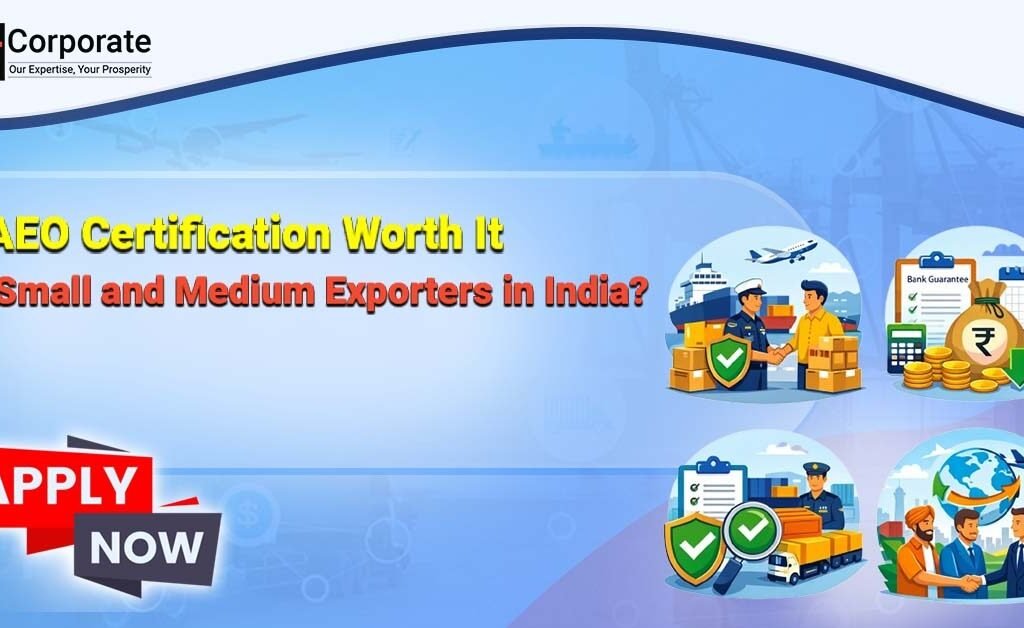
As a small or medium exporter in India, managing customs procedures, logistics costs, and delivery timelines can be challenging. Businesses constantly seek ways to reduce delays and improve competitiveness.
AEO (Authorized Economic Operator) certification helps exporters achieve faster customs clearance and smoother supply chain operations. This guide explains whether AEO certification is worth the investment for small exporters and how to apply successfully.
Why AEO Certification Matters for Small Exporters in India
The AEO program, introduced by the World Customs Organization (WCO) and implemented in India by the Central Board of Indirect Taxes and Customs (CBIC), aims to recognize reliable and secure players in the international supply chain. For small and medium-sized enterprises (SMEs), it’s not just another certificate; it’s a strategic tool that can transform their export operations.
India’s AEO program has seen steady growth in recent years, with increasing participation from MSMEs due to simplified eligibility norms. Importantly, recent reforms have specifically boosted MSME participation, making the program more accessible than ever before. This includes reduced eligibility thresholds and tailored AEO-T1 tier options designed with smaller businesses in mind.
Key Benefits and Long-Term Value of AEO Status
Obtaining AEO certification offers a range of tangible advantages that can significantly impact the bottom line and operational efficiency of small and medium exporters:
Faster Customs Clearance: AEO-certified entities receive priority treatment, leading to significantly reduced inspection rates. AEO-certified exporters generally experience fewer inspections and faster customs clearance compared to non-AEO exporters, although inspection levels vary based on risk assessment.
Reduced Bank Guarantees: This is a game-changer for cash flow. AEO status can lead to a substantial reduction or waiver of bank guarantees depending on AEO tier and eligibility.
Direct Port Delivery/Entry: AEO-certified importers can often pick up their consignments directly from the port, and exporters can get direct port entry for their shipments. This bypasses congestion and storage costs, further accelerating the supply chain.
Enhanced Credibility and Global Recognition: AEO status signals to international partners, customers, and customs authorities worldwide that your business adheres to high standards of security and compliance. This builds trust and can open doors to new markets and partnerships.
Improved Supply Chain Security: The AEO program encourages robust internal controls and security measures, leading to a more secure and predictable supply chain. This reduces risks of theft, damage, and unauthorized access, benefiting both your business and your partners.
Priority Treatment: In times of trade disruptions or emergencies, AEO-certified businesses often receive priority in customs processing, ensuring business continuity.
Expedited Refunds and Rebates: AEO-certified businesses may experience faster processing of duty drawbacks and refunds, depending on customs procedures.
Competitive Edge: With faster, more reliable, and cost-effective logistics, your business gains a significant competitive advantage over non-AEO counterparts, allowing you to offer better service and pricing to customers.
Required Documents and Prerequisites for AEO for Small Exporters
While the prospect of certification might seem daunting, the CBIC has made significant efforts to simplify the process, especially for MSMEs seeking AEO-T1 status. Meeting the prerequisites is the first crucial step.
Eligibility Criteria for Small Exporters (AEO-T1 Focus)
To qualify for AEO-T1 certification, small and medium exporters generally need to meet the following criteria:
Business Duration: You should have been engaged in customs-related activities (import/export) for at least two financial years preceding the application.
Customs Documents: You need to have filed a minimum of 10 customs documents (Bills of Entry or Shipping Bills) in each of the two preceding financial years. This threshold was specifically lowered to benefit MSMEs.
Compliance History: A clean record with customs, excise, service tax, and GST over the past three years is essential. No serious violations or show cause notices for duty evasion should be pending.
Financial Solvency: You must demonstrate financial health and solvency. This usually involves submitting audited financial statements.
Internal Controls & Security Measures: While less exhaustive than for higher tiers, you must have adequate internal controls to prevent fraud and ensure data accuracy, along with basic security measures for your premises and cargo.
Mandatory Documents Checklist
Preparing a comprehensive set of documents is key to a smooth application process. Here’s a list of commonly required documents:
- Application Form (AEO-T1)
- Copy of IEC (Importer-Exporter Code)
- Copy of PAN (Permanent Account Number)
- GST Registration Certificate
- Memorandum and Articles of Association (or Partnership Deed/Proprietorship Certificate)
- Audited Financial Statements for the last two financial years
- Income Tax Returns for the last two financial years
- Proof of Business Premises (e.g., rent agreement, property ownership documents) Organizational Chart with details of key personnel
- Details of Customs Broker/CHA (if applicable)
- Declaration of compliance history with various tax and customs laws
- Brief description of your business activities, supply chain, and IT systems.
- Basic security policy or procedures (e.g., access control, cargo handling).
- List of your suppliers and customers
It is advisable to consult with an expert to ensure all specific documents, especially those related to security and internal controls, are properly prepared and submitted.
Validity of AEO Certification
In India, AEO-T1 and AEO-T2 certifications are generally valid for three years, while AEO-T3 certification is valid for five years from issuance.
To maintain your AEO status beyond this period, you will need to apply for renewal. The renewal process typically involves a re-evaluation of your continued compliance, security measures, and financial solvency. It is similar to the initial application but might be slightly streamlined if you have maintained excellent records. Proactive planning for renewal is essential to avoid any lapse in benefits.
Process/Step-by-Step Procedure for Obtaining AEO Certification
The journey to becoming an AEO-certified exporter involves a structured process. Understanding each step can help small exporters prepare effectively and minimise delays.
- Self-Assessment and Readiness Check:
Before formally applying, conduct an internal review to assess your current compliance, security measures, and internal controls against the AEO requirements.
This helps identify any gaps that need to be addressed before submission. Focus on AEO-T1 criteria, which are less rigorous than T2 or T3.
- Documentation Preparation:
Gather all necessary documents as listed in the prerequisites section. Ensure all financial statements are audited and compliance records are impeccable. Organize these documents systematically to facilitate easy review by customs authorities.
- Application Submission:
The application is submitted online through the AEO India portal. Fill out the AEO-T1 application form (Form AEO-T1) accurately and attach all supporting documents. Double-check all entries to avoid errors that could lead to rejection or delays.
- Scrutiny and Verification by Customs:
Upon submission, the AEO Cell of the CBIC will scrutinize your application and documents. They may request additional information or clarifications. Be prepared to respond promptly to any queries.
- On-site Validation/Audit (if required):
While AEO-T1 applications for MSMEs are often cleared based on documentation review, customs authorities reserve the right to conduct an on-site validation of your premises. This audit verifies the physical security measures, internal controls, and overall compliance stated in your application. For small exporters, this might be a less intensive exercise focusing on key areas.
- Decision and Certification:
Once the scrutiny and validation process is complete and satisfactory, the AEO Committee will review your case. If approved, you will be granted the AEO-T1 certificate. This marks your official entry into the Trusted Trader program.
- Post-Certification Compliance:
After receiving certification, it’s crucial to maintain the standards that qualified you for AEO status. This includes continuous adherence to customs laws, maintaining security protocols, and updating customs authorities on any significant changes in your business operations or supply chain.
Common Mistakes to Avoid When Seeking AEO for Small Exporters
Even with simplified procedures, small exporters can make certain errors that prolong the application process or lead to rejection. Being aware of these common pitfalls can save you time and resources.
Checklist of Mistakes to Avoid:
Incomplete or Inaccurate Documentation: Ensure all documents are submitted, complete, and accurately reflect your business. Missing signatures, outdated information, or discrepancies can cause significant delays.
Underestimating Preparation Time: Don’t rush the process. Gathering all required documents, reviewing internal processes, and potentially implementing new security measures takes time.
Lack of Robust Internal Controls: Even for AEO-T1, demonstrating sound internal controls for customs compliance, financial management, and data integrity is crucial. A weak system can raise red flags.
Ignoring Security Aspects: Basic physical security (e.g., access control, cargo storage), IT security, and personnel security are fundamental. Overlooking these can lead to audit failures.
Poor Communication with Customs: Be proactive and responsive to any queries from the AEO Cell. Delayed or unclear responses can stall your application. Not Understanding AEO-T1 Specifics: The requirements for T1 are different from T2 or T3. Applying with a mindset for higher tiers or misinterpreting T1 guidelines can lead to unnecessary work or missteps.
Lack of Management Buy-in: A successful AEO journey requires commitment from top management to implement and maintain the necessary standards. Failing to Perform a Self-Assessment: Skipping the initial self-assessment means you might not identify and fix potential issues before applying, leading to setbacks during the verification stage.
What Happens If You Ignore AEO Certification?
Without AEO certification, exporters continue under normal customs procedures, often facing higher inspection rates and clearance delays. This can increase logistics costs and impact delivery commitments.
Businesses also miss benefits like reduced bank guarantees and priority customs processing, making them less competitive compared to AEO-certified exporters.
The Cost Involved for AEO for Small Exporters
Understanding the financial outlay is crucial for any small business considering AEO certification. The costs involved can be broadly categorized into official fees, professional consultancy charges, and internal resource allocation.
It’s important to note that the direct government application fees for AEO certification in India are generally minimal or negligible, making the program accessible. However, other costs contribute to the overall investment.
| Cost Category | Rough Range (INR) | Description |
| Government
Application Fees |
₹0 – ₹1,000 | Official fees are typically very low or nil for filing the application. |
| Consultancy Charges | ₹50,000 –
₹2,00,000+ |
Fees for expert guidance, documentation preparation, internal control setup, and audit support. Varies based on scope and firm. |
| Internal Resource Time | Variable
(Opportunity Cost) |
Time spent by your staff on gathering documents, internal reviews, implementing security measures, and coordinating with consultants/customs. |
| Infrastructure/System Upgrades | ₹0 – ₹50,000+ | Potential costs if your current systems (e.g., IT security, physical security) require upgrades to meet AEO standards. Often minimal for AEO T1. |
For most small exporters seeking AEO-T1 status, the primary cost will be associated with engaging professional consultants who can guide them through the intricate process, ensure proper documentation, and help meet compliance standards. The return on investment (ROI) from reduced bank guarantees, faster clearance, and operational efficiencies often outweighs these initial costs over the three-year validity period.
How ELT Corporate Pvt. Ltd. Can Help You
ELT Corporate Pvt. Ltd. provides end-to-end support for AEO certification, including eligibility assessment, documentation preparation, compliance improvements, and audit preparation.
Our experts help exporters secure certification smoothly and maintain compliance for long-term benefits.
Conclusion
AEO certification helps small exporters reduce customs delays, lower logistics costs, and improve global credibility. For businesses seeking smoother export operations, AEO-T1 certification offers clear operational advantages.
FAQs
Q1: Is AEO certification really worth the investment for a small exporter with limited shipments?
Yes, absolutely. Even with limited shipments, the benefits of AEO certification, particularly for AEO-T1, can offer significant returns.
Reduced bank guarantees free up working capital, and faster customs clearance means quicker delivery times and lower demurrage costs. These efficiencies directly impact your profitability and customer satisfaction, regardless of shipment volume.
Q2: What are the minimum export volumes or document counts needed to qualify for AEO T1 certification?
For AEO T1 certification, small and medium exporters need to have filed a minimum of 10 customs documents (Bills of Entry or Shipping Bills) in each of the two financial years preceding the application.
This threshold was specifically lowered by the CBIC to encourage greater participation from MSMEs and small businesses in the AEO program.
Q3: How long does the AEO certification process actually take for a small business, and what’s the typical timeline from application to benefits?
The AEO certification process for AEO-T1 for small businesses can typically range from 3 to 6 months from the date of application submission, assuming all documentation is complete and accurate.
Once certified, the benefits like faster clearance and reduced bank guarantees are usually available almost immediately, providing prompt returns on your investment.
Q4: What ongoing compliance requirements and costs should small exporters expect after getting AEO certified?
After certification, small exporters must maintain the standards that qualified them for AEO status. This includes continuous adherence to customs laws, maintaining robust internal controls, and ensuring adequate security measures.
There are no significant ongoing government fees, but you might incur minor costs for periodic internal audits or if you choose to retain a consultant for ongoing advice. The key is to sustain the initial compliance efforts.
Q5: Can very small exporters or startups with less than 3 years of operation still qualify for AEO certification?
Yes, recent reforms have made AEO certification more accessible for newer businesses. For AEO-T1, exporters generally need to have been engaged in customs-related activities for at least two financial years.
This means that startups with two years of operational history and the required minimum customs document count can now apply. This encourages early adoption of best practices in the supply chain.