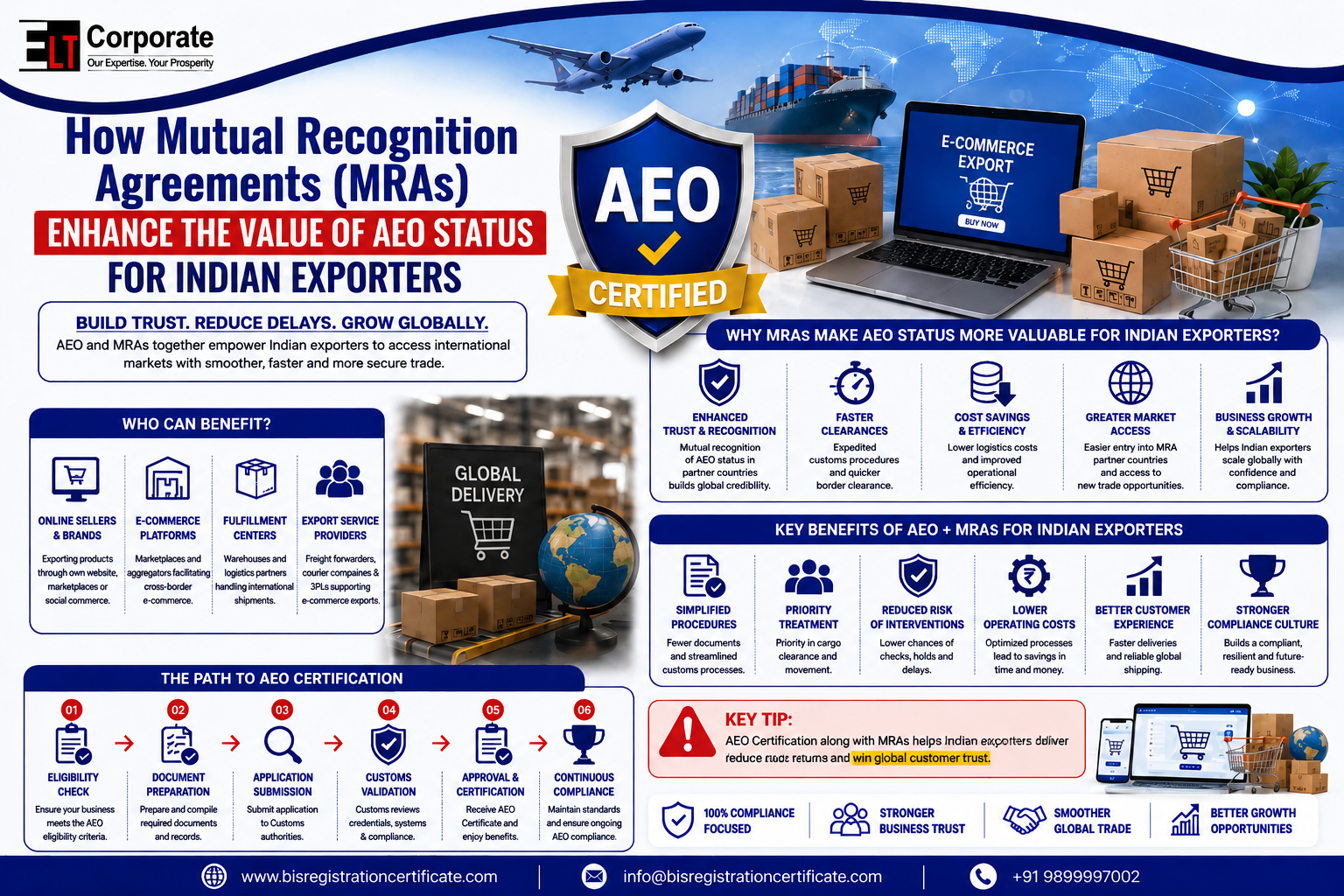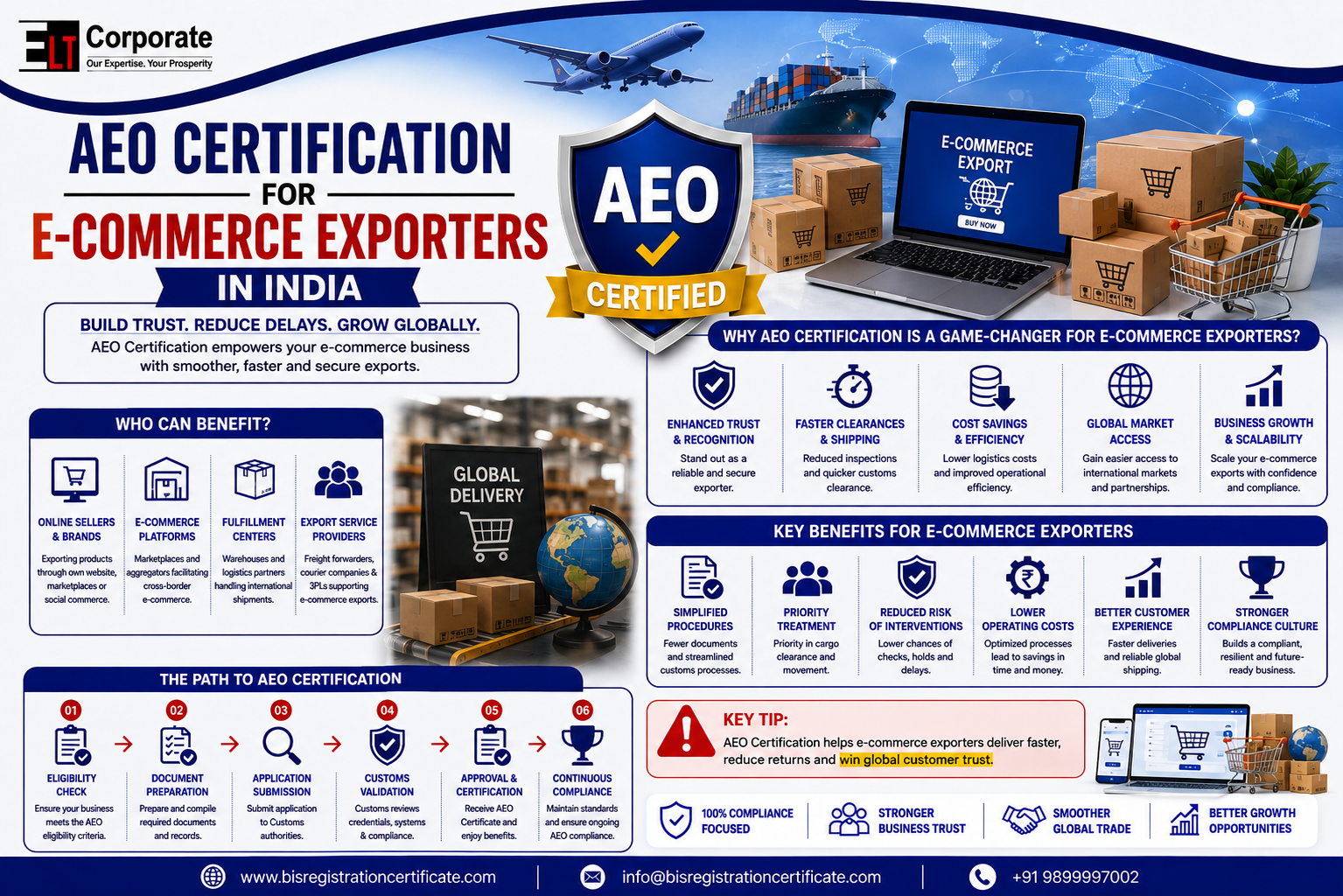

For large manufacturers in Delhi NCR — whether you operate in Manesar, Bahadurgarh, Noida, Greater Noida, Faridabad, or Gurgaon — AEO T3 certification represents the highest standard of customs compliance recognition available in India. It is the government’s formal declaration that your business operates with the highest levels of supply chain security, regulatory integrity, and trade compliance.
AEO T3 is not for everyone. It is specifically designed for established importers and exporters with a strong, verified compliance track record — businesses that have held AEO T2 status for at least two consecutive years and are ready to demonstrate that their compliance systems are genuinely embedded in their operations, not just documented on paper.
For large manufacturers in Delhi NCR who qualify, AEO T3 delivers the most comprehensive customs facilitation package available anywhere in India’s trade regulatory system — from the fastest possible clearance at ICD Tughlakabad, ICD Patparganj, and Delhi’s IGI Airport Air Cargo, to international recognition through India’s growing Mutual Recognition Agreement (MRA) network covering Singapore, South Korea, Hong Kong, and South Africa.
ELT Corporate is Delhi NCR’s specialist AEO T3 consultant for large manufacturing businesses. Our team has guided manufacturers across pharmaceuticals, automotive components, electronics, textiles, engineering goods, and FMCG through the demanding T3 certification process — delivering results that transform their customs operations and competitive positioning in global trade.
As of April 2026, only 212 businesses across India hold AEO T3 status. If your manufacturing business is among the few that qualify and obtains T3, you join an elite group that receives the most preferential treatment at every customs point in India — and at customs points in every MRA partner country worldwide.
What Is AEO T3 — And Why Is It the Gold Standard?
AEO — Authorized Economic Operator — is a programme administered by India’s Central Board of Indirect Taxes and Customs (CBIC) under the World Customs Organization’s SAFE Framework of Standards. The programme recognises businesses that meet strict standards of customs compliance, supply chain security, and financial solvency as ‘trusted traders’ — giving them priority treatment at customs.
India’s AEO programme has three tiers for importers and exporters: T1 (entry level), T2 (intermediate), and T3 (advanced). AEO T3 is the programme’s apex certification — it delivers every benefit of T1 and T2 plus an additional layer of customs facilitation that is simply not available to any non-T3 business:
| Benefit | Non-AEO | AEO T1/T2 | AEO T3 |
| RMS Green Channel routing | Rare | Consistent | Guaranteed priority |
| Physical inspection rate | 20-30% | Significantly reduced | Near-zero |
| Customs clearance speed (sea) | 2-5 days | 12-30 hours | 4-8 hours |
| Customs clearance speed (air) | 12-36 hours | 6-12 hours | 2-4 hours |
| Deferred duty payment | Not available | Available (T2) | Available — maximum flexibility |
| Bank guarantee exemption | Full required | Partial (T2) | Maximum exemption |
| International MRA recognition | None | Partial (T2) | Full — all MRA countries |
| Post-clearance audit frequency | Regular | Reduced (T2) | Minimum — once in 3 years |
| CBIC dedicated relationship | None | AEO Cell (T2) | Senior dedicated contact |
| Self-sealing of containers | Not available | Available (T2) | Priority self-sealing |
| Certificate validity | N/A | 2-3 years | 5 years |
| Global trade reputation signal | None | Recognised | Premium — highest tier |
AEO T3 certificate validity is 5 years — compared to 2 years for T1 and 3 years for T2. For large manufacturers with complex compliance programmes, the 5-year validity significantly reduces the overhead of certification management and renewal.
AEO T3 Eligibility — Who Qualifies?
AEO T3 is the most selective tier in CBIC’s programme. Eligibility requirements are strict and the assessment process is the most rigorous of all three tiers. Here is what large manufacturers in Delhi NCR must demonstrate to qualify:
| Eligibility Criterion | What CBIC Looks For |
| Minimum 2 years of AEO T2 Status | You must have held active, uninterrupted AEO T2 certification for at least 2 consecutive years before applying for T3. No shortcut — this is a hard prerequisite. |
| Exceptional Compliance Track Record | No customs violations, penalties, or show-cause notices during your T2 tenure. CBIC reviews your full compliance history — any lapses significantly weaken your T3 application. |
| Advanced Supply Chain Security Programme | Comprehensive, documented, and actually implemented supply chain security — covering physical premises, cargo handling, access controls, personnel vetting, IT security, and third-party partner security requirements. CBIC assesses the quality of implementation, not just documentation. |
| Robust IT Systems and Digital Compliance | Sophisticated IT infrastructure for customs compliance — EDI integration, digital record-keeping, real-time shipment tracking, and audit trail systems. T3 applicants are expected to demonstrate technology-enabled compliance. |
| Senior Management Commitment | Evidence that customs compliance is a board-level priority — compliance policies signed at director level, resource allocation to compliance function, and internal audit programmes reporting to senior management. |
| Post-Market Compliance Excellence | Your T2 performance data — clearance history, RMS scores, query rate, PCA outcomes — must demonstrate consistent, high-level compliance. CBIC uses your actual customs performance as the primary T3 assessment input. |
| Financial Solvency — Positive Net Worth | Current audited accounts showing positive net worth and positive net current assets — demonstrating financial stability appropriate for the highest tier of trade trust. |
| 25+ Customs Documents per Year (10 for MSME) | Active trading volumes — the same minimum document threshold as T1 and T2 applies, but T3 applicants typically far exceed this with high-volume manufacturing operations. |
Why AEO T3 Matters Specifically for Large Delhi NCR Manufacturers
Delhi NCR is home to some of India’s most significant manufacturing clusters — and the customs infrastructure that serves them. Understanding how AEO T3 specifically benefits manufacturers operating in this region is essential for making the business case for certification:
ICD Tughlakabad — India’s Largest ICD
ICD Tughlakabad handles some of the largest import and export volumes in India. For Delhi NCR manufacturers importing raw materials, components, or finished goods through Tughlakabad, AEO T3 delivers a transformational operational advantage. Non-AEO businesses routinely face 3 to 5 days of clearance delay at Tughlakabad during peak periods. AEO T3 holders clear in 4 to 8 hours — same day — with Direct Port Delivery taking goods from the ICD directly to the manufacturer’s facility without CFS handling.
ICD Patparganj — East Delhi Manufacturing Belt
ICD Patparganj is critical for the electronics, garments, and light manufacturing exporters of East Delhi, Noida, and Greater Noida. AEO T3 holders using Patparganj for export consignments benefit from Direct Port Entry for factory-stuffed containers and priority Let Export Order processing — consistently getting their export consignments onto vessels faster than any non-AEO competitor.
IGI Airport Air Cargo — Time-Critical Shipments
For Delhi NCR manufacturers dealing in high-value, time-sensitive imports or exports — electronics components, pharmaceutical raw materials, precision engineering parts — IGI’s Air Cargo Complex is the primary gateway. AEO T3 holders at IGI consistently clear air cargo in 2 to 4 hours. Non-AEO businesses at the same port during the same period face 12 to 36 hours of processing time. For perishable goods, temperature-sensitive materials, or components needed to keep production lines running, this difference is measured in business impact, not just time.
MRA Benefits for Delhi NCR Exporters
Delhi NCR manufacturers exporting to Singapore, South Korea, Hong Kong, or South Africa — where India has active MRAs — gain a direct competitive advantage from AEO T3 status. Their shipments are recognised as coming from a trusted Indian trader at the destination customs, reducing inspections and accelerating clearance at the receiving end. For manufacturers competing for supply contracts with multinational buyers in these markets, T3 MRA recognition is increasingly a procurement criterion.
A Manesar automotive component manufacturer with AEO T3 status who exports to a South Korean automotive OEM receives trusted trader treatment at Korean customs — fewer inspections, faster release, and enhanced credibility as a supply chain partner. This is the kind of advantage that wins and retains long-term export contracts.
Our Premium AEO T3 Certification Services
ELT Corporate’s AEO T3 service is structured for the complexity that large manufacturers in Delhi NCR bring to the certification process. Our team includes customs compliance specialists, supply chain security auditors, IT compliance reviewers, and senior regulatory strategists — all with hands-on T3 certification experience.
| AEO T3 Pre-Application Assessment and Gap Analysis |
| Before committing to the T3 application, you need a precise picture of where you stand. Our assessment delivers that — with the depth required for a T3 evaluation. |
| ✓ Full review of your T2 compliance track record — RMS scores, query rates, clearance history, and any penalty or dispute history during T2 tenure |
| ✓ Assessment of your supply chain security programme against CBIC’s T3 evaluation framework — not just documentation, but actual implementation evidence |
| ✓ IT systems review — customs EDI integration, digital record management, audit trail capabilities, and cybersecurity posture |
| ✓ Senior management engagement assessment — board-level compliance policy, resource allocation, and internal audit reporting structure |
| ✓ Third-party partner compliance review — your suppliers, logistics providers, and warehouse operators’ security standards |
| ✓ Written gap report with prioritised action plan — what needs to be strengthened before T3 application to maximise approval probability |
| ✓ Realistic timeline and readiness assessment — honest advice on whether to apply now or strengthen further before applying |
| Supply Chain Security Programme Enhancement |
| AEO T3 requires a genuinely sophisticated supply chain security programme — one that CBIC can verify is actually operating, not just documented. We build or strengthen yours. |
| ✓ Comprehensive supply chain security policy development — aligned with WCO SAFE Framework and CBIC T3 requirements |
| ✓ Physical security enhancement — facility access control, CCTV systems, cargo handling security, and tamper-evidence procedures |
| ✓ Personnel security programme — employee vetting procedures, security awareness training, and incident reporting systems |
| ✓ IT security framework — data access controls, system audit trails, network security standards, and cybersecurity incident response plan |
| ✓ Third-party vendor security assessment framework — evaluating and monitoring the security standards of your logistics partners |
| ✓ Cargo integrity procedures — seal management, container stuffing protocols, and departure verification |
| ✓ Implementation evidence documentation — CBIC needs to see the programme operating, not just written. We help you build the evidence trail. |
| Advanced SOP and Compliance Documentation Package |
| T3 documentation must demonstrate a higher level of sophistication than T1 or T2. Our team prepares the complete documentation set that CBIC’s senior assessors expect. |
| ✓ Advanced customs compliance SOPs — covering import/export processes, classification review, valuation methodology, and duty management |
| ✓ Post-market compliance SOPs — adverse event reporting, market surveillance cooperation, and regulatory change management |
| ✓ Internal audit programme documentation — audit plan, methodology, finding management, and management review integration |
| ✓ Board-level compliance policy — signed and dated by directors, reflecting genuine senior leadership commitment |
| ✓ Compliance training programme documentation — records of all staff training on customs procedures and security awareness |
| ✓ CBIC liaison and communication protocol — documented procedures for managing CDSCO queries, audits, and inspections |
| ✓ Annexure preparation for T3 application — all required annexures prepared, formatted, and verified for consistency |
| CBIC Audit Preparation and Mock Inspection |
| The T3 CBIC audit is more demanding than T1 or T2. Senior CBIC officers conduct a comprehensive review of your operations, systems, and compliance culture. Our preparation is designed to ensure you present your business at its best. |
| ✓ Full mock T3 audit conducted by our senior customs compliance specialists — simulating the CBIC senior officer evaluation |
| ✓ Document retrieval and presentation practice — your team must locate any compliance record within minutes under audit conditions |
| ✓ Facility walk-through — review of all areas CBIC will assess: import/export processing areas, cargo handling, IT systems, warehousing, and access controls |
| ✓ Senior management briefing — coaching your directors and compliance heads on how to present your compliance programme convincingly |
| ✓ Pre-audit document index preparation — a comprehensive, cross-referenced document library making your records instantly accessible during the audit |
| ✓ Observation resolution — any weaknesses identified during the mock audit are addressed before the actual CBIC visit |
| ✓ Audit day support — our team available for real-time guidance on the day of the CBIC T3 audit |
| CBIC T3 Application Filing and Liaison |
| The T3 application on the CBIC AEO portal requires precision. We manage the complete filing process and maintain active liaison with CBIC throughout the review period. |
| ✓ CBIC AEO portal registration and account management |
| ✓ Complete T3 application preparation — all annexures, declarations, and supporting documents formatted and verified |
| ✓ Application submission and reference number receipt |
| ✓ Active CBIC liaison during the review period — tracking application status and maintaining communication with the AEO Cell |
| ✓ Query response management — all CBIC queries drafted and submitted within stipulated deadlines, completely and accurately |
| ✓ Timeline management — proactive follow-up ensuring your application moves through CBIC review without unnecessary delays |
| Post-Certification MRA Benefit Optimisation |
| Receiving your T3 certificate is the beginning. Maximising its value — especially through India’s MRA network — requires active management. We help you leverage every benefit your T3 status delivers. |
| ✓ MRA country mapping — identifying which of your current and target export markets are covered by India’s active MRAs |
| ✓ MRA declaration integration — ensuring your export shipping bills include the correct AEO T3 code for MRA recognition at destination customs |
| ✓ Buyer communication strategy — helping you communicate your T3 status to international buyers as a procurement-relevant credential |
| ✓ Deferred duty programme setup — structuring your duty payment cycle to maximise the working capital benefit of T3’s deferred payment facility |
| ✓ Bank guarantee exemption management — working with your customs broker to maximise guarantee exemptions across all applicable procedures |
| ✓ Post-clearance audit preparation — maintaining your facility and records in permanent audit-ready condition for the 3-year PCA cycle |
| ✓ 5-year T3 certificate renewal planning — beginning the renewal process well in advance so your T3 status never lapses |
The T3 Certification Process — What to Expect
AEO T3 is a multi-stage process that typically takes 4 to 8 months from initial assessment to certificate issuance. Here is a realistic overview of what the journey looks like for a large Delhi NCR manufacturer:
- Eligibility Confirmation and Gap Assessment (Month 1) — ELT Corporate conducts a comprehensive gap assessment of your T2 compliance track record, security programme, IT systems, and documentation. We confirm T3 readiness or provide a remediation roadmap.
- Gap Remediation (Months 1-3) — We work alongside your operations, compliance, and IT teams to strengthen any identified gaps — security program enhancements, documentation improvements, and IT system upgrades where needed.
- Advanced Documentation Preparation (Months 2-3) — Our team prepares the complete T3 application package—all annexures, SOPs, board-level compliance policy, security program documentation, and supporting evidence.
- CBIC Portal Application Filing (Month 3-4) — We submit the complete T3 application through the CBIC AEO India portal, submit the application (no government fee applicable), and obtain the Application Reference Number.
- CBIC Senior Officer Review (Months 3-6) — CBIC’s AEO Cell assigns senior officers to review your application and compliance track record. This stage may involve queries and requests for additional information.
- CBIC T3 Audit (Month 4-6) — Senior CBIC officials conduct a comprehensive audit of your manufacturing facility, IT systems, compliance documentation, and operations. Our preparation ensures you present your business confidently.
- Certificate Issuance (Month 5-8) — Following successful audit and review, CBIC issues your AEO T3 certificate — valid for 5 years. ELT Corporate then activates the post-certification benefit optimisation programme.
ELT Corporate’s average T3 certification timeline for clients who begin engagement with a strong T2 track record and a reasonably developed compliance programme is 5 to 6 months. Clients starting with compliance gaps should allow 8 to 12 months. We give you an honest timeline assessment at the start — not an optimistic estimate.
The Business Case for AEO T3 — ROI for Large Delhi NCR Manufacturers
For large manufacturers, the business case for AEO T3 goes well beyond customs clearance speed. Here is how the financial and commercial benefits accumulate:
| Benefit Category | Typical Non-AEO Cost | AEO T3 Position |
| Annual demurrage (50 containers/year) | Rs. 25–60 lakhs | Near-zero — DPD routing |
| CFS handling charges (50 containers) | Rs. 12–25 lakhs | Zero — DPD bypasses CFS |
| Bank guarantee requirement (Rs. 2 Cr duty) | Rs. 2–4 lakhs tied up | Maximum exemption |
| Duty deferred (30-day float, Rs. 5 Cr/month) | Full duty upfront | Rs. 5 Cr working capital freed |
| Customs consultant / query fees | Rs. 5–15 lakhs/year | Minimal — fewer queries |
| Post-clearance audit costs | Rs. 3–8 lakhs per audit | 3-year cycle — 60% reduction |
| Missed delivery penalties (export) | Rs. 10–50 lakhs/year | Near-zero — on-time consistently |
| Premium pricing for reliable delivery | N/A | 5–15% premium justifiable |
For a large Delhi NCR manufacturer handling 50+ containers per year with Rs. 5 crore+ in monthly import duty, the combined financial benefits of AEO T3 — demurrage elimination, CFS savings, deferred duty working capital, bank guarantee exemption, and reduced audit costs — typically range from Rs. 75 lakhs to Rs. 2 crores annually.
ELT Corporate’s AEO T3 certification fee is recovered by most large Delhi NCR manufacturers within 60 to 90 days of certificate issuance — based on the combined savings from deferred duty, DPD, and reduced bank guarantee requirements alone.
Industries We Serve — Delhi NCR Large Manufacturers
ELT Corporate has guided large manufacturers across Delhi NCR’s key industrial sectors through AEO T3 certification:
| Industry / Sector | Typical AEO T3 Business Impact |
| Automotive and Auto Components (Manesar, Faridabad, Gurgaon) | Just-in-time component imports from Germany, Japan, and South Korea cleared same-day — protecting assembly line continuity and JIT contracts |
| Pharmaceuticals and APIs (Noida, Greater Noida) | Rapid clearance for temperature-sensitive APIs and excipients — cold chain integrity maintained, regulatory import timelines met consistently |
| Electronics and IT Hardware (Noida, Greater Noida) | Time-critical component imports and finished goods exports to global buyers cleared in hours — meeting tight assembly and delivery windows |
| Textiles and Garments (Delhi, Faridabad, Gurgaon) | Export consignments to USA, EU, and UAE cleared with Direct Port Entry — vessels caught consistently, seasonal delivery windows met |
| Engineering Goods and Capital Equipment | High-value imports cleared through IGI same-day — project timelines protected, installation windows met |
| FMCG and Consumer Goods (Noida, Greater Noida) | Festive season inventory imported and cleared weeks ahead of non-AEO competitors — peak sales windows fully captured |
| Chemicals and Specialty Chemicals (Panipat, Bahadurgarh) | Regulated chemical imports cleared with minimal inspection — compliant handling demonstrated through T3 security programme |
Frequently Asked Questions
Do I have to hold AEO T2 before applying for T3?
Yes — this is a mandatory prerequisite. CBIC requires a minimum of 2 consecutive years of active AEO T2 status before a business can apply for T3. There is no pathway to T3 without first going through T2. This two-year period is important — it builds your RMS compliance score, establishes your track record with CBIC’s AEO Cell, and gives you the operational experience to implement the more sophisticated security and compliance systems that T3 requires. If you have not yet achieved T2 status, ELT Corporate can guide you through T1 and T2 first.
What is the government fee for AEO T3 certification?
CBIC’s AEO programme fees are nominal — the government charges are minimal compared to the compliance investment the programme requires. Professional consultant fees for T3 — which is a significantly more complex and documentation-intensive process than T1 or T2 — reflect the depth of engagement required. ELT Corporate provides a transparent, fixed-fee proposal for T3 based on your manufacturing complexity, facility scope, and compliance starting position. Contact us for a specific quotation.
How long is an AEO T3 certificate valid?
AEO T3 certificates are valid for 5 years — significantly longer than T1 (2 years) and T2 (3 years). This extended validity reflects the depth of CBIC’s assessment at T3 level and the confidence the certification represents. Renewal requires demonstrating continued compliance through the same rigorous process. ELT Corporate begins renewal preparation 12 months before the 5-year validity date to ensure uninterrupted T3 status.
Will CBIC conduct a physical inspection of our facility for T3?
Yes. The T3 audit is more comprehensive than any previous AEO tier assessment. Senior CBIC officials — not the standard AEO Cell team — conduct the T3 evaluation. They review your manufacturing facility, IT infrastructure, compliance documentation, record management systems, personnel training records, and supply chain security implementation. The assessment evaluates whether compliance is genuinely embedded in your operations at every level — from the loading dock to the boardroom. ELT Corporate’s T3 audit preparation programme ensures you present your operations confidently and completely.
Which countries recognise India’s AEO T3 certification?
India’s AEO T3 status is recognised in all countries that have signed Mutual Recognition Arrangements (MRAs) with CBIC. Current active MRAs: South Korea, Hong Kong, Singapore (signed May 2025), and South Africa (signed July 2025). Negotiations are underway with USA, UAE, and Taiwan. For each MRA country, your AEO T3 code — declared in the Shipping Bill — triggers trusted trader treatment at the destination customs. The MRA network is expanding; businesses that hold T3 now will benefit from each new MRA as it comes into force.
Can a trading house or distributor apply for AEO T3 or is it only for manufacturers?
AEO T3 is available to any eligible importer or exporter — including trading houses, distributors, and merchant exporters — not only manufacturers. However, the programme is particularly valuable for large manufacturers because of the volume of imports and exports they handle, the supply chain complexity they manage, and the strategic importance of reliable customs clearance for their production operations. ELT Corporate serves T3 applicants across all business types in Delhi NCR.
Why ELT Corporate for Premium AEO T3 Certification in Delhi NCR
AEO T3 is the most demanding certification in India’s customs compliance framework. The consultant you choose for this process directly determines the quality of your application, the outcome of your CBIC audit, and the speed of your certification. ELT Corporate brings:
- Deep T3 specialisation — we have guided large manufacturers through every stage of the T3 process, including the senior CBIC audit. We know exactly what auditors look for at this level.
- Delhi NCR operational knowledge — we understand the specific customs infrastructure that Delhi NCR manufacturers depend on: Tughlakabad, Patparganj, IGI, Nhava Sheva for sea cargo transshipment. Our advice is grounded in how these facilities actually operate.
- Senior regulatory team — your T3 engagement is handled by senior compliance specialists, not junior associates. The depth of expertise matters at T3 level.
- Honest readiness assessment — we will tell you if you are not yet ready for T3 and what you need to do first. We do not file applications that are not ready, because a failed T3 application damages your prospects.
- Post-certification continuity — our engagement does not end at certificate issuance. We manage your T3 compliance calendar, MRA optimisation, and renewal preparation throughout the 5-year validity period.
- 2,500+ regulatory approvals delivered across all compliance programmes — the breadth of our regulatory experience informs the quality of our T3 work.
| Get Your Free AEO T3 Readiness Assessment — Delhi NCR Manufacturers
Share your T2 status, manufacturing facility details, export/import volumes, and compliance programme overview. Our senior T3 specialists will assess your readiness, identify any gaps, and give you a clear, honest timeline and roadmap to certification. |