AEO vs Non-AEO: Customs Clearance Time Comparison With Illustrative Case Scenarios

In the fast-paced world of international trade, time is more than just money; it’s a competitive advantage. Efficient customs clearance can make or break your supply chain, influencing everything from delivery deadlines to customer satisfaction. 

This comprehensive guide delves into one of the most significant distinctions in global logistics: the difference in customs clearance times between Authorized Economic Operator (AEO) certified businesses and non-AEO entities. We’ll explore why AEO status is becoming indispensable for businesses looking to streamline their international shipments, using insights from India’s National Time Release Study (NTRS) and common clearance bottlenecks seen at major ports and ICDs.

You’ll gain practical insights, real-world case scenarios, and a clear understanding of how AEO certification can transform your operations. This isn’t just about speed; it’s about predictability, cost savings, and a competitive edge in the global marketplace. 

The Undeniable Edge: Benefits of AEO Certification 

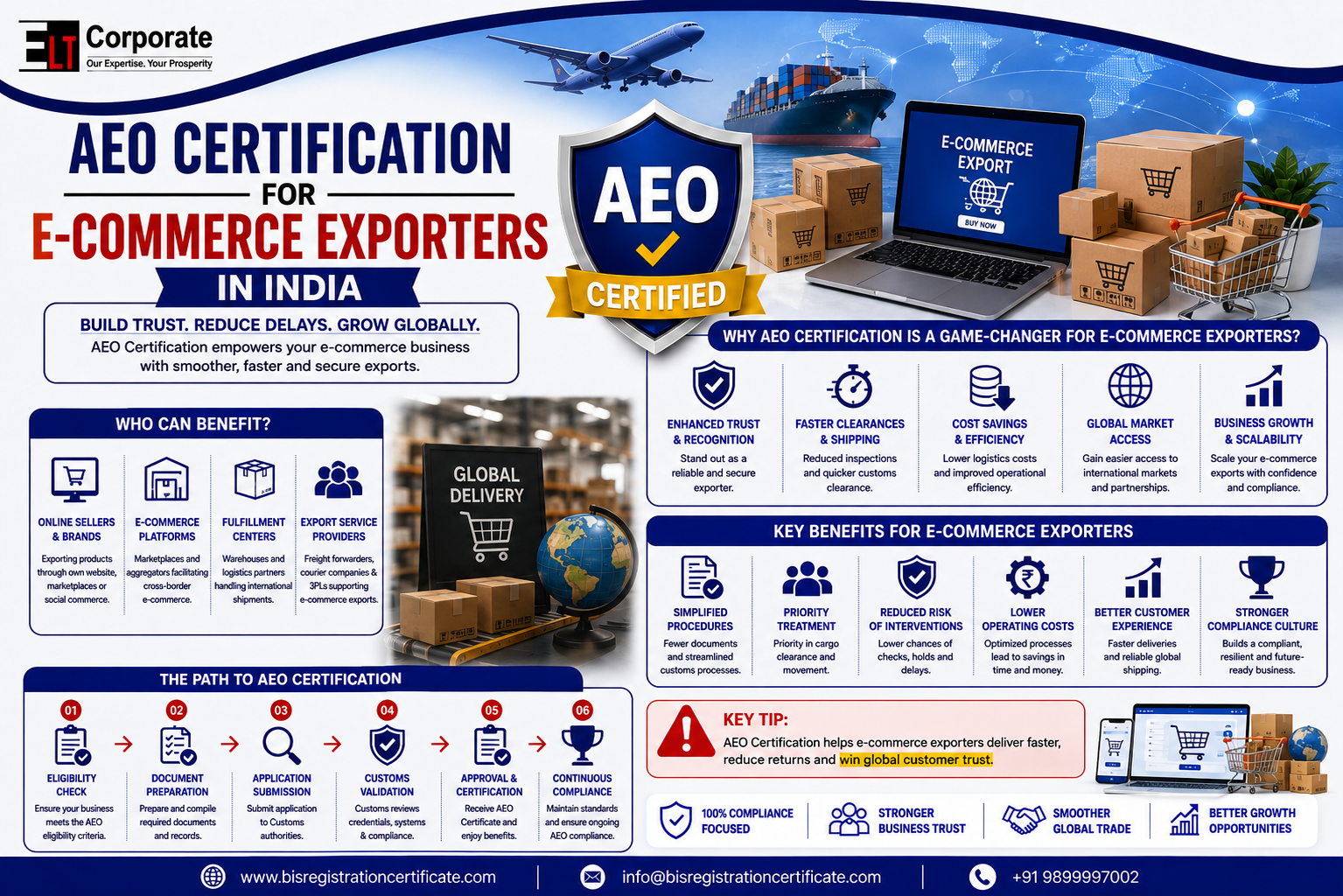
AEO certification isn’t just a label; it’s a strategic tool designed to facilitate smoother, faster, and more secure international trade. For businesses operating globally, its benefits extend far beyond mere compliance, offering tangible advantages that directly impact your bottom line and operational efficiency. 

AEO vs Non-AEO Customs Clearance Time: A Detailed Comparison 

The latest National Time Release Study (NTRS) 2024 data from India’s Central Board of Indirect Taxes & Customs (CBIC) provides a stark picture of the difference. NTRS insights indicate that AEO facilitation can reduce routine interventions and improve predictability, but the time impact varies by mode, location, risk parameters, and documentation quality. 

Non-AEO Customs Clearance Times 

Without AEO status, businesses often face standard clearance procedures that can lead to significant delays. These times reflect the average time from cargo arrival to its physical release from customs custody. 

  • Seaports (Exports): Non-AEO shipments often face longer clearance timelines due to routine checks, document queries, and examination queues. In practice, ICDs can take longer than seaports, while air cargo is usually faster, but timelines vary based on risk assessment, port congestion, and documentation quality.
  • Inland Container Depots (ICDs) (Exports): ICD timelines are often longer than seaports due to additional handling and inland movement factors, though actual timelines vary by location and cargo profile.
  • Air Cargo (Exports): Air cargo is generally faster than sea cargo, but timelines still vary depending on risk assessment, congestion, and documentation quality.
  • Import Clearance Benchmarks: Similar patterns apply to imports, with non-AEO shipments experiencing longer dwell times. 

These figures highlight the inherent challenges and bottlenecks in the traditional customs clearance process for non-AEO businesses. 

AEO Customs Clearance Times (Documented Improvements) 

AEO status fundamentally changes how customs authorities interact with your shipments. It’s built on trust and a proven track record of compliance and security.

  • Significantly Faster Clearance: AEO-certified shipments typically see faster clearance and fewer interventions versus non-AEO, but actual time savings vary by port/ICD, cargo risk profile, and documentation quality.
  • Priority Processing: AEO businesses receive priority in processing, especially during peak seasons or unforeseen logistical challenges. This means your cargo moves to the front of the queue. 
  • Reduced Inspection Rates: AEO status generally results in fewer examinations and fewer routine interventions, with the exact examination percentage depending on risk parameters and local customs controls.
  • Post-AEO T2 Advantage: Many businesses report noticeably improved predictability and faster release in practice—often a reduction in avoidable holds—after achieving AEO status.

This expedited treatment translates into predictable supply chains, reduced demurrage, and significant operational savings. 

Side-by-Side Comparison: AEO vs Non-AEO 

To truly appreciate the advantage, let’s look at a comparative table that summarizes the key differences. 

Avg. Clearance Time

  • Non-AEO: Standard processing; time varies by port/ICD, risk parameters and document readiness
  • AEO T1: Facilitation benefits; generally fewer routine holds (varies)
  • AEO T2: Higher facilitation and predictability; fewer avoidable interventions (varies)
  • AEO T3: Highest facilitation level; minimal routine intervention, risk/intelligence based (varies)

Inspection / Examination

  • Non-AEO: Higher likelihood of examination depending on RMS/risk
  • AEO: Lower routine intervention; still risk-based depending on commodity, profile and alerts

Cost impact (demurrage/detention)

  • Non-AEO: Higher risk of storage/demurrage due to unpredictability
  • AEO: Often lower cost risk due to predictability and fewer holds (depends on operations)

Duty payment/compliance facilitation

  • Non-AEO: Standard rules
  • AEO: Facilitation benefits as applicable to tier and applicable schemes (where permitted)

Customs support

  • Non-AEO: Standard, transaction-based handling
  • AEO: Facilitation support mechanism through AEO cell/help channels (implementation varies)

Illustrative Case Scenarios: Typical Before vs After AEO

Numbers tell a story, but real-world examples bring it to life. These case studies highlight the tangible impact of AEO certification on various businesses. 

Case Study 1: Electronics Exporter (Delhi NCR ICD)

Before AEO: Typical clearance often extended to 3–4 days due to document queries/examination queues (illustrative).

After AEO T2, clearance became more predictable, with many shipments releasing in ~1–2 days, depending on RMS/risk and documentation readiness (illustrative).

Case Study 2: Pharmaceutical Exporter (Mumbai)

Before AEO: Higher likelihood of examination/intervention because of sensitive cargo and compliance checks, often adding 24–48 hours (illustrative).

After AEO T2: Routine interventions were reduced in many cases; critical shipments were often released within ~24 hours, subject to risk parameters and local controls (illustrative).

Case Study 3: Logistics Company in Bengaluru 

A 3PL logistics provider based in Bengaluru, handling diverse cargo for multiple clients, sought AEO certification to enhance their service offerings. Before AEO, they faced typical delays at Bengaluru Air Cargo and ICD Whitefield. 

With AEO status, they gained access to Direct Port Entry (DPE) for exports and Direct Port Delivery (DPD) for imports for their clients. This meant bypassing congested Container Freight Stations (CFSs) and directly handling cargo at the port/airport. The result was faster turnaround times, reduced documentation requirements, and increased client satisfaction due to more reliable and efficient services. 

Port-Specific Analysis: Where AEO Makes the Biggest Difference

The impact of AEO is particularly pronounced at major Indian ports and ICDs, which are often prone to congestion and high volumes. 

Mumbai Port (JNPT) 

As India’s largest container port, JNPT often faces significant congestion. Non-AEO businesses frequently experience delays due to queuing for inspections and CFS processing. 

AEO status grants access to DPD/DPE facilities, allowing pre-cleared cargo to be directly moved to and from the port terminals. This can result in meaningful time savings, especially by reducing dependency on intermediate handling points. 

Delhi NCR ICDs 

Inland Container Depots (ICDs) like Tughlakabad and Dadri serve as critical logistics hubs for the landlocked Delhi NCR region. Clearance here involves rail and road connectivity challenges. 

AEO businesses benefit from priority processing at these ICDs, ensuring their cargo is handled with urgency. This priority extends to rail movements and documentation, significantly reducing inland clearance challenges and improving overall supply chain fluidity. 

Bengaluru Air Cargo 

Air cargo generally offers the fastest transit times, but even here, AEO provides an edge. For sensitive or high-value shipments handled at Bengaluru Air Cargo, AEO status means quicker processing and minimal chances of physical inspection. 

This is particularly beneficial for high-tech, pharmaceutical, or e-commerce exports where every hour counts. AEO ensures that your air cargo maintains its inherent speed advantage without unnecessary customs-related hold-ups. 

International Perspective: Benefits for Global Traders 

AEO isn’t just an Indian initiative; it’s a global standard. For international exporters trading with India, AEO status, whether in their home country or through their Indian partners, offers substantial advantages. 

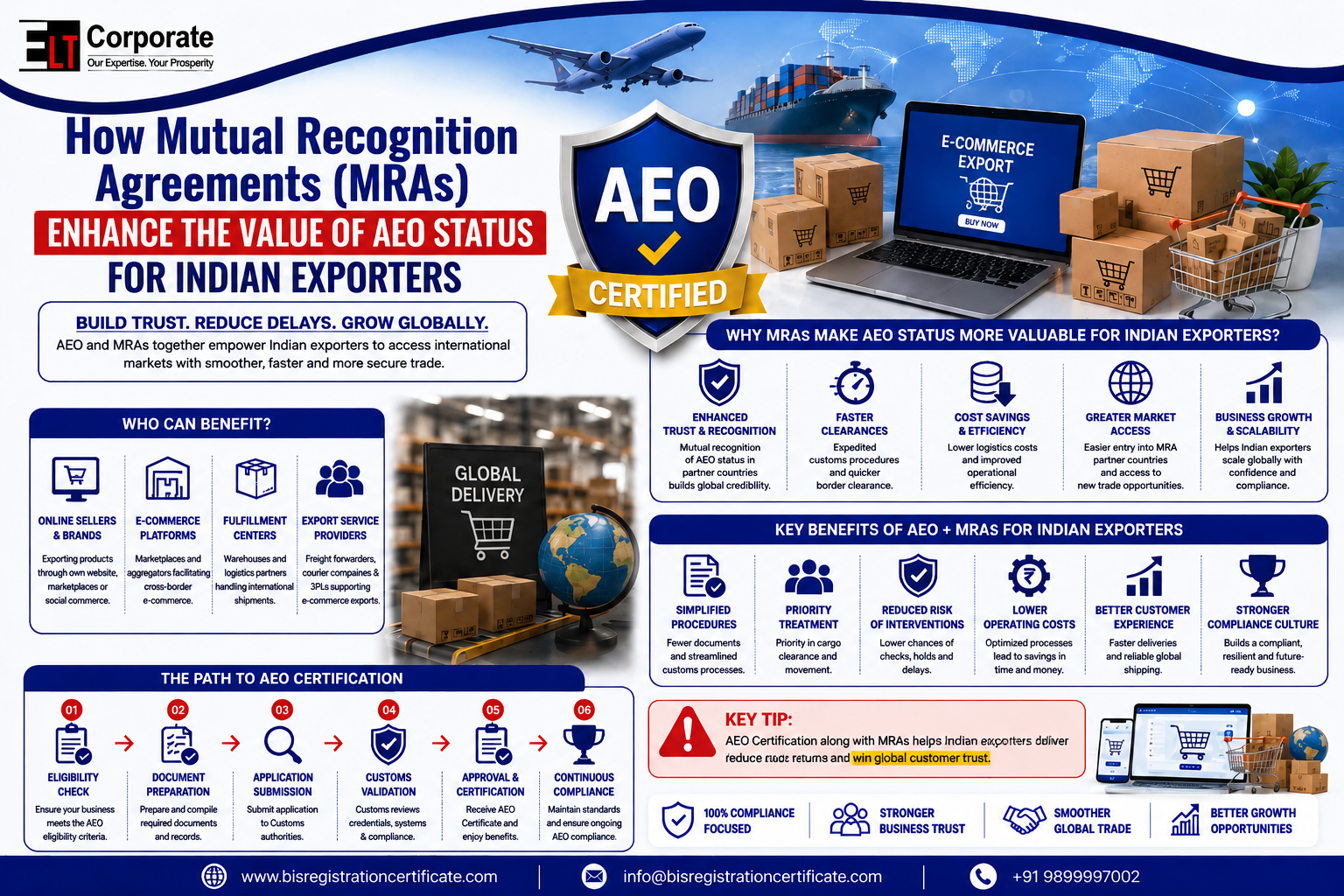
Mutual Recognition Agreements (MRAs)

India has signed Mutual Recognition Agreements (MRAs) with several countries, including the USA, South Korea, Hong Kong, and others. An MRA means that if you are an AEO certified business in your home country, India will recognise your trusted status and grant you reciprocal benefits, and vice-versa. 

This facilitates faster clearance and reduced inspections when importing or exporting between MRA partner countries. It simplifies cross-border trade, reduces regulatory burdens, and enhances supply chain security for global businesses. 

Case Study: US Exporter to India 

A major US automobile parts manufacturer regularly exporting to India faced consistent scrutiny and inspection at Indian ports. Despite having a strong compliance record in the US, their Indian shipments often experienced delays. 

Leveraging the MRA between India and the USA, and working with AEO-certified partners in India, their shipments now receive expedited treatment. This has not only reduced clearance times but also improved their supply chain reliability to India, fostering stronger trade relations and reducing overall logistics costs. 

Required Documents and Prerequisites for AEO Certification 

Obtaining AEO certification requires demonstrating a robust compliance and security framework. The process is meticulous but designed to ensure that only trustworthy businesses receive the benefits. 

Eligibility Requirements 

To be eligible for AEO certification, your business generally needs to meet the following criteria: 

  • Legal Compliance: A clean record of compliance with customs and other relevant laws over the past three years. This includes no serious infringements of customs legislation. 
  • Satisfactory System for Commercial and Transport Records: You must have a robust system for managing commercial and transport records, allowing for proper customs controls. This includes accounting and logistical records. 
  • Financial Solvency: You should be financially sound with no ongoing bankruptcy proceedings. A history of financial stability is crucial.
  • Proven Security and Safety Standards: You need to demonstrate appropriate security and safety measures across your supply chain. This covers physical security, access controls, personnel security, and cargo security. 
  • Practical Competence or Professional Qualifications: Demonstrated competence in customs matters is essential. This can be through hiring experienced personnel or engaging customs brokers. 

Mandatory Documents (Illustrative List) 

While the exact list can vary by AEO tier (T1, T2, T3, LO), here’s a general overview of the types of documents you’ll need to prepare: 

  • Application Form: The prescribed AEO application form (AEO-T1, AEO-T2, AEO-T3, or AEO-LO). 
  • Company Registration Documents: Certificate of Incorporation, Memorandum, and Articles of Association. 
  • PAN and GST Registration: Copies of Permanent Account Number (PAN) and Goods and Services Tax (GST) registration. 
  • Financial Statements: Audited balance sheets and profit & loss statements for the last three financial years. 
  • Bank Solvency Certificate: From your bank, affirming financial stability.       
  • Customs Compliance History: Detailed records of all customs clearances, including Bills of Entry/Shipping Bills, for the last three years. 
  • Undertaking on Non-Conviction: Declaration that the company or its key management personnel have not been convicted of serious crimes. 
  • Supply Chain Security Questionnaire: Detailed responses to a questionnaire covering physical security, access control, personnel security, cargo security, and IT security. 
  • Site Plan and Security Layout: Diagrams showing the physical layout of your premises, security fencing, CCTV coverage, and access points. 
  • Standard Operating Procedures (SOPs): For various functions like import/export, warehousing, cargo handling, and security. 
  • Employee Details: Organisational chart, details of key personnel responsible for customs and security. 
  • Insurance Policy: Details of relevant cargo and liability insurance. 
  • Authorisation Letter: Appointing a representative for the AEO application

Validity of AEO Certification

AEO certification is not a one-time achievement; it requires ongoing commitment and periodic renewal to ensure continued compliance and security standards. 

  • AEO T1: Valid for 3 years
  • AEO T2: Valid for 3 years
  • AEO T3: Valid for 5 years
  • AEO LO: Valid for 5 years

Before expiry, businesses must apply for renewal, demonstrating continued adherence to AEO requirements and a clean compliance record. This usually involves an updated submission of documents and a potential re-verification process. 

The AEO Certification Process: A Step-by-Step Procedure 

Obtaining AEO certification is a structured process that involves application, assessment, and verification. While it requires dedication, the long-term benefits far outweigh the initial effort. 

  1. Self-Assessment and Gap Analysis: Before applying, conduct a thorough internal review of your existing customs compliance and supply chain security practices against the AEO requirements. Identify any gaps that need to be addressed. 
  2. Prepare Documentation: Gather all necessary documents, including company details, financial records, customs compliance history, and detailed security measures. This is a critical and often time-consuming step. 
  3. Submit Application: Complete the appropriate AEO application form (AEO-T1, AEO T2, AEO-T3, or AEO-LO) and submit it along with all supporting documents to the AEO Programme Manager at the Directorate General of Performance Management (DGPM), CBIC. 
  4. Initial Scrutiny and Review: Customs authorities will conduct an initial review of your application to ensure completeness and eligibility. They may request additional information or clarification at this stage. 
  5. Site Validation/Verification: A team from DGPM will conduct a physical visit to your premises. They will verify the information provided in your application, assess your physical security measures, and interview key personnel. This step is crucial for AEO T2, T3, and LO. For AEO T1, it might be a desk review or a limited site visit. 
  6. Grant of AEO Status: If your application is successful and all requirements are met, DGPM will grant your business AEO status and issue the certificate for the relevant tier.
  7. Post-Certification Compliance and Monitoring: After certification, you must maintain the high standards of compliance and security. Customs authorities conduct periodic

reviews and audits to ensure ongoing adherence to the AEO program requirements. The application processing timeline can vary: 

  • AEO T1: Typically processed within 30 days. 
  • AEO T2/T3/LO: Can take 2 to 6 months due to the more extensive verification and site validation processes. 

Common Mistakes to Avoid in Your AEO Journey 

While the AEO program offers immense benefits, navigating the application and maintenance can be tricky. Being aware of common pitfalls can save you time and effort. 

Here’s a checklist of frequent errors to avoid: 

  • Incomplete Documentation: 
      • Failing to provide all mandatory documents. 
      • Submitting outdated or inconsistent financial records. 
      • Missing specific details in your supply chain security questionnaire. 
  • Lack of Preparedness for Site Validation: 
      • Not ensuring that your physical security measures (CCTV, access control) are fully operational and documented. 
      • Key personnel being unaware of company procedures or AEO requirements during interviews. 
      • Inconsistent responses between documentation and on-site reality. 
  • Poor Customs Compliance History: 
      • Having a history of minor or major customs violations that haven’t been adequately addressed. 
      • Failing to disclose past compliance issues transparently. 
  • Inadequate Security Standards: 
      • Not having robust procedures for personnel screening (e.g., background checks). Insufficient physical security at warehouses or loading docks. 
      • Lack of an emergency response plan for security breaches. 
  • Choosing the Wrong AEO Tier: 
      • Applying for a higher tier (T2/T3) without meeting all the stringent requirements can lead to delays or rejection. 
      • Underestimating the efforts required for a particular tier. 
  • Ignoring Ongoing Compliance: 
      • Assuming certification is a one-time event; failing to conduct annual self-audits. Not updating customs authorities about significant changes in your business or supply chain.
      • Missing renewal deadlines. 
  • Lack of Internal Communication: 
    • Key departments (logistics, finance, HR, IT) not being aligned on AEO requirements and responsibilities.
    •  Employees not understanding their role in maintaining AEO standards.

What Happens If You Ignore Customs Compliance and AEO? 

Choosing to remain a non-AEO entity, especially for businesses with significant international trade volumes, comes with tangible risks and potential penalties. Ignoring the advantages of AEO can lead to a less competitive and more vulnerable supply chain. 

The consequences include: 

  1. Extended Delays and Unpredictability: Your shipments will face standard, often longer, clearance times and higher rates of physical inspection. This leads to unpredictable delivery schedules, frustrating customers, and damaging your reputation. 
  2. Increased Costs: Longer clearance times invariably lead to higher demurrage and detention charges, warehousing costs, and potentially expedited shipping fees to compensate for delays. These costs can significantly erode your profit margins.  
  3. Higher Inspection Rates: Non-AEO shipments generally face a higher likelihood of examination depending on RMS instructions and risk parameters.                
  4. Cash Flow Issues: Without deferred duty payment benefits, non-AEO importers must pay duties upfront, tying up working capital. This can strain cash flow, particularly for businesses with high import volumes. 
  5. Loss of Competitive Advantage: Competitors with AEO status can offer faster, more reliable deliveries at a lower cost. This puts non-AEO businesses at a significant disadvantage in securing new clients and retaining existing ones. 
  6. Increased Regulatory Scrutiny: Without the trusted partner status of AEO, your business might face greater scrutiny from customs authorities, especially during periods of heightened security alerts. 
  7. Ineligibility for Special Facilities: You will miss out on benefits like Direct Port Delivery (DPD), Direct Port Entry (DPE), and 24/7 clearance on request, which are crucial for optimising logistics at major ports. 
  8. Reputational Damage: Frequent delays, missed deadlines, and higher costs can damage your brand’s reputation for reliability and efficiency in the eyes of both partners and customers.

In essence, while AEO requires an investment of time and resources, ignoring it can cost your business far more in the long run, both financially and reputationally. 

The Cost Involved: AEO Certification Expenses 

The cost of obtaining AEO certification isn’t a fixed fee paid to the government. Instead, it primarily involves indirect expenses related to compliance, documentation, and potentially engaging consultants. The official application itself is usually free. 

Here’s a rough breakdown of potential costs: 

Cost Category  Rough Range (INR)
Internal Man-Hours & Resources  50,000 – ₹200,000+ (depending on company size & readiness)
Consultancy Services  ₹150,000₹500,000+ (for end-to-end support, varies by tier)
Security Infrastructure Upgrades  0 – 10,00,000+ (if existing systems are inadequate)
Documentation & Compliance Software  0 – ₹100,000+ (if needed)
Audit Fees (if external pre-audit)  50,000 – ₹150,000
Training for Staff  10,000 – 50,000+

These figures are indicative and can vary widely based on your company’s existing infrastructure, compliance levels, and the specific AEO tier you are applying for. The primary investment is in time and ensuring your systems meet the stringent AEO standards. 

How ELT Can Help You Achieve AEO Certification 

If your organisation handles high-volume imports/exports through Mumbai, Delhi NCR ICDs, or Bengaluru Air Cargo, AEO T2/T3 can materially improve clearance predictability. ELT Corporate helps you achieve structured, documentation-ready AEO compliance with minimal business disruption.

  • Initial Assessment and Gap Analysis: We begin by conducting a thorough review of your current operations, identifying compliance gaps and areas needing improvement to meet AEO standards. 
  • Documentation Preparation: Our team assists you in compiling, reviewing, and organizing all necessary documents, ensuring they are accurate, complete, and aligned with CBIC requirements. We streamline the often-cumbersome paperwork. 
  • Supply Chain Security Enhancement: We provide practical strategies and recommendations to bolster your physical and procedural security, helping you implement the required measures to meet AEO criteria. 
  • Application Submission and Liaison: We guide you through the correct application form selection and submission process, acting as a liaison with customs authorities, addressing queries, and facilitating communication. 
  • Site Validation Preparation: We prepare your team and premises for the crucial site validation visit by customs officials, conducting mock audits and ensuring all aspects are in order. 
  • Post-Certification Support: Our support extends beyond certification. We provide guidance on maintaining compliance, preparing for periodic audits, and managing renewals, ensuring your AEO status remains active. 

By partnering with ELT Corporate Pvt. Ltd., you gain a reliable expert to demystify the AEO process, minimise your workload, and maximise your chances of successful certification. This allows you to focus on your core business while we handle the complexities of compliance. 

Conclusion 

The comparison between AEO and non-AEO customs clearance patterns generally indicates the strategic advantage of AEO certification, particularly in terms of predictability and reduced routine interventions. NTRS insights indicate AEO facilitation can improve predictability and reduce interventions, but outcomes vary by port/ICD, mode, risk profile, and documentation quality. Import facilitation benefits are often more visible than export time gains in aggregate comparisons.

For businesses engaged in international trade, particularly those aiming for supply chain predictability, cost efficiency, and enhanced security, pursuing AEO status is a wise investment. It fosters trust with customs authorities, grants access to priority processing, and aligns your operations with global best practices. 

If you’re ready to transform your supply chain, reduce delays, and unlock significant savings, exploring AEO certification is your next logical step. Don’t let your cargo be held hostage by

traditional customs processes. Take action today to streamline your global operations and secure your competitive edge. 

FAQs 

How much time does AEO certification actually save on customs clearance? 

NTRS insights show that AEO facilitation can improve predictability and reduce interventions, but the time impact varies by mode (sea/air/ICD), port congestion, risk parameters, and documentation quality. In many import scenarios, facilitation benefits are more visible than export time gains in aggregate comparisons. The best way to estimate your time saving is to compare your last 20–30 consignments (non-AEO) vs expected AEO facilitation outcomes at the same port/ICD.

What is the ROI on AEO certification for a medium-sized exporter? 

Many exporters report strong ROI after obtaining AEO certification due to reduced delays, improved predictability, and lower demurrage and logistics risks. Benefits typically include smoother clearance, better shipment planning, improved cash flow through facilitation measures, and increased client confidence. Actual ROI depends on shipment volume, port usage, compliance history, and operational efficiency, but many businesses recover certification investment within the first year of operational benefits.

How does AEO help with port congestion issues at Mumbai/JNPT? 

AEO status enables facilitation measures such as Direct Port Delivery (DPD) and Direct Port Entry (DPE), allowing shipments to bypass certain intermediate handling stages where applicable. During congestion periods, AEO-certified shipments often receive facilitation priority, improving predictability and reducing avoidable delays. Actual benefits depend on port infrastructure, operational conditions, and approvals applicable at the port or ICD.

Can international exporters from China/Korea/USA benefit from India’s AEO program?

Yes, significantly through Mutual Recognition Agreements (MRAs). India has MRAs with countries like the USA, South Korea, Hong Kong, and more, with China also under consideration. International exporters with AEO status in their home countries can receive reciprocal benefits in India. 

These benefits include faster clearance, reduced inspections, and priority treatment for their shipments entering India. This is particularly valuable for businesses regularly exporting to India, as it streamlines cross-border trade and reduces potential delays. 

What are the maintenance requirements after getting AEO certification? 

AEO requires ongoing compliance and vigilance. Key maintenance requirements include annual self-audits and reporting to ensure continued adherence to AEO standards. 

Businesses must also maintain clean compliance records, ensure timely renewal (T1/T2 are valid for 3 years, T3/LO for 5 years), and promptly report any significant changes or compliance issues to customs. Customs may also conduct periodic reviews/validations as per AEO guidelines and risk-based monitoring.
Picture of Rajul Jain

Rajul Jain

Rajul Jain is the Founder of ELT Corporate Private Limited, bringing over 18 years of experience in litigation, regulatory approvals, and strategic consulting. He provides leadership in enabling global organizations to establish and scale operations in the Indian market through robust regulatory frameworks, structured market-entry strategies, and comprehensive distributor ecosystem development. A Chartered Accountant and Advocate, he oversees the delivery of end-to-end solutions including CDSCO registrations, product registrations, import and manufacturing licensing, regulatory compliance, and business expansion advisory. Under his leadership, ELT Corporate has supported 2,500+ clients worldwide, with a consistent focus on governance, scalability, risk mitigation, and long-term sustainable growth.

You may also like

Scroll to Top