
International trade plays an important role in the growth of Indian businesses. Importers, exporters, manufacturers, logistics operators, and AEO application process in India, other supply chain participants regularly deal with customs procedures, documentation, and regulatory requirements. Managing these activities efficiently is essential for avoiding unnecessary delays and maintaining smooth international trade operations.
To support secure and efficient international trade, the Central Board of Indirect Taxes and Customs (CBIC) introduced the Authorised Economic Operator (AEO) Programme in India. This program recognizes businesses that maintain a strong compliance record and follow appropriate supply chain security practices.
Understanding the AEO Application Process in India is important for businesses that want to obtain AEO status and benefit from customs facilitation measures. However, applying for an AEO Certificate involves more than simply filling out an application form. Businesses must understand the applicable eligibility requirements, prepare supporting documents, establish internal procedures, and complete the verification process wherever required.
In this guide, we explain the AEO application process in India step by step, including the different AEO categories, eligibility criteria, required documents, application submission, verification, and common mistakes to avoid.
What Is AEO Certification in India?
Authorised Economic Operator (AEO) Certification is a voluntary trade facilitation program administered by Indian Customs under the CBIC. It recognizes eligible businesses and organizations involved in the international supply chain that demonstrate appropriate customs compliance and, where applicable, supply chain security standards.
The primary objective of the AEO application process in India is to strengthen international supply chain security while facilitating legitimate trade. Businesses that obtain an AEO Certificate may receive benefits such as faster customs processing, reduced routine examination, and other facilitation measures, subject to the applicable program conditions.
The program is relevant to various participants in international trade, including:
- Importers and exporters
- Manufacturers involved in international trade
- Customs brokers
- Freight forwarders
- Warehouse operators
- Custodians and terminal operators
- Other eligible logistics and supply chain service providers
AEO status helps eligible businesses demonstrate their commitment to customs compliance, transparency, and secure business operations.
Types of AEO Certification in India
Before starting the AEO Application Process in India, applicants should identify the appropriate certification category. The Indian AEO Program has different categories based on the applicant’s business activity and eligibility.
1. AEO-T1 Certification
AEO-T1 is an entry-level category for eligible importers and exporters. It is suitable for businesses seeking recognition under the AEO Program while meeting the AEO application process in India prescribed eligibility and compliance requirements.
This category provides customs facilitation benefits to eligible businesses. Applicants must submit the required information and supporting documents through the prescribed application process.
2. AEO-T2 Certification
AEO-T2 is intended for eligible importers and exporters that can demonstrate stronger compliance management and supply chain security arrangements.
The application generally requires more AEO application process in India detailed information about business operations, internal procedures, security measures, and supporting evidence. Verification of relevant premises and controls forms part of the process.
3. AEO-T3 Certification
AEO-T3 is a higher category under the AEO Program. It is generally available to eligible AEO-T2 certificate holders who satisfy the prescribed conditions.
Businesses applying for AEO-T3 should AEO application process in India review the applicable requirements, including the relevant AEO-T2 holding period and qualifying conditions.
4. AEO-LO Certification
AEO-LO is designed for eligible logistics operators and other qualifying entities involved in the international supply chain.
Depending on their activities and eligibility, applicants may include:
- Customs brokers
- Freight forwarders
- Warehouse operators
- Custodians
- Terminal operators
- Other eligible logistics service providers
Selecting the correct category is an important part of the AEO application process in India because the application requirements differ depending on the type of applicant and certification.
Eligibility Criteria for AEO Certification in India
Businesses should check their eligibility before submitting an AEO application. The requirements may vary according to the category, applicant type, and applicable CBIC guidelines.
Some important eligibility considerations include:
1. Involvement in International Trade
The applicant should be involved in activities connected with the international supply chain and relevant customs-related operations in India.
Importers, exporters, and eligible logistics AEO application process in India operators may apply under the relevant AEO category.
2. Legal Entity Status
The applicant must satisfy the legal entity requirements prescribed under the AEO Program. The application should be made in the name of the eligible legal entity rather than simply using a group or brand name.
3. Customs Compliance Record
The business should be able to demonstrate an appropriate history of customs and other relevant legal compliance.
Applicants should review their past AEO application process in India compliance records and ensure that any relevant issues are properly disclosed.
4. Financial Solvency
Financial solvency is an important consideration under the applicable AEO requirements. Businesses should maintain appropriate financial records and supporting evidence.
5. Record Management System
The applicant should maintain reliable business and transaction records. Proper documentation helps demonstrate transparency and supports verification by the AEO application process in India.
6. Security and Internal Controls
For categories requiring security validation, businesses should maintain appropriate security arrangements covering their premises, personnel, cargo, access control, and business partners, as applicable.
7. Prescribed Business Activity and Transaction Criteria
Applicants must satisfy the applicable business history, customs transaction, and other category-specific requirements. Special AEO application process in India provisions may apply to eligible MSMEs.
Businesses should consult the latest official eligibility guidelines rather than relying on a general checklist alone.
Documents Required for AEO Application in India
Preparing the correct documents is one of the most important parts of the AEO application process in India. Incomplete, inconsistent, or outdated information can lead to clarification requests and delays.
The exact document checklist depends on the AEO category and the applicant’s business activities. Commonly required AEO application process in India documents and supporting information may include:
1. Import Export Code (IEC)
The IEC is an important document for eligible importers and exporters. Applicants should ensure that their IEC information is accurate and consistent with the details provided in the application.
2. GST Registration Certificate
The GST registration certificate may be required to support the AEO application process in India applicant’s business and registration details.
3. Company Registration Documents
Businesses may need to provide relevant legal entity documents, such as:
- Certificate of Incorporation
- Partnership deed, where applicable
- LLP registration documents, where applicable
- Details of directors or authorised representatives
- Other applicable entity registration records
4. Financial Documents
Applicants may need to provide financial information and supporting AEO application process in India records to demonstrate compliance with the applicable financial solvency requirements.
These may include financial statements, audit-related documents, and other prescribed declarations or certificates.
5. Customs and Trade Transaction Records
Relevant import and export transaction AEO application process in India records may be required to establish the applicant’s business activity and customs-related operations.
Examples include bills of entry, shipping bills, and other supporting transaction records, as applicable.
6. Standard Operating Procedures (SOPs)
Businesses applying under categories requiring detailed operational and security information should prepare documented procedures for relevant activities.
These may cover:
- Import and export operations
- Cargo handling
- Access control
- Record management
- Employee responsibilities
- Incident reporting
- Security monitoring
7. Security-Related Documents
Depending on the category, applicants may need to AEO application process in India provide information about their security arrangements, including premises security, employee access, cargo handling, and business partner controls.
8. Site Plan and Process Information
For applicable categories, businesses may need to submit site plans, process maps, and other information explaining their premises and operational activities.
9. Business Partner Details
Certain applications may require details of relevant business partners involved in the supply chain.
Important: The above list is a general preparation guide, not a universal mandatory document checklist. Applicants should download and follow the AEO application process in India latest category-specific checklist, forms, and declarations available on the official AEO portal.
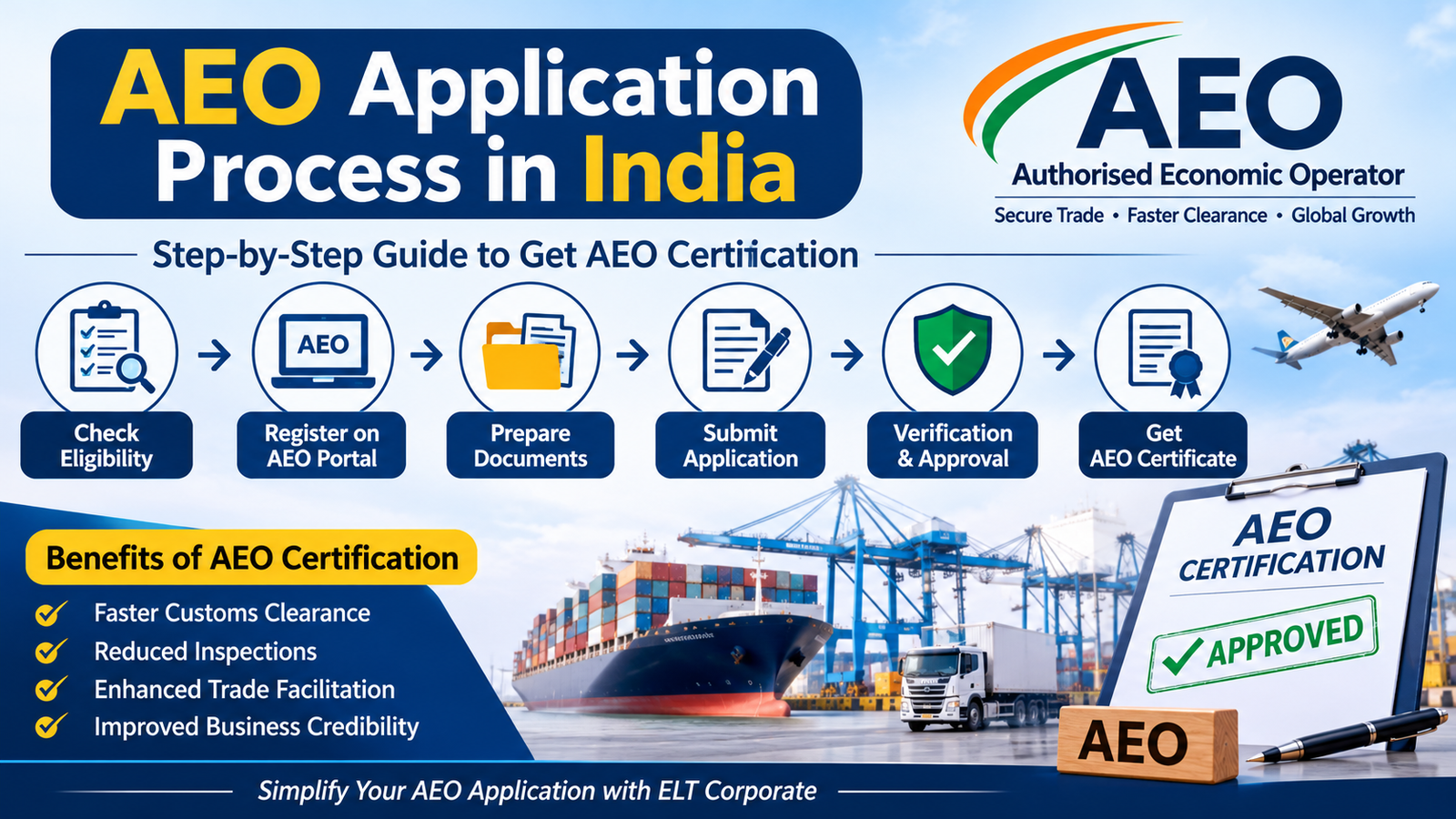
Step-by-Step AEO Application Process in India
The AEO Application Process in India involves checking eligibility, registering on the official portal, preparing documents, submitting the application, and completing the applicable verification requirements.
The following steps explain the general application journey.
Step 1: Check Your AEO Eligibility
The first step is to determine whether your business qualifies under the AEO Program.
Review your AEO application process in India business activities, customs-related operations, legal status, compliance history, and applicable category-specific requirements.
You should also identify whether your organization should apply for AEO-T1, AEO-T2, AEO-T3, or AEO-LO.
Choosing the correct category at the beginning helps avoid unnecessary application errors.
Step 2: Select the Appropriate AEO Category
Once eligibility is reviewed, select the certification category that matches your business activities and readiness.
For example:
- Importers and exporters may consider the relevant AEO-T1 or AEO-T2 category.
- Eligible existing AEO-T2 holders may apply for AEO-T3 when they meet the prescribed conditions.
- Eligible logistics operators may apply under AEO-LO.
The final category should always be selected according to the latest CBIC guidelines.
Step 3: Register on the Official AEO Portal
Applicants need to access the official Indian AEO Program portal:
Official Website: https://www.aeoindia.gov.in/
New applicants can create an account using the AEO application process in India prescribed registration process. The portal may require information such as the applicant’s zone, legal entity name, IEC details, and registered contact information.
Ensure that the information entered matches the relevant official registration records.
Existing registered applicants can log in using their credentials.
Step 4: Prepare the Required Documents
After AEO application process in India, registration and eligibility assessment, prepare the documents required for the selected AEO category.
Organize the documents carefully and check that:
- The company name is consistent across records.
- IEC and GST information is accurate.
- Supporting documents are current and readable.
- Required declarations are properly completed.
- SOPs and security-related evidence are available wherever applicable.
- The information in the application matches the supporting records.
A well-organized document file can make the application review process smoother.
Step 5: Complete the Application Form.
Log in to the AEO portal and access the relevant application section.
Enter the requested details AEO application process in India carefully, including information about the legal entity, business activities, customs operations, and other applicable compliance requirements.
Applicants should provide accurate information and upload the supporting documents according to the portal instructions.
For categories involving detailed annexures, complete all applicable sections and declarations before submission.
Step 6: Submit the AEO Application
After completing the AEO application process in India form and uploading the documents, review the application carefully.
Check for missing information, incorrect entries, and document mismatches. Once the application is complete, submit it through the prescribed channel.
Keep the application reference number and submission confirmation safely for future communication and status tracking.
Step 7: Application Scrutiny and Clarifications
After submission, the application is examined by the concerned AEO authorities.
The reviewing team may check the completeness of the AEO application process in India application, eligibility details, and supporting documents.
If additional information or clarification is required, the applicant may be asked to provide it.
Businesses should monitor their registered email and portal account regularly and respond to official queries within the specified time.
Step 8: Verification and Validation
For categories requiring verification, the AEO application process in India team may examine the applicant’s relevant premises, operational processes, records, and security arrangements.
The verification may include:
- Reviewing business and customs records
- Checking documented SOPs
- Examining access control arrangements
- Reviewing cargo and premises security
- Discussing procedures with responsible employees
- Checking whether documented processes are followed in practice
Applicants should ensure that the AEO application process in India, their records and procedures are organized and that relevant employees understand their responsibilities.
The scope of verification depends on the category and applicable AEO requirements.
Step 9: Certification Decision
After reviewing the AEO application process in India and completing the applicable verification process, the competent authority takes a decision according to the prescribed guidelines.
If the application is approved, the applicant receives the AEO certification through the prescribed process.
If deficiencies or concerns are identified, further clarification, corrective action, or other action may be required in accordance with the applicable rules.
Step 10: Maintain AEO Compliance After Certification
Obtaining an AEO Certificate is not the end of the process. Certified businesses must continue to maintain the relevant compliance and security standards.
They should:
- Maintain updated business and customs records.
- Follow documented SOPs.
- Review security arrangements periodically.
- Inform the authorities about significant changes as prescribed.
- Respond to official communications.
- Follow applicable renewal and re-validation requirements.
Maintaining compliance helps businesses preserve their AEO application process in India and continue benefiting from the program.
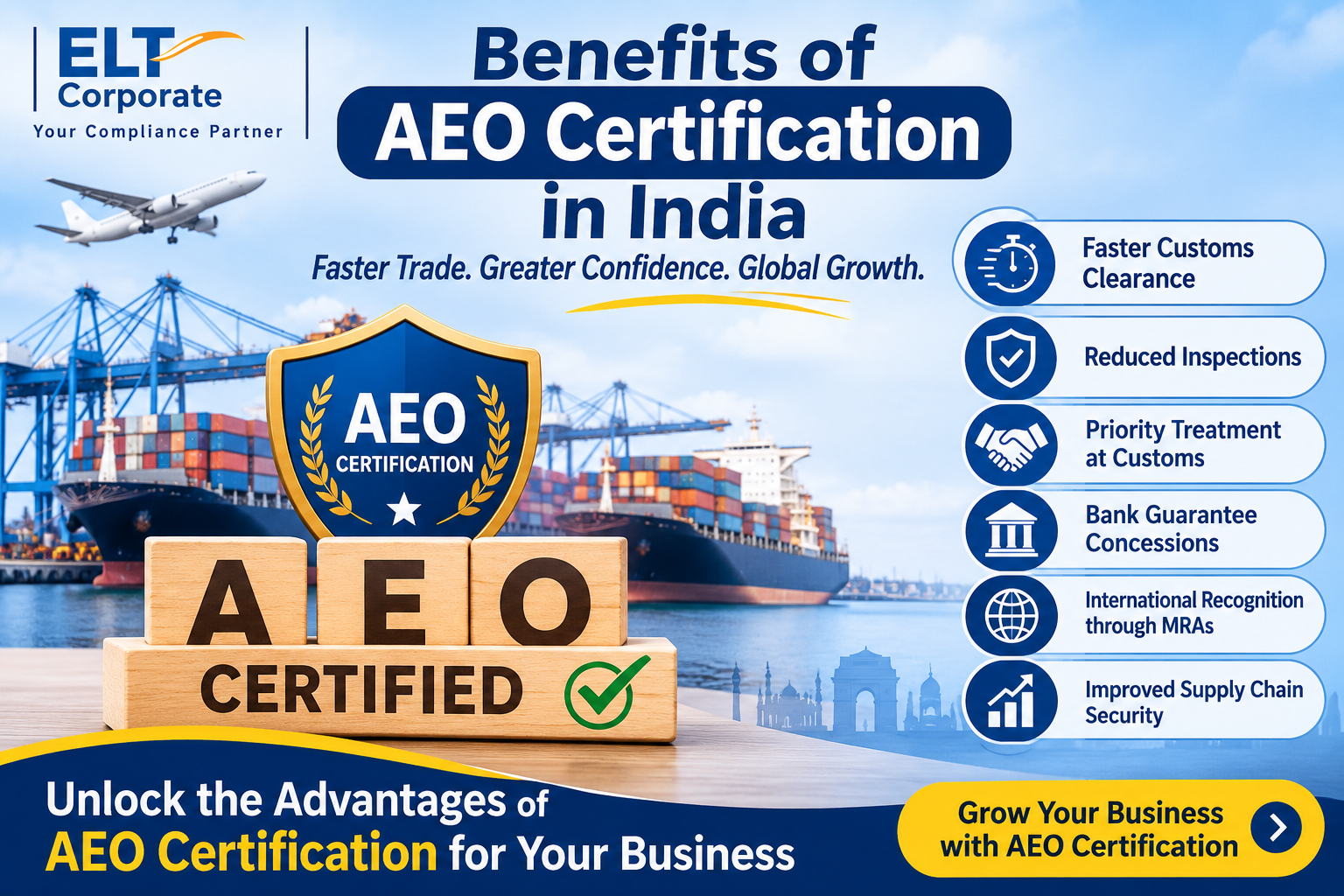
Benefits of AEO Certification for Indian Businesses
Completing the AEO application process in India can provide several advantages to eligible businesses involved in international trade.
Some important benefits include:
1. Faster Customs Processing
Eligible AEO-certified businesses may receive priority facilitation and faster AEO application process in India customs processing, subject to applicable procedures and risk-based controls.
2. Reduced Routine Customs Examinations
AEO status can provide reduced routine examination of consignments under the applicable customs facilitation framework.
3. Improved Supply Chain Security
The program encourages businesses to strengthen AEO application process in India, their internal controls, documentation practices, and supply chain security arrangements.
4. Better Business Credibility
AEO recognition can demonstrate that a business follows established compliance and security practices. This may help strengthen confidence among customers and business partners.
5. International Trade Facilitation
India’s Mutual Recognition Arrangements (MRAs) with partner customs administrations can provide facilitation benefits to eligible AEO application process in India, subject to the terms of the relevant arrangements.
6. Better Operational Management
Preparing for AEO certification encourages businesses to review their procedures, maintain proper records, and assign clear responsibilities for compliance.
The specific benefits available depend on the AEO application process in India certification category, and applicable program conditions.
Common Mistakes to Avoid During the AEO Application Process
Businesses sometimes face delays because of avoidable documentation or compliance issues. Understanding these mistakes can help applicants prepare more effectively.
1. Selecting the Wrong AEO Category
Applying under an unsuitable category may AEO application process in India create unnecessary complications. Always review the eligibility criteria before selecting the certification type.
2. Submitting Incomplete Documents
Missing certificates, declarations, or supporting records can result in clarification requests. Use the latest official checklist before submission.
3. Incorrect Company Information
Differences in company names, addresses, IEC details, or GST records may create inconsistencies AEO application process in India during scrutiny.
4. Poorly Documented SOPs
For applicable categories, merely preparing an SOP is not enough. Businesses should be able to demonstrate that the documented procedures are actually implemented.
5. Inadequate Security Arrangements
Applicants should review their relevant security controls and maintain evidence of their AEO application process in India implementation wherever required.
6. Delayed Responses to Clarifications
Ignoring portal notifications or responding late to official queries can affect the processing of an application.
How ELT Corporate Can Help with AEO Certification
The AEO Application Process in India involves eligibility assessment, documentation, compliance review, and coordination throughout the application journey. Businesses may find it challenging to understand the applicable requirements and organize the supporting information.
ELT Corporate provides regulatory and compliance consulting support to businesses seeking assistance with AEO certification in India.
Our support can include:
- Preliminary AEO eligibility assessment
- Guidance on selecting the appropriate AEO category
- AEO application documentation support
- Assistance with preparing applicable declarations and supporting information
- SOP and compliance documentation guidance
- Guidance on security and record-management requirements
- Application preparation and submission support
- Assistance in responding to application-related clarifications
- Guidance for verification and post-certification compliance
Our objective is to help businesses understand the AEO requirements and prepare their applications in an organized manner.
Whether you are an importer, exporter, manufacturer, or eligible logistics operator, ELT Corporate can guide you through the relevant AEO certification requirements.
Looking for professional assistance with AEO certification in India? Contact ELT Corporate to discuss your business requirements and application readiness.
Website: https://aeocertificate.com/
Conclusion
The AEO Application Process in India is an important step for businesses that want to strengthen their customs compliance practices and become recognized participants in the international supply chain.
From checking eligibility and selecting the appropriate category to preparing documents, submitting the application, and completing verification, every stage requires proper attention.
Businesses should review the latest CBIC guidelines, maintain accurate records, and ensure that their internal procedures meet the applicable requirements. Proper preparation can help reduce avoidable errors and make the application journey more organized.
With professional guidance from ELT Corporate, businesses can better understand the AEO requirements and prepare for the certification process with greater confidence.
Frequently Asked Questions
Q1. What is the AEO Application Process in India?
It involves eligibility checking, document preparation, online application, and verification.
Q2. Who can apply for AEO Certification?
Eligible importers, exporters, manufacturers, and logistics operators can apply.
Q3. What documents are required for AEO Certification?
IEC, GST certificate, company documents, financial records, and applicable compliance documents.
Q4. How many types of AEO certification are available?
There are four categories: AEO-T1, AEO-T2, AEO-T3, and AEO-LO.
Q5. How long does AEO certification take?
The timeline depends on the category, application completeness, and verification requirements.