
Starting an import-export business in India creates exciting opportunities for entrepreneurs, manufacturers, traders, and international suppliers. However, entering international trade also involves several responsibilities, including customs compliance, documentation, cargo security, regulatory requirements, and supply chain management.
For businesses looking to establish a reliable position in international markets, AEO Certification for New Import-Export Businesses can be an important consideration. The Authorized Economic Operator (AEO) program is an initiative introduced by the Central Board of Indirect Taxes and Customs (CBIC) to recognize businesses that meet prescribed standards of customs compliance and supply chain security.
An AEO Certificate helps eligible businesses establish credibility and access various customs-related facilitation benefits. It is particularly relevant for companies that regularly participate in international trade and want to improve their customs procedures.
In this guide, we will explain the eligibility requirements, benefits, documents, application process, and important considerations for obtaining AEO Certification for New Import-Export Businesses in India.
What Is AEO Certification for New Import-Export Businesses?
AEO Certification for New Import-Export Businesses refers to the process of obtaining Authorized Economic Operator status under India’s AEO program.
The AEO program is based on international supply chain security principles promoted by the World Customs Organization (WCO) through its SAFE Framework of Standards.
Under this program, eligible businesses involved in international trade can receive recognition from customs authorities after meeting the prescribed compliance, financial solvency, record-keeping, and security requirements.
In India, the AEO program is administered by CBIC.
Businesses that may be eligible include:
- Importers and exporters
- Manufacturers involved in international trade
- Customs brokers
- Freight forwarders
- Logistics service providers
- Warehouse operators
- Other eligible entities involved in the international supply chain
For a newly established company, understanding the AEO framework early can help create better compliance practices as its import-export operations expand.
Why Should New Import-Export Businesses Consider AEO Certification?
New businesses often face challenges when managing customs procedures, shipment documentation, regulatory requirements, and international supply chain operations.
AEO Certification for New Import-Export Businesses can help eligible companies build a structured approach to these responsibilities.
Here are some important reasons to consider the certification.
1. Improved Customs Facilitation
Customs procedures can influence shipment movement and delivery schedules. AEO-certified entities receive specified customs facilitation benefits AEO Certification for New Import-Export Businesses depending on their certification category and applicable regulations.
These benefits can support more efficient import-export operations.
2. Better Business Credibility
International buyers and suppliers often prefer working with businesses that demonstrate reliable compliance practices.
An AEO Certificate can help establish credibility by showing that a business has been recognized under the customs program.
3. Improved Supply Chain Security
AEO requirements encourage businesses to maintain appropriate security practices throughout their supply chain.
This includes cargo handling, employee access, transportation arrangements, premises security, and business partner management.
4. Better Compliance Management
The AEO Certification for New Import-Export Businesses encourages companies to maintain accurate records, follow customs regulations, and establish internal compliance procedures.
These practices can help new businesses reduce documentation errors and improve operational management.
5. Support for International Trade Growth
As businesses expand into new markets, managing international shipments and regulatory requirements becomes increasingly important.
AEO Certification for New Import-Export Businesses can support long-term trade development by encouraging reliable customs and supply chain practices.
Eligibility Criteria for AEO Certification for New Import-Export Businesses
Before applying, businesses should understand that obtaining an Import Export Code (IEC) does not automatically make them eligible for AEO Certification.
Applicants must satisfy the applicable conditions under the Indian AEO program.
The important eligibility considerations include:
1. Valid Business Registration
The applicant should be a legally established business entity with the necessary registrations and authorization to conduct its activities.
2. Import-Export Activities
The applicant should be involved in activities covered by the relevant AEO Certification for New Import-Export Businesses category and applicable eligibility requirements.
3. Financial Solvency
Businesses must satisfy the prescribed financial solvency requirements and provide relevant financial information where required.
4. Customs Compliance History
The applicant’s compliance record is an AEO Certification for New Import-Export Businesses important consideration. Relevant customs, tax, and regulatory compliance requirements should be reviewed before applying.
5. Proper Record Maintenance
The business should maintain organized records relating to imports, exports, customs transactions, invoices, shipping documents, and other relevant commercial activities.
6. Supply Chain Security
Applicants should establish AEO Certification for New Import-Export Businesses suitable security arrangements according to the requirements applicable to their business operations and AEO category.
Important: A newly established business should not assume that it automatically qualifies for AEO status. Specific eligibility conditions, including prescribed transaction history or other qualifying requirements, must be checked under the latest applicable CBIC guidelines.
Types of AEO Certification Available in India
Understanding the available certification categories is important when considering AEO Certification for New Import-Export Businesses.
India’s AEO program includes different categories for eligible entities.
AEO-T1 Certification
AEO-T1 is an entry-level category for eligible importers and exporters.
It provides customs facilitation benefits to qualifying businesses that meet the prescribed requirements.
AEO-T2 Certification
AEO-T2 is a higher AEO Certification for New Import-Export Businesses certification category that involves additional compliance and security requirements.
Eligible businesses can receive additional facilitation benefits compared with the lower category.
AEO-T3 Certification
AEO-T3 is an advanced category under the AEO program.
It is intended for businesses meeting the applicable higher-level compliance, security, and eligibility requirements.
AEO-LO Certification
AEO-LO is designed for AEO Certification for New Import-Export Businesses eligible logistics operators, and other qualifying entities involved in the international supply chain.
This category may be relevant to freight forwarders, customs brokers, warehouse operators, and other eligible service providers.
Choosing the appropriate category depends on the applicant’s business activities and applicable CBIC requirements.
Documents Required for AEO Certification for New Import Businesses
Documentation is an important part of the AEO Certification for New Import-Export Businesses their records before submitting an application.
The following documents may be relevant depending on the applicant’s category and eligibility:
Business Registration Documents
- Certificate of Incorporation or business registration certificate
- PAN card of the business
- GST registration certificate, where applicable
- Import Export Code (IEC)
- Registered office address proof
- Details of directors, partners, or authorized signatories
Financial Documents
- Audited financial statements, as applicable
- Balance sheets
- Profit and loss statements
- Financial solvency-related documents
- Relevant tax records
Note: The exact documentation depends on the AEO Certification for New Import-Export Businesses and the latest prescribed application requirements. Not every document listed above is mandatory for every applicant.
Step-by-Step Process for AEO Certification for New Import-Export Businesses
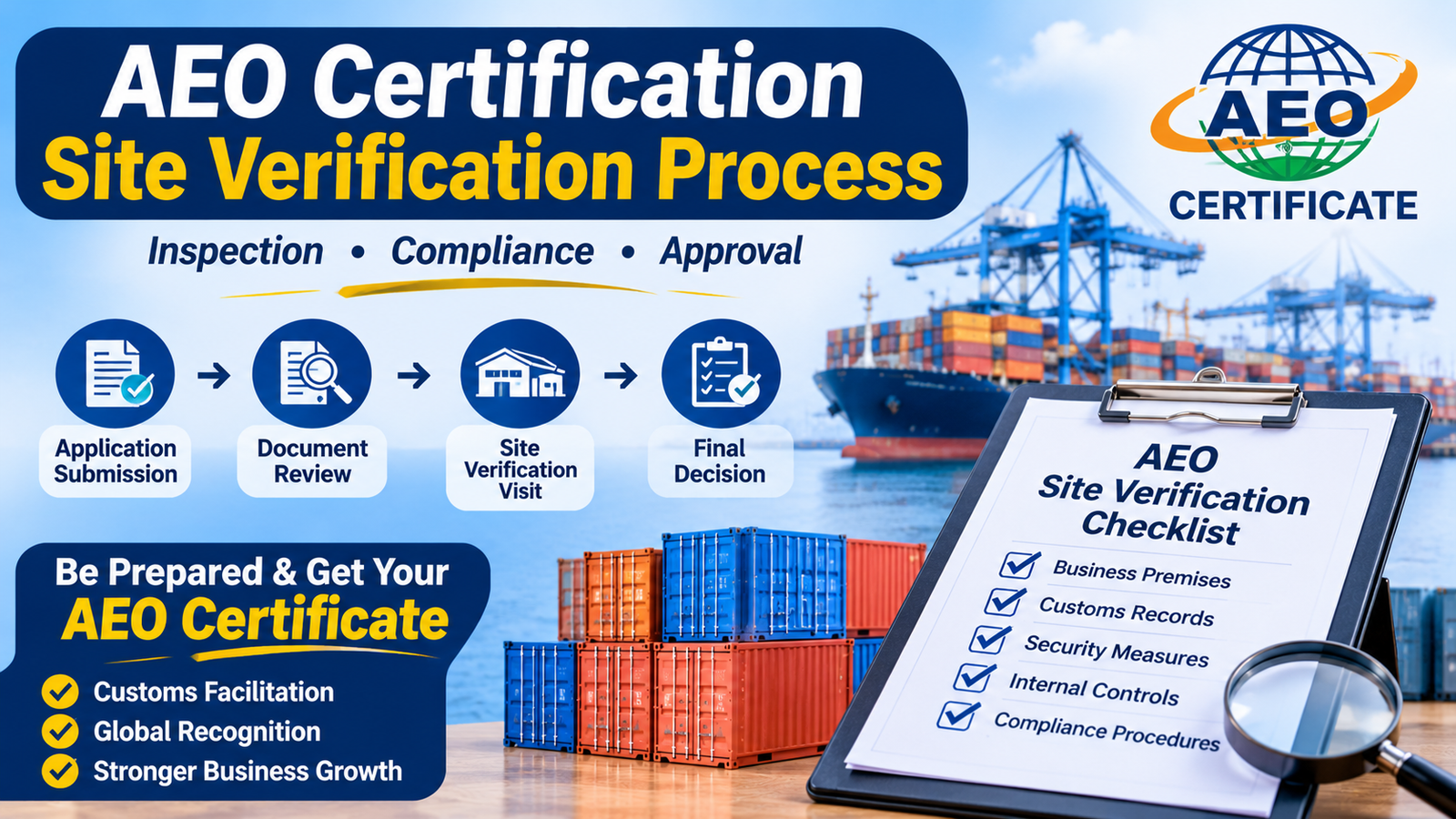
Businesses planning to obtain AEO Certification should understand the application procedure and prepare their documentation accordingly.
Here is a general overview of the process.
Step 1: Understand the AEO Program
First, understand the purpose of the AEO program, available categories, eligibility conditions, and applicable benefits.
This helps determine whether the business should consider AEO-T1, AEO-T2, AEO-T3, or AEO-LO.
Step 2: Check Business Eligibility
Review the company’s registration, import-export activities, financial position, customs compliance history, and other applicable conditions.
For new companies, this AEO Certification for New Import-Export Businesses step is particularly important because they may not yet have the required operational or transaction history.
Step 3: Prepare the Required Documents
Collect all relevant business, financial, customs, compliance, and security documents.
Ensure that the information is accurate and consistent across the application and supporting records.
Step 4: Review Internal Compliance Procedures
Examine the company’s existing procedures for record AEO Certification for new import-export businesses, maintenance, cargo security, employee access, transportation, and customs compliance.
Identify any gaps that need to be addressed before submitting the application.
Step 5: Submit the AEO Application
Eligible applicants should submit their application through the applicable CBIC-prescribed process and platform, along with the required supporting documents.
Step 6: Application Review and Verification
The application is reviewed by the relevant customs authorities.
Depending on the AEO Certification for New Import-Export Businesses application category and applicable requirements, additional information, clarification, or verification may be required.
Step 7: Grant of AEO Status
Once the authorities are satisfied that the applicant meets the applicable requirements, the relevant AEO status may be granted.
The applicant should then understand the conditions associated with maintaining its certification.
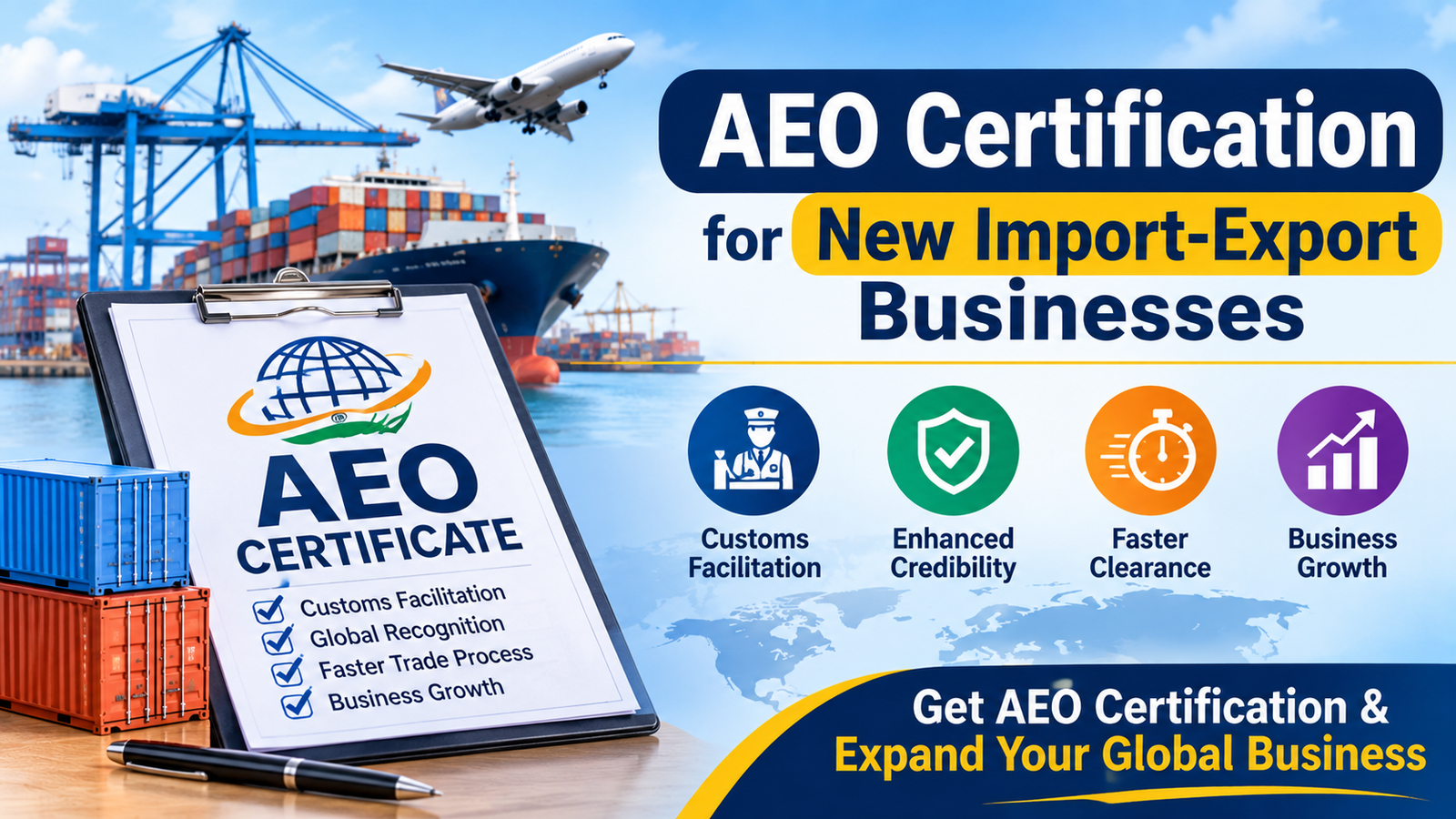
Major Benefits of AEO Certification for New Import-Export Businesses
Obtaining AEO Certification for New Import-Export Businesses can provide several advantages to eligible organizations.
Some important benefits include:
- Customs Facilitation: Eligible businesses receive prescribed customs-related facilitation benefits.
- Reduced Examination: Certain AEO categories may receive reduced examination requirements, subject to applicable customs procedures and risk assessment.
- Priority Processing: Eligible entities may receive priority treatment in specified customs procedures.
- Improved Trade Efficiency: Customs facilitation can help businesses manage their import-export activities more efficiently.
- International Recognition: AEO status can support recognition and credibility in international supply chains, including through applicable Mutual Recognition Arrangements.
- Better Security Practices: The program encourages businesses to strengthen cargo, premises, employee, and transportation security.
- Stronger Business Relationships: Demonstrating compliance and supply chain security can help build confidence among overseas buyers, suppliers, and logistics partners.
The exact benefits depend on the AEO category, applicable customs notifications, and operational requirements.
Common Challenges Faced by New Import-Export Businesses
Although AEO Certification offers several advantages, new businesses may face challenges while preparing for the program.
1. Limited Import-Export Experience
New companies may not have AEO Certification for New Import-Export Businesses sufficient transaction history or operational experience to satisfy certain eligibility requirements.
2. Incomplete Documentation
Missing invoices, shipping records, financial statements, and compliance documents can create difficulties during application preparation.
3. Lack of Security Procedures
Some startups do not have documented procedures for cargo handling, premises access, employee verification, and transportation security.
4. Limited Knowledge of Customs Regulations
Understanding customs requirements AEO Certification for New Import-Export Businesses can be difficult for entrepreneurs who are entering international trade for the first time.
5. Incorrect AEO Category Selection
Applying under an unsuitable category can result in unnecessary delays or complications.
Businesses should evaluate these challenges before proceeding with an application.
How Can an AEO Certification Consultant Help New Businesses?
Professional assistance can make the AEO Certification for New Import-Export Businesses more organized, particularly for companies that are unfamiliar with customs compliance requirements.
An experienced AEO certification consultant can assist with:
- Initial eligibility assessment
- Selection of the appropriate AEO category
- Document preparation and review
- Compliance gap identification
- Supply chain security documentation
- Application preparation and filing assistance
- Responding to queries raised by authorities
- Guidance on certification maintenance and renewal
Professional consultancy support can help businesses understand the applicable requirements and avoid common documentation mistakes.
However, the final decision to grant AEO status rests with the competent customs authorities.
Important Tips Before Applying for AEO Certification
Before starting the AEO Certification for New Import-Export Businesses process, consider the following recommendations:
- Obtain the necessary business registrations and IEC.
- Understand the applicable AEO eligibility requirements.
- Maintain accurate import-export transaction records.
- Keep financial statements and tax documents organized.
- Establish written security procedures.
- Review customs compliance practices regularly.
- Select the appropriate AEO category.
- Check the latest CBIC guidelines before submitting the application.
- Seek professional guidance if the requirements are unclear.
These steps can help businesses build a stronger foundation for AEO compliance.
Conclusion
AEO Certification for New Import-Export Businesses is an important consideration for companies planning to establish reliable and secure international trade operations in India.
The program encourages customs compliance, financial responsibility, accurate documentation, and supply chain security. Eligible businesses can also access various customs facilitation benefits depending on their AEO category.
However, newly established businesses should carefully review the eligibility conditions before applying. Having an IEC or starting an AEO certification for New Import-Export Businesses does not automatically guarantee eligibility for AEO status.
With proper documentation, compliance planning, and professional guidance, businesses can better understand the certification requirements and prepare for the application process.
If your company is planning to obtain an AEO Certificate, ELT Corporate can assist with AEO eligibility assessment, documentation preparation, application support, and compliance guidance.
Visit https://aeocertificate.com/ to learn more about AEO Certification assistance in India.
Frequently Asked Questions
Q1. What is AEO Certification for New Import-Export Businesses?
AEO Certification is a customs recognition program for eligible businesses involved in international trade security requirements.
Q2. Can a newly established import-export company apply for AEO Certification?
A newly established company must first satisfy the applicable eligibility conditions. The latest CBIC guidelines.
Q3. Is an IEC mandatory for AEO certification?
For importers and exporters, a valid import/export code is generally an important requirement.
Q4. What are the main benefits of an AEO Certificate?
Benefits may include customs facilitation, reduced examination in applicable cases, and greater business credibility.
Q5. How many types of AEO certification are available in India?
The main categories include AEO-T1, AEO-T2, AEO-T3, and AEO-LO.