In today’s fast-paced global trade environment, securing your supply chain and streamlining customs processes is not just an advantage—it’s a necessity. Authorized Economic Operator (AEO) certification offers accredited businesses significant benefits, from faster customs clearance to enhanced security and international recognition. But how do you get there?
This comprehensive guide provides a practical 90-day AEO implementation roadmap designed to prepare your organization for certification. Whether you are an exporter, importer, logistics provider, or customs broker in India or anywhere across the globe, following these steps will put you on the fast track to AEO status.
The Strategic Imperative: Why AEO Matters to Your Business?
AEO status is more than just a certificate; it’s a strategic asset that transforms your trade operations. It signals to customs authorities worldwide that your supply chain meets high security and compliance standards. This trust translates into tangible benefits that directly impact your bottom line and operational efficiency.
You can expect reduced customs clearance times and fewer physical inspections, leading to significant cost savings. AEO also grants you prioritized treatment in customs procedures and recognition under Mutual Recognition Agreements (MRAs), giving you a global competitive edge.
This includes improved cash flow through eligibility for deferred duty payment facilities, subject to customs approval and reduced bank guarantees. Ultimately, AEO status strengthens your business reputation and fosters greater trust with partners and customers alike.
Required Documents and Prerequisites
Before embarking on your AEO journey, certain foundational documents and conditions must be in place. These establish your organization’s legal standing, financial health, and commitment to compliance.
A thorough preparation of these items will significantly smooth your application process:
- Business Registration: Company registration certificate, PAN card, GST registration.
- Customs Compliance Records: History of customs declarations, duty payments, and any past notices or penalties.
- Operational Licenses: Relevant import/export licenses or permits.
- Security Procedures: Documentation of physical security, personnel security, and cargo security measures.
- Commercial & Transport Records: Proof of satisfactory systems for managing commercial, transport, and customs records.
- Employee Details: Organizational structure, employee verification policies, and training records.
- Financial Solvency: Audited financial statements, income tax returns for the past three years.
Validity of AEO Certification
The validity of AEO certification depends on the category. AEO-T1 and AEO-T2 are generally valid for three years, while AEO-T3 certification is valid for five years, subject to continuous compliance. Customs authorities may conduct periodic reviews or audits to ensure that your organization maintains the required level of security and compliance throughout this period.
Your 90-Day AEO Implementation Roadmap: Step-by Step Procedure
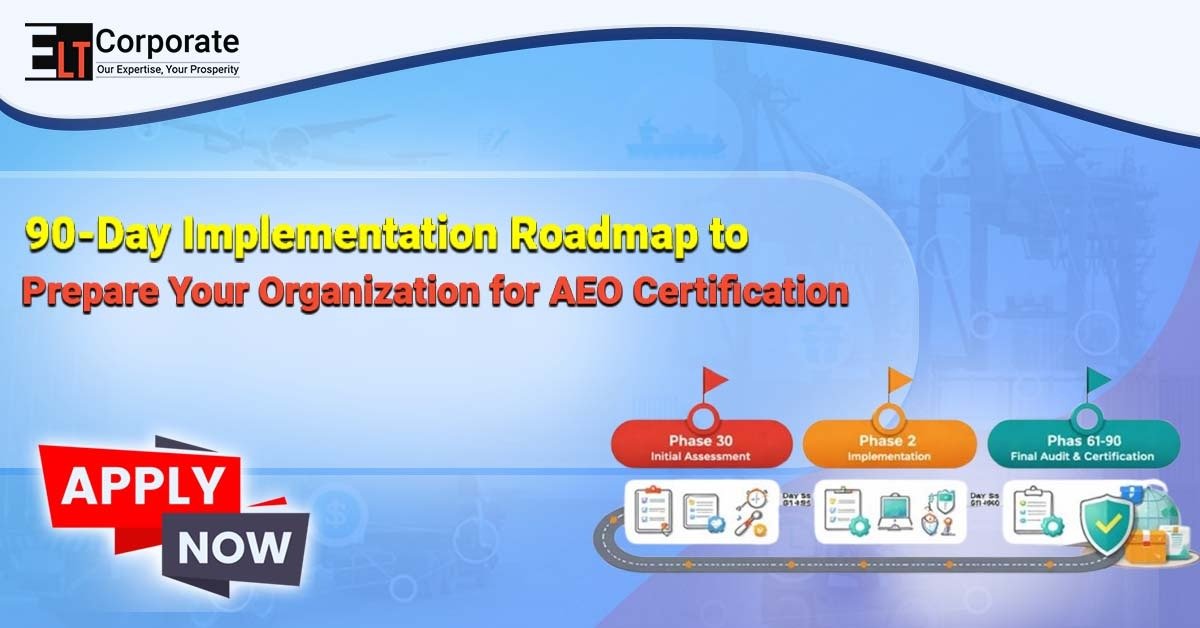
Here’s how you can prepare your organization to become AEO-ready within 90 days, broken down into manageable phases:
Phase 1: Laying the Foundation (Day 1-30)
- Understand AEO Categories & Eligibility: Start by familiarizing yourself with the different AEO categories (e.g., AEO-LO, AEO-T1, AEO-T2) and their specific requirements. Determine which category best suits your business operations and size. Review the core eligibility criteria for customs compliance, record management, financial solvency, and security standards.
- Conduct an Initial Self-Assessment: Perform a comprehensive internal audit against AEO guidelines. This helps identify existing gaps in your processes, documentation, and security measures. Assemble a dedicated AEO project team with clearly defined roles and responsibilities to steer the certification effort.
- Document Gathering & Organization: Begin collecting all necessary documents, such as business registration, financial statements, and customs records. Implement a robust document management system to ensure all information is easily accessible, verifiable, and up-to-date. This step is crucial for an efficient application.
Phase 2: Implementing & Optimizing Systems (Day 31-60)
- Enhance Internal Controls: Develop and implement strong internal control procedures for accurate record-keeping and data integrity. This includes managing commercial, transport, and financial data securely. Establish internal audit and review mechanisms to monitor compliance continually.
- Strengthen Security Measures: Focus on fortifying all aspects of your security. This involves physical security of premises (access control, CCTV), personnel security (background checks, training), and cargo security (loading, unloading, storage, transit). Don’t forget cybersecurity protocols for your IT systems.
- Training & Awareness: Roll out comprehensive training programs for all relevant staff members on AEO principles, procedures, and their individual roles in maintaining compliance. Cultivating a strong culture of security and compliance throughout the organization is key to long-term success.
- Engage with Business Partners: Assess the AEO compliance of your critical supply chain partners, including freight forwarders, carriers, and warehouses. Establish formal agreements or memorandums of understanding to ensure their adherence to your security standards and AEO requirements.
Phase 3: Application & Validation (Day 61-90)
- Complete the AEO Application Form: Carefully fill out the official AEO application form (e.g., Form AEO-T1/T2 or AEO-LO). Double-check all entries and attachments for accuracy and completeness. Ensure all supporting documentation gathered in Phase 1 and refined in Phase 2 is in order.
- Prepare for Customs Validation: Understand that customs authorities will conduct a thorough validation process, including document reviews, site visits, and interviews with key personnel. Perform mock audits internally to identify and rectify any potential issues before the official assessment. Know what customs officials will scrutinize.
- Address Discrepancies & Follow-ups: Be prepared to promptly respond to any queries or requests for additional information from customs officials. If any non-compliance is noted during validation, develop and implement a corrective action plan (CAP) efficiently. Swift action here can prevent delays.
- Certification Decision: After successful validation and resolution of any issues, customs will make their certification decision. Upon approval, you will receive your AEO certificate, marking your organization as a trusted and secure entity in the global supply chain.
Common Mistakes to Avoid
Steering clear of these frequent errors can save you time and prevent application delays:
- Incomplete or inaccurate documentation.
- Underestimating security gaps (physical and IT).
- Lack of proper employee training and awareness.
- Poorly maintained or non-existent record-keeping systems.
- Failure to involve all relevant departments from the start.
- Not verifying the AEO compliance of supply chain partners.
- Delaying responses to customs queries during validation.
What Happens If You Ignore It?
Ignoring AEO certification means missing out on significant competitive advantages in international trade. Your shipments may face more frequent and thorough inspections, leading to increased delays and demurrage costs.
You could also incur higher logistics expenses and find yourself at a disadvantage compared to AEO-certified competitors who enjoy expedited processes. Furthermore, a lack of robust security measures increases your risk of theft, loss, or tampering within your supply chain, impacting your reputation and financial stability.
The Cost Involved
The cost of AEO certification primarily includes internal resource allocation and potential investment in compliance upgrades. Official application fees are typically minimal or nil, but engaging external consultants can add to the expense. Below is a rough breakdown of potential costs:
| Category | Rough Cost Range |
| Official Application Fees | Minimal to Nil |
| Internal Staff Time & Resources | Significant (operational cost) |
| Security Upgrades (CCTV, access control) | Variable (depending on existing
infrastructure) |
| IT System Enhancements | Variable (depending on existing systems) |
| Training Programs | Moderate |
| External Consulting Services | Moderate to High (optional) |
How ELT Corporate Pvt. Ltd. Can Help You?
Navigating the complexities of AEO certification can be challenging, but you don’t have to do it alone. ELT Corporate Pvt. Ltd. specializes in guiding organizations through every step of the AEO application process. Our expert team provides tailored advice, conducts thorough pre-assessments, helps with documentation, and prepares you for customs validation. We ensure your AEO implementation roadmap is clear and efficient, maximizing your chances of successful certification.
Conclusion
Achieving AEO certification is a journey that demands commitment but delivers unparalleled returns. This 90-day AEO implementation roadmap provides a clear pathway to enhance your organization’s security, efficiency, and global trade standing. By meticulously following these steps, addressing common pitfalls, and leveraging expert support, your business can unlock a future of seamless, secure, and expedited international trade.
Don’t delay; start your AEO journey today and position your organization at the forefront of global customs compliance and supply chain excellence.
FAQs
Q1: Is AEO certification truly worth the effort and investment for my small to medium-sized export business in India, or is it only for large corporations?
AEO certification is highly beneficial for businesses of all sizes, including SMEs. It provides advantages like faster customs clearance and enhanced reputation, which are crucial for growth. While large corporations often pursue it, the benefits for smaller businesses in gaining a competitive edge and reducing operational hurdles are significant.
Q2: What are the most common reasons companies get rejected for AEO certification, and how can I avoid making those mistakes during my application?
Common rejection reasons include incomplete documentation, inadequate security measures, and poor record-keeping. To avoid these, conduct a thorough self-assessment, ensure all documents are accurate, invest in necessary security upgrades, and train your staff comprehensively on AEO standards. Promptly addressing any customs queries is also vital.
Q3: How can I ensure my existing supply chain partners (truckers, freight forwarders) meet AEO security requirements without completely overhauling my entire logistics network?
You can start by evaluating your partners’ current security protocols against AEO standards. Implement a formal vetting process and include AEO compliance clauses in your contracts.
Provide guidance and support to help them meet requirements, fostering a collaborative approach rather than a complete overhaul.
Q4: Beyond faster customs clearance, what tangible financial benefits can my company expect from AEO status, particularly in terms of duties, taxes, or bank guarantees?
AEO status can lead to significant financial benefits beyond faster clearance. These include reduced bank guarantees for customs duties, eligibility for deferred duty payment facilities, subject to customs approval, and fewer costs associated with physical inspections and delays. It can also open doors to specific government schemes and incentives for AEO-certified entities.
Q5: After achieving AEO certification, what ongoing obligations or audits should I anticipate to maintain my status, and what happens if I fall out of compliance?
After certification, you must continuously adhere to AEO standards. Expect regular internal audits, ongoing staff training, and updating procedures as regulations change. Customs authorities may conduct periodic post-certification audits. Falling out of compliance can lead to the suspension or revocation of your AEO status, resulting in the loss of all associated benefits.