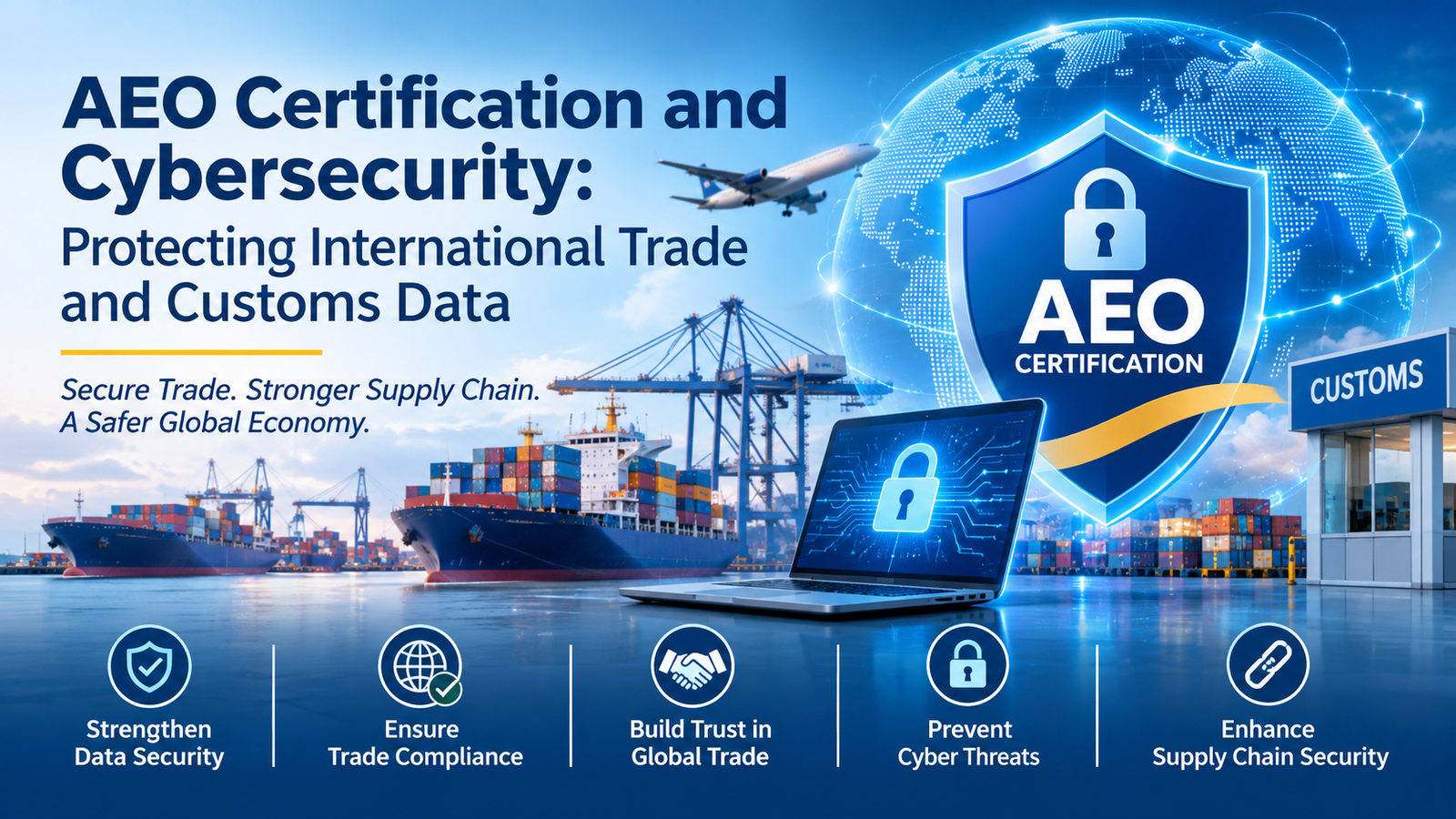
International trade depends on the secure exchange of business information, customs documentation, shipment details, and financial records between importers, exporters, customs authorities, logistics providers, and other supply chain partners. As businesses increasingly adopt digital platforms for import-export operations, protecting sensitive trade information has become an important part of supply chain security.
This is where AEO Cybersecurity Requirements become relevant to businesses seeking to strengthen their Authorized Economic Operator (AEO) compliance practices. An authorized economic operator is a business recognized by customs authorities for meeting applicable standards relating to customs compliance, security, and supply chain reliability.
Cybersecurity is an important supporting element of a secure international trade environment. Businesses must protect their digital systems, prevent unauthorized access, maintain accurate records, and prepare for potential cyber incidents that could disrupt customs operations.
Understanding AEO cybersecurity requirements can help importers, exporters, manufacturers, customs brokers, and logistics companies improve their information security practices while supporting their broader AEO security and compliance responsibilities.
What Are AEO Cybersecurity Requirements?
AEO Cybersecurity Requirements refer to the information security measures and digital protection practices that businesses should consider as part of their wider AEO supply chain security arrangements.
The AEO program focuses on strengthening international supply chain security while facilitating legitimate trade. Cybersecurity supports this objective by protecting the digital information and systems used in customs and logistics operations.
Businesses involved in international trade may handle sensitive information such as:
- Import and export declarations
- Commercial invoices and packing lists
- Shipping bills and bills of entry
- Customer and supplier information
- Transportation and shipment details
- Customs documentation and financial records
- Login credentials and business communication
If this information is exposed, altered, or accessed without AEO cybersecurity requirements authorization, it can create financial losses, operational disruption, and compliance problems.
Therefore, businesses should establish appropriate cybersecurity controls alongside physical security and customs compliance procedures.
Why Is Cybersecurity Important for AEO Certification?
Cybersecurity plays an important role in protecting the digital environment of international trade businesses. Importers and exporters increasingly depend on electronic documentation, customs portals, enterprise software, and communication platforms.
The importance of AEO cybersecurity requirements can be understood through the following points.
1. Protection of Confidential Customs Data
Customs documentation contains sensitive AEO cybersecurity requirements business and shipment information. Unauthorized access may expose confidential commercial details or create opportunities for fraudulent activities.
Businesses should use secure document storage, restricted access, and appropriate encryption measures to protect important information.
2. Prevention of Unauthorized System Access
Unauthorized users may attempt to access company accounts, customs records, or shipment management systems.
Strong passwords, multi-factor authentication, and access permissions can help reduce this risk.
3. Improved Supply Chain Security
International supply chains involve multiple stakeholders, including manufacturers, transporters, customs brokers, warehouses, and freight forwarders.
A cybersecurity weakness in one organization may affect other connected businesses. Security controls and supplier assessments can help reduce these risks.
4. Reduced Risk of Business Disruption
Cyberattacks, ransomware, and system failures can AEO cybersecurity requirements interrupt documentation, shipment tracking, and customs-related activities.
Businesses should maintain backup systems and incident response procedures to minimize operational disruption.
5. Better Business Reliability
Strong information security practices demonstrate that an organization takes its business data and supply chain responsibilities seriously.
This can support its wider security management and compliance objectives.
AEO Cybersecurity Requirements Businesses Should Follow
Businesses should develop a documented information security framework that addresses the risks associated with their customs and supply chain activities.
The following measures can help organizations strengthen their cybersecurity practices.
1. Implement Strong Password Policies
Businesses should establish strong password AEO cybersecurity requirements policies for employees who access customs portals, shipment management software, and business systems.
Recommended practices include:
- Use strong and unique passwords.
- Change passwords when compromise is suspected.
- Avoid sharing login credentials.
- Enable multi-factor authentication wherever available.
- Remove access for employees who leave the organization.
These practices help prevent unauthorized access to confidential trade information.
2. Use Firewalls and Network Security
Firewalls help monitor and control incoming and outgoing network traffic. Businesses should protect their internal networks against unauthorized access and suspicious activities.
Companies can consider:
- Installing reliable firewall solutions.
- Using updated antivirus and endpoint protection software.
- Securing Wi-Fi networks.
- Restricting access to sensitive systems.
- Monitoring unusual network activities.
These measures support the broader objectives of AEO Cybersecurity Requirements.
3. Maintain Regular Data Backups
Losing customs records, shipping documents, or commercial information can create serious operational problems.
Businesses should maintain regular backups of important data.
A practical backup strategy should include:
- Automatic backups of important business records.
- Secure offline or separate backup copies.
- Restricted access to backup storage.
- Regular testing of data recovery procedures.
- Documented backup schedules.
A reliable backup system helps businesses restore essential information after accidental deletion, technical failure, or cyberattacks.
4. Protect Electronic Customs Documentation
Importers and exporters exchange several documents electronically during international trade operations.
These documents should be protected against unauthorized modification, loss, or disclosure.
Businesses should:
- Use authorized document management systems.
- Restrict document editing permissions.
- Maintain records of important changes.
- Verify the accuracy of customs information.
- Use secure channels for document sharing.
Maintaining accurate and protected electronic records supports customs compliance and supply chain reliability.
5. Train Employees on Cybersecurity Awareness
Employees are an important part of an organization’s cybersecurity framework. Human errors, phishing emails, and careless handling of passwords can expose business information.
Companies should conduct regular cybersecurity awareness programs covering:
- Identifying suspicious emails.
- Avoiding unknown attachments and links.
- Protecting business passwords.
- Recognizing phishing attempts.
- Reporting unusual system activities.
- Following company data protection policies.
Employee awareness should be included in the organization’s broader AEO security training program.
6. Establish an Incident Response Plan
Businesses should prepare for situations involving AEO cybersecurity requirements, data breaches, ransomware, system failures, and unauthorized access.
An incident response plan should explain:
- How employees should report a suspected cyber incident.
- Who is responsible for investigating the incident.
- How affected systems should be isolated.
- How business data can be restored.
- How customers, business partners, and relevant authorities should be informed when required.
- How the organization will prevent similar incidents in the future.
A documented incident response process can reduce operational disruption and support business continuity.
Role of AEO Certification in International Trade Security
Authorized Economic Operator certification is designed to strengthen cooperation between customs authorities and businesses involved in international trade.
The World Customs Organization (WCO) developed the SAFE Framework of Standards to support secure and facilitated global trade. Its AEO framework promotes security practices across the international supply chain.
The framework covers several security areas, including:
- Information exchange, access, and confidentiality
- Cargo security
- Premises security
- Personnel security
- Business partner security
- Crisis management and incident recovery
Information security is therefore an important part of the wider supply chain security approach.
Businesses implementing AEO Cybersecurity Requirements can use these practices to improve their readiness for security assessments and strengthen their internal compliance systems.
AEO Cybersecurity Requirements for Importers and Exporters
Importers and exporters manage different types of international trade information. Both should establish appropriate cybersecurity controls according to their business operations.
Cybersecurity Requirements for Importers
Importers regularly handle supplier AEO cybersecurity requirements information, purchase orders, commercial invoices, bills of entry, and shipment details.
They should focus on:
- Protecting supplier and vendor information.
- Securing import documentation.
- Restricting access to customs-related systems.
- Verifying electronic documents received from suppliers.
- Maintaining secure communication with customs brokers.
- Creating regular backups of import records.
These practices help importers maintain accurate documentation and protect their import operations.
Cybersecurity Requirements for Exporters
Exporters manage export invoices, shipping bills, buyer information, product specifications and transportation records.
They should focus on:
- Protecting international buyer information.
- Securing export documentation.
- Maintaining access controls for employees.
- Protecting shipment and transportation records.
- Using secure platforms for business communication.
- Establishing procedures for reporting cyber incidents.
Following these practices can help exporters improve their digital security and maintain reliable international trade operations.
Common Cybersecurity Risks in International Trade
International trade businesses may face different AEO cybersecurity requirements threats depending on their technology infrastructure, business partners, and operational activities.
| Cybersecurity risk | Possible impact |
| Phishing attacks | Theft of login credentials |
| Ransomware | Loss of access to business data |
| Data breaches | Exposure of confidential trade information |
| Unauthorized access | Misuse of customs records |
| Malware attacks | Damage to business systems |
| Weak passwords | Compromised business accounts |
| Third-party security failures | Supply chain disruptions |
Understanding these threats is an important step towards implementing effective AEO cybersecurity requirements.
How Can Businesses Prepare for AEO Security Assessment?
Businesses planning to apply for AEO certification should review their existing security arrangements and identify areas that require improvement.
A structured preparation process can help organizations maintain proper records and demonstrate their security practices.
Step 1: Review Existing Security Policies
Start by reviewing existing IT security policies, data protection procedures, and internal security guidelines.
Check whether employees understand their responsibilities and whether security policies are properly documented.
Step 2: Conduct a Security Risk Assessment
Identify possible risks associated with customs AEO cybersecurity requirements documentation, business software, employee access, and third-party service providers.
Prepare a risk assessment report and establish corrective measures for identified weaknesses.
Step 3: Review Access Controls
Check who can access sensitive business information and customs-related systems.
Remove unnecessary access permissions and ensure that access is provided according to employees’ responsibilities.
Step 4: Verify Data Backup Procedures
Review backup schedules, storage arrangements, and data recovery procedures.
Businesses should periodically test whether important records can be restored successfully.
Step 5: Maintain Security Documentation
Maintain relevant records to demonstrate the AEO cybersecurity requirements implementation of security procedures.
Depending on the business and applicable programme requirements, useful records may include:
- Information security policy
- IT access control policy
- Employee cybersecurity training records
- Data backup procedures
- Incident response plan
- Network security procedures
- Vendor security assessment records
- Internal security audit reports
How Does Cybersecurity Improve Supply Chain Management?
A secure supply chain requires coordination between multiple businesses and service providers. Manufacturers, importers, exporters, customs brokers, freight forwarders, warehouses, and transport companies exchange information throughout the movement of goods.
Weak information security at any stage may create risks for connected businesses.
Implementing appropriate AEO cybersecurity requirements can improve supply chain management in several ways.
Better information sharing: Secure communication channels help businesses exchange shipment and customs information more safely.
Improved operational transparency: Accurate records and controlled access make it easier to monitor business activities.
Reduced fraud risks: Verification procedures can help identify suspicious requests and unauthorised changes to trade documents.
Stronger business partnerships: Companies with documented security practices can demonstrate their commitment to responsible supply chain management.
Better operational continuity: Backup and recovery procedures help businesses respond to unexpected technology-related disruptions.
Common Mistakes Businesses Should Avoid
While preparing for AEO certification and improving cybersecurity, organizations should avoid the following mistakes:
- Sharing passwords among employees.
- Allowing unrestricted access to customs documentation.
- Ignoring software and security updates.
- Not maintaining regular data backups.
- Sending confidential documents through unsecured channels.
- Ignoring cybersecurity training for employees.
- Not assessing the security practices of important business partners.
- Failing to document security incidents and corrective actions.
Avoiding these mistakes can help businesses develop stronger information security procedures and support their broader AEO compliance objectives.
AEO Certification and Cybersecurity: Important Considerations for Indian Businesses
Indian importers and exporters seeking AEO cybersecurity requirements should understand the applicable requirements under the Indian Customs AEO Program.
The program is administered by Indian Customs under the Central Board of Indirect Taxes and Customs (CBIC). Businesses should review the applicable AEO eligibility, compliance, and security requirements before submitting an application.
It is important to understand that AEO certification is not a standalone cybersecurity certification. Businesses should not assume that obtaining AEO status automatically confirms compliance with every cybersecurity or data protection law.
Similarly, the specific cybersecurity controls required will depend on the applicable AEO program criteria, business activities, and relevant legal obligations.
The WCO SAFE Framework provides an international reference for supply chain security. Its 2025 edition continues to address information security, business integrity, and emerging supply chain threats.
Indian businesses should therefore review their AEO cybersecurity requirements andcurrent security procedures, maintain appropriate documentation, and seek professional guidance where required.
How ELT Corporate Can Help with AEO Certification
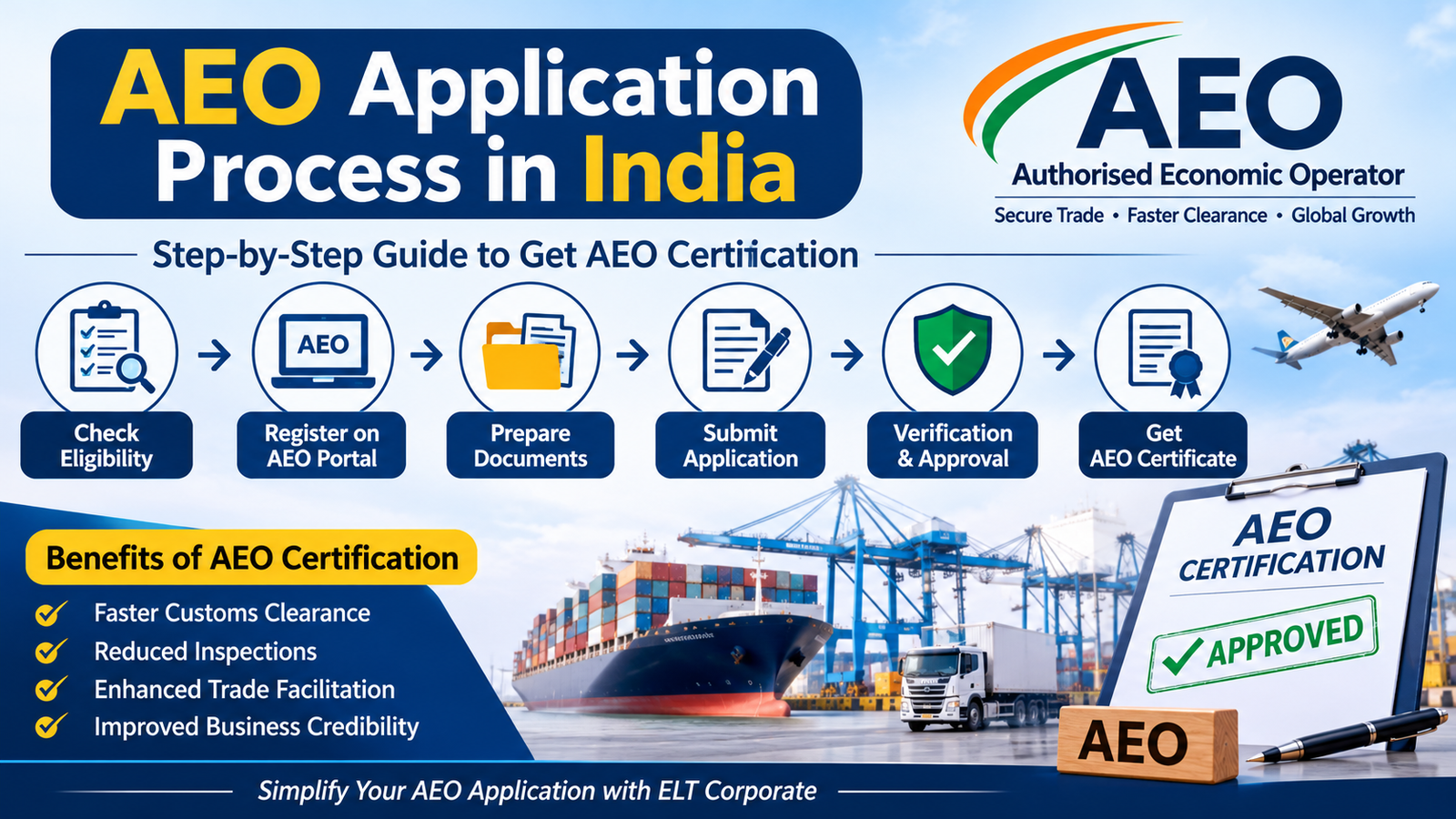
Businesses planning to obtain Authorized Economic Operator certification may need professional assistance with understanding eligibility requirements, preparing documentation, and managing the application process.
ELT Corporate provides regulatory compliance and AEO certification consultancy support to businesses involved in international trade.
Professional AEO consultancy can assist businesses with:
- Understanding AEO certification requirements.
- Identifying the appropriate AEO application category.
- Reviewing business eligibility and compliance readiness.
- Preparing application documentation.
- Identifying gaps in existing security procedures.
- Organizing relevant compliance records.
- Supporting businesses during the application and assessment process.
Businesses can visit aeocertificate.com to learn more about AEO certification and related consultancy services.
Conclusion
Cybersecurity has become an important consideration for businesses involved in international trade. Importers, exporters, manufacturers, customs brokers, and logistics providers depend on digital systems to manage customs documentation, shipment information, and commercial records.
Implementing AEO cybersecurity requirements can help businesses strengthen information security, protect confidential customs data, reduce unauthorized access, and improve supply chain resilience.
AEO certification focuses on secure and compliant international trade operations. Businesses should therefore treat cybersecurity as part of their broader security management strategy rather than as an isolated IT activity.
By maintaining strong access controls, secure document management, regular data backups, employee awareness, and incident response procedures, organizations can build a more reliable and secure international trade environment.
For businesses planning to apply for AEO certification in India, understanding the applicable customs security requirements and preparing the necessary documentation are important steps towards improving compliance readiness.
Frequently Asked Questions
Q1. What are AEO cybersecurity requirements?
They are information security practices that help protect customs data and business information.
Q2. Why is cybersecurity important for AEO certification?
It helps protect sensitive trade data and strengthens supply chain security.
Q3. Do importers need cybersecurity policies for AEO certification?
Businesses should maintain appropriate security procedures according to applicable AEO requirements.
Q4. What documents are needed for cybersecurity preparation?
Common documents include security policies, backup records, access controls, and incident response plans.
Q5. How does cybersecurity protect international trade?
It reduces data breaches, unauthorized access, and digital disruptions in trade operations.