In international trade, certifications play a key role in reducing compliance costs, improving ease of business, and gaining government benefits. Two of the most recognised certifications available to Indian importers and exporters are:
- Authorised Economic Operator (AEO) Certification – introduced by the World Customs Organisation (WCO) under the SAFE Framework of Standards.
- Star Export House (Status Holder) Certification – introduced by the Government of India to boost exports.
Though both schemes aim to enhance trade efficiency, their scope, eligibility, and benefits differ significantly. Let’s dive deeper into each.
Authorised Economic Operator (AEO) Certification
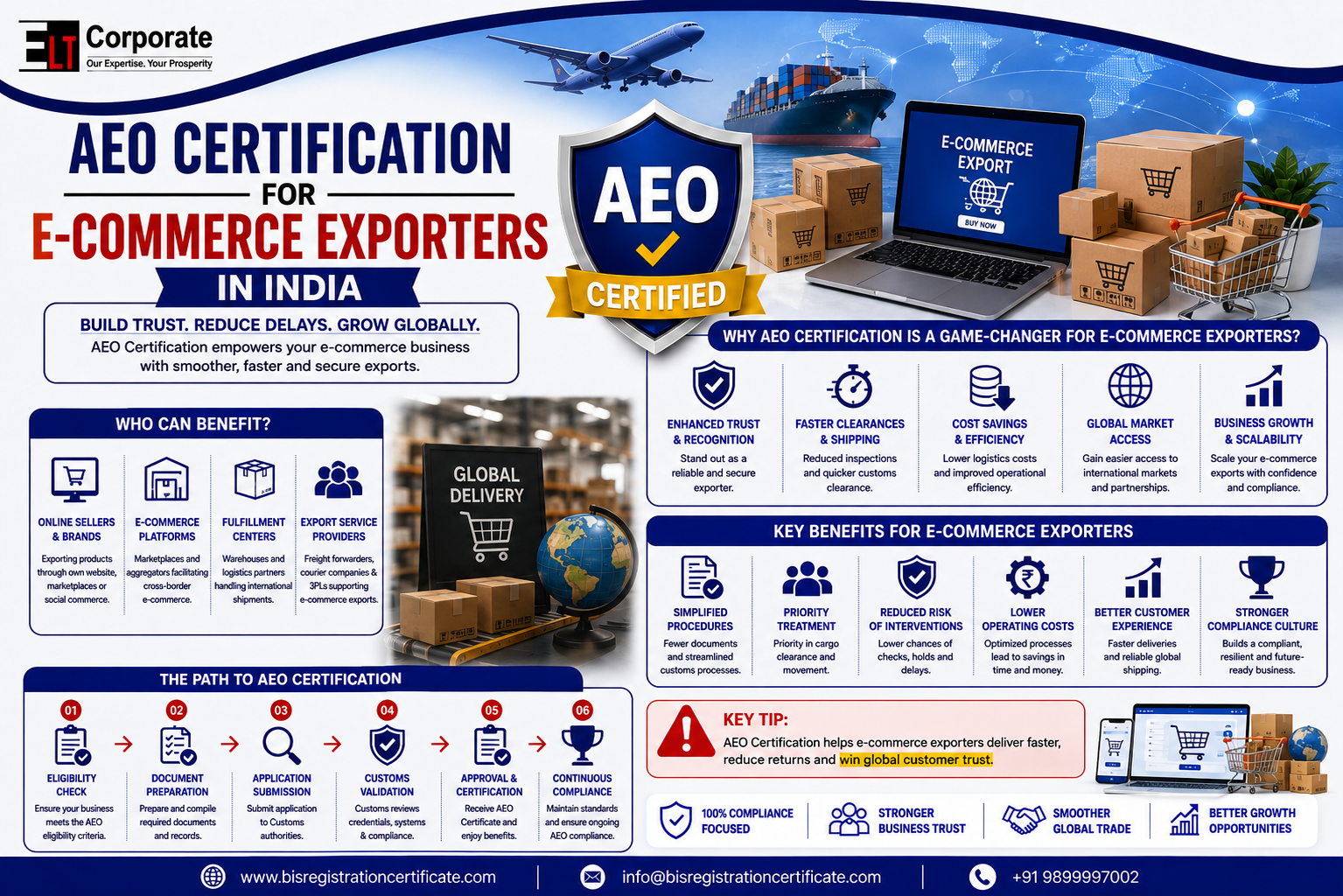
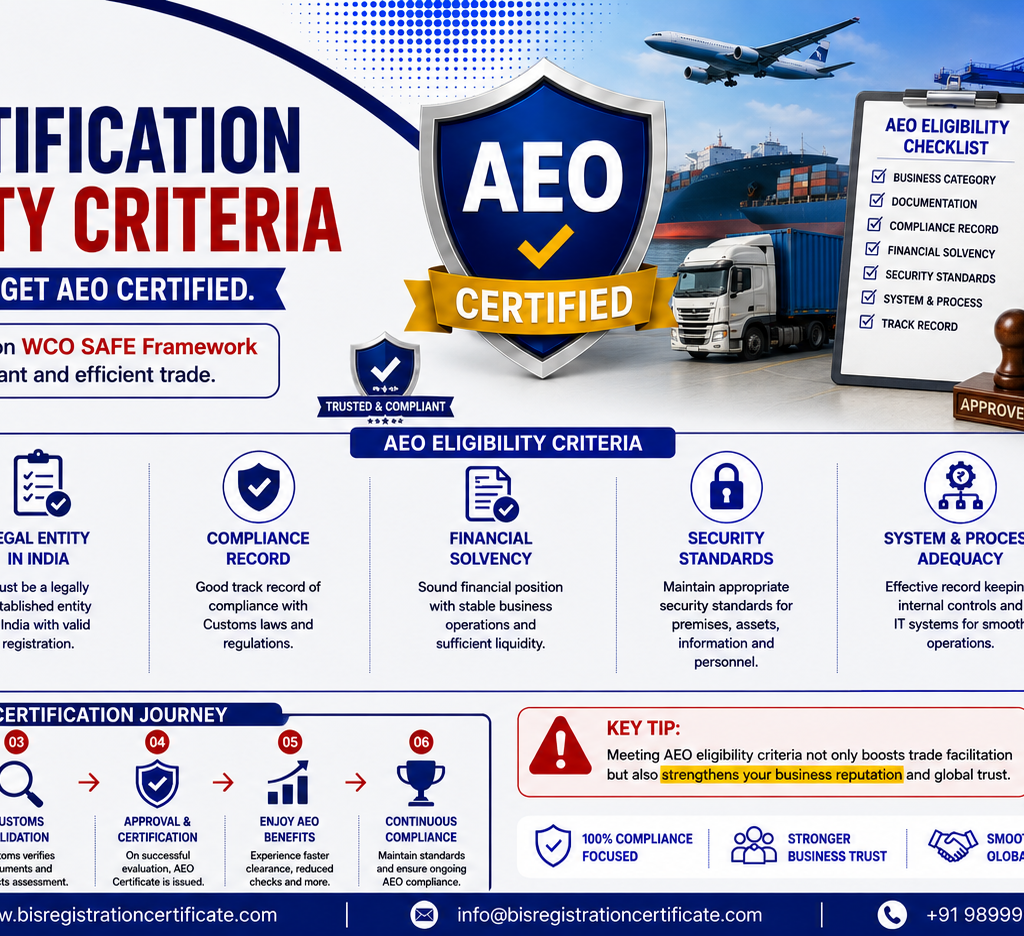
AEO certification is a global initiative that establishes an importer/exporter/logistics provider as a “secure and reliable trading partner.”
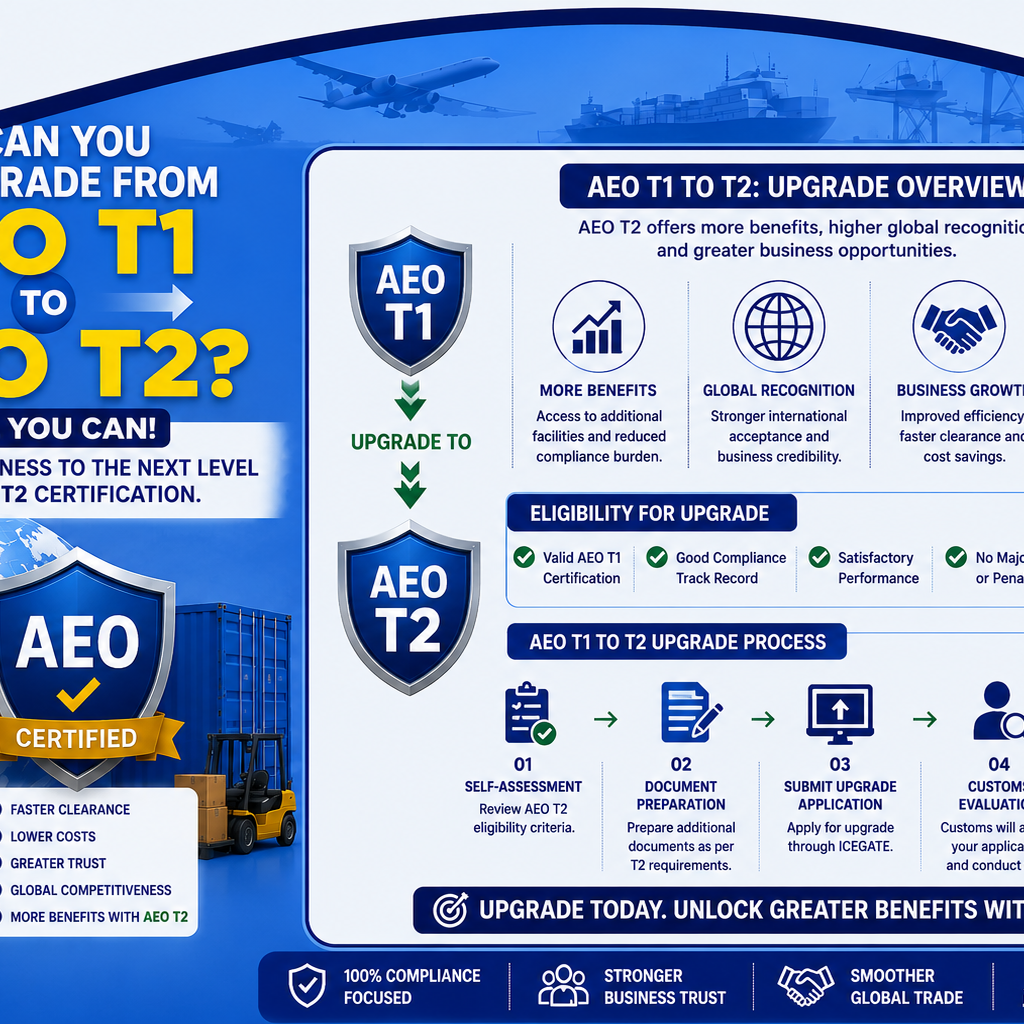
It has three tiers for importers/exporters (T1, T2, and T3) and a single-tier AEO-LO for logistics operators.
- Application: Online via AEO Portal.
- Objective: Trade facilitation, customs simplification, global credibility, and faster clearances.
Key Benefits of AEO (Not Available to Star Export House Holders)
- Direct Port Delivery (DPD) – Imports
- Clearance within 48 hours vs. 7–9 days in CFS model.
- Saves ₹10K–20K per container in handling, rent, and detention costs.
- Clearance within 48 hours vs. 7–9 days in CFS model.
- Direct Port Entry (DPE) – Exports
- Factory-stuffed cargo moves directly to terminals.
- 70%–100% reduction in CFS costs.
- Factory-stuffed cargo moves directly to terminals.
- No Merchant Overtime Fees (MOT)
- AEO exporters don’t pay overtime charges for customs clearance beyond office hours.
- Email & SMS Alerts
- Real-time updates on consignment movement.
- Self-Sealing with RFID E-Seals (T2 and above)
- Reduced cost and global acceptance under MRAs.
- Deferred Duty Payment (T2 & T3)
- Clear First, Pay Later” facility with consolidated duty accounts.
- Faster Refunds & Incentives
- Duty Drawback within 72 hours of EGM.
- IGST refunds within 45 days.
- Duty Drawback within 72 hours of EGM.
- Priority in Investigations & Dispute Resolution
- Time-bound resolution (6–9 months).
- Post Clearance Audit (PCA)
- Simplified once in 3 years instead of transactional checks.
- Preferential Treatment & Trade Facilitation
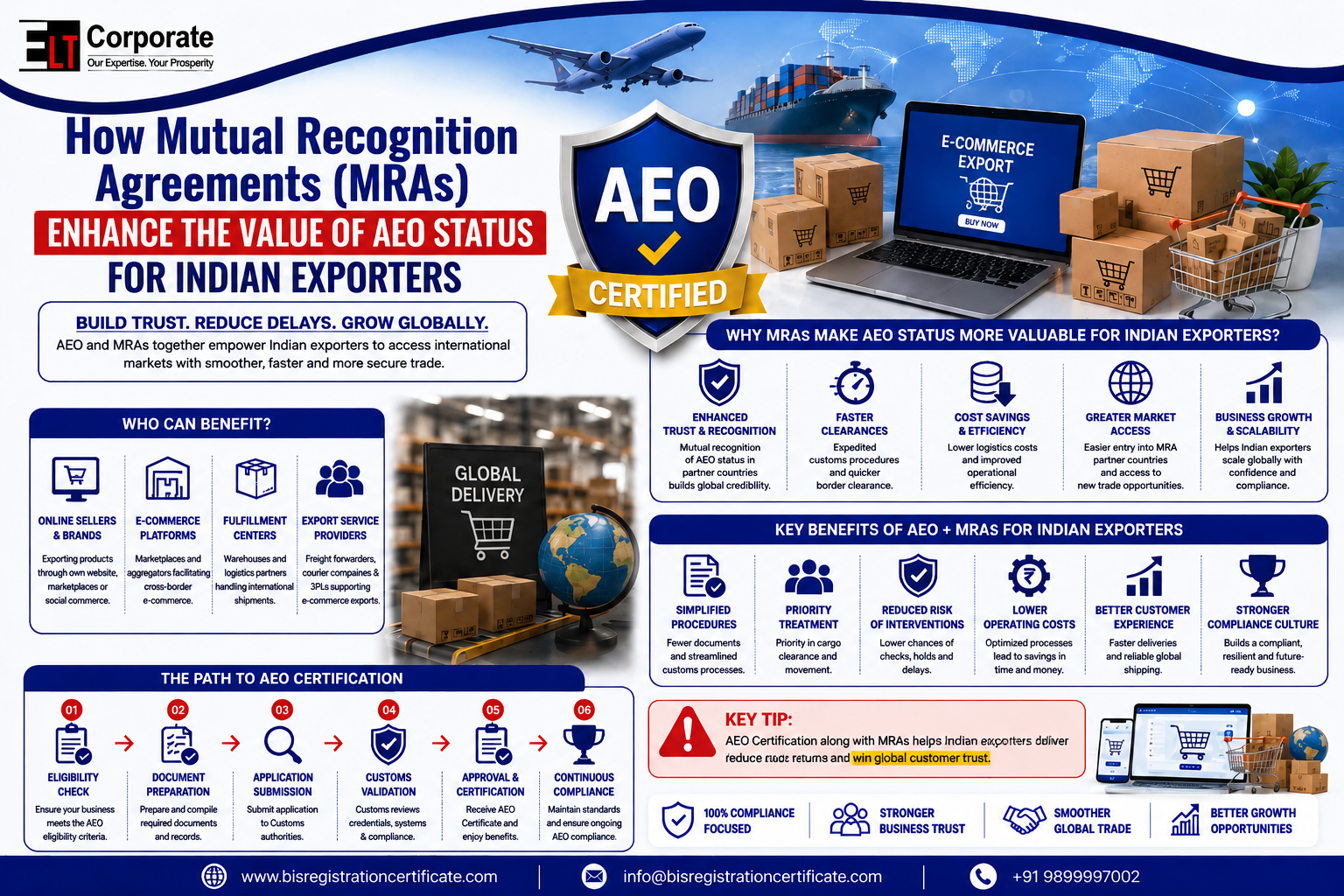
- MRAs with foreign customs reduce inspections and speed up global trade.
- MRAs with foreign customs reduce inspections and speed up global trade.
Star Export House (Status Holder) Certification
This certification is performance-based and awarded to exporters achieving a certain FOB/FOR value of exports:
- One Star – $3 million
- Two Star – $25 million
- Three Star – $100 million
- Four Star – $500 million
- Five Star – $2000 million
Key Benefits of Star Export House (Not Available to AEO Holders)
- Bank Guarantee Exemption
- 100% exemption under the Advance/EPCG Scheme.
- (Whereas AEO T1: 50%, AEO T2: 75%, AEO T3: 100%).
- Establishment of Export Warehouse
- 2 Star and above holders can set up warehouses for exports.
- Export of Free-of-Cost Samples
- Entitlement to export samples within prescribed annual limits for promotion.
- Trade Promotion Opportunities
- Priority in participating in international trade fairs and buyer–seller meets organised by the government.
Similarities Between AEO & Star Export House
Both schemes:
- Provide recognition and credibility to exporters in the global market.
- Enhance ease of doing business through faster clearances and reduced compliance costs.
- Aim to improve India’s trade competitiveness.
Key Differences – AEO vs Star Export House
| Aspect | AEO Certification | Star Export House Certification |
| Basis | Security & compliance-based | Export performance-based |
| Applicability | Importers, Exporters, Logistics providers | Only Exporters |
| Global Recognition | Yes (through MRAs) | No (only India-specific) |
| Customs Facilitation | Priority clearance, DPD, DPE, deferred duty | Not available |
| Financial Benefits | Duty deferment, MOT waiver, reduced CFS costs | BG exemption, warehouse eligibility, free samples |
| Eligibility | Compliance check by Customs | Minimum export turnover |
Conclusion
- AEO Certification is more beneficial for import-heavy businesses as it provides duty deferment, customs priority, and international recognition under MRAs.
- Star Export House Certification is more suitable for export-oriented companies as it offers BG exemption, warehouse establishment, and free sample export facility.
Since both certifications are not mutually exclusive, companies can apply for both to maximize their advantages.
This dual certification ensures:
- Reduced costs
- Faster clearances
- Greater international credibility
- Competitive advantage in the global market
FAQ
Can a company hold both AEO and Star Export House certifications?
Yes. Both certifications are independent and not mutually exclusive. Many businesses hold both to maximise benefits.
Which certification is easier to obtain?
Star Export House is performance-based and depends on export turnover. AEO requires strict compliance with customs/security checks but offers broader global recognition.
Is the Star Export House certification recognised globally?
No. It is specific to India and issued by DGFT. AEO, on the other hand, has international recognition through MRAs.
What is the validity period of these certifications?
- AEO: Valid for 3 years (T1) / 5 years (T2, T3, and LO).
- Star Export House: Valid for the Foreign Trade Policy (FTP) period (generally 5 years).
Can service exporters apply for Star Export House certification?
Yes. Service exporters achieving the prescribed FOB/FOR value of exports are also eligible.
What is the main financial benefit of Star Export House certification?
100% Bank Guarantee exemption under the Advance Authorisation and EPCG schemes.